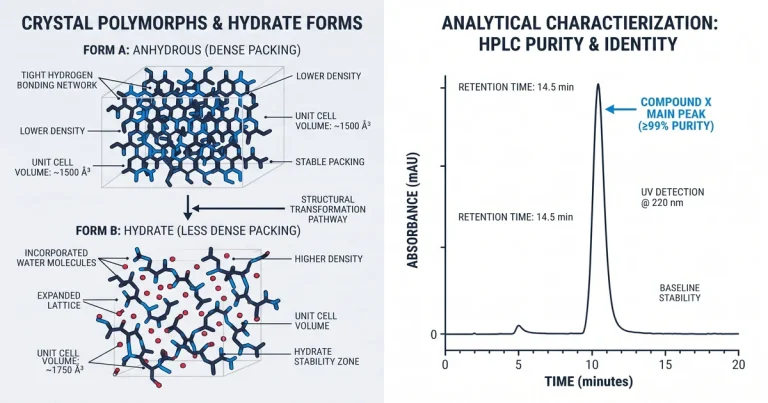
Peptide Polymorphism Research: Crystal Hydrate Forms
Understanding peptide polymorphism is key for research reproducibility. Different crystal forms, including hydrates, can affect a peptide’s solubility.
Understanding peptide polymorphism is key for research reproducibility. Different crystal forms, including hydrates, can affect a peptide’s solubility.
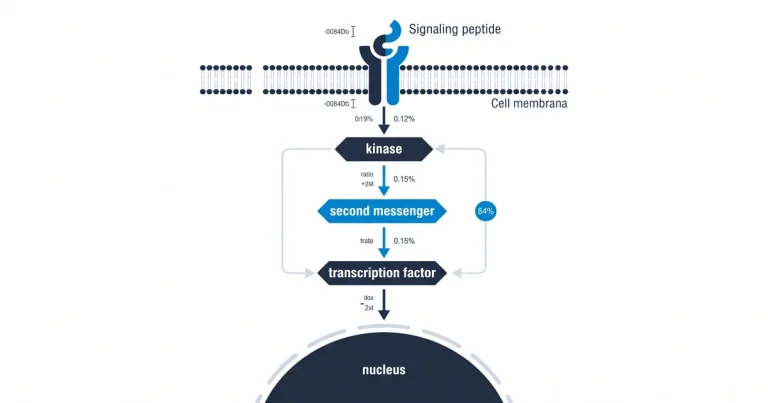
An IACUC peptide research protocol must adhere to the PHS Policy, which covers over 1,000 institutions. Learn to design a compliant protocol for animal.
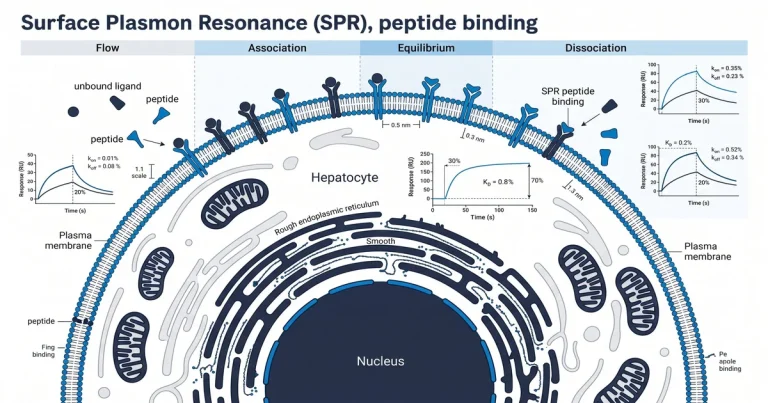
Surface plasmon resonance (SPR) measures peptide binding kinetics in real time, label-free. Explore setup, rate constants, data analysis for research labs.
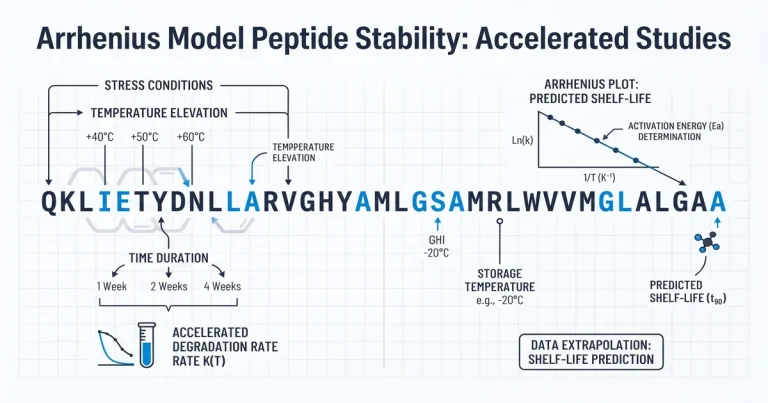
Arrhenius accelerated stability research for peptides uses high temps to predict shelf life. Learn how this model forecasts peptide breakdown rates.
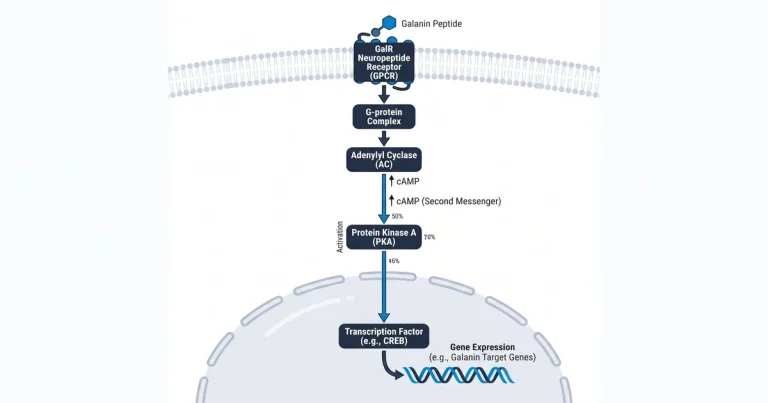
Galanin GalR receptor research covers a 29-30 amino acid neuropeptide binding GalR1, GalR2, and GalR3, each with distinct cell signaling paths.
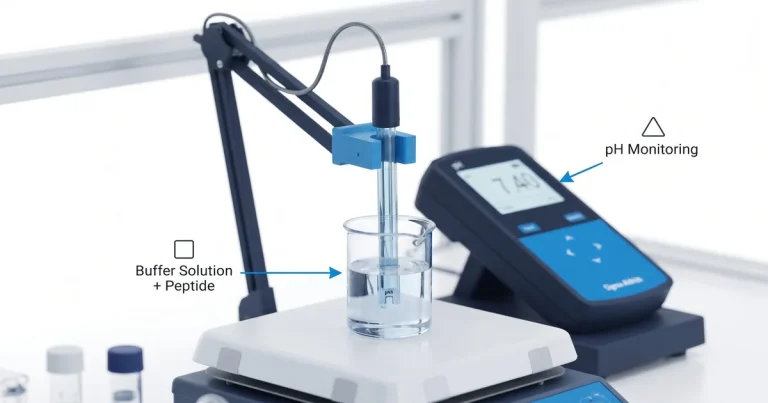
Learn how buffer pH and ionic strength affect peptide stability in the lab. Find the right pH range, buffer types, and test methods for research peptides.
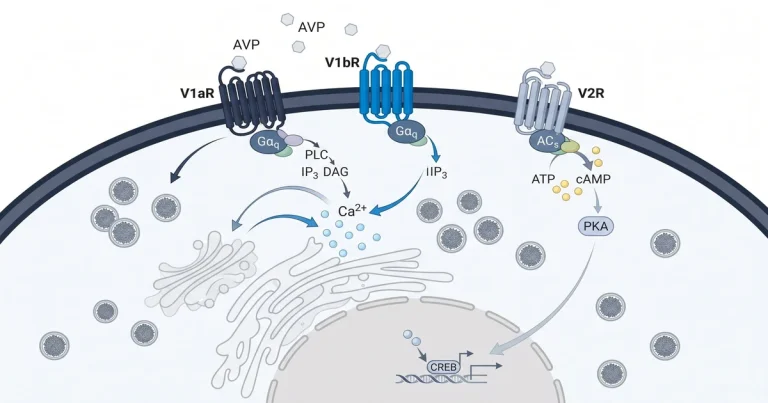
Vasopressin AVP receptor peptide research maps how V1a, V1b, and V2 GPCRs signal via calcium and cAMP in cell models. COA-tested AVP from Next Level Pharm.
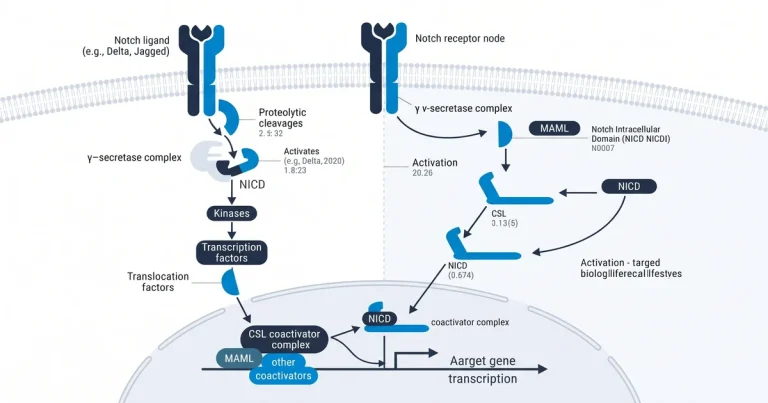
Notch pathway peptide research studies how ligand-induced gamma-secretase cleavage activates Hes and Hey gene transcription in cell differentiation models.
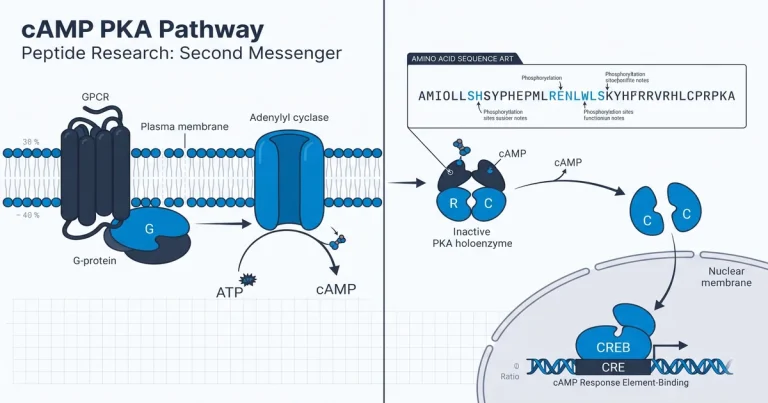
cAMP PKA pathway peptide research examines how GPCR activation generates the cAMP second messenger and activates PKA kinase signaling in laboratory models.
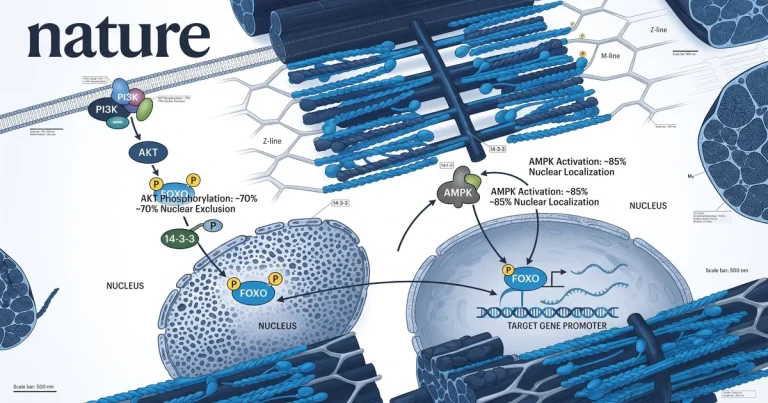
FOXO pathway peptide research studies how PI3K-AKT signaling controls FOXO transcription factors linked to oxidative stress and longevity genes in cell models.