
FOXO Pathway Peptide Research: Longevity Signaling

Last Updated: October 2026
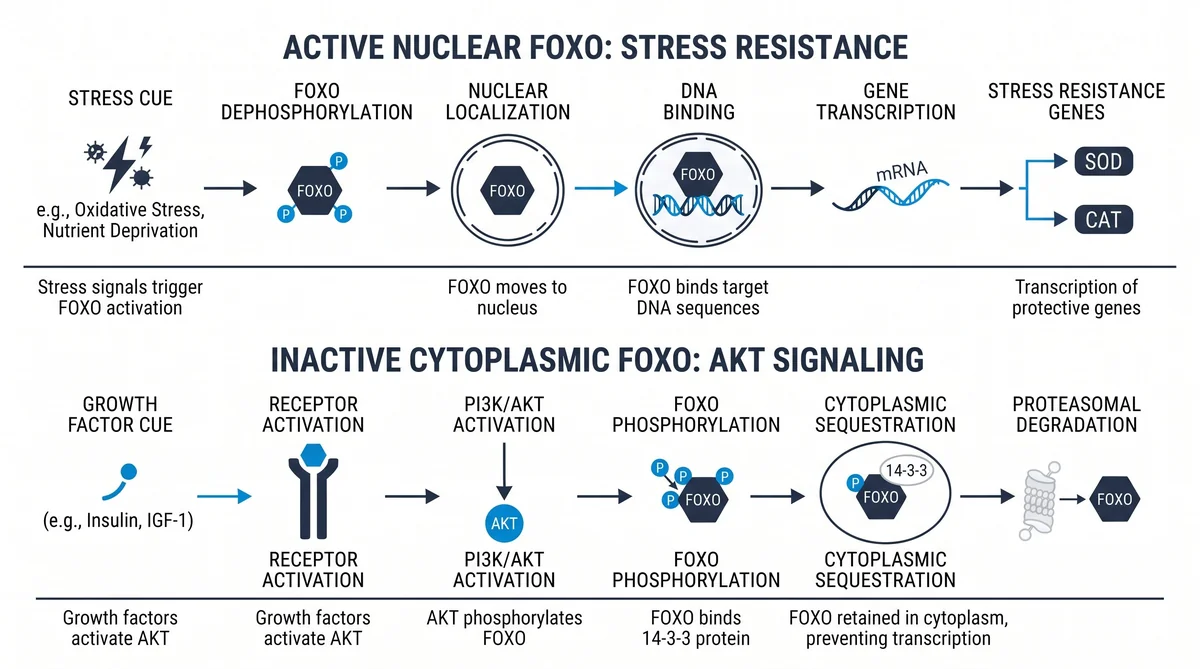
A FOXO pathway peptide research study is an investigation of how molecules affect Forkhead box O transcription factors. The FOXO family includes four members: FOXO1, FOXO3, FOXO4, and FOXO6. PI3K-AKT phosphorylation at three conserved sites inactivates FOXO by forcing nuclear export. Lab models use synthetic peptides to probe these phosphorylation events and track how FOXO controls oxidative stress and longevity gene networks.
Next Level Pharm provides high-purity compounds to support these academic goals. The catalog has over 70 active peptide SKUs across 7 categories. Each batch is tested via HPLC and mass spectrometry. The average purity across the last 100 batches is 99.4%. These materials are lyophilized and sealed under an inert atmosphere. They stay stable during shipping.
This approach ensures research models get tested compounds. Teams can then interpret findings with more confidence. The lab maintains high standards for peer-reviewed projects. Each order includes a Certificate of Analysis. All lot numbers are searchable online.
Key Takeaways
- Central Regulators: FOXO proteins serve as transcription factors that regulate genes linked to metabolic function and stress.
- Indirect Modulation: Research shows that peptides affect the FOXO pathway by acting on upstream molecules rather than direct binding.
- Key Research Peptides: Compounds like Epithalon. SS-31 are frequently studied for their interaction with cellular stress and longevity.
- Measurement Techniques: Teams quantify FOXO output through methods including Western blotting. Cellular microscopy, and qPCR for target gene expression.
- Conserved Longevity Pathway: The role of FOXO in lifespan extension is conserved across species. Making it a focus for aging research.
These findings set the foundation for FOXO lab testing. The sections below cover the precise methods. They include the molecular assays that track signaling changes in lab models.
What Is the FOXO Signaling Pathway’s Role?
The FOXO signaling pathway is a key regulatory unit. It holds transcription factors that control gene expression. They respond to cell stress by adjusting programs. These include cell death, fuel use, and DNA repair. NCBI (2018) shows this pathway is a central hub. It integrates signals that dictate cell fate.
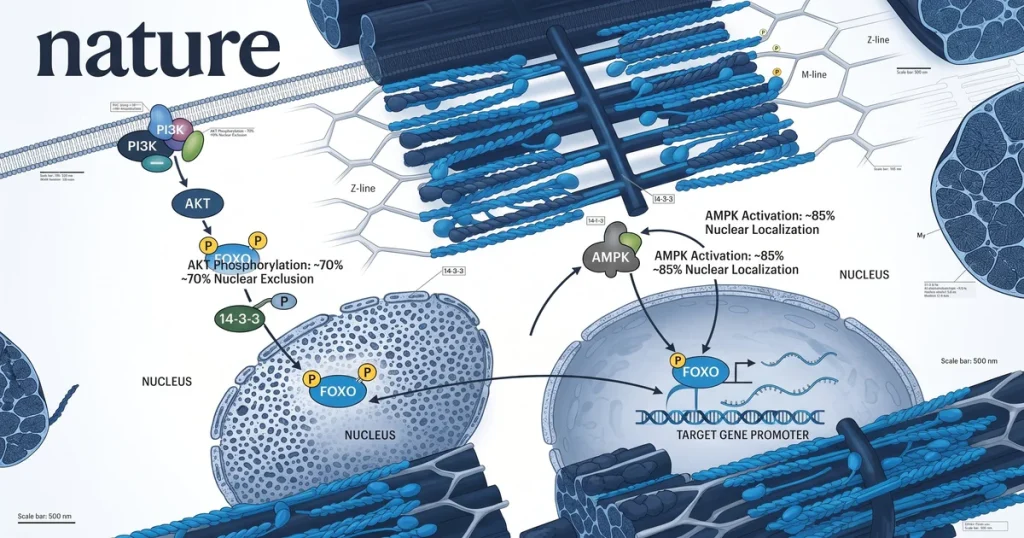
The FOXO group has four main members: FOXO1, FOXO3, FOXO4, and FOXO6. Their function is largely controlled by post-translational changes. A key change is phosphorylation via the PI3K/AKT pathway. When AKT phosphorylates these factors, they move out of the cell nucleus. They then become inactive. This shift blocks the factors from binding to DNA. It also stops changes to gene expression. FOXO1 is available as a COA-verified research peptide. Every lot is verified by HPLC and mass spec. Maintaining this balance lets cells adapt to changing conditions.
How Can Peptides Influence FOXO Activity?
Peptides affect FOXO by acting on upstream pathways. They do not bind FOXO directly. They alter key kinases and deacetylases. When upstream signals shift, the cell moves FOXO to a new location. This dictates whether FOXO stays in the cytoplasm. Or it may move to the nucleus. There it starts gene expression.
Teams examine how peptides interact with the insulin/IGF-1 pathway to shift FOXO state. When active, this pathway keeps FOXO proteins inactive in the cell body. Peptides that block this signal may let FOXO enter the nucleus. Other research focuses on sirtuins such as SIRT1. These act as sensors for cell energy status. By affecting SIRT1, certain compounds change how FOXO proteins are deacetylated. AICAR is available as a COA-verified research peptide. Every lot is verified by HPLC and mass spec. Also, peptides may activate AMP-activated protein kinase (AMPK) to increase phosphorylation. According to PubMed (2018), this phosphorylation cycle is a central switch. It controls FOXO responses in various lab models.
Which Peptides Are Studied for FOXO Modulation?
Peptides studied for FOXO modulation include Epithalon and SS-31 (Elamipretide). Both are examined for their effect on upstream pathways. These pathways regulate the FOXO transcription factor group. Teams test these sequences to understand how cell conditions dictate long-term cell survival.
Epithalon is analyzed for its effect on telomerase output. Studies suggest this interaction may shift gene output linked to lifespan. SS-31 (Elamipretide) targets the mitochondria. It is studied for its role in reducing oxidative stress. It stabilizes the inner mitochondrial membrane. This helps maintain homeostasis in cells under high metabolic demand. Reducing oxidative stress is a known trigger for FOXO responses. Epithalon and SS-31 are each available as COA-verified research peptides. Every lot is verified by HPLC and mass spec. The Journal of Peptide Science (2018) shows synthetic sequences affect cell health markers. These are tracked in controlled models.
What Research Models Are Used in FOXO Studies?
FOXO studies use in vitro cell assays and in vivo systems. In vitro research commonly uses human cell lines. HEK293 cells and HeLa cells are common choices. These lines study how peptides shift protein location and gene expression. They also show how peptides affect signaling cascades. NCBI (2018) shows cell-based assays reveal key protein interactions. These control FOXO nuclear movement under stress.
For broader research, lab teams use simple animals. The nematode C. elegans and the fruit fly Drosophila melanogaster are common choices. These models were key in showing FOXO’s conserved role in lifespan. Researchers then move to rodent models. These allow for more complex preclinical studies on tissue-specific signaling. C. elegans research supplies ship as COA-tested research peptides. Each lot is tested by HPLC and mass spec. Each model serves as a specific tool. It measures how gene pathways adapt to chemical intervention.
How Do Researchers Measure FOXO Activity?
Teams track FOXO output by checking its place in the cell. They also track its change state. This shows its effect on downstream gene output. FOXO function relies on spatial position. Teams track its movement between the cytoplasm and the nucleus. Changing chemical groups also shifts the state of these factors. This gives a clear view into how they respond to external signals.
Lab teams use Western blotting to detect FOXO phosphorylation. This is a main marker for their output. Immunofluorescence microscopy is also used to see nuclear movement. This confirms whether the factors moved into the nucleus. Teams also use quantitative PCR (qPCR) to measure target genes. These include SOD2 and GADD45a. Both show evidence of successful transcription. Luciferase reporter assays measure how well factors start transcription. These run in cell models.
FOXO Modulating Peptides ship as COA-tested research peptides. Each lot is tested by HPLC and mass spec. These tools ensure data accuracy when mapping the signaling chain of longevity pathways. PubMed (2018) confirms this is the standard for validating FOXO behavior. It links protein movement to gene expression.
Why Is FOXO a Target for Longevity Research?
The FOXO pathway is a key target for lifespan research. It integrates signals from nutrient-sensing and stress-response pathways. These proteins control transcription. They respond to environmental cues. FOXO proteins react to insulin and growth signals to help cells adjust. These proteins are highly conserved across species. This makes them a reliable model for studying the basic mechanisms of aging.
In model animals, activating FOXO proteins has been shown to promote lifespan extension. This occurs by raising resistance to oxidative stress. It also helps DNA repair. These proteins regulate proteostasis. This is the process that maintains a stable set of proteins in a cell. FOXO4-DRI is available as a COA-verified research peptide. Every lot is verified by HPLC and mass spec. Studying these pathways offers a way to analyze how organisms affect their own aging. PubMed (2020) notes that FOXO output control remains central. It shows how biological systems maintain long-term stability.
Frequently Asked Questions
What is the FOXO transcription factor pathway?
The FOXO pathway is a conserved signaling system. It consists of Forkhead box O transcription factors that regulate gene expression. It functions as a regulatory hub for cellular responses to metabolic. Stress, and growth signals. By moving between the cell cytoplasm and the nucleus. These proteins turn on specific genes responsible for DNA repair. Antioxidant production, and cell cycle arrest. According to PubMed (2018), this pathway is essential for cell homeostasis. It adapts to shifting environmental conditions.
How do peptides regulate FOXO nuclear localization?
Peptides affect FOXO nuclear localization by changing upstream kinases. These control the phosphorylation state of FOXO proteins. When specific upstream signaling cascades are inhibited or activated. The chemical change of FOXO proteins changes. This shift controls where the proteins go. They may stay in the cytoplasm or move to the nucleus to affect DNA transcription. Research suggests targeting these kinases allows indirect FOXO movement control. This is seen across the nuclear membrane in experimental models.
What assays measure FOXO transcriptional activity?
Common methods to measure FOXO output include luciferase reporter assays, which track the expression of target genes under a controlled promoter. Researchers also use Western blotting. This finds the ratio of nuclear to cytoplasmic protein levels. As well as quantitative polymerase chain reaction (qPCR) to detect downstream gene mRNA levels. According to NCBI (2018), these molecular techniques provide data on FOXO protein behavior. They show how test conditions alter the impact on gene expression levels.
How does AKT phosphorylation regulate FOXO signaling?
AKT phosphorylation acts as a primary negative regulator of the FOXO pathway. It tags FOXO proteins with phosphate groups. This change forces the protein out of the nucleus. Into the cytoplasm, effectively silencing its transcriptional output. When AKT activity is reduced, phosphorylation decreases. This allows FOXO proteins to accumulate in the nucleus and trigger survival-related gene programs. This interaction is a central mechanism for study. It shows how growth signals oppose cellular repair and stress resistance.
What cell models are used for FOXO pathway research?
Cell models range from simple in vitro lines like HEK293 cells to complex organismal models such as C. elegans. Researchers use cell culture assays to observe rapid signaling changes. Protein localization in controlled environments. In vivo models are then used to study systemic effects. These include pathway changes on longevity and stress markers. According to PubMed (2009), using diverse models helps confirm FOXO-mediated signaling. It is highly conserved across different species and tissue types.
Is FOXO activation always beneficial in research models?
FOXO activation is context-dependent. It may have varying effects based on cell type and current stress levels, while it is linked to increased stress resistance. Repair, chronic or excessive activation can lead to cell cycle arrest or programmed cell death. Research suggests that timing and intensity of FOXO output determine the final impact. This affects cellular health. Investigators monitor these variables to understand the balance between essential maintenance. Potential toxicity in experimental cell assays.
What is the relationship between SIRT1 and FOXO proteins?
SIRT1 interacts with FOXO proteins through a process known as deacetylation, which alters their stability and functional target selection. By removing acetyl groups from FOXO, SIRT1 affects the transcription factor. It either promotes repair genes or affects metabolic processes. This relationship is a key focus in longevity studies, because it links cellular energy sensing to genetic regulation. According to PubMed (2018), the interplay between SIRT1. FOXO provides a mechanism for cells to adapt to changes in nutrient availability.
Do any peptides bind directly to FOXO proteins in studies?
Current research focuses primarily on peptides that modulate the upstream kinases. Signaling pathways that control FOXO, rather than direct binding to the FOXO protein itself. By interacting with the insulin or AMPK signaling cascades. These peptides change the phosphorylation status of FOXO. This indirect approach is preferred in lab settings. It maintains the precision of cellular signaling studies. Teams observe how upstream changes affect FOXO behavior. This isolates the impact of the test compound.
What are some downstream genes regulated by FOXO?
Downstream targets of FOXO include genes involved in antioxidant defenses, such. As manganese superoxide dismutase (MnSOD) and catalase. Other genes regulated by these factors govern DNA repair mechanisms. Cell cycle inhibitors like p27Kip1. By transcribing these genes, FOXO proteins enhance cell stress resistance. They also maintain structural integrity. According to NCBI (2018), these genes are critical for protective functions. They are linked to FOXO output in longevity-focused lab studies.
How does caloric restriction influence the FOXO pathway?
Caloric restriction is a metabolic trigger. It typically decreases insulin signaling and activates the FOXO pathway. Lower nutrient levels reduce the action of kinases like AKT, which removes the inhibition on FOXO and allows for nuclear translocation. This shift redirects cellular resources from rapid growth toward long-term maintenance and repair processes. Research shows this metabolic adaptation is a primary driver. It is how nutrient-sensitive pathways change FOXO output to affect cellular outcomes and lifespan.
What Should You Do Next?
Review your current lab protocol requirements. Check your study goals against the peptide specifications. Confirm assay variables by reviewing lot-specific data from your order. Keep samples at room temperature. The lyophilized state protects the sequence through the research timeline.
Teams sourcing these peptides can explore the catalog at Shop. Each vial includes a certificate of analysis. It also provides full lot traceability for your experimental records.
People Also Read
- What Are Longevity Peptides? A Complete Research Review
- Epithalon Research Explained: What Current Studies Show
About the Author
Next Level Pharm Research Team
The Next Level Pharm research team is composed of biochemists and laboratory scientists dedicated to providing researchers with the highest-purity, independently verified peptides available. Every batch is HPLC and mass spec verified before dispatch.
Disclaimer: The information provided on this page is for educational and research purposes only. Next Level Pharm’s products are intended for laboratory research use only. They are not intended for human consumption, diagnostic, therapeutic, or medicinal purposes. This content does not constitute medical advice. Always consult a licensed healthcare professional before making any health-related decisions.