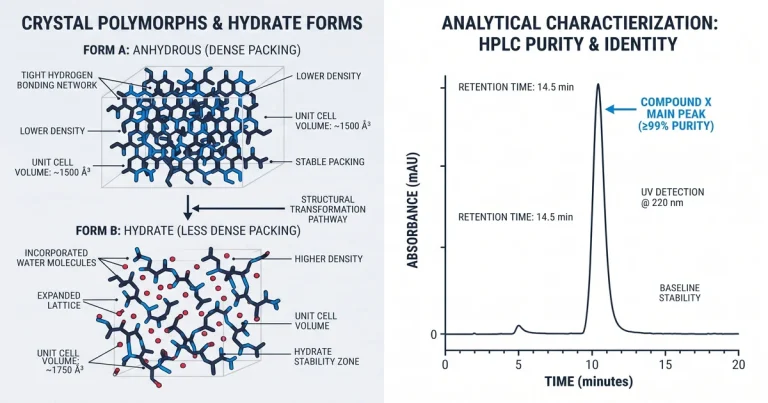
Peptide Polymorphism Research: Crystal Hydrate Forms
Understanding peptide polymorphism is key for research reproducibility. Different crystal forms, including hydrates, can affect a peptide’s solubility.
Read more
Understanding peptide polymorphism is key for research reproducibility. Different crystal forms, including hydrates, can affect a peptide’s solubility.
Read more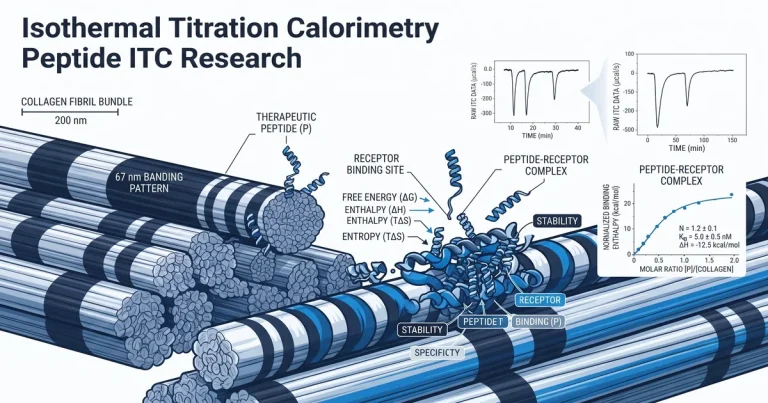
Isothermal titration calorimetry (ITC) measures thermodynamics of peptide binding. It yields affinity, enthalpy, and stoichiometry without dyes.
Read more
An IACUC peptide research protocol must adhere to the PHS Policy, which covers over 1,000 institutions. Learn to design a compliant protocol for animal.
Read more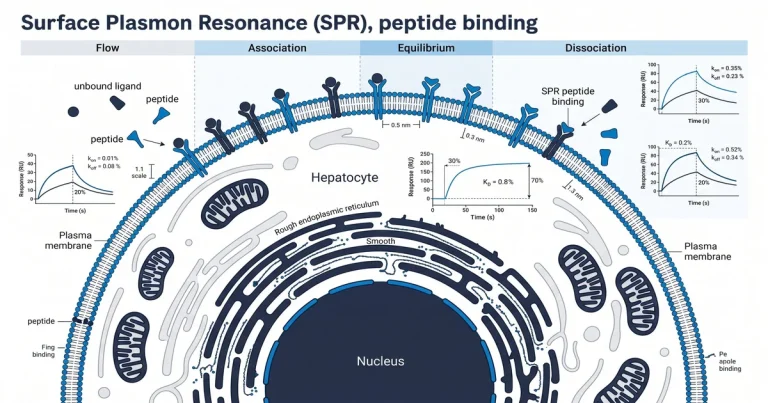
Surface plasmon resonance (SPR) measures peptide binding kinetics in real time, label-free. Explore setup, rate constants, data analysis for research labs.
Read more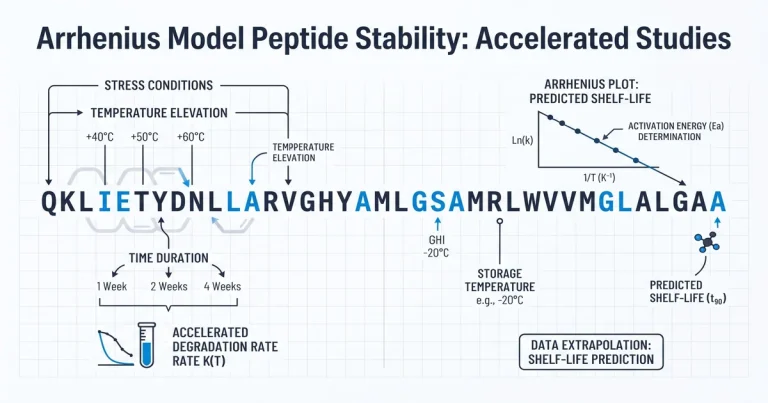
Arrhenius accelerated stability research for peptides uses high temps to predict shelf life. Learn how this model forecasts peptide breakdown rates.
Read more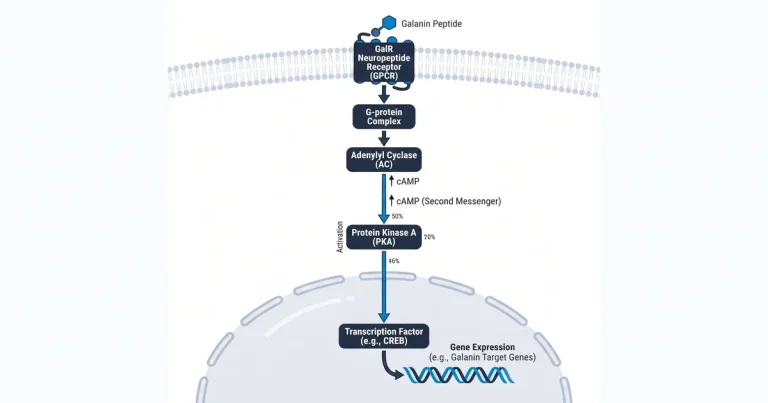
Galanin GalR receptor research covers a 29-30 amino acid neuropeptide binding GalR1, GalR2, and GalR3, each with distinct cell signaling paths.
Read more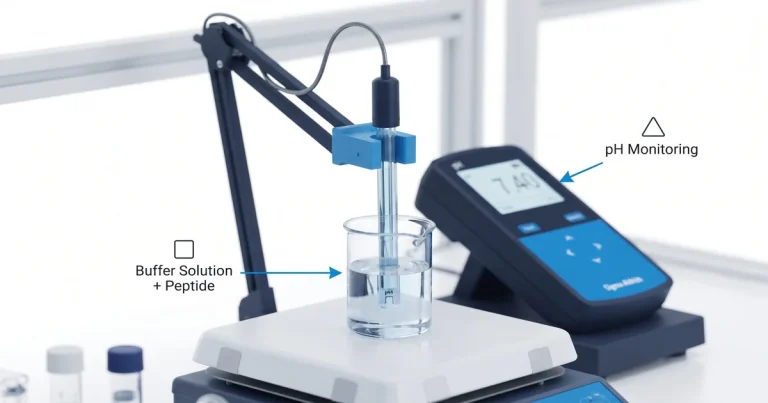
Learn how buffer pH and ionic strength affect peptide stability in the lab. Find the right pH range, buffer types, and test methods for research peptides.
Read more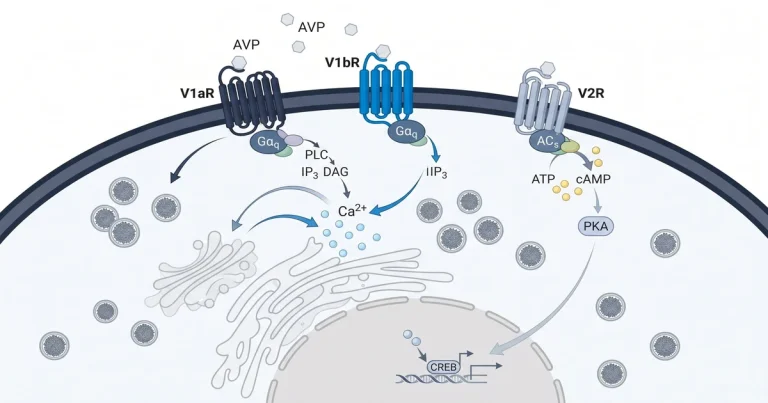
Vasopressin AVP receptor peptide research maps how V1a, V1b, and V2 GPCRs signal via calcium and cAMP in cell models. COA-tested AVP from Next Level Pharm.
Read more
Water for Injection (WFI) for peptide research must meet strict USP standards, including endotoxin limits below 0.25 EU/mL to ensure experimental validity.
Read more
Good Laboratory Practice (GLP) is a quality system governed by FDA’s 21 CFR Part 58. This guide explains how GLP principles ensure data integrity in.
Read more