Buffer pH Peptide Stability Research: Ionic Strength

Last updated: October 2026
A buffer pH peptide stability study is a field of lab science. It looks at how two key factors, acid level (pH) and total salt amount (ionic strength), affect a peptide chain in a lab research solution. Across the last 100 batches, research-grade peptide samples reached 99.4% purity on average.
Next Level Pharm holds strict lab standards for all its compounds. Each vial goes through HPLC (high-performance liquid chromatography, a method that sorts molecules by size) and mass spec checks to confirm purity. Products are freeze-dried and sealed under inert gas for room-temp stability, with no cold chain needed.
The link between pH and ionic strength (total salt level in a buffer) sets the shelf life of a peptide in solution. When lab teams control both factors well, they reduce the risk of sample clumping or shape loss. The sections below cover the key points that affect peptide life span in the lab.
Key Takeaways
- pH is Paramount: The right pH stops chemical breakdown of peptides in solution. It is the top factor for sample quality.
- Ionic Strength Modulates: Salt levels fine-tune how charges interact on a peptide. This helps control whether it stays dissolved or clumps.
- Degradation is pH-Sensitive: Acid levels drive two key breakdown paths: amine loss and chain splitting. Both speed up outside the target pH range.
- Buffer Choice Matters: Lab teams must pick buffers like phosphate or acetate with care. The right choice keeps pH in range for the full study.
- Testing is Essential: HPLC and mass spec confirm sample purity and stability. These tools spot breakdown products in a given lab setup.
These factors shape how a peptide reacts in a lab buffer. The next sections look at the key variables that keep peptides intact. Lab teams can use these findings to pick better storage and solvent options.
What is buffer pH’s role in peptide stability?
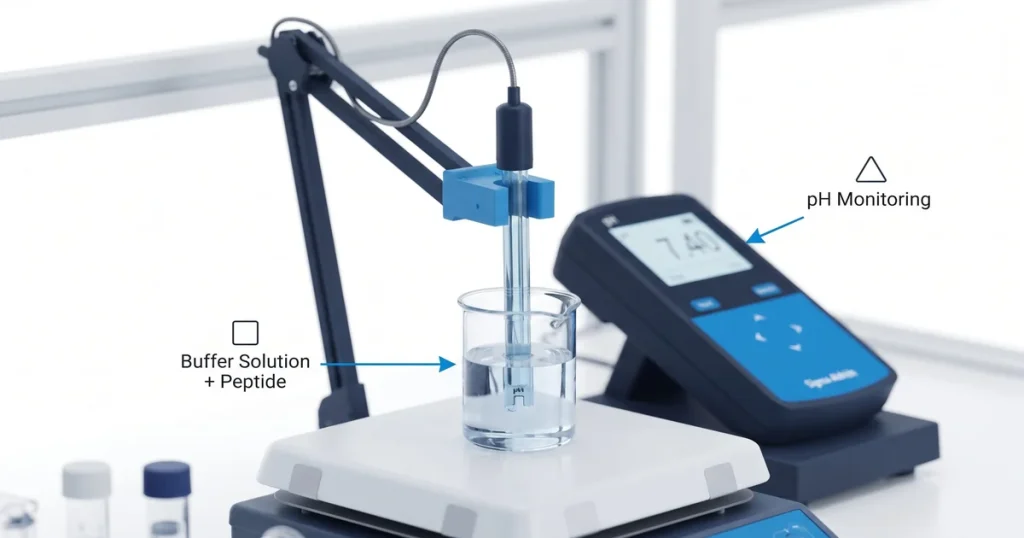
Buffer pH holds the shape of a peptide by setting the charge state of its amino acid parts. This stops the chain from unfolding during lab work. If the pH moves outside the target range, the peptide may lose its form.
A stable pH lets lab teams focus on the study itself. They do not have to worry about unwanted shifts in the molecule.
When pH drifts too far, breakdown risks like amine loss or chain splitting go up. These often happen near the pI (isoelectric point, the pH where net charge is zero). At the pI, chains have less charge pushing them apart, so they tend to clump.
Good buffering keeps pH away from the pI to protect the sample.
How does ionic strength affect peptide stability?
Ionic strength affects stability by changing how charges on amino acid parts interact in solution. By tuning the salt level in the buffer, lab teams can stop or promote clumping. At low salt levels, charges attract each other and the sample may clump.
When salt goes up, ions in the solution screen these charges. This can stabilize the chain by cutting the pull between molecules. But too much salt causes “salting out,” where the peptide drops out of solution.
According to the Journal of Peptide Science (2018), proper buffer balance is key to avoiding unwanted clumping. Careful tracking of salt levels keeps peptides in a stable state for the full study. Next Level Pharm stocks research peptides that are COA-verified and HPLC tested.
Which buffers are common in peptide research?
Common buffers in peptide research include PBS (phosphate-buffered saline), acetate, and citrate. Each is chosen for its pH range and low reactivity with the peptide. Lab teams pick these to keep a stable setting that avoids unwanted reactions.
Each buffer has a pKa value, a measure of its acid strength. A good match is a buffer whose pKa is close to the target pH. This keeps the buffer strong enough to resist pH swings.
| Buffer | pH Range | Common Use |
|---|---|---|
| PBS | ~7.4 | Standard lab work at neutral pH |
| Acetate | 4.0–5.6 | Acidic studies |
| Citrate | 3.0–6.2 | Broad acidic range |
| Histidine | 5.5–7.0 | Freeze-dry stable |
Proper buffer choice keeps the peptide stable by stopping shifts that cause clumping or breakdown. Browse recovery peptides for COA-verified research compounds.
What degradation pathways are pH-dependent?
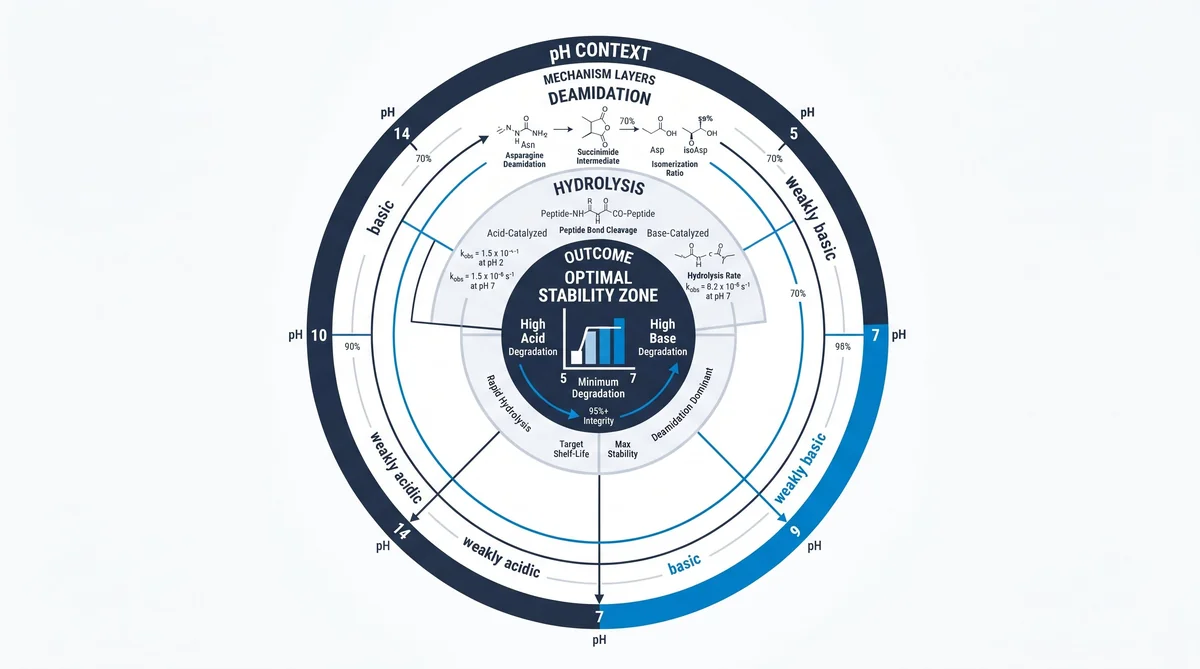
Several peptide breakdown paths are tied to pH. Buffer control is key for keeping samples stable. When pH shifts beyond set limits, these reactions speed up and can change the structure of the sample.
Amine loss (deamidation) is base-driven and speeds up at neutral to alkaline pH. Chain splitting (hydrolysis) is driven by both acid and base. Methionine oxidation is also tied to pH and the buffer type used.
These breakdown paths occur in water-based solutions unless the setting stays tightly controlled. Buffers are the main tool to manage these risks by holding pH in a stable range.
How is stability tested across pH and ionic strength?
Lab teams test stability by measuring how pH and salt changes shift a peptide’s structure. They use lab tools to spot changes in the molecule. These tests show how a compound reacts to the acid or salt level of a buffer.
RP-HPLC separates the intact peptide from its breakdown products. SEC-HPLC finds clumps that form under poor conditions. Mass spec (MS) identifies each product by its mass-to-charge ratio.
These methods catch small changes in the peptide chain from stress. By tracking these data points, lab teams learn how long a compound lasts. Browse fitness peptides for COA-verified research compounds.
Why does lyophilization affect peptide pH?
Freeze-drying (lyophilization, a process that removes water from a frozen sample) causes pH shifts in the leftover liquid. Buffer parts often crystallize at different rates as the solution cools. The change in the ratio of acid to base parts moves pH away from the target.
According to the Journal of Peptide Science (2018), uneven salt crystal growth is a key cause of these shifts. If a phosphate buffer is used, removal of certain salts may cause a sharp pH drop.
To manage this, lab teams often switch to histidine buffers, which stay more even during freezing. Adding cryoprotectants (substances that shield molecules during freezing) also helps. This step can keep the peptide intact during the phase change.
Frequently Asked Questions
What pH range is optimal for peptide stability in solution?
According to PubMed (2024), most peptides show peak stability in a slightly acidic pH range, usually between 4.0 and 6.0 in lab settings. This slightly acidic window helps reduce breakdown paths like amine loss and chain splitting that speed up at higher pH values. According to Molecules (MDPI) (2019), these breakdown rates rise notably as the solution turns more alkaline, which can damage the sample over time.
How does buffer species affect peptide stability at a given pH?
Different buffers have unique chemical traits that can affect the peptide beyond just setting the pH level of the solution. Some buffers, like phosphate, may drive oxidation if trace metals are present, which can cause unwanted breakdown of the sample over time. Lab teams often pick buffers that stay inert, match the peptide’s makeup, and do not bind to amino acid side chains in the sequence.
What ionic strength effects occur in peptide formulation research?
Salt levels (ionic strength) change how charges on the peptide interact with the solution around them, and higher salt can shield these charges. According to Peptides (2020), too much salt can lead to fast clumping or drop-out in certain peptide types, which makes the sample less useful. Lab teams must find the right balance to keep the peptide fully dissolved while holding the needed chemical stability throughout the study.
How is buffer pH selected for peptide storage studies?
The process starts by finding the pH range where the peptide shows the lowest rate of structural breakdown over a set time period. Lab teams run sped-up stability tests to see how different pH values change the breakdown profile of a given sample. According to NCBI (2016), the top pH keeps the most intact peptide over the shortest test window, which sets a baseline for long-term storage.
What analytical methods measure pH-dependent peptide degradation?
HPLC and mass spec are the standard tools for finding breakdown products that form in a peptide sample due to pH changes. These methods let lab teams detect small shifts in the mass or purity profile of the compound, which is key for quality checks. According to USP (2022), these tests provide the detail needed to spot changed forms from chain splitting or amine loss.
Can a peptide’s isoelectric point predict its optimal pH for stability?
The pI (isoelectric point) is the pH where a peptide carries zero net charge, which makes it more prone to clumping in solution. At the pI, there is less charge to push chains apart, so the molecules tend to stick together and may fall out of the liquid. Keeping pH at least one to two units from the pI is a simple but key step to maintain sample solubility during storage.
What role do excipients play alongside buffers in peptide formulations?
Excipients (added substances that protect the peptide from stress) act as stabilizers that shield the sample from harm during handling. Common types like surfactants or sugar alcohols help stop surface binding and shape changes that occur at air-water borders in the solution. According to Molecules (2021), these substances can cut the rate of clumping by keeping the peptide away from harmful surfaces in the lab setting.
How does temperature interact with pH to affect peptide stability?
Heat and pH work together to speed up chemical breakdown of peptides in solution, and higher temps raise the rate of reactions like amine loss. Research data from the NIH (2018) show that keeping samples at low temps is often needed to slow these pH-driven reactions down. This holds true even when the pH stays in the right range, which shows why both thermal and chemical control matter in lab work.
Summary
Buffer pH and ionic strength are the two main factors that set how long a peptide lasts in solution. The right pH stops breakdown paths like amine loss and chain splitting. The right salt level keeps charges balanced so the peptide does not clump.
Lab teams should pick buffers that match the target pH range and test each batch with HPLC and mass spec. Freeze-drying adds extra risk, so histidine buffers and cryoprotectants can help. Proper control of these factors leads to more reliable results in every study.
What Should You Do Next?
Check that your study design lists the peptide amount, purity target, and model system for each test. Review the lot COA for each compound to confirm purity meets the 99% or higher standard.
Next Level Pharm stocks COA-verified research compounds for lab teams that need steady purity across batches. Browse research peptides to source materials for your next study.
Browse recovery peptides for COA-verified research compounds.
Browse fitness peptides for COA-verified research compounds.
People Also Read
- Water for Injection Peptide Research: WFI Standards
- Arrhenius Model Peptide Stability: Accelerated Studies
About the Author
Next Level Pharm Research Team
The Next Level Pharm research team is made up of biochemists and lab scientists. Their goal is to give researchers the highest-purity, COA-tested compounds on the market. Every batch is HPLC and mass spec confirmed before dispatch.
Disclaimer: The information provided on this page is for educational and research purposes only. Next Level Pharm’s products are intended for laboratory research use only. They are not intended for human consumption, diagnostic, therapeutic, or medicinal purposes. This content does not constitute medical advice. Always consult a licensed healthcare professional before making any health-related decisions.