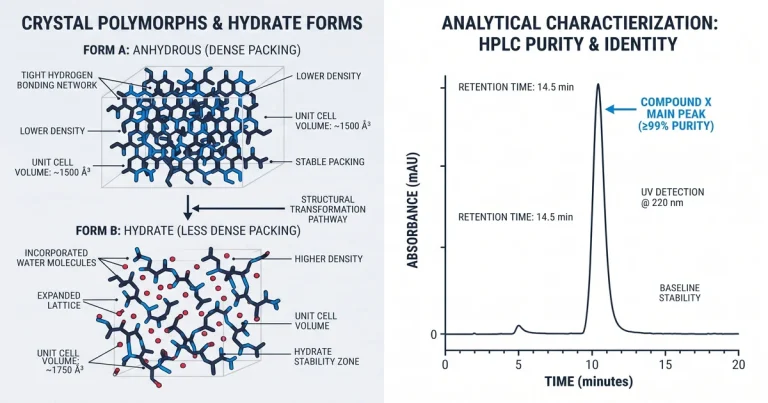
Peptide Polymorphism Research: Crystal Hydrate Forms
Understanding peptide polymorphism is key for research reproducibility. Different crystal forms, including hydrates, can affect a peptide’s solubility.
Understanding peptide polymorphism is key for research reproducibility. Different crystal forms, including hydrates, can affect a peptide’s solubility.
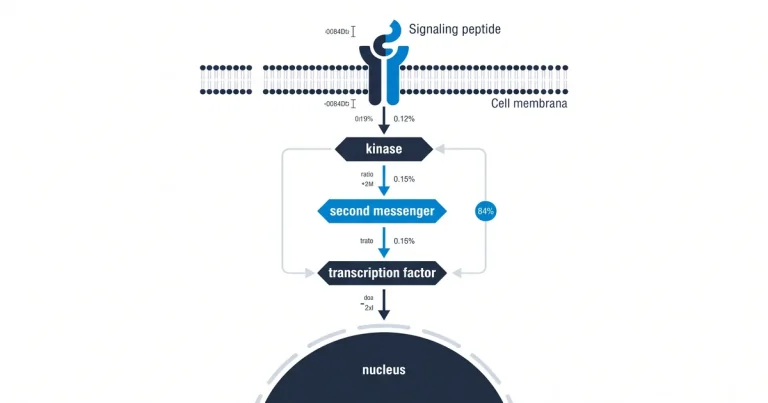
An IACUC peptide research protocol must adhere to the PHS Policy, which covers over 1,000 institutions. Learn to design a compliant protocol for animal.
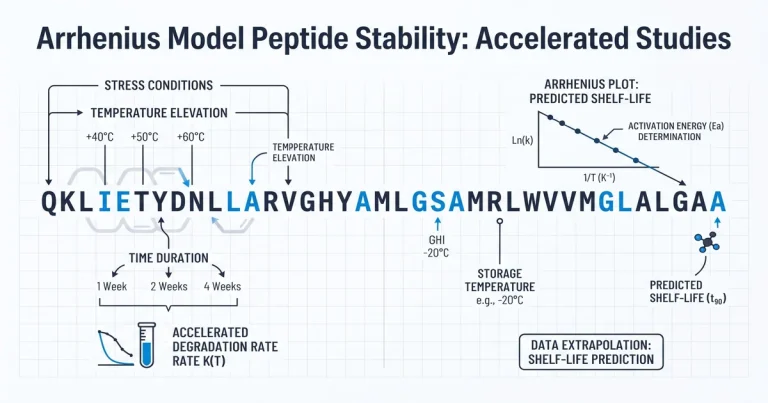
Arrhenius accelerated stability research for peptides uses high temps to predict shelf life. Learn how this model forecasts peptide breakdown rates.
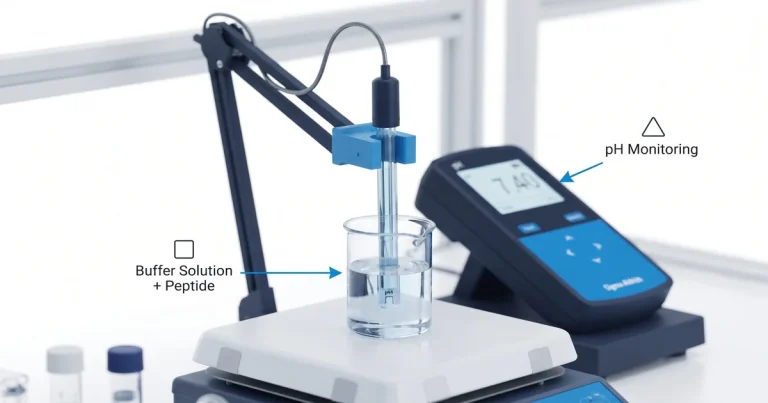
Learn how buffer pH and ionic strength affect peptide stability in the lab. Find the right pH range, buffer types, and test methods for research peptides.
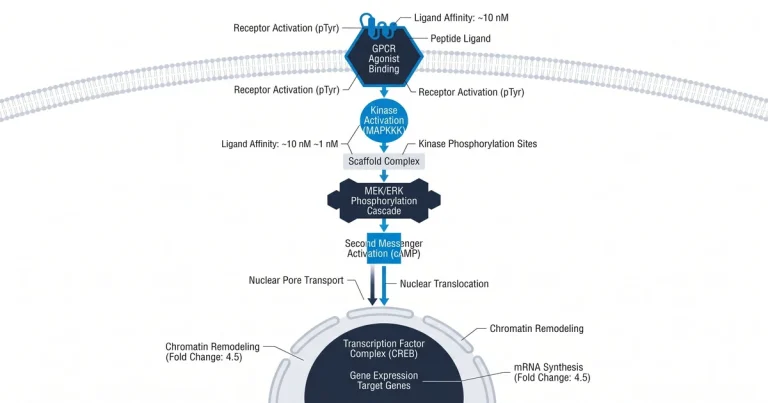
Water for Injection (WFI) for peptide research must meet strict USP standards, including endotoxin limits below 0.25 EU/mL to ensure experimental validity.
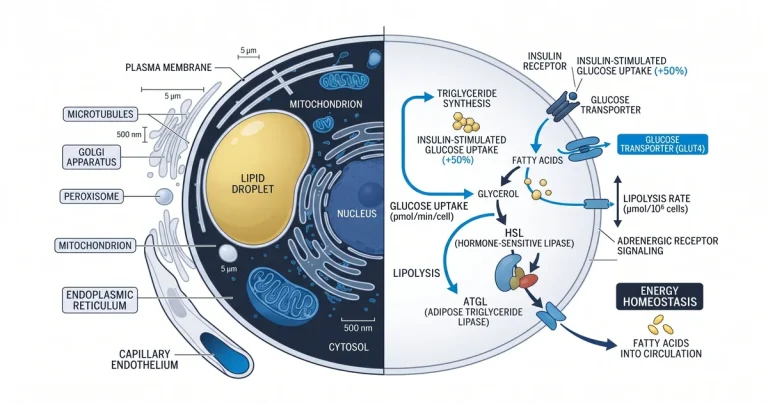
Good Laboratory Practice (GLP) is a quality system governed by FDA’s 21 CFR Part 58. This guide explains how GLP principles ensure data integrity in.
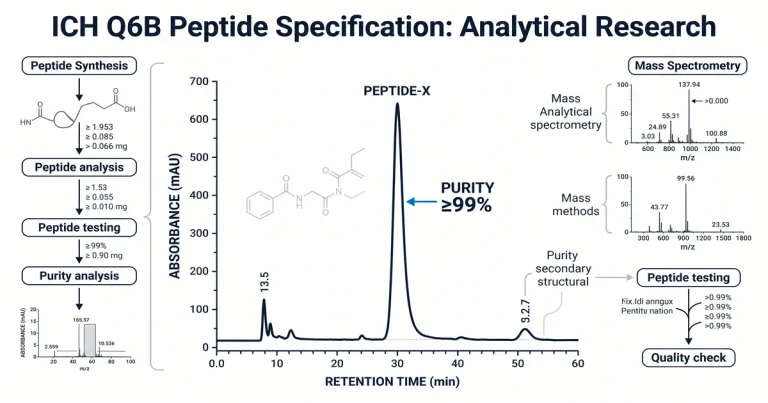
Learn how ICH Q2R1 sets the standard for peptide HPLC method validation. Six parameters confirm purity results are accurate, repeatable, and specific.
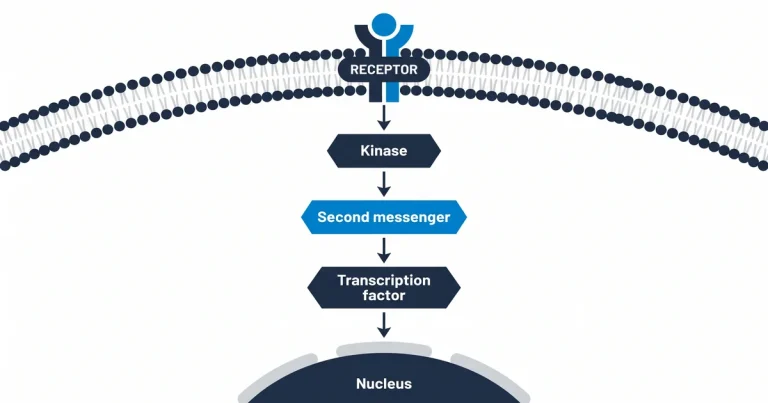
ICH Q6B provides essential guidelines for setting specifications for biotech products, including research peptides, covering identity, purity, and potency.
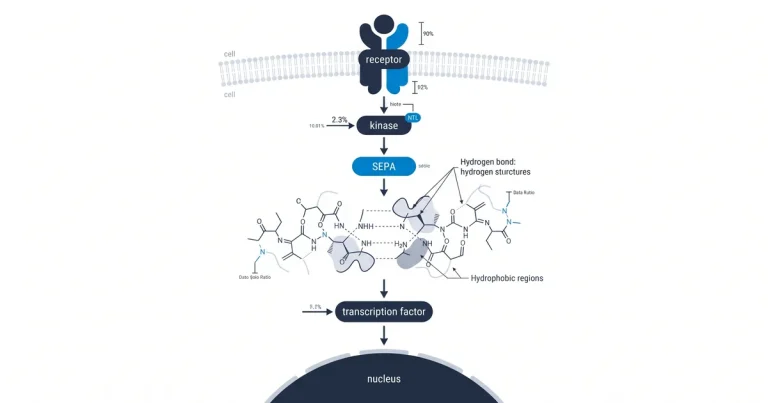
Explore peptide dimerization research, a process where two peptide molecules bind. This intermolecular interaction can alter stability, with studies.
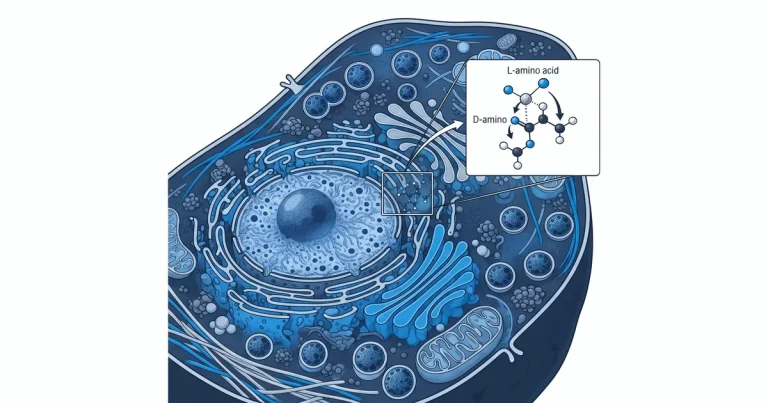
Peptide racemization, or stereoinversion, can reduce biological activity as L-amino acids convert to D-amino acids. Learn how pH, temp, and sequence.