
IACUC Peptide Animal Research: Protocol Design

Last updated: October 2026
A IACUC peptide animal research protocol is a formal plan that describes how a lab will study peptides in animal models. IACUC (Institutional Animal Care and Use Committee) is the ethics board that must approve each study before work begins. This plan covers the study goals, lab steps, safety measures, and humane care rules for all animal subjects.
Next Level Pharm provides research compounds that meet strict purity standards. Each batch is tested by HPLC and mass spec. These products hold a 99.4% purity average across the last 100 batches.
HPLC (high-performance liquid chromatography) is a method that checks compound purity. Mass spec (mass spectrometry) confirms the molecular weight. A COA (Certificate of Analysis) for each lot aids the review process.
Key Takeaways
- Ethical Compliance is Paramount: IACUC protocols make sure all animal research meets federal humane care rules set by the Animal Welfare Act.
- Peptide-Specific Handling: Protocols must list how the peptide is prepped, the solvent used, the amount given, and the delivery route.
- The 3Rs are Mandatory: Labs must use Replacement, Reduction, and Refinement to lower animal use and limit stress.
- Scientific Justification Required: The choice of model and total count must be backed by a power analysis and published studies.
- Objective Humane Endpoints: Clear, preset humane endpoints stop or prevent animal pain during any research study.
These protocols form the basis for strong data collection. They also keep all lab work within ethics rules. The sections below describe how to apply these standards to peptide research tasks.
What is an IACUC protocol’s core purpose?
The core purpose of an IACUC protocol is to confirm that animal research is humane and ethical. It acts as a checkpoint for each new study. The committee reviews the plan to make sure goals outweigh risks to the animals.
The committee checks that labs reduce pain and stress for all subjects. These protocols follow the Animal Welfare Act. This federal law sets rules for the care and housing of lab animals.
Labs must also follow the PHS Policy on Humane Care and Use of Laboratory Animals. This policy requires IACUC oversight for any group that gets federal funding. These rules set high standards for vet care, housing, and research methods.
BPC-157 is available as a COA-verified research peptide. Every lot is verified by HPLC and mass spec.
How do peptides affect protocol design?
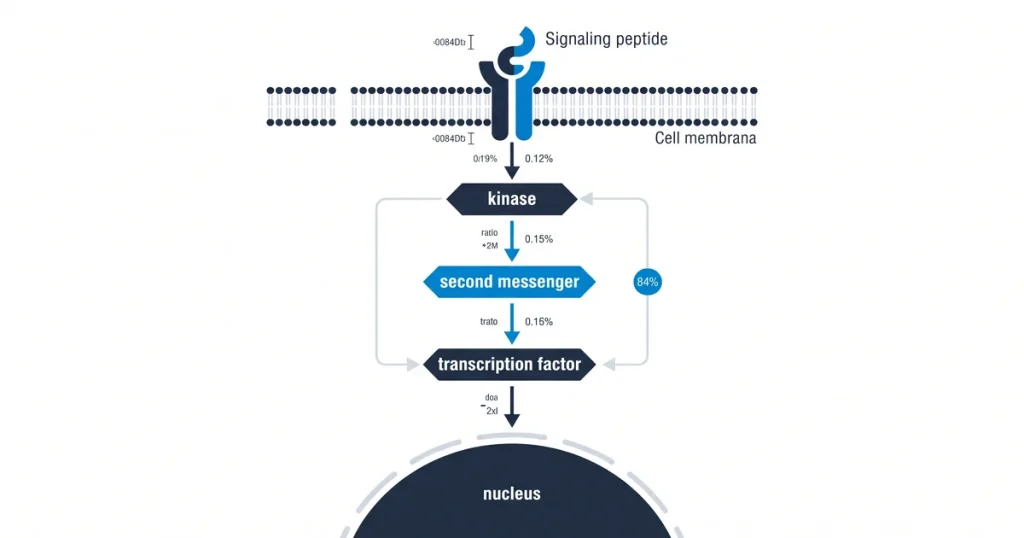
Peptides change protocol design because they need strict controls over stability, prep, and delivery. Many arrive as lyophilized powders (freeze-dried, stable solids that stay sealed until use). Correct handling keeps the peptide intact for the full study.
Labs must pick the right solvent to dissolve the peptide without breaking its active chain. Once mixed, the solution needs storage at set temps to stay active. The protocol must also state the amount per volume and the volume for each round of delivery.
Timing matters too. Steady spacing of each round helps avoid shifts in the data. Logging every step from first storage to final delivery supports clean results.
What are the 3Rs in peptide research?
The 3Rs are a required framework for ethical lab work: Replacement, Reduction, and Refinement. These rules ask labs to justify their methods for lowering animal use and stress. Next Level Pharm supports labs that put these ethical standards first.
Replacement means using non-animal methods first. In vitro assays (tests done in a dish or tube) and computer models can study peptide activity before animal work begins. Reduction uses a power analysis to find the smallest sample size for valid results.
Refinement means improving delivery methods and tracking to lower stress for models. By using fewer animals and better methods, labs uphold ethical standards. This also leads to cleaner data.
CJC-1295 is available as a COA-verified research peptide. Every lot is verified by HPLC and mass spec.
How do you justify the animal model and numbers?
Justifying the model requires a clear reason for the chosen species and math proof for the count. The species must match the pathways the peptide targets. The number of animals must come from a power analysis, not guesses.
This makes sure the study finds a true effect without extra subjects. According to NCBI (2018), citing known protocols helps confirm that the model can yield useful data. By aligning with prior work, labs can predict how the peptide will act.
The protocol must also list the power analysis details. Group sizes must be large enough to avoid false results. Clear planning means every animal used adds to the study’s worth.
Tirzepatide is available as a COA-verified research peptide. Every lot is verified by HPLC and mass spec.
What procedural details must be included?
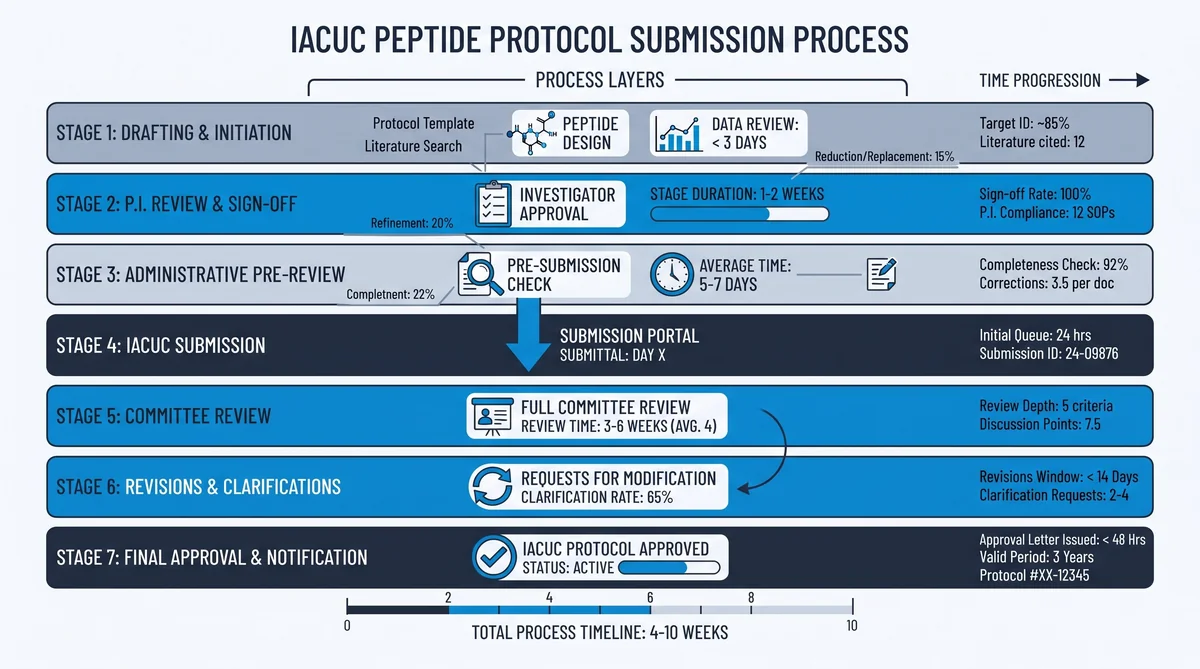
IACUC protocols need a full, step-by-step list of every step the animals go through. This covers arrival at the lab through the study’s end. The record must state the peptide delivery route and the blood draw schedule.
| Protocol Section | Key Details to Include |
|---|---|
| Study Goals | The main question and expected outcome |
| Animal Model | Species, strain, and reason for choice |
| Peptide Handling | Storage temp, solvent, prep steps, shelf life |
| 3Rs Plan | Steps to replace, reduce, or refine animal use |
| Humane Endpoints | Preset signs that trigger early study stop |
| Data Logs | Records of every step and observed result |
Clear logs for these actions make sure every factor can be traced and repeated. According to PubMed (2020), this ensures results are useful for the wider research field. Good records raise study quality.
Tirzepatide is available as a COA-verified research peptide. Every lot is verified by HPLC and mass spec.
The protocol must also describe how the team checks for pain and distress. This includes watching for changes in behavior or health. If the model shows signs of distress, the plan must include preset rules to stop the study.
These limits are the final safeguard for animal welfare. Good logs keep the work sound through the full study period.
What defines a humane endpoint in peptide studies?
A humane endpoint is a preset, clear set of criteria that triggers the stop of a study. These markers let labs end a test before severe pain occurs. They protect the welfare of all models in the study.
According to the NIH (2015), protocol reviewers must approve these triggers. By using these standards, labs keep research grounded in ethical practice. This also builds trust in the data.
Research teams set these endpoints based on the peptide being studied. Examples include signs of toxicity, such as sudden shifts in behavior or coat state. A drop in body weight past a set percent is another marker.
BPC-157 is available as a COA-verified research peptide. Every lot is verified by HPLC and mass spec.
If a model reaches an endpoint, the study ends for that subject. Teams that track these metrics lower the risk of health problems during the trial. Precise records for these endpoints remain key for valid, repeatable results.
Frequently Asked Questions
What is the IACUC protocol review process for peptide research?
According to PubMed (2024), this area draws strong research interest. The IACUC reviews protocols to make sure the study plan follows federal ethics rules. The review starts with a form that lists the study goals, the peptide, and the planned steps.
The board checks the study’s merit and weighs risks to the animal models. It may then approve the plan, ask for changes, or request a team review.
What animal model justification is required in IACUC applications?
Researchers must give a clear reason for picking a certain species or strain to test the peptide. The committee needs proof that the chosen model is the right fit for the study question.
According to the NIH (2015), the reason must show the study cannot use a simpler species. Teams must also note how the model relates to the research goal and why it matters for the study.
How does IACUC define the 3Rs in peptide research protocols?
The 3Rs are a required ethics framework: Replacement, Reduction, and Refinement. Replacement asks labs to use non-animal methods when they can. Reduction focuses on finding the fewest animals needed for valid results.
Refinement means updating steps to lower pain or stress during peptide delivery. These rules guide lab design toward humane standards while keeping data quality high during the study.
What endpoint criteria must be specified in IACUC submissions?
Submissions must list clear, measurable humane endpoints that call for action if an animal shows severe distress. These criteria note physical or behavioral signs that need quick action, such as early study end or vet care for the subject.
According to the NCBI (2020), setting these points early is key to guarding animal welfare. It also keeps data in line with research ethics standards.
How is IACUC approval documented for a peptide study?
Approval comes through a formal letter from the committee chair. This letter states the study scope and how long it will run. It is the official permit for the research to start under the listed rules.
All records, including the first form and any change notes, must be kept as part of the study files. These must be ready for review during lab checks to confirm the work follows all required rules.
Can an IACUC protocol be amended for a new peptide?
If a lab wants to add a new peptide, the current protocol must go through a change process. The committee reviews how the new compound shifts the study factors, risks, and tracking needs.
The team must submit the new peptide data, including stability details and planned amounts. A formal change is required before any new compound is used to keep the protocol within its ethics scope.
What training documentation is needed for staff on a peptide protocol?
All staff on the study must show proof of training on the animal models and methods in the protocol. This includes skill in handling, giving peptides, and watching for bad effects.
Most labs require proof of courses on ethical animal care and safety rules. Regular updates to training records are needed so all team members stay current on safe research methods.
How do you calculate peptide dosage for animal models in a protocol?
The amount is set by adjusting the standard figure for the animal model’s body traits and weight. This math factors in subject weight and the compound’s half-life to keep levels steady during the study.
Labs must record the basis for their chosen amount and the strength of the peptide solution. This data lets the committee check that levels match published work for the model.
What are common reasons for IACUC to return a peptide protocol for revision?
Protocols are often sent back if the pain plan is unclear or if the animal count lacks math support. The committee may also ask for changes if the peptide amount or delivery route has no peer-reviewed backing.
A lack of details on long-term safety tracking is another common issue. Adding more proof for the chosen model or clearing up the humane endpoints often solves these concerns.
Summary
Review your lab protocols to make sure all factors and subject traits are controlled before new peptide studies begin. Check your study design against standard rules to lower the risk of mixed data that could hide your results.
Access your lot data online and download your COA to confirm purity for your records. All compounds ship with full lot tracking and a COA for each order.
Researchers can browse the full catalog at research peptides. Every vial ships with a COA and lot details.
What Should You Do Next?
Confirm that your study design specifies the peptide concentration, purity threshold, and membrane model system for each assay. Review the lot-specific Certificate of Analysis for each compound to verify purity meets the ≥99% standard.
Next Level Pharm stocks COA-verified research compounds for lab teams that need consistent purity across batches. Browse research peptides to source materials for your next study.
Browse recovery peptides for COA-verified research compounds.
Browse fitness peptides for COA-verified research compounds.
People Also Read
- IRB Peptide Research Protocol: Ethical Compliance
- Good Laboratory Practice Peptide Research: GLP Guide
About the Author
Next Level Pharm Research Team
The Next Level Pharm research team is made up of biochemists and lab scientists. Their goal is to give researchers the highest-purity, COA-tested compounds on the market. Every batch is HPLC and mass spec confirmed before dispatch.
Disclaimer: The information provided on this page is for educational and research purposes only. Next Level Pharm’s products are intended for laboratory research use only. They are not intended for human consumption, diagnostic, therapeutic, or medicinal purposes. This content does not constitute medical advice. Always consult a licensed healthcare professional before making any health-related decisions.