
Peptide Racemization Research: Stereoinversion Studies

Last updated: October 2026
A peptide racemization stereoinversion is the process where a peptide’s amino acids flip from their natural L-form to the D-form. This shift changes the shape of the molecule and alters how it works in lab tests. According to NCBI (2013), stopping this flip is key for keeping high purity in lab-made peptides.
Next Level Pharm offers peptides that meet strict quality standards for lab research. Every batch is tested through two methods: HPLC (high-performance liquid chromatography) and mass spec (mass spectrometry). This keeps purity at 99% or higher per batch, with a 99.4% average across the last 100 batches.
All compounds are stored as lyophilized (freeze-dried) powders sealed under inert gas. This method keeps them stable at room temp. It removes the need for cold chain shipping.
These controls help labs avoid unwanted changes in their research compounds. Stable storage and shipping keeps the peptide’s structure intact. This focus on purity gives a clear basis for lab data.
Key Takeaways
- Defining Peptide Racemization: It is the shift of an L-amino acid into its D-form within a peptide chain. This changes the 3D shape of the molecule.
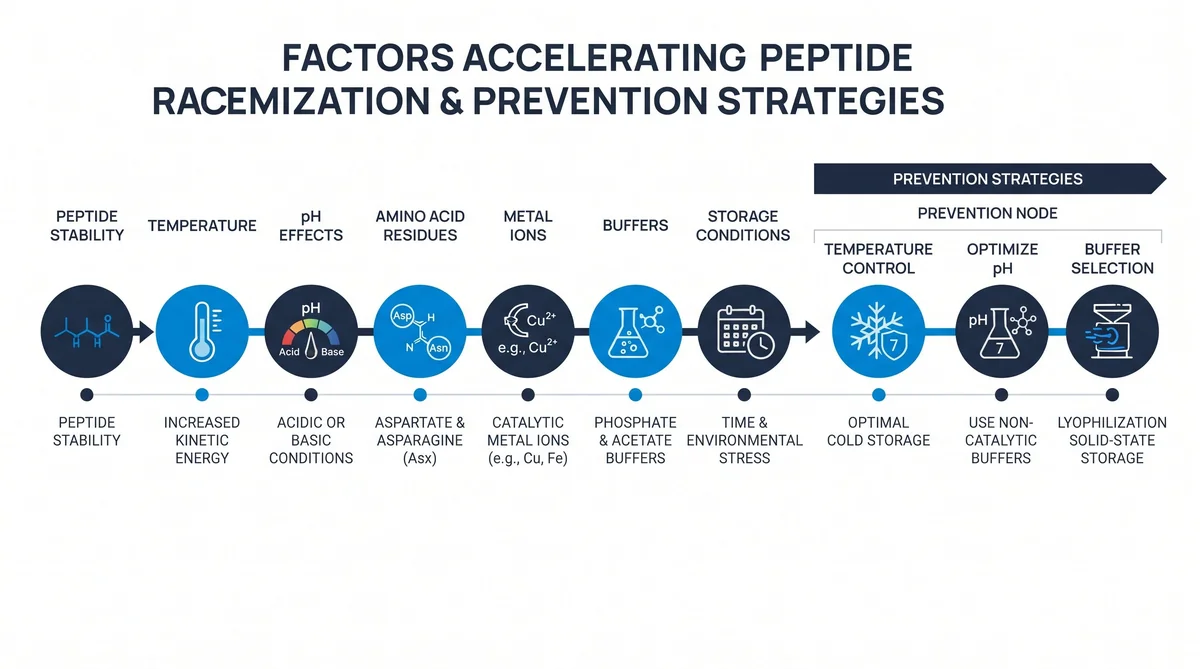
- Environmental Triggers: High heat and pH outside the 6 to 8 range speed up this process. These factors cause the alpha-hydrogen to lose its stable position.
- High-Risk Amino Acids: Aspartic acid and asparagine are the most prone to this shift. They often pass through a ring structure (cyclic succinimide) during the reaction.
- Impact on Experimental Data: This change lowers purity and reduces peptide activity in lab tests. It creates mixed results and limits the accuracy of findings.
- Maintaining Sample Quality: Low-temp storage and freeze-drying protect peptide structure. Chiral HPLC (a type of column test) spots unwanted mirror-image forms in samples.
The next sections show how lab markers check structural accuracy and purity. Researchers can use these tools to keep their data consistent across all study types.
What is Peptide Racemization and Stereoinversion?
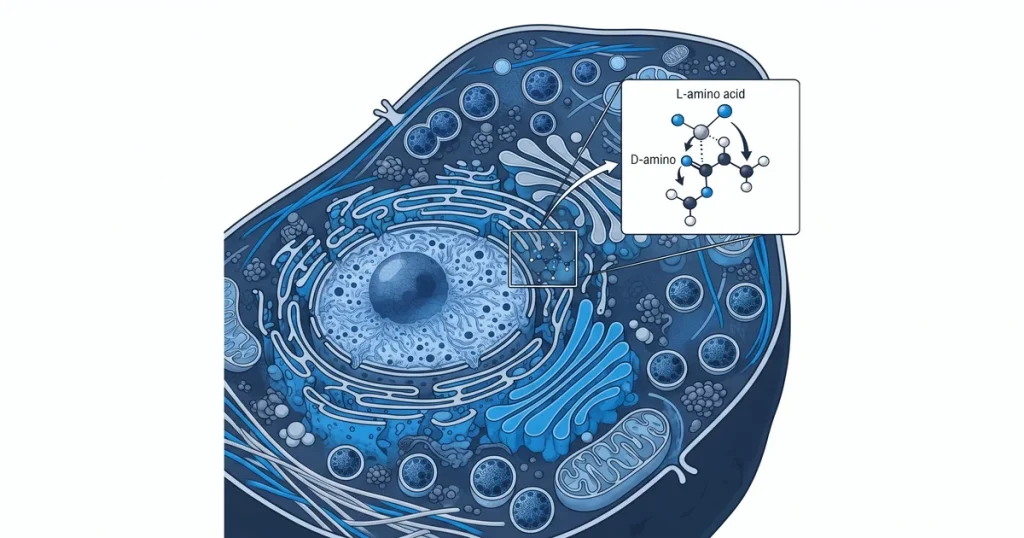
Peptide racemization is the change of a natural L-amino acid into its mirror-image D-amino acid. This shifts the layout of atoms at the chiral center (the point where two mirror forms exist). Lab systems need exact shapes to work.
So this flip breaks the peptide’s intended 3D form. The altered sequence often fails to bind to its target in a lab test.
Every amino acid (except glycine) has a chiral center that lets it exist as two mirror forms. Most lab processes rely on L-amino acids for proper function. If D-amino acids form during synthesis, the peptide can lose its target fit.
This loss happens because the receptor needs an exact shape match. Wrong shape stops the process. High-purity research compounds help reduce these risks.
What Triggers Amino Acid Racemization in Peptides?
Several factors drive this process in the lab. High heat, extreme pH, and certain chemicals trigger the loss of chiral purity. According to the Journal of Peptide Science (2012), these factors raise the chance of an amino acid flipping from its L-form to the D-form.
The process starts when the alpha-hydrogen is pulled away. This creates a flat, unstable state at the alpha-carbon. This step is the slowest part of the full reaction.
Once the molecule reaches this flat state, it can lose its specific shape. Keeping strict lab conditions limits these unwanted shifts during synthesis.
Which Amino Acids Are Most Prone to Racemization?
Aspartic acid (Asp) and asparagine (Asn) are the most likely to flip within a peptide chain. Serine (Ser) and phenylalanine (Phe) also carry higher risk. Asp and Asn form a stable ring structure (cyclic succinimide) that speeds up this process.
This ring shape flips easily under normal synthesis conditions. It lowers the purity of the final peptide chain. According to the Journal of Peptide Science (2012), this five-part ring remains a main cause of chiral impurity in many lab methods.
This pattern differs from bulky amino acids like valine. Large side chains block the chemicals needed to cause the flip. This keeps the alpha-carbon stable during the coupling step.
When working with sequences that contain Asp or Asn, chemists must adjust their methods. They aim to limit how long the reactive ring form exists. These changes are needed for keeping high chiral accuracy in complex lab work.
How Does Racemization Impact Peptide Research?
Racemization lowers peptide purity by creating unwanted D-amino acid forms. This leads to mixed lab results. The compound no longer matches the planned sequence.
When an amino acid loses its chiral center, the product often shows changed activity. Researchers see these gaps during batch testing.
The shift in shape creates problems for lab methods. A flipped peptide often fails to bind to its target receptor. This can cause off-target effects that cloud the data.
Methods like HPLC often reveal extra peaks that suggest lost purity. This kind of variation makes it hard to draw clear findings from cell tests or structure studies.
What Analytical Methods Detect Peptide Stereoinversion?
Lab methods that detect this flip use special chiral column tests. These tools let researchers measure D-amino acid levels by splitting L- and D-forms from a mixed sample. Chiral GC (gas chromatography) and chiral HPLC are the main tools for checking purity.
The split happens through a chiral column phase. In chiral HPLC, this phase reacts with each form based on its shape. This forces the forms to move through the column at different speeds.
For chiral GC, the same idea applies. But the sample often needs a chemical prep step first to boost its ability to become gas. According to Peptides (2012), these methods are key for proving a peptide keeps its planned shape.
Every vial arrives with a COA (certificate of analysis) and full lot tracking to support lab work.
How Can Racemization Be Minimized in the Lab?
Researchers reduce this risk by keeping peptides in a freeze-dried state and using cold storage. Water plays a key role in this flip. Removing it through freeze-drying stops the changes that lead to chiral shifts.
Scientists follow strict mixing steps and use the compound right away in a neutral pH buffer. According to Molecules (MDPI) (2020), keeping the peptide dry and under inert gas is the top method for long-term stability.
For extra safety, stocks should stay between -20 C and -80 C to slow reaction rates. Once in solution, high or low pH must be limited to avoid fast flipping. These steps help researchers keep the right shape for accurate test results.
Frequently Asked Questions
What causes amino acid stereoinversion in peptide racemization?
According to PubMed (2024), this topic draws strong research interest. The flip occurs when the alpha-hydrogen on an amino acid is pulled away. This creates a flat, unstable state at the alpha-carbon.
The chiral center can then rotate and form a mirror-image D-form instead of the natural L-form. According to Peptides (2012), base-driven reactions or reactive side chains often speed up this shift during synthesis.
Which amino acids are most prone to racemization?
Aspartic acid and asparagine flip the most. They form a five-part ring (cyclic succinimide) that speeds up the process under many conditions. Serine and phenylalanine also show higher rates than bulky amino acids like valine.
Researchers track these specific spots because their flexible structure raises the risk of chiral impurities during the peptide coupling step. This makes sequence design a key part of purity control.
What analytical methods detect D-amino acid formation in peptides?
Chiral column tests are the main method for finding D-amino acids in lab-made peptides. These include chiral HPLC and chiral GC. Both use special column phases to split L-forms from D-forms.
By measuring how long each form takes to pass through, these methods count the level of unwanted flipping. According to Molecules (2012), these strict steps are key for confirming peptide batch purity.
How does pH and temperature affect racemization rate?
Heat and pH levels directly affect the speed of the step that triggers this flip. Rates rise sharply as pH moves away from neutral. Higher temps also speed the reaction.
Keeping stable, cold conditions during synthesis and storage helps stop these shifts. According to Frontiers (2005), even small rises in heat can cause fast flipping in prone amino acids like aspartic acid.
What storage conditions minimize peptide racemization?
Freeze-drying (lyophilization) and storage under inert gas are the preferred methods to reduce this risk. Removing water stops the reactions that weaken the chiral center over time. A dry, stable state avoids the breakdown seen in liquid solutions.
Next Level Pharm provides products that stay stable at room temp. This helps keep the compound’s structure intact without cold chain shipping needs.
Does racemization affect all peptides equally?
No. The risk depends on the amino acid sequence and the local chemical setting. Chains with reactive residues like aspartic acid are more prone to chiral shifts.
Chains with stable amino acids resist them. Also, where a residue sits in the chain affects how easily its alpha-hydrogen can be pulled away. Each peptide shows a unique stability profile based on its specific makeup and structure.
Can racemization be reversed in a laboratory setting?
This process is generally one-way once the shift has occurred in a peptide chain. Some lab methods can separate the two forms. But they cannot turn the D-form back into the L-form within the same compound.
Preventing D-forms through smarter synthesis methods works better than trying to fix a flipped sequence. Quality control focuses on finding the problem early, not on reversing the shift.
What is the difference between racemization and degradation?
Racemization turns an amino acid into its mirror-image D-form without changing the compound’s makeup. Degradation breaks peptide bonds or changes side chains instead. It alters the compound’s sequence and molecular weight.
Both lower the purity of a sample. But they represent distinct types of structural failure. Each needs its own testing method for proper detection and tracking in the lab.
How does sequence position affect an amino acid’s racemization?
Where an amino acid sits in a chain affects its risk of flipping. Spots near the C-terminus (the chain end) are often more prone during synthesis. The carboxyl group there raises the alpha-hydrogen’s acidity.
Also, nearby amino acids can stabilize or weaken the chiral center through size or electronic effects. Researchers factor in these risks when planning synthesis for complex, high-purity peptides.
How does racemization impact the efficacy of peptide-based drugs?
This process changes a peptide’s 3D shape. This often stops it from binding to its target receptor in the lab. Receptor-ligand interactions need an exact fit.
So D-forms can reduce or block the desired activity of the compound. According to NIH (2013), high chiral purity is vital for accurate results. Even small shape shifts can hurt a peptide’s performance in a lab test.
Summary
Review your research needs and find the right peptide sequences for your lab study design. Check the purity standards for all materials you plan to use. Make sure each compound comes with a verified COA (certificate of analysis) for every lot.
If you have questions about compound stability or storage, contact the support team for guidance. They can help with proven methods for your study design.
Next Level Pharm provides research-grade materials to support lab teams that need reliable, consistent data. Researchers can explore the full catalog at Shop. Every vial ships with a COA and full lot tracking to back up your work.
What Should You Do Next?
Confirm that your study design specifies the peptide concentration, purity threshold, and membrane model system for each assay. Review the lot-specific Certificate of Analysis for each compound to verify purity meets the ≥99% standard.
Next Level Pharm stocks COA-verified research compounds for lab teams that need consistent purity across batches. Browse research peptides to source materials for your next study.
Browse recovery peptides for COA-verified research compounds.
Browse fitness peptides for COA-verified research compounds.
People Also Read
- Chiral Peptide Research: D-Amino Acid Stability Studies
- Peptide Dimerization Research: Intermolecular Studies
About the Author
Next Level Pharm Research Team
The Next Level Pharm research team is made up of biochemists and lab scientists. Their goal is to give researchers the highest-purity, COA-tested compounds on the market. Every batch is HPLC and mass spec confirmed before dispatch.
Disclaimer: The information provided on this page is for educational and research purposes only. Next Level Pharm’s products are intended for laboratory research use only. They are not intended for human consumption, diagnostic, therapeutic, or medicinal purposes. This content does not constitute medical advice. Always consult a licensed healthcare professional before making any health-related decisions.