
Peptide Research in Cardiac Cell Biology

Last updated: July 2026
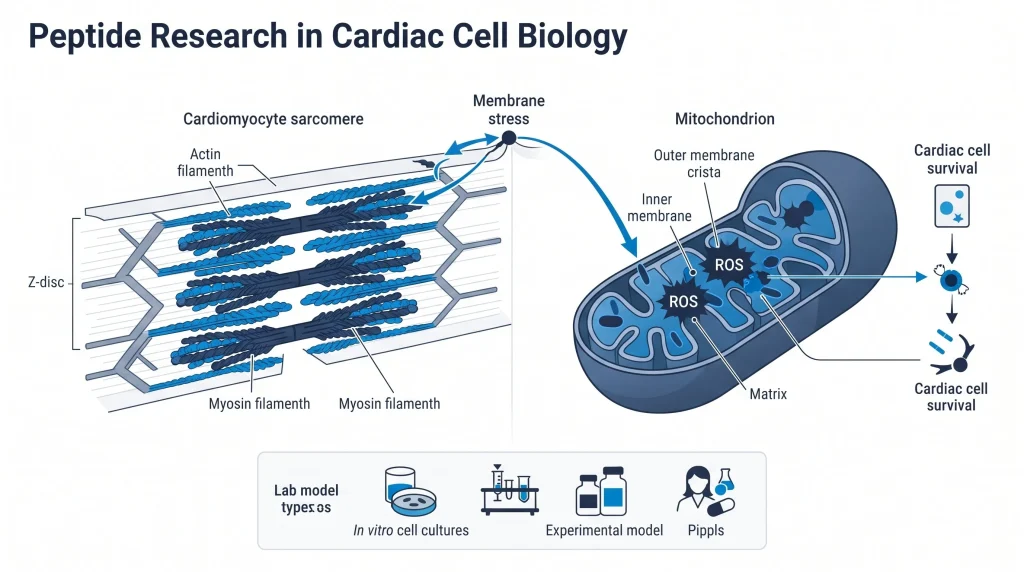
A peptide cardiac cell biology study is a controlled lab model that tests how small protein chains interact with heart muscle cells. These cells depend on their energy systems for function. Cardiac cells have very high energy needs. They rely on mitochondria for most of that energy. When mitochondria are damaged, cardiac cells produce more reactive oxygen species (ROS). High ROS levels lead to cell death in lab assays. Peptides like SS-31 and Humanin are studied for their roles in cardiac energy health. According to PubMed (2013), SS-31 reduces ROS output in cardiac cell models.
Next Level Pharm supplies research-grade cardiac peptides for lab use. Every vial is HPLC-tested and ships with a COA (certificate of analysis). Average purity across recent batches is 99.4%.
Cardiac cell biology research uses peptides to probe how the heart handles energy stress and oxidative load. Mitochondrial function and ROS control are the central themes. Each peptide targets a different part of this system, so labs can pick the right compound for their specific cardiac cell model.
Key Takeaways
- Energy System Is the Core Target: Cardiac cells depend on mitochondria for energy. Peptides that support energy function or lower ROS output are key tools in cardiac cell biology research.
- SS-31 and Cardiolipin: SS-31 (Szeto-Schiller 31) is a short peptide that binds cardiolipin, a key lipid in the inner energy membrane. It is studied for reducing ROS output and protecting cardiac cells in ROS stress models.
- Humanin as a Mitochondrial Peptide: Humanin is a peptide encoded in mtDNA. It is studied for blocking cell death in cardiac cell culture models under stress conditions.
- BPC-157 in Cardiac Tissue Research: BPC-157 is a 15-amino-acid peptide. It is studied in cardiac IR lab models for its effects on cytokine balance and cell survival.
- MOTS-c and Cardiac Metabolism: MOTS-c is a mtDNA-encoded peptide. It activates AMPK (AMP-activated protein kinase), a key metabolic sensor in cardiac cells. Labs study MOTS-c in cardiac energy stress models.
- COA-Verified Cardiac Peptides: All cardiac research peptides listed here are lyophilized and batch-tested. COA records link to each lot number for full lab traceability.
These six points define the research landscape covered in the sections below.
What Is Cardiac Cell Biology in Peptide Research?
Cardiac cell biology research uses cardiac cells in culture or animal models to study peptide effects. The main readouts are energy function, ROS output, ATP production, and cell survival. Cardiac cells are non-dividing cells, so once they are damaged, they cannot be replaced by normal cell division. This makes energy health a central concern in cardiac cell research.
Peptide cardiac cell biology studies use three main model types. In vitro models use isolated cardiac cells in culture dishes. Ex vivo models use whole heart tissue outside the body. In vivo models use rodent heart studies. Each model type gives different resolution on how a peptide changes cardiac cell function under controlled conditions.
How Does SS-31 Target Cardiac Mitochondria?
SS-31 (Szeto-Schiller peptide 31, also called elamipretide) is a short synthetic peptide. Its positive charge draws it to the inner energy membrane. There, it binds cardiolipin, a lipid that is key to maintaining the structure of the inner membrane. When cardiolipin is damaged, the ETC (ETC) breaks down and ROS rises.
SS-31 stabilizes cardiolipin and supports ETC function. This lowers ROS output and helps cardiac cells maintain ATP production under ROS stress. According to PubMed (2013), SS-31 reduces ROS output and supports energy function in cardiac cell models. Browse SS-31 research vials for COA-verified lab supply.
What Is Humanin’s Role in Cardiac Cell Models?
Humanin is a 21-amino-acid peptide encoded within the 16S rRNA region of mtDNA. It was found to block cell death in neurons and has since been studied in cardiac cell models. Humanin works through several paths. It binds the IGFBP3 receptor and blocks a signaling chain that leads to cell death. It also binds the BimEL protein, which directly triggers mitochondrial cell death pathways.
In cardiac cell models, Humanin is tested under low-oxygen (IR) conditions and ROS stress conditions. Labs measure cell survival rates, caspase activity (a marker of cell death), and energy membrane potential. According to PubMed (2014), Humanin reduces cell death in cardiac cell models under stress conditions. Browse Humanin research vials for batch-tested supply.
How Is BPC-157 Studied in Cardiac Tissue?
BPC-157 (body protection compound-157) is a 15-amino-acid peptide. In cardiac research, it is studied in IR models. In IR models, blood flow is cut off and then restored. Blood flow returns creates a burst of ROS. It also triggers cytokine release in cardiac tissue. BPC-157 is tested to see if it lowers cytokine output. It is also tested for cell survival support during IR.
BPC-157 also affects nitric oxide (NO) output. NO plays a key role in blood vessel function in cardiac tissue. Labs study BPC-157 in cardiac NO pathway assays alongside cytokine assays. According to PubMed (2019), BPC-157 affects cytokine balance in tissue stress models. Browse BPC-157 research vials for lyophilized, COA-verified supply.
Research labs can shop research peptides for batch-tested, HPLC-verified cardiac peptide supply.
What Role Does MOTS-c Play in Cardiac Research?
MOTS-c (mtDNA-encoded sequence) is a small peptide encoded in mtDNA. It activates AMPK (AMP-activated protein kinase). AMPK is a metabolic sensor that turns on energy-saving pathways when the cell is under energy stress. AMPK activation promotes glucose uptake and lowers fat synthesis. This helps cardiac cells hold energy balance under stress.
Labs study MOTS-c in cardiac energy stress models. Readouts include AMPK activation, glucose uptake rate, and energy membrane potential. MOTS-c is also studied for its role in reducing ROS stress in cardiac cell cultures. Browse MOTS-c research vials at Next Level Pharm for COA-verified supply.
How Do Cardiac Research Peptides Compare?
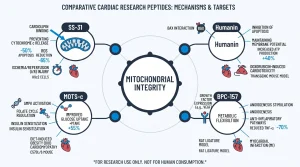
Labs choose cardiac peptides based on the specific biology they want to study. Mitochondrial ROS control, cell death block, and metabolic support are distinct research targets.
| Peptide | Mechanism | Key Target | Main Lab Model |
| SS-31 | Cardiolipin binding | ROS output, ETC function | Cardiomyocyte culture |
| Humanin | Apoptosis block | Caspase, BimEL | Ischemia stress models |
| BPC-157 | Cytokine and NO balance | IL-6, TNF-alpha | Ischemia-reperfusion models |
| MOTS-c | AMPK activation | Glucose uptake, energy balance | Cardiac energy stress assays |
Combining SS-31 with Humanin lets labs study both ROS control and cell death block in the same cardiac model. This gives a fuller view of how mitochondrial stress and cell death interact in cardiac cell assays.
Frequently Asked Questions
What is peptide cardiac cell biology research?
Peptide cardiac cell biology research uses lab models to study how small protein chains interact with heart muscle cells (cardiac cells). Labs track energy function, ROS output, cell death rates, and ATP production. Common models include isolated cardiac cell cultures, ex vivo heart tissue, and rodent cardiac assays. SS-31, Humanin, BPC-157, and MOTS-c are among the most studied compounds. All research is conducted for lab use only in preclinical settings.
What are cardiac cells and why are they used in peptide research?
Cardiac cells are heart muscle cells. They make up the bulk of heart tissue and are responsible for its pumping function. Unlike most cells, cardiac cells do not divide after birth, so they cannot regenerate after damage. Studying how peptides protect cardiac cells is important. Labs use isolated cardiac cells in culture dishes or whole heart tissue to test how peptides change energy function and cell survival under stress conditions.
What is SS-31 and how does it target cardiac mitochondria?
SS-31 is a short synthetic peptide that binds cardiolipin, a phospholipid in the inner energy membrane. Cardiolipin is needed for the ETC to work. When cardiolipin is damaged, ROS production rises and ATP output falls. SS-31 stabilizes cardiolipin and supports ETC function. According to PubMed (2013), SS-31 reduces ROS output in cardiac cell models. Labs use it in ROS stress and ischemia assays.
What is Humanin and how does it protect cardiac cells?
Humanin is a 21-amino-acid peptide encoded in mtDNA. In cardiac cell models, it blocks cell death by binding the IGFBP3 receptor and the BimEL protein, both of which trigger mitochondrial cell death paths. Labs test Humanin in ischemia and ROS stress models. Readouts include caspase activity and cell survival rate. According to PubMed (2014), Humanin reduces cell death in cardiac cell models under stress conditions.
How is BPC-157 used in cardiac research?
BPC-157 is a 15-amino-acid peptide studied in IR cardiac models. Ischemia-reperfusion is when blood flow is cut and then restored. This creates a burst of ROS and cytokine release in cardiac tissue. BPC-157 is tested for its effects on cytokine balance and nitric oxide output during reperfusion. According to PubMed (2019), BPC-157 affects cytokine balance in tissue stress models. Labs track cytokine levels and cell survival as key readouts.
What is MOTS-c and how is it studied in cardiac models?
MOTS-c is a small peptide encoded in mtDNA. It activates AMPK (AMP-activated protein kinase), a metabolic sensor that turns on energy-saving paths when a cell is under stress. In cardiac cells, AMPK activation promotes glucose uptake and lowers fatty acid synthesis. This helps cardiac cells maintain energy balance. Labs study MOTS-c in cardiac energy stress assays and measure AMPK activation, glucose uptake, and energy membrane potential.
What is ROS and why do cardiac labs measure it?
ROS (reactive oxygen species) are unstable molecules produced by mitochondria. Low ROS levels are normal. High ROS levels damage proteins, lipids, and DNA in cardiac cells. In cardiac cell biology research, ROS measurement shows how much ROS stress a cell is under. Labs measure ROS using fluorescent dyes that change color in the presence of reactive oxygen molecules. When a peptide lowers ROS output, it suggests the peptide supports energy function in cardiac cells.
What is cardiolipin and why does SS-31 target it?
Cardiolipin is a lipid found only in the inner energy membrane. It is needed for the ETC to function. The ETC is the main source of ATP in cardiac cells. When cardiolipin is damaged by ROS stress, ETC efficiency drops and ROS output rises. SS-31 binds cardiolipin and stabilizes it under stress. This makes cardiolipin a key target in cardiac mitochondrial peptide research, and SS-31 a useful tool in ROS stress assays.
Can SS-31 and Humanin be studied together in a cardiac model?
Combining SS-31 and Humanin in one cardiac model lets labs study both ROS control (SS-31) and cell death block (Humanin) at the same time. These two peptides target different points in the cardiac cell stress response. SS-31 acts at the energy membrane. Humanin acts at the cell death signaling path. Together, they give a fuller picture of how cardiac cells respond to ROS and low-oxygen stress in preclinical assays.
What purity standards matter for cardiac cell peptide research?
Cardiac cell research requires high purity because cardiac cell cultures are sensitive to impurities. Residual synthesis byproducts or endotoxins (bacterial toxins) can trigger cytokine responses or cell death in cardiac cell cultures. This would confound results. Labs need peptide purity of 99% or higher. HPLC testing confirms purity grade. Mass spectrometry confirms molecular identity. A COA links lot numbers to these results for each batch used in cardiac cell assays.
Summary
Peptide cardiac cell biology research tests how small protein chains interact with heart muscle cells and their energy systems. SS-31 binds cardiolipin to lower ROS output in cardiac mitochondria. Humanin blocks cell death in cardiac cells under ischemia and ROS stress. BPC-157 adjusts cytokine balance in IR models. MOTS-c activates AMPK to support cardiac energy balance in metabolic stress assays.
Each compound targets a distinct part of cardiac cell biology. Labs often combine mitochondrial-support peptides with cell death-blocking peptides to study how energy stress and cell death interact.
What Should You Do Next?
Researchers should define whether the cardiac model targets ROS, cell-death signaling, cytokines, or cellular energy. Select the peptide and controls that isolate the chosen pathway. Confirm HPLC purity, mass spec identity, and the lot number on the COA before each run. Researchers sourcing these lab peptides can shop research peptides with full COA and lot traceability.
People Also Read
- SS-31 Research Peptide: Cardiac Mitochondrial Studies
- Humanin Research Peptide: Mitochondrial Apoptosis Models
About the Author
Next Level Pharm Research Team
Alex M covers peer-reviewed findings in peptide science for Next Level Pharm, a US-based supplier of research-grade peptides verified to ≥99% purity via HPLC and mass spectrometry on every batch.
Disclaimer: For research purposes only. Not intended for human consumption. Next Level Pharm products are not intended for diagnostic, therapeutic, or medicinal use. This content does not constitute medical advice. Always consult a licensed healthcare professional before making any health-related decisions.