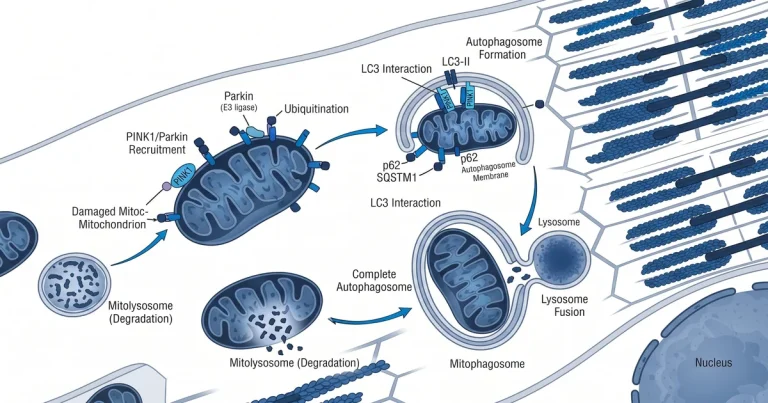
Mitophagy Research and Mitochondrial-Targeting Peptides
Research overview: Mitophagy Research and Mitochondrial-Targeting Peptides. COA-verified peptides for lab use. HPLC + mass spec verified. Next Level Pharm.
Research overview: Mitophagy Research and Mitochondrial-Targeting Peptides. COA-verified peptides for lab use. HPLC + mass spec verified. Next Level Pharm.
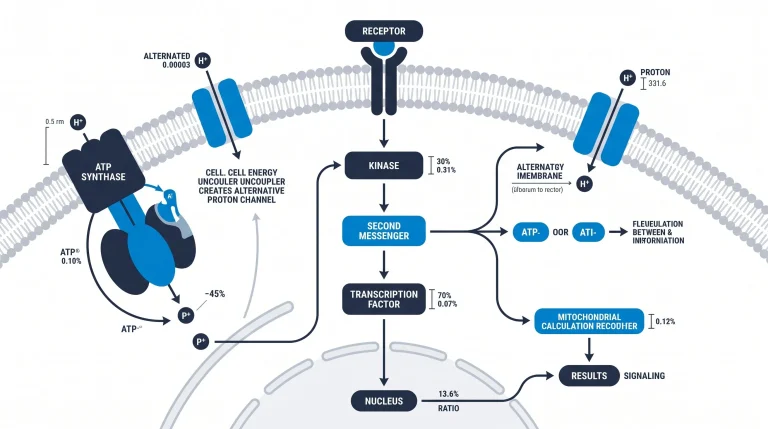
BAM15 is a mitochondrial uncoupler that works by separating fuel oxidation from the process of adenosine triphosphate (ATP) synthesis.
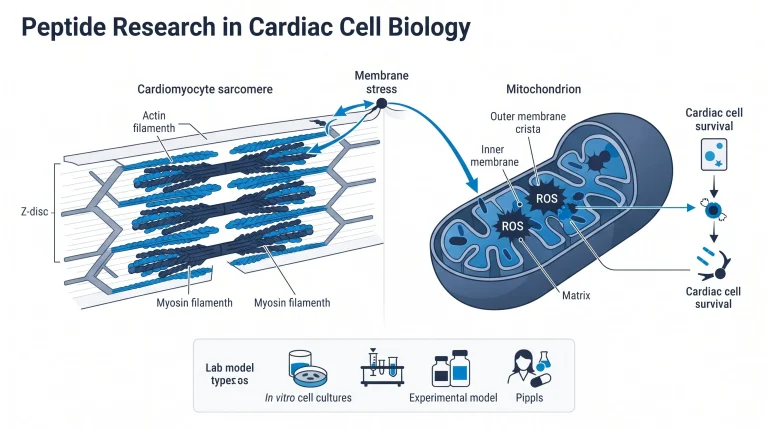
Peptide cardiac cell biology research studies how SS-31, Humanin, BPC-157, and MOTS-c affect cardiac mitochondria and cell survival in lab models.
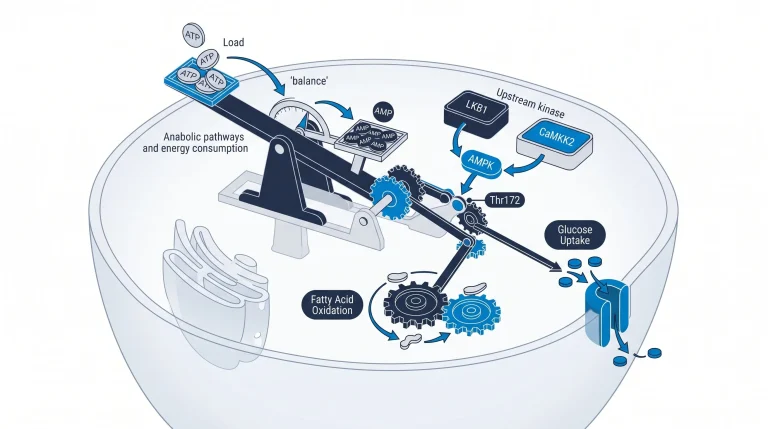
AMPK pathway peptide research maps how cells sense low energy and shift metabolism. Studies show AICAR and related compounds trigger AMPK in lab models.
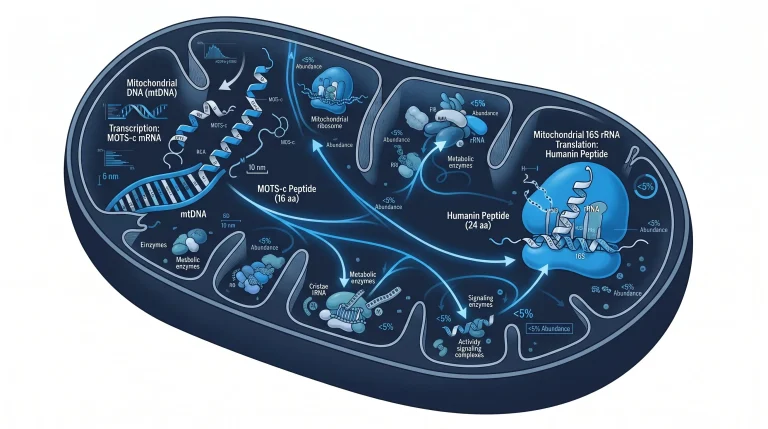
MOTS-c vs humanin research compares two mitochondrial peptides. MOTS-c targets AMPK. Humanin targets gp130 and STAT3. Both COA-verified for labs.
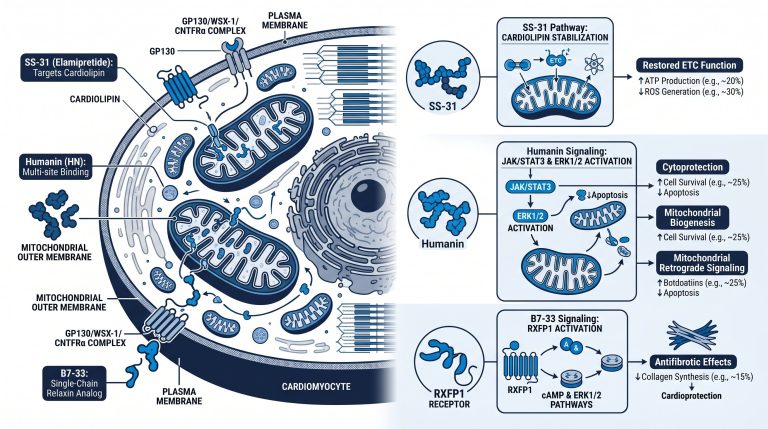
Last updated: June 2026 A cardiac peptide research compound is a short amino acid sequence studied in cardiac and mito cell models. Researchers examine how these peptides interact with organelle membranes, apoptotic proteins, and receptor pathways. SS-31, Humanin, and B7-33 are three distinct compounds used in cell culture studies of cardiac biology. Each targets a […]

A research overview of SS-31, MOTS-c, and Humanin: three mitochondrial peptides with distinct targets studied in cell and animal models.
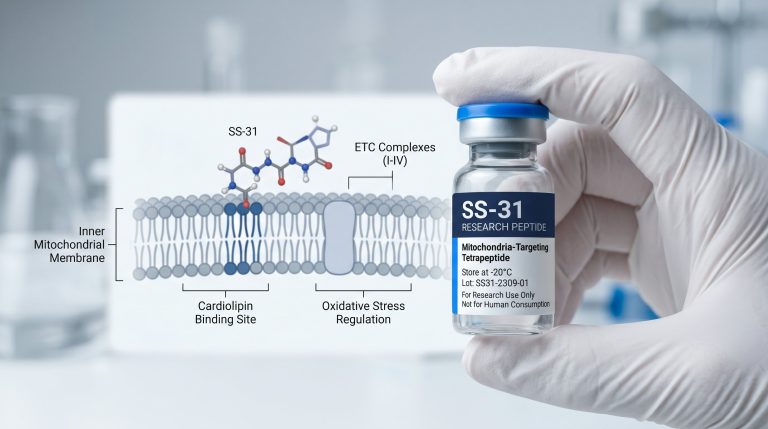
SS-31 peptide research explained: cardiolipin binding, mitochondrial ROS reduction, ischemia-reperfusion and aging models, and sourcing standards for labs.
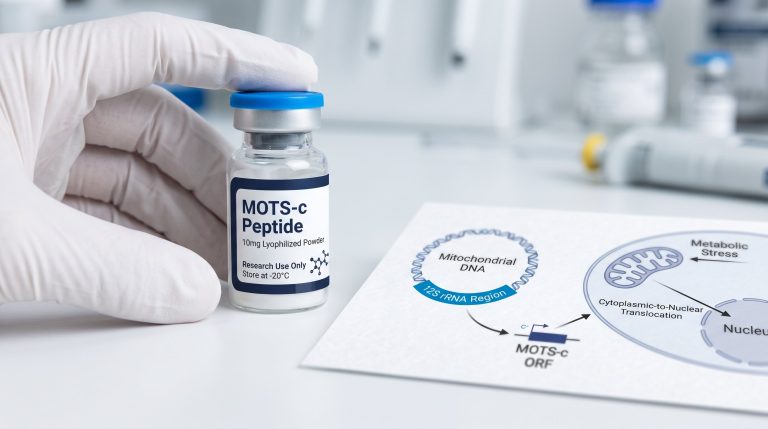
MOTS-c research explained: mitochondrial peptide structure, AMPK activation, metabolic homeostasis findings, aging model data, and sourcing standards.