Peptides in Immune Modulation Research
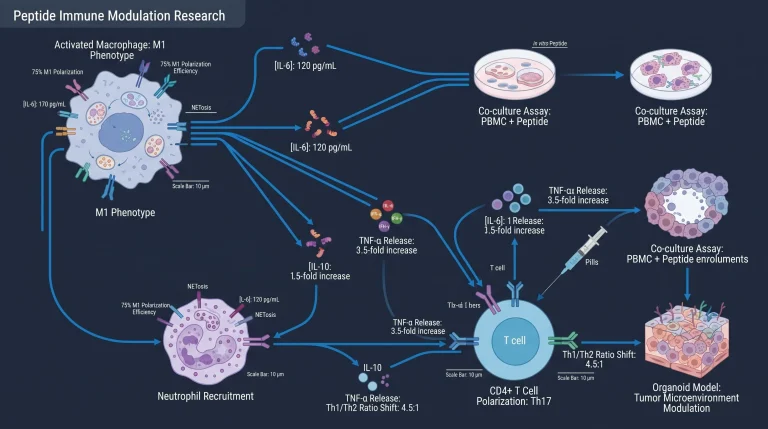
Peptide immune modulation research studies how KPV, BPC-157, and Epithalon change cytokine output and T-cell activity in preclinical lab models.
Read more
Peptide immune modulation research studies how KPV, BPC-157, and Epithalon change cytokine output and T-cell activity in preclinical lab models.
Read more
Liraglutide vs semaglutide: C16 vs C18 chain differences, GLP-1R binding, half-life data in animal models, and COA documentation for research lots.
Read more
Peptide neurogenesis research studies how Semax, PE-22-28, and NAD+ affect BDNF expression and hippocampal neuron formation in preclinical lab models.
Read more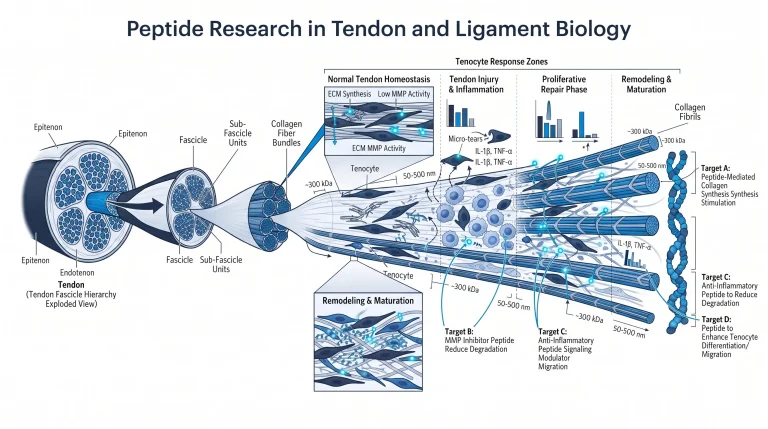
Peptide tendon repair research maps how BPC-157 and TB-500 affect collagen synthesis and tenocyte migration in lab models. COA-verified peptides for labs.
Read more
Semaglutide discovery: GLP-1 research history, Aib at position 8 for DPP-4 resistance, and C18 diacid chain for albumin binding in animal models.
Read more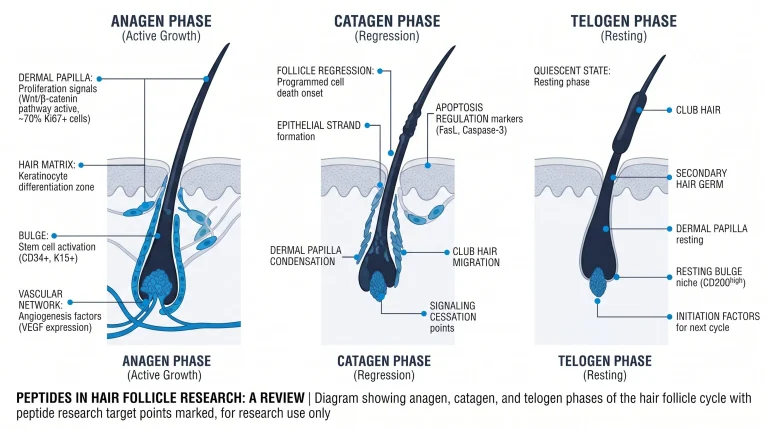
Peptide hair follicle research maps how compounds like GHK-Cu affect the anagen phase and follicle stem cell activity in lab models. COA-verified for labs.
Read more
Semaglutide structure and sequence: Aib at position 8, C18 diacid chain at position 26, GLP-1R binding mechanism, and COA data for research lots.
Read more
Selank reference material: what this 7-AA synthetic peptide is, how HPLC purity standards work, and what a Selank COA should include for research.
Read more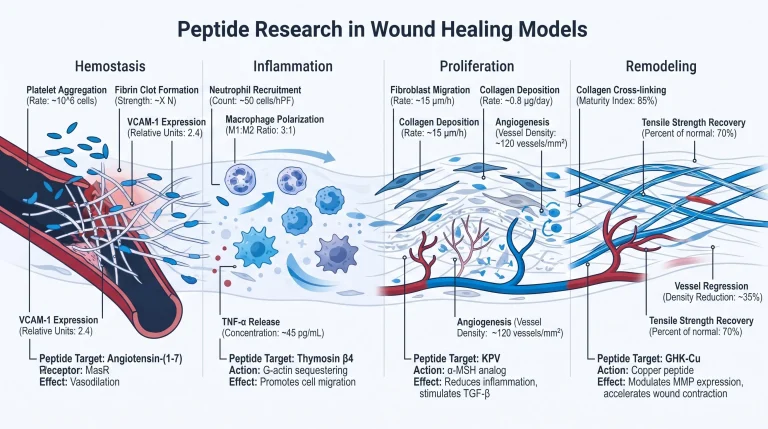
Last updated: July 2026 A peptide wound healing research model is a lab system that tests how small protein chains affect tissue repair pathways. Wounds move through four overlapping stages: hemostasis, swelling, cell growth, and tissue remodeling. Researchers study peptides that act at each stage. BPC-157, TB-500, GHK-Cu, and KPV are four compounds studied in […]
Read more
Ion fragmentation in mass spectrometry: what b ions and y ions are, how CID works, and what MS/MS data confirms about research peptide sequence identity.
Read more