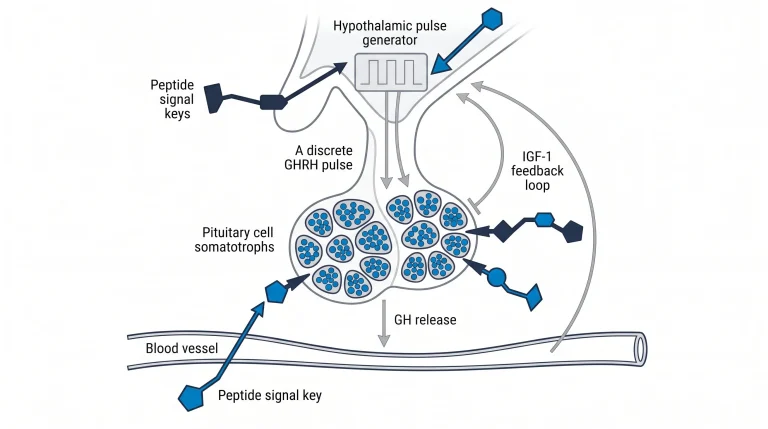
Peptides and the Hypothalamic-Pituitary Axis
HPA axis peptide research covers GHRH analogs and GH secretagogues. Studies map how the hypothalamus and pituitary control GH pulse output in lab models.
Read more
HPA axis peptide research covers GHRH analogs and GH secretagogues. Studies map how the hypothalamus and pituitary control GH pulse output in lab models.
Read more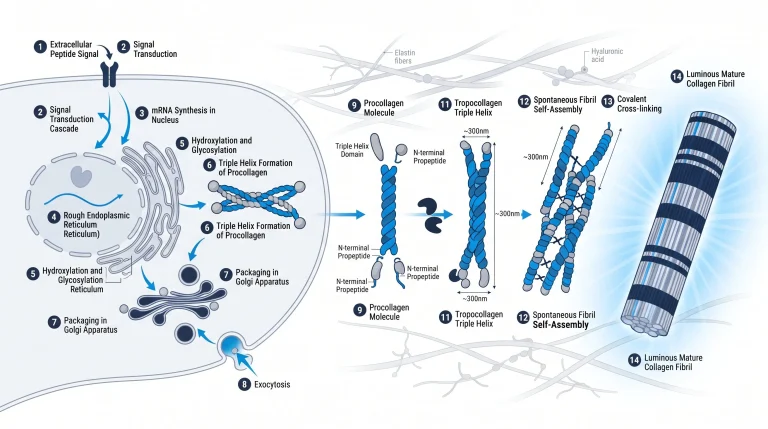
Collagen peptide synthesis research maps how peptides signal fibroblasts. Studies on GHK-Cu show effects on COL1A1 gene expression in lab models.
Read more
Peptide endotoxin testing with the LAL assay: what EU/mg limits mean, how LPS contamination causes false cell results, and what COA data to request.
Read more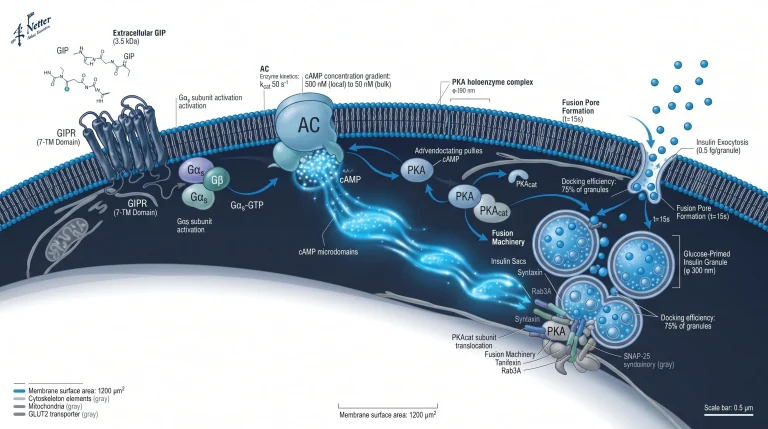
GIP receptor peptide research maps how this class B GPCR triggers glucose-dependent insulin signaling. Studies examine dual agonists in lab models.
Read more
Peptide reference standards: what USP CRMs are, how HPLC calibration uses them, and why certified purity traceability matters in research.
Read more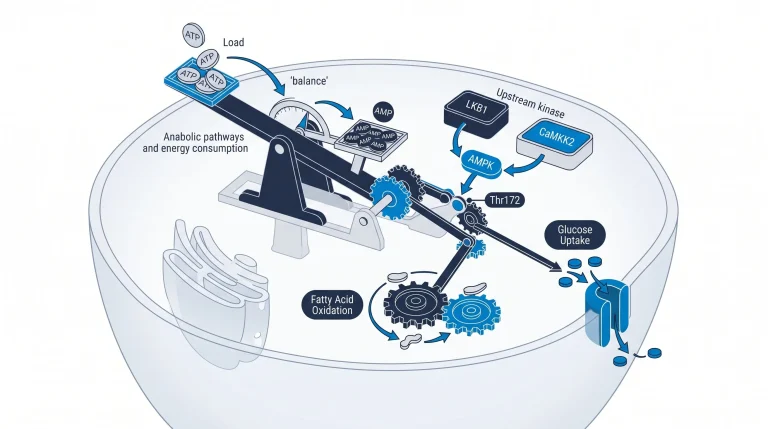
AMPK pathway peptide research maps how cells sense low energy and shift metabolism. Studies show AICAR and related compounds trigger AMPK in lab models.
Read more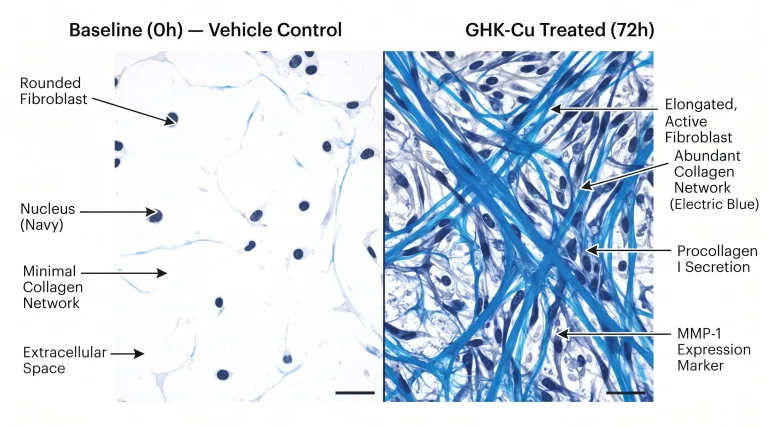
GHK-Cu skin research: collagen synthesis, fibronectin, and keratinocyte gene markers in cell and animal models. No human outcomes are claimed.
Read more
Blood-brain barrier peptide research maps how peptides enter the CNS. Studies on Semax and Selank show these cross via active transport in lab models.
Read more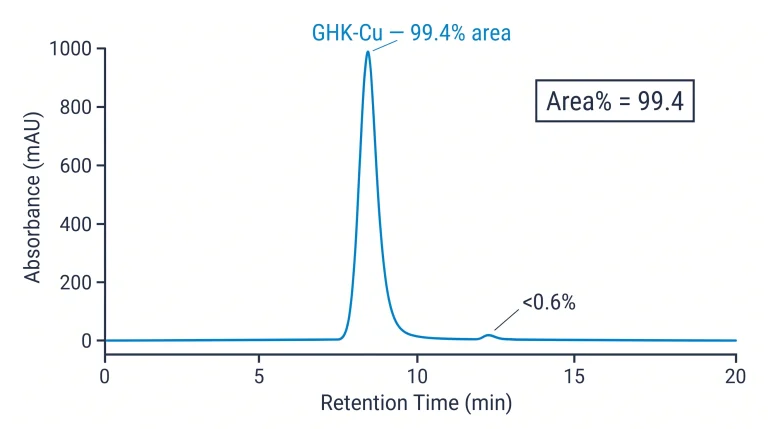
How to read a GHK-Cu COA: what HPLC peak area, mass spec molecular weight, and lot number data mean for research-grade copper peptide.
Read more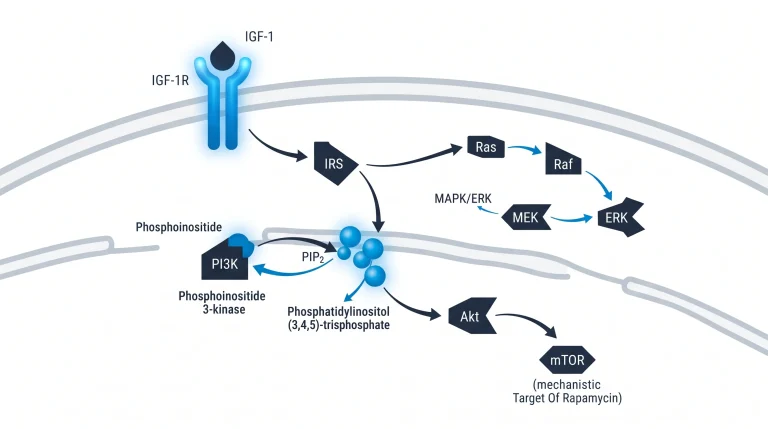
IGF-1 pathway research maps PI3K, Akt, and mTOR signaling. Studies show this cascade regulates cell growth, protein production, and survival in lab models.
Read more