
Peptides in Immune Modulation Research

Last updated: July 2026
A peptide immune modulation research study is a controlled lab model that tests how small protein chains change immune cell behavior. Immune cells include T cells, macrophages, and natural killer (NK) cells. Peptides can raise or lower cytokine output in cell culture or tissue assays. KPV, BPC-157, and Epithalon are among the most studied compounds in this area. Labs use these peptides in cytokine assays and cell migration studies. According to PubMed (2015), KPV lowers cytokine output in macrophage cell cultures.
Next Level Pharm supplies research-grade immune peptides for lab use. Every vial is HPLC-tested and ships with a COA (certificate of analysis). Average purity across recent batches is 99.4%.
Immune research tracks how peptides change cytokine balance in controlled lab settings. Cytokines are small proteins that control immune cell action. When labs study peptide effects on cytokines, they learn how immune signals are routed. Each compound acts through a different path, so knowing those distinctions helps researchers pick the right model.
Key Takeaways
- Cytokines Are the Key Readout: Cytokines (small proteins that control immune cell behavior) are the main readout in immune peptide research. Labs measure cytokine output to track peptide effects.
- KPV as an Anti-Inflammatory Tool: KPV (Lys-Pro-Val) is a tripeptide fragment of alpha-MSH (alpha-melanocyte stimulating hormone). It blocks NF-kB signals and lowers pro-inflammatory cytokines in macrophage models.
- BPC-157 and Cytokine Balance: BPC-157 is a 15-amino-acid peptide. It is studied for its role in adjusting cytokine balance in mucosal and systemic lab models.
- Epithalon and Thymic Function: Epithalon is a synthetic tetrapeptide (Ala-Glu-Asp-Gly). It is studied for effects on thymic output and T-cell count in aging cell models.
- TB-500 and Immune Cell Movement: TB-500 (thymosin beta-4 analog) is studied for how it affects immune cell migration in tissue repair lab assays.
- COA-Verified Immune Peptides: All immune research peptides listed here are lyophilized and batch-tested. COA records link to each lot number for full lab traceability.
These six points outline the research areas covered below.
What Is Immune Modulation in Peptide Research?
Immune modulation means changing how the immune system responds. In peptide research, labs study whether specific peptides raise or lower cytokine levels, T-cell count, or macrophage activity in controlled models. The main readouts are cytokine profiles and immune cell count assays. Researchers use these tools to map which signal paths a peptide targets.
Labs work with cell culture models, animal tissue, and whole-body preclinical models. Cell cultures allow precise peptide dosing and direct cytokine measurement. Animal models add whole-system context. Together, these approaches give a clear picture of how a peptide interacts with immune signal paths.
How Does KPV Act on Immune Cells in Lab Models?
KPV (Lys-Pro-Val) is a tripeptide from the C-terminal end of alpha-MSH. Alpha-MSH is a hormone linked to skin color and immune control. KPV is the fragment thought to carry most of alpha-MSH’s anti-inflammatory action. In macrophage cell cultures, KPV blocks NF-kB signals. NF-kB (nuclear factor kappa-B) is the main path that controls pro-inflammatory cytokine output.
When NF-kB is blocked, macrophages produce less IL-6, TNF-alpha, and IL-1beta. These are cytokines most linked to excess immune response in cell models. According to PubMed (2015), KPV lowers cytokine output in gut epithelial cell models. Browse KPV research vials for COA-verified lab supply.
What Role Does BPC-157 Play in Immune Research?
BPC-157 (body protection compound-157) is a 15-amino-acid peptide first found in gastric juice. In lab models, BPC-157 adjusts cytokine balance in both mucosal and systemic tissue. It is studied for its effects on IL-6, TNF-alpha, and other cytokines in injury and repair models.
BPC-157 also affects nitric oxide (NO) output. NO is a molecule produced by immune cells to signal tissue damage. Labs study BPC-157 to see how it changes NO output and cytokine balance in tissue repair assays. According to PubMed (2019), BPC-157 adjusts cytokine output in mucosal tissue models. Browse BPC-157 research vials for batch-tested supply.
How Is Epithalon Studied for Immune Cell Function?
Epithalon (Ala-Glu-Asp-Gly) is a synthetic tetrapeptide based on the thymic peptide epithalamin. It is studied for effects on the thymus and T-cell output. The thymus is the organ where T cells mature. In aging models, thymic output falls over time. Epithalon is tested to see whether it restores thymic activity in aged tissue models.
Epithalon also affects telomerase activity. Telomerase is the enzyme that lengthens telomeres at chromosome ends. Longer telomeres link to slower cell aging in lab models. Labs study Epithalon in immune aging assays where T-cell count and thymic output are the key readouts. According to PubMed (2014), Epithalon affects T-cell output in aged immune cell models. Browse Epithalon research vials for COA-verified supply.
What Is TB-500’s Role in Immune Lab Studies?
TB-500 is a synthetic analog of thymosin beta-4 (TB4). TB4 is a natural peptide found in high amounts in immune cells, platelets, and wound fluid. In lab models, TB-500 promotes the movement of macrophages and monocytes toward tissue sites. This movement is called chemotaxis. Labs study TB-500’s effects on chemotaxis to understand how it changes immune cell recruitment in tissue repair models.
TB-500 also binds actin, the protein that forms the cell skeleton. When actin is changed, immune cells move and attach to tissue more freely. This makes TB-500 useful in wound healing and migration assays. Labs often study it alongside cytokine-blocking peptides to see how cell movement and cytokine output interact. Browse TB-500 research vials at Next Level Pharm for COA-verified supply.
Research labs can shop research peptides for batch-tested, HPLC-verified immune peptide supply.
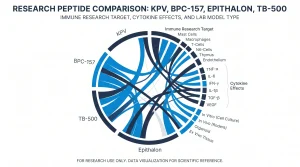
How Do Immune Research Peptides Compare in Labs?
Labs choose immune peptides based on the specific path they want to study. Cytokine suppression, immune cell movement, and thymic function are distinct research targets.
| Peptide | Mechanism | Key Target | Main Lab Model |
| KPV | NF-kB block | IL-6, TNF-alpha | Macrophage cell culture |
| BPC-157 | Cytokine and NO balance | IL-6, TNF-alpha | Mucosal tissue models |
| Epithalon | Thymic peptide | T-cell output | Aging cell models |
| TB-500 | Actin and chemotaxis | Immune cell migration | Wound healing assays |
Combining KPV with BPC-157 lets labs study both NF-kB block and cytokine balance in the same model. This gives a wider view of how immune signals interact during a research run.
Frequently Asked Questions
What is peptide immune modulation research?
Peptide immune modulation research uses lab models to study how small protein chains change immune cell behavior. Labs track cytokine output, T-cell count, macrophage action, and immune cell migration. Common models include macrophage cell cultures, gut epithelial cells, and rodent tissue assays. KPV, BPC-157, Epithalon, and TB-500 are among the most studied compounds in this field. All research is conducted for lab use only in preclinical settings.
What is a cytokine and why do labs measure it?
A cytokine is a small protein released by immune cells to control how other immune cells respond. Key cytokines include IL-6, TNF-alpha, and IL-1beta. High cytokine levels in lab models signal an active immune response. By measuring cytokine output after peptide addition, labs can see how a peptide changes immune response strength. The direction and scale of that change show up in the data. This makes cytokines the main readout in immune peptide assays.
How does KPV reduce immune signals in lab models?
KPV blocks NF-kB signals in macrophages. NF-kB is the path that controls pro-inflammatory cytokine output, including IL-6, TNF-alpha, and IL-1beta. When KPV blocks NF-kB, macrophages produce fewer of these cytokines. According to PubMed (2015), KPV lowers cytokine output in gut epithelial cell models. This makes KPV a useful tool for studying NF-kB-driven immune signals in controlled lab settings.
What is BPC-157 and how is it used in immune research?
BPC-157 is a 15-amino-acid peptide found in gastric juice. In lab models, it is studied for its ability to adjust cytokine balance and nitric oxide output in mucosal and systemic tissue. Labs apply it to cell cultures and animal tissue to track IL-6 and TNF-alpha changes. BPC-157 is also tested in tissue repair models where cytokine balance is a key variable. According to PubMed (2019), BPC-157 adjusts cytokine output in mucosal models.
What is Epithalon and how does it affect thymic function?
Epithalon is a synthetic tetrapeptide (Ala-Glu-Asp-Gly) based on the thymic peptide epithalamin. It is studied for effects on thymic output, T-cell production, and telomerase activity in aging lab models. The thymus shrinks with age in rodent and cell models. Labs study Epithalon to see if it restores thymic output in aged tissue. Epithalon also affects telomerase, the enzyme that lengthens chromosome ends. Labs use it in immune aging assays alongside other bioregulator peptides.
What is TB-500 and what does it do in immune models?
TB-500 is a synthetic analog of thymosin beta-4, a natural peptide in immune cells and wound fluid. In lab models, TB-500 promotes immune cell movement (chemotaxis) toward tissue sites. It does this by binding actin, the protein that forms the cell skeleton. When actin is changed, immune cells move and attach more freely. Labs study TB-500 in wound healing and migration assays to understand how it controls immune cell recruitment in tissue repair models.
How do labs measure peptide effects on immune cells?
Labs use several methods to measure peptide effects on immune cells. ELISA (enzyme-linked immunosorbent assay) measures cytokine levels in cell culture media. Flow cytometry counts and classifies immune cell types. Migration assays track how immune cells move in response to a peptide. PCR (polymerase chain reaction) measures how a peptide changes immune gene output. Each method gives different data on peptide-immune cell interaction in controlled preclinical settings.
Can KPV and BPC-157 be studied in the same model?
Combining KPV and BPC-157 in one model lets labs study NF-kB block (KPV) and broader cytokine balance (BPC-157) at the same time. This dual approach gives a fuller picture of immune signal changes during a peptide run. Labs can compare how each compound changes cytokine output and whether the combined effect is additive. Multi-compound designs are common in mucosal immune research where multiple cytokine paths are active.
What purity level matters for immune research peptides?
Purity matters because impurities (residual solvents or synthesis byproducts) can trigger false cytokine signals in cell cultures. A contaminated peptide may cause macrophages to respond to the impurity rather than the peptide. For immune assays, researchers need peptides at 99% purity or higher to isolate the peptide’s true effect. HPLC testing confirms purity grade. Mass spectrometry confirms molecular identity. A COA links lot numbers to these results for each batch.
What is NF-kB and why is it studied in peptide research?
NF-kB (nuclear factor kappa-B) is a protein complex that acts as a switch for immune gene output. When NF-kB is active, immune cells produce pro-inflammatory cytokines like IL-6 and TNF-alpha. Peptides like KPV are studied for their ability to block NF-kB and lower cytokine output. Labs measure NF-kB activity using reporter gene assays and western blot analysis. This makes NF-kB one of the most useful readouts in immune peptide research.
Summary
Peptide immune modulation research tests how small protein chains change immune cell behavior in controlled lab models. KPV blocks NF-kB to lower cytokine output in macrophage cultures. BPC-157 adjusts cytokine balance in mucosal and systemic tissue. Epithalon is studied for thymic function and T-cell output in aging models. TB-500 promotes immune cell migration in tissue repair assays.
Each compound targets a distinct immune path. Labs often combine cytokine-blocking peptides with immune cell migration compounds to study how different immune signals interact in preclinical models.
What Should You Do Next?
Researchers should map whether the immune model targets cytokine output, T-cell signaling, or immune-cell movement. Select the peptide and controls that isolate that pathway. Confirm HPLC purity, mass spec identity, and the lot number on the COA before each run. Researchers sourcing these lab peptides can shop research peptides with full COA and lot traceability.
People Also Read
- KPV Research Peptide: Anti-Inflammatory Cytokine Studies
- BPC-157 Research Peptide: Mucosal and Systemic Immune Models
About the Author
Next Level Pharm Research Team
Alex M covers peer-reviewed findings in peptide science for Next Level Pharm, a US-based supplier of research-grade peptides verified to ≥99% purity via HPLC and mass spectrometry on every batch.
Disclaimer: For research purposes only. Not intended for human consumption. Next Level Pharm products are not intended for diagnostic, therapeutic, or medicinal use. This content does not constitute medical advice. Always consult a licensed healthcare professional before making any health-related decisions.