
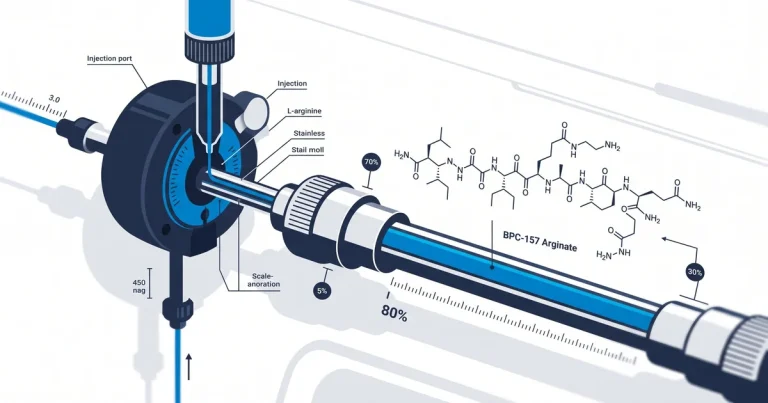
BPC-157 Arginate: Stability and Research Overview
Research overview: BPC-157 Arginate: Stability and Research Overview. COA-verified peptides for lab use. HPLC + mass spec verified. Next Level Pharm.
Research overview: BPC-157 Arginate: Stability and Research Overview. COA-verified peptides for lab use. HPLC + mass spec verified. Next Level Pharm.
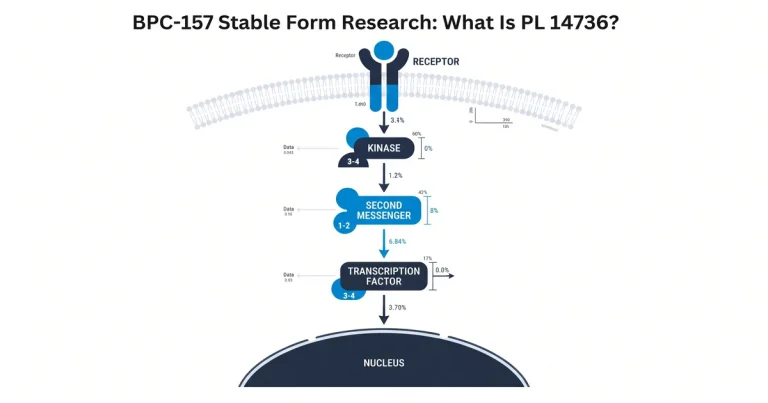
Research overview: BPC-157 Stable Form Research: What Is PL 14736?. COA-verified peptides for lab use. HPLC + mass spec verified. Next Level Pharm.
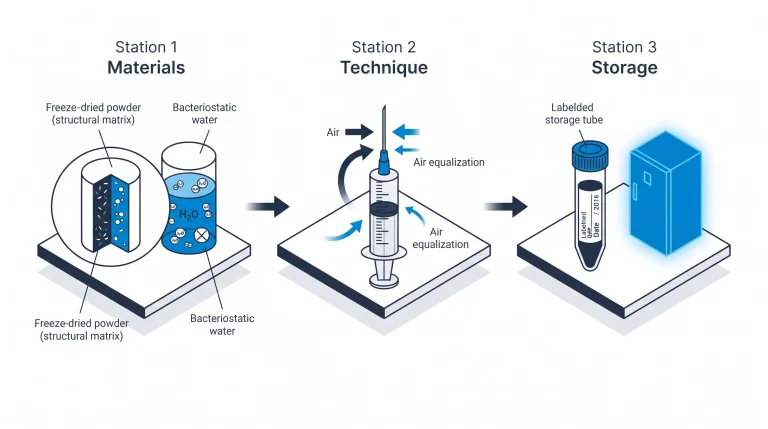
BPC-157 reconstitution is the lab process of dissolving freeze-dried peptide in bacteriostatic water for sample preparation in research assays.
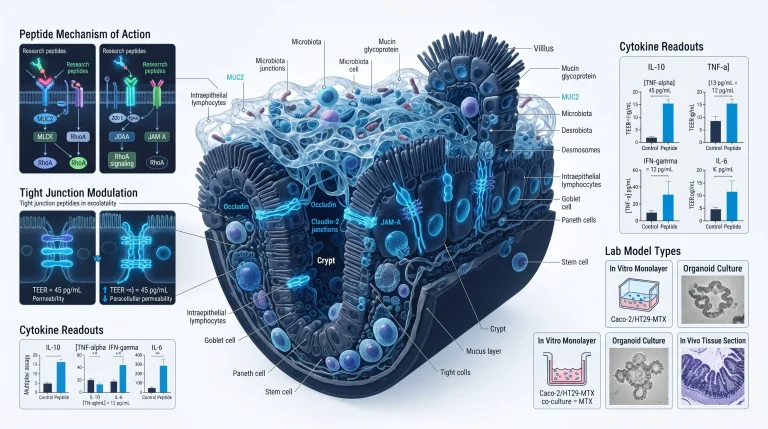
Last updated: July 2026 A peptide gut mucosal biology study is a controlled lab model that tests how small protein chains interact with the intestinal lining. The gut mucosa is the inner lining of the intestine. It is made of gut cells, a mucus layer, and an underlying layer of connective tissue. Peptides like BPC-157 […]
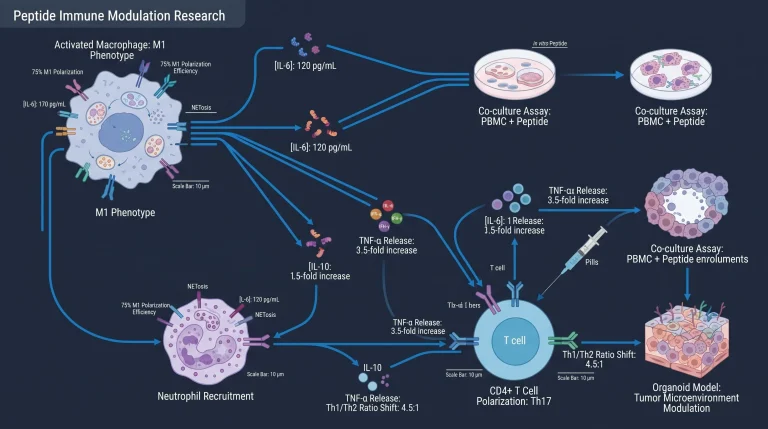
Peptide immune modulation research studies how KPV, BPC-157, and Epithalon change cytokine output and T-cell activity in preclinical lab models.
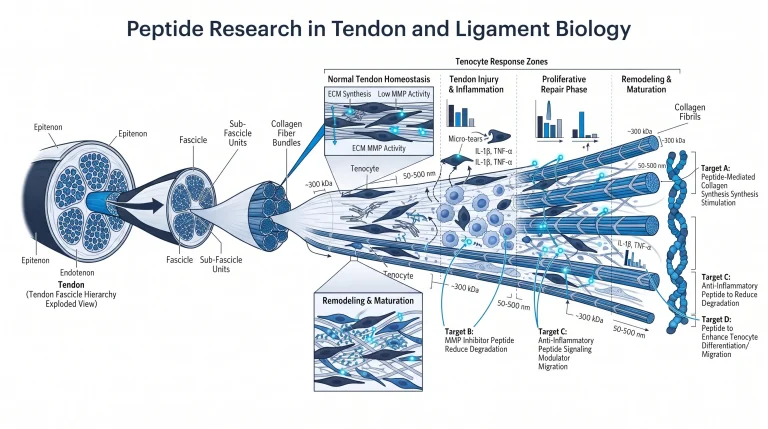
Peptide tendon repair research maps how BPC-157 and TB-500 affect collagen synthesis and tenocyte migration in lab models. COA-verified peptides for labs.
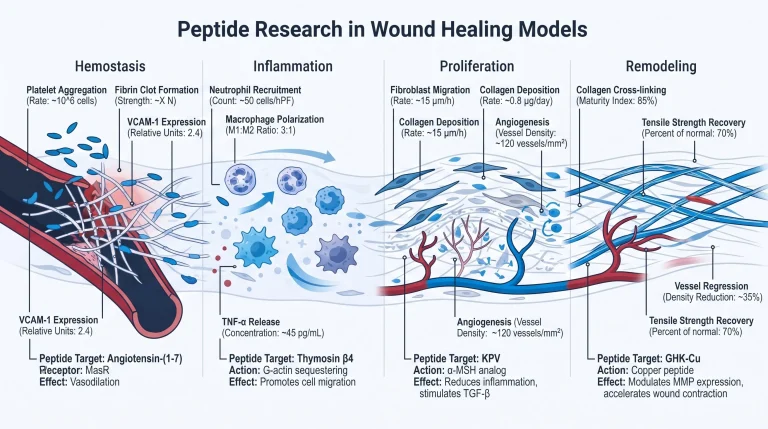
Last updated: July 2026 A peptide wound healing research model is a lab system that tests how small protein chains affect tissue repair pathways. Wounds move through four overlapping stages: hemostasis, swelling, cell growth, and tissue remodeling. Researchers study peptides that act at each stage. BPC-157, TB-500, GHK-Cu, and KPV are four compounds studied in […]
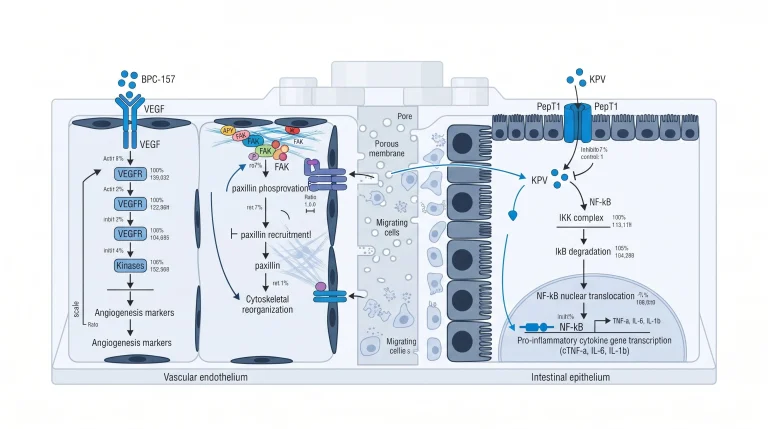
BPC-157 vs KPV peptide research comparison. BPC-157 signals via VEGF and nitric oxide. KPV blocks NF-kB through PepT1.
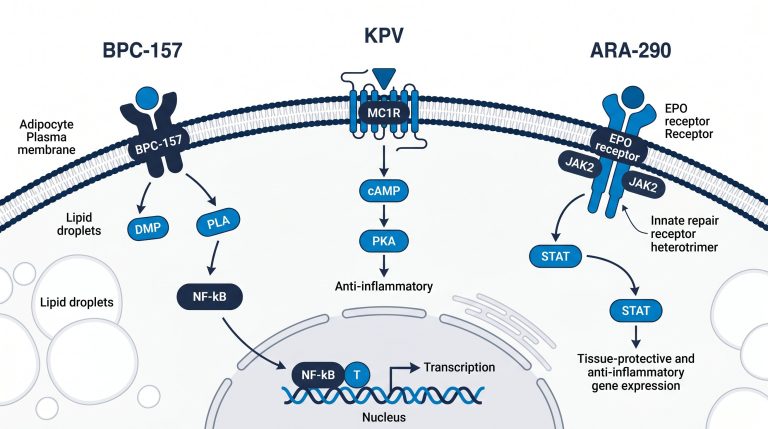
Review BPC-157, KPV, and ARA-290 anti-inflammatory peptide research: receptor targets, cell models, and cytokine assay methods for lab use.
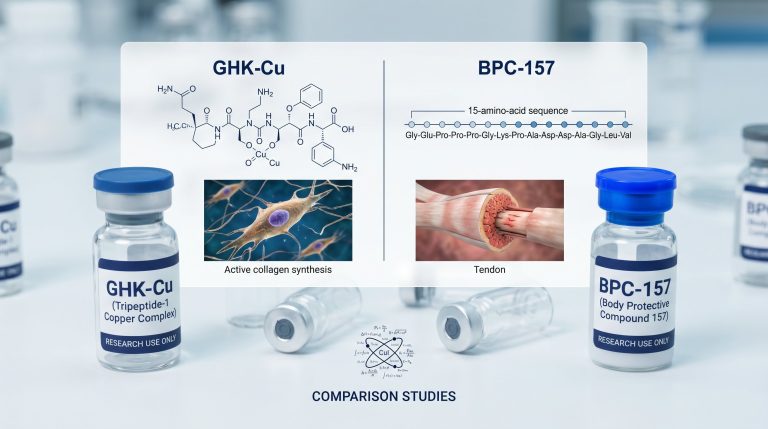
GHK-Cu vs BPC-157 research comparison: peptide structure differences, extracellular matrix findings, tissue study data, and sourcing standards for labs.