
What Does Peptide Purity Mean in Research?
Peptide purity research defines how labs use HPLC and mass spectrometry to verify purity grade and ensure COA-backed batch quality for research use.
Peptide purity research defines how labs use HPLC and mass spectrometry to verify purity grade and ensure COA-backed batch quality for research use.

Liraglutide vs semaglutide: C16 vs C18 chain differences, GLP-1R binding, half-life data in animal models, and COA documentation for research lots.

Semaglutide structure and sequence: Aib at position 8, C18 diacid chain at position 26, GLP-1R binding mechanism, and COA data for research lots.

Selank reference material: what this 7-AA synthetic peptide is, how HPLC purity standards work, and what a Selank COA should include for research.

Ion fragmentation in mass spectrometry: what b ions and y ions are, how CID works, and what MS/MS data confirms about research peptide sequence identity.

Peptide endotoxin testing with the LAL assay: what EU/mg limits mean, how LPS contamination causes false cell results, and what COA data to request.

Peptide reference standards: what USP CRMs are, how HPLC calibration uses them, and why certified purity traceability matters in research.
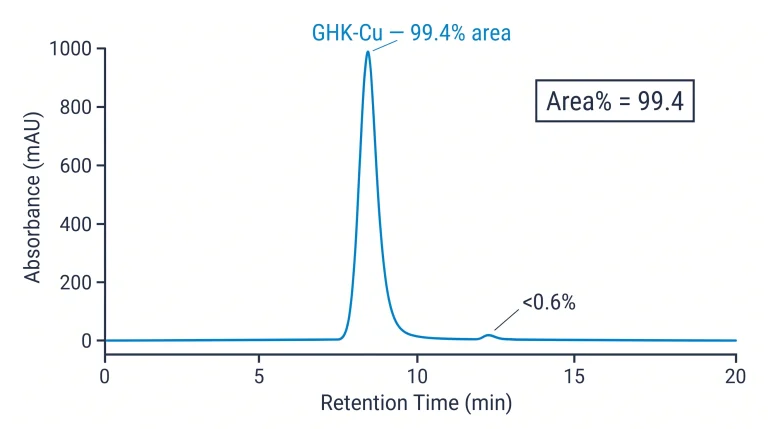
How to read a GHK-Cu COA: what HPLC peak area, mass spec molecular weight, and lot number data mean for research-grade copper peptide.

A research overview of lyophilization: the freeze-drying process used to stabilize peptides, with data on moisture content, shelf life, and purity.

Acetic acid water is a dilute acidic solvent for basic peptide research. Compare it to BAC water and PBS by pH, preservative, and compatibility.