What Is Peptide Half-Life? Stability and Research Studies
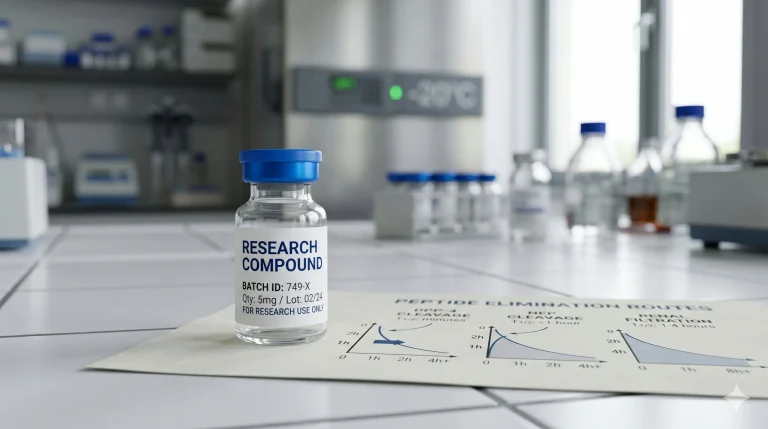
A research overview of peptide half-life: how t½ is measured in animal models and what structural changes extend plasma t½ in research peptides.
A research overview of peptide half-life: how t½ is measured in animal models and what structural changes extend plasma t½ in research peptides.
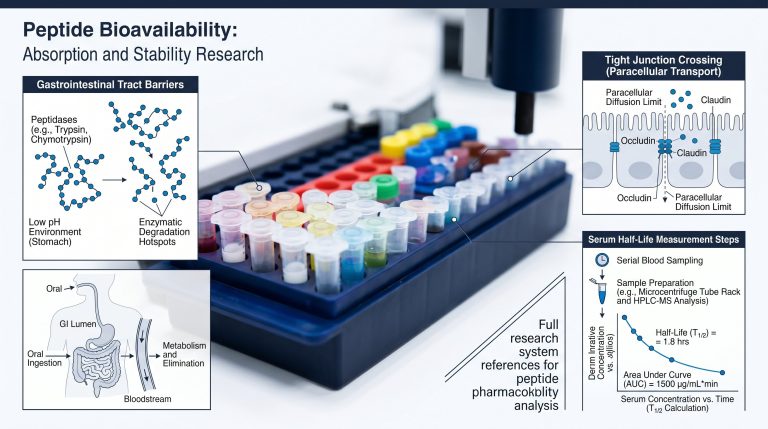
Peptide bioavailability research on oral absorption barriers, lyophilization stability, and receptor delivery in published cell and animal models.
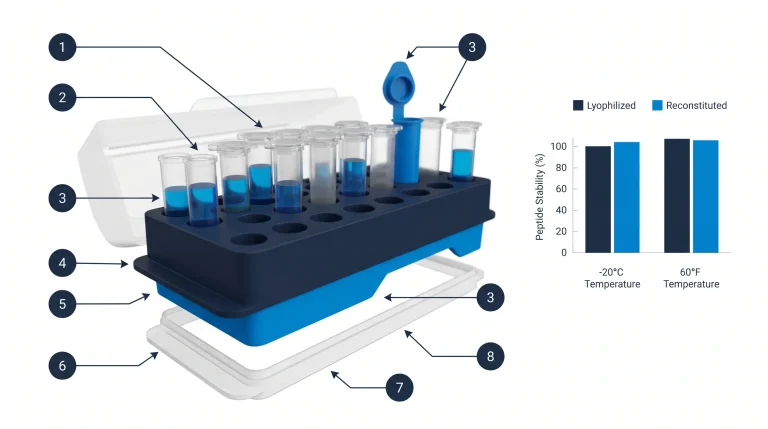
Peptide storage research covers temperature, light, and moisture conditions that keep research compounds stable from shipping to laboratory use.
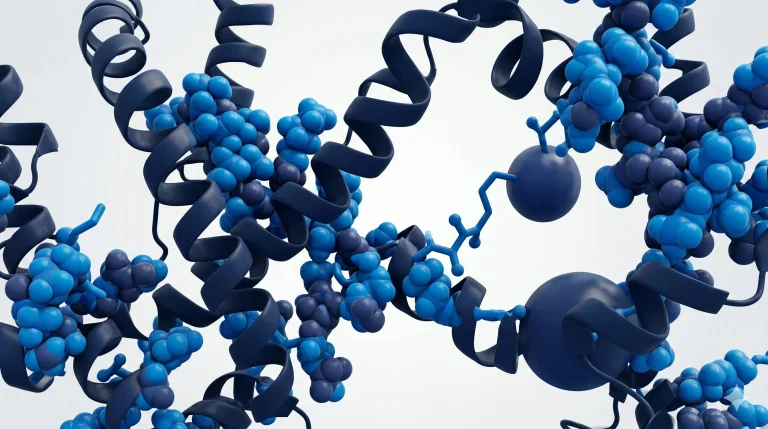
A research guide to peptide synthesis: how SPPS builds amino acid chains, how Fmoc chemistry works, and how purity is confirmed to ≥99% for lab use.
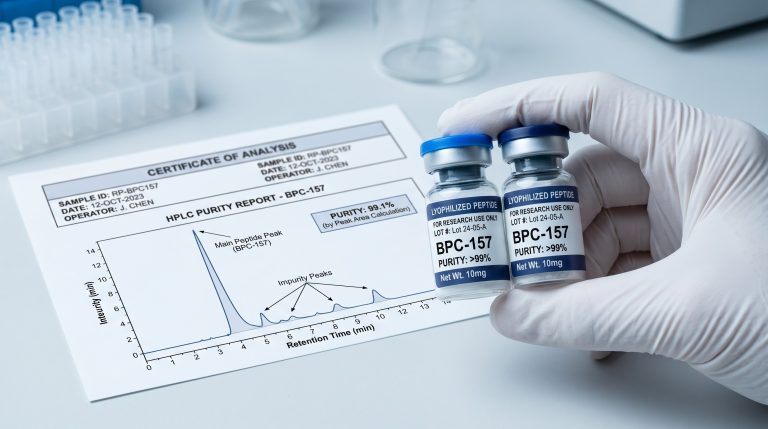
Last updated: May 2026 HPLC testing is the main way labs check peptide purity. HPLC stands for high-performance liquid chromatography. It separates compounds in a sample. Each compound exits the column at a different time. The instrument records a graph called a chromatogram. According to published research indexed on PubMed (2019), HPLC can detect impurities […]
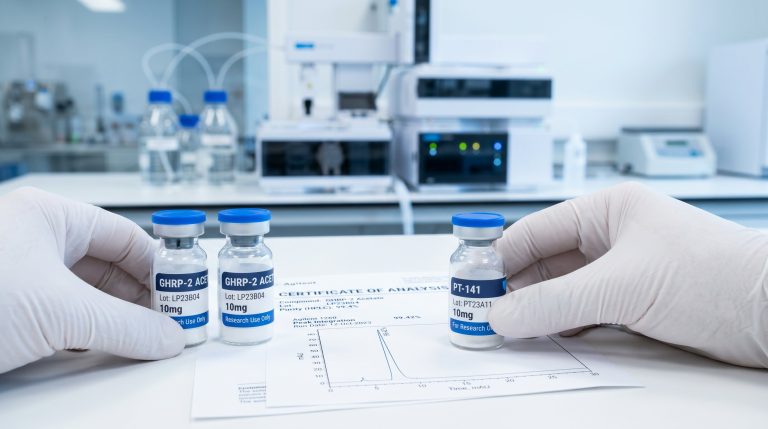
Research-grade peptides explained: HPLC purity testing, mass spectrometry verification, Certificate of Analysis structure, and sourcing checklist for labs.