
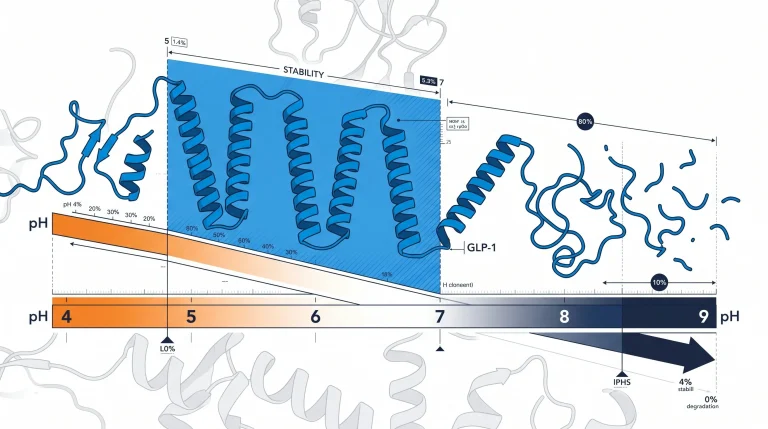
GLP-1 Peptide Stability: pH and Buffer Research
GLP-1 peptide stability is the ability of a glucagon-like peptide-1 analog to maintain its chemical structure, purity, and biological activity under.
GLP-1 peptide stability is the ability of a glucagon-like peptide-1 analog to maintain its chemical structure, purity, and biological activity under.
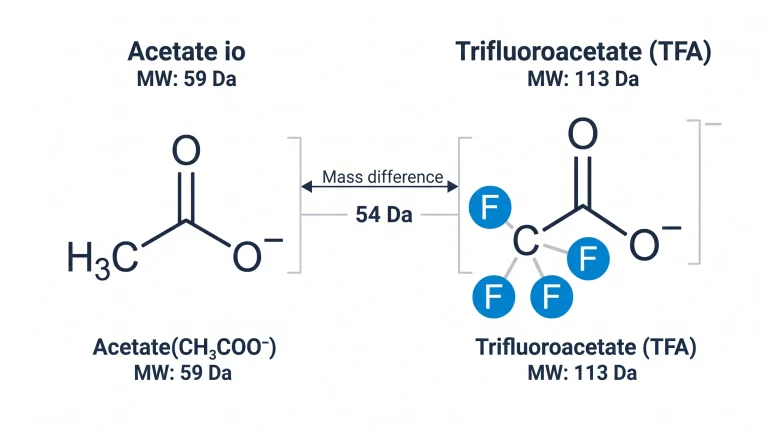
Acetate and TFA are the two most common counterions in research peptides. TFA adds more non-active mass and may lower pH in sensitive cell assays.
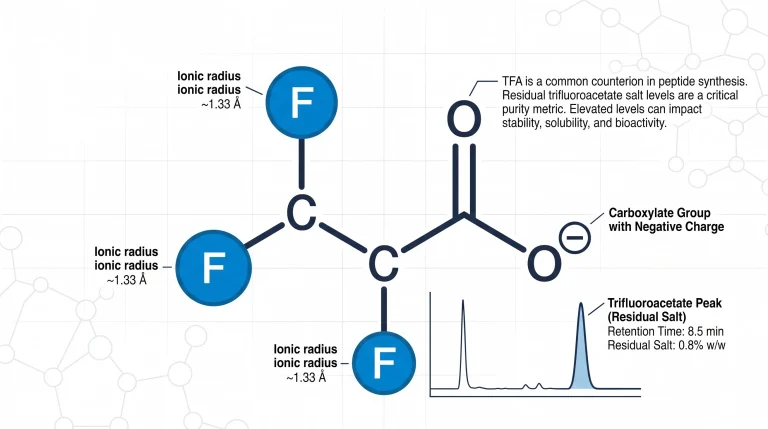
TFA (trifluoroacetic acid) is a standard counterion from HPLC peptide purification. It adds 5 to 15 percent non-active mass to labeled vial weight.
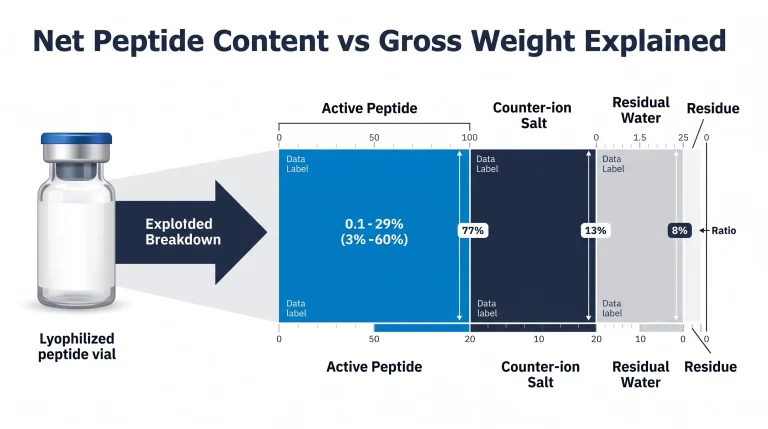
Net peptide content is the true mass of active peptide in a vial. Gross weight adds counterion and water that can overstate content by 10 to 30 percent.
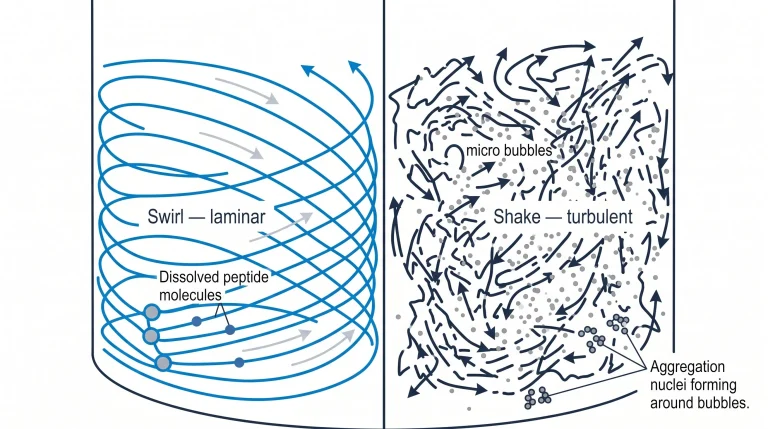
Peptide vials must be swirled, not shaken. Shaking creates shear forces that trigger aggregation and reduce sample purity in research assays.
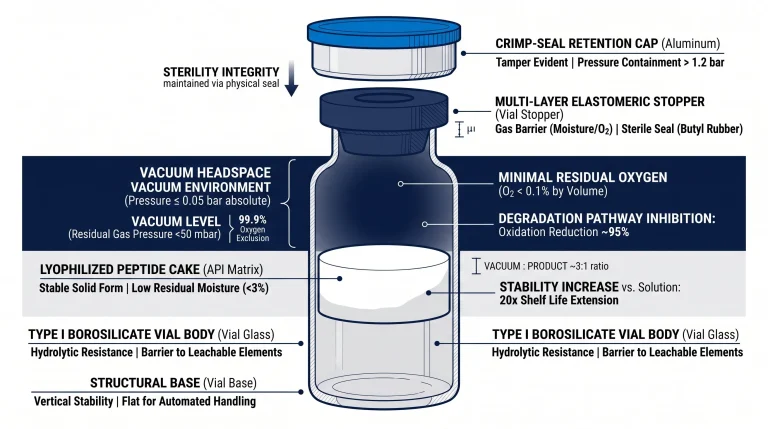
A peptide vial vacuum seal removes oxygen and moisture before hermetic closure, protecting freeze-dried peptides from oxidation and hydrolysis.
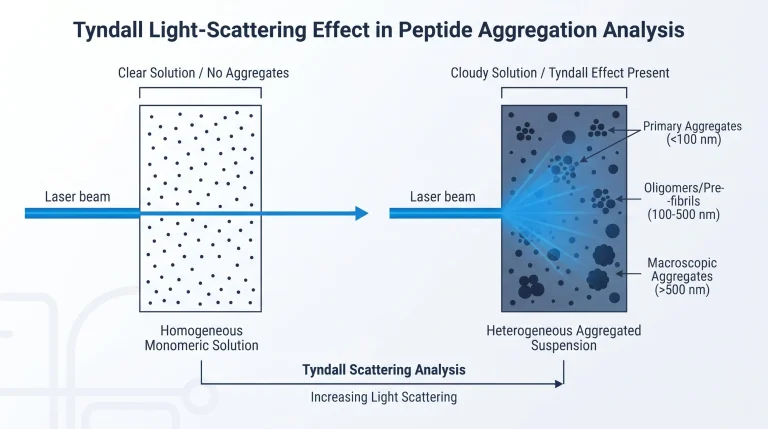
A cloudy peptide vial signals aggregation, precipitation, or bacterial growth. Learn how each cause differs and how to prevent it.
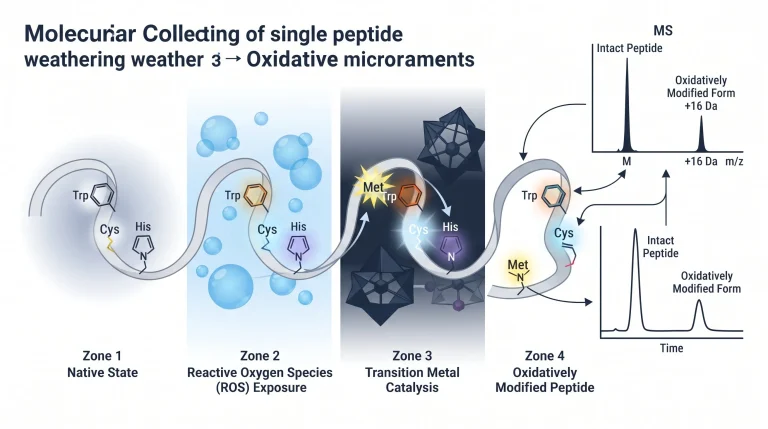
Peptide oxidation research covers Met and Trp residue degradation and how a plus-16 Da mass shift affects purity, identity, and lab assay results.

Peptide solubility research covers pH, co-solvents, and charge effects that determine how research peptides dissolve in aqueous lab buffers.

Last updated: July 2026 A research peptide shelf life study is a controlled stability test that measures how long a peptide stays intact under set storage conditions. Peptides can break down due to heat, moisture, light, and oxygen exposure. The form of the peptide (freeze-dried or reconstituted) is the single largest factor in shelf life. […]