

Peptides in Neurogenesis Research: Current Studies
Peptide neurogenesis research studies how Semax, PE-22-28, and NAD+ affect BDNF expression and hippocampal neuron formation in preclinical lab models.
Peptide neurogenesis research studies how Semax, PE-22-28, and NAD+ affect BDNF expression and hippocampal neuron formation in preclinical lab models.
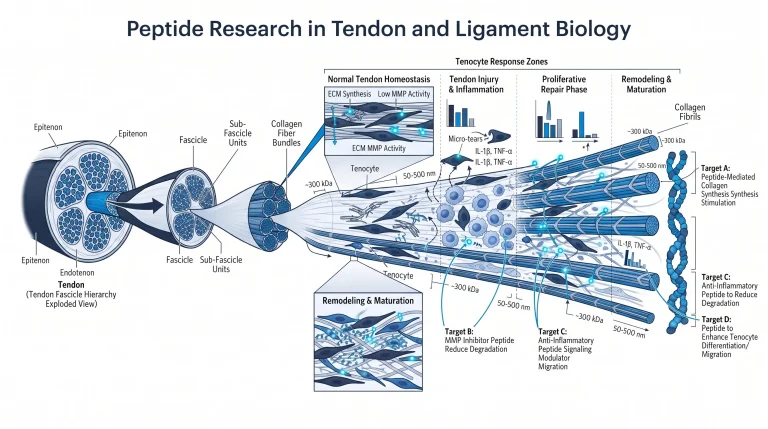
Peptide tendon repair research maps how BPC-157 and TB-500 affect collagen synthesis and tenocyte migration in lab models. COA-verified peptides for labs.

Semaglutide discovery: GLP-1 research history, Aib at position 8 for DPP-4 resistance, and C18 diacid chain for albumin binding in animal models.
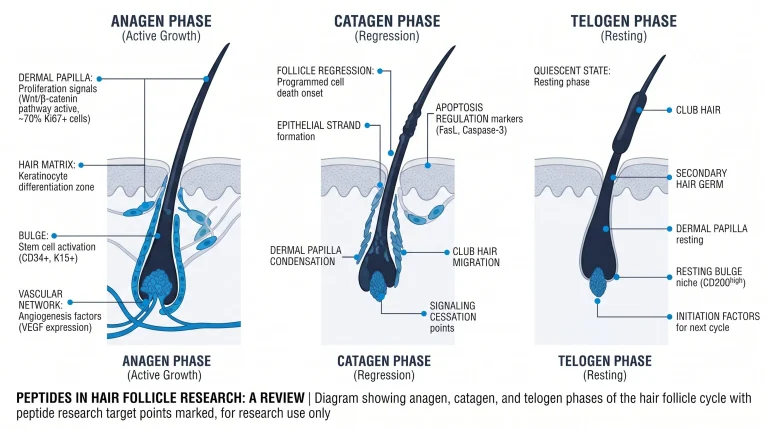
Peptide hair follicle research maps how compounds like GHK-Cu affect the anagen phase and follicle stem cell activity in lab models. COA-verified for labs.

Semaglutide structure and sequence: Aib at position 8, C18 diacid chain at position 26, GLP-1R binding mechanism, and COA data for research lots.

Selank reference material: what this 7-AA synthetic peptide is, how HPLC purity standards work, and what a Selank COA should include for research.
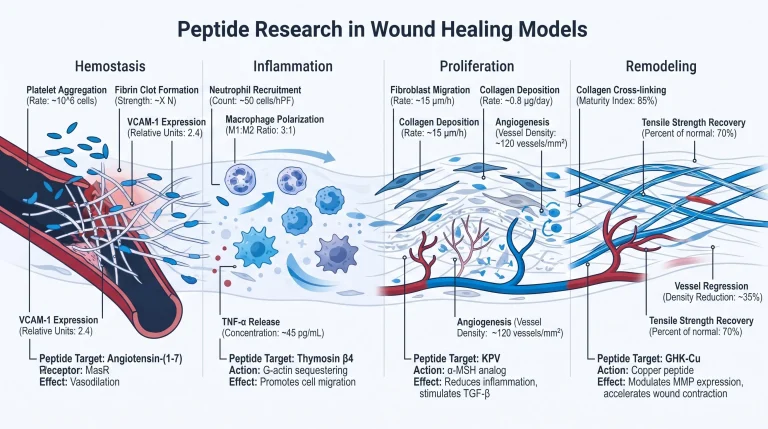
Last updated: July 2026 A peptide wound healing research model is a lab system that tests how small protein chains affect tissue repair pathways. Wounds move through four overlapping stages: hemostasis, swelling, cell growth, and tissue remodeling. Researchers study peptides that act at each stage. BPC-157, TB-500, GHK-Cu, and KPV are four compounds studied in […]

Ion fragmentation in mass spectrometry: what b ions and y ions are, how CID works, and what MS/MS data confirms about research peptide sequence identity.
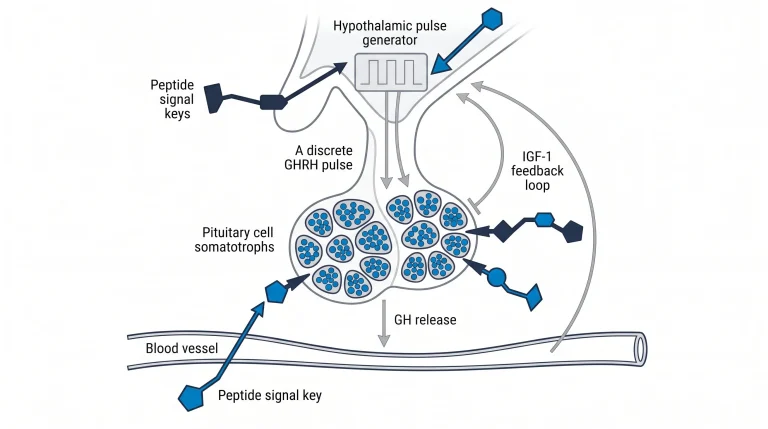
HPA axis peptide research covers GHRH analogs and GH secretagogues. Studies map how the hypothalamus and pituitary control GH pulse output in lab models.

Peptide endotoxin testing with the LAL assay: what EU/mg limits mean, how LPS contamination causes false cell results, and what COA data to request.