How Long Do Reconstituted Peptides Stay Stable?

Last updated: August 2026
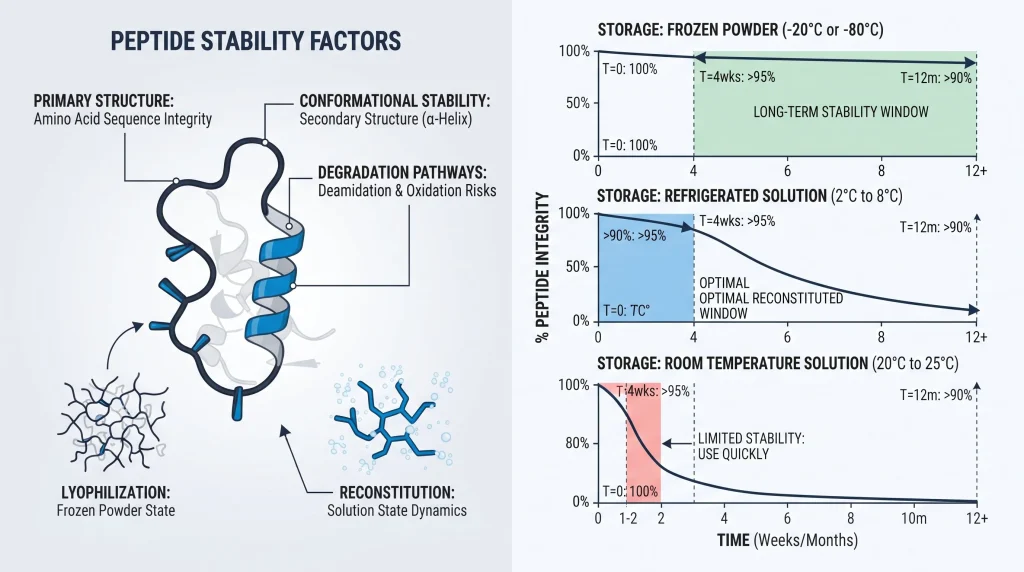
Reconstituted peptide storage is the practice of keeping a dissolved peptide under conditions that slow chemical breakdown. Stability depends on temperature, light, and the diluent used. Most peptides in solution remain usable for 2-4 weeks under refrigeration. According to NCBI (2020), aqueous peptide preparations benefit from stable, cold environments to slow breakdown pathways.
Next Level Pharm provides research peptides with a verified average purity of 99.4% across the last 100 batches. Every vial undergoes HPLC and mass spectrometry testing before dispatch. Compounds ship as freeze-dried solids sealed under an inert atmosphere. No cold chain is required during transit. Each order includes a COA with lot-specific purity data.
Managing stable storage after adding a diluent is a core task for lab teams. Heat, repeated freeze-thaw cycles, and light all speed up breakdown. The sections below cover each variable and its effect on stability.
Key Takeaways
- Temperature Range: Store reconstituted peptides at 2-8 degrees C. This slows chemical breakdown and limits bacteria growth.
- BAC Water Advantage: BAC water contains 0.9% benzyl alcohol. This agent limits bacteria growth in multi-use vials.
- Freeze-Thaw Damage: Repeated freeze-thaw cycles form ice crystals that disrupt the peptide chain. Aliquot into single-use portions to avoid this.
- Visual Checks Are Not Enough: Cloudiness or color change signals degradation. Clear liquid does not confirm potency. HPLC is the only reliable test.
- Stability by Sequence: Stability windows vary by peptide. Some sequences hold for days. Others stay stable for several weeks under refrigeration.
Every vial ships with a COA and full lot traceability. Browse the catalog at Next Level Pharm shop.
What Happens to a Peptide After Reconstitution?
Adding liquid diluent to a dry peptide starts several breakdown pathways. Water can break peptide bonds. Oxygen can damage the chain. Bacteria can grow over time. Refrigeration slows all three.
When diluent is added to a freeze-dried peptide, the compound enters solution. Water molecules can then break peptide bonds. This process is called hydrolysis (bond breakdown by water contact). Oxygen can alter sensitive amino acids. Bacteria can grow if the vial is accessed without a preservative.
Freeze-dried powder has no free water. It resists all three pathways. Moving from solid to liquid always reduces long-term stability. Refrigeration slows breakdown. It is the main tool after adding a diluent.
How Does Temperature Affect Reconstituted Stability?
Higher heat speeds bond-breaking reactions. Cold storage at 2-8 degrees C greatly extends the usable window. Most peptides last 2-4 weeks at this temperature versus hours at room temperature.
Temperature drives chemical reaction rates. More heat means faster molecular movement. This speeds bond-breaking and oxygen damage. Storing at 2-8 degrees C slows these reactions.
Most peptides show visible purity loss within 24-48 hours at room temperature. Under refrigeration, the same peptides can hold for 2-4 weeks. Light also speeds photo-damage in many peptides. Keep vials in an opaque container away from direct light.
Why Does Bacteriostatic Water Extend Usable Life?
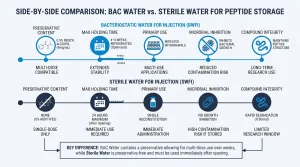
BAC water has 0.9% benzyl alcohol. This limits bacteria growth in multi-use vials. Sterile water has no agent and must be used at once.
BAC water is the standard diluent for multi-use peptide storage. Its benzyl alcohol limits bacteria reproduction. It does not sterilize the vial. This lets researchers draw from the same vial multiple times over days or weeks.
Sterile water has no such protection. Once the seal breaks, bacteria and fungal growth become possible. Sterile water suits single-use protocols only. According to Peptides (2005), dry powder is the most stable storage form. BAC water extends the usable window once a diluent is needed.
Browse BAC water and BPC-157 product pages for lot-specific COA data and diluent guidance.
What Does Degradation Look Like in Solution?
Visible signs include cloudiness, clumps, or color change. These confirm degradation. However, clear liquid does not confirm quality. Chemical changes happen long before any visible sign.
Degradation often shows up as cloudiness, white clumps, or a color shift in the vial. These signs mean the peptide chain has broken apart or stuck together in clusters. However, many chemical changes stay invisible to the eye. Bond breaking and oxygen damage can occur in a clear solution.
Researchers should not rely on visual checks to confirm sample quality. A clear appearance can give false confidence. Only HPLC separates intact peptides from its breakdown products. Visual checks alone are a known source of error in research batches.
How Is Post-Reconstitution Potency Measured?
HPLC measures potency by separating intact peptides from breakdown products. Mass spectrometry confirms molecular identity. According to NCBI (2011), these paired methods are standard for verifying structural integrity.
HPLC (High-Performance Liquid Chromatography) separates the intact peptide from any clumped or broken pieces. The ratio of intact peptide to total material gives the purity percentage. A drop in this ratio shows degradation.
Mass spectrometry paired with HPLC identifies breakdown products. This confirms both the amount and type of degradation. Next Level Pharm verifies every lot by both methods before dispatch. Average purity across 100 recent batches is 99.4%. COA documents are available per order.
Frequently Asked Questions
What happens to a peptide after reconstitution?
Diluent is added to a freeze-dried peptide. The compound enters liquid solution. Water can then break peptide bonds. Oxygen can damage sensitive amino acids. Bacteria can grow without a preservative. These pathways do not affect dry powder. Liquid form reduces long-term stability. Refrigeration and the right diluent slow all three. All products are for laboratory research use only.
How does temperature affect reconstituted stability?
Temperature is the main control variable for a peptide solution. Higher heat speeds all chemical reactions, including bond breaking and oxygen damage. Most peptides hold longer at 2-8 degrees C versus room temperature. Breakdown rates drop within this cold range. Most sequences stay usable for 2-4 weeks under refrigeration. At room temperature, the same peptides often degrade within 24-48 hours.
Why does bacteriostatic water extend usable life?
BAC water has 0.9% benzyl alcohol, which limits bacteria growth in multi-use vials. This agent stops bacteria from reproducing. It works across multiple draws. Without it, bacteria can grow after the first draw. Sterile water has no protective agent and must be discarded after one use. BAC water works for multi-draw use over days or weeks under refrigeration.
What does degradation look like in solution?
Degradation often appears as cloudiness, white clumps, or a color shift in the vial. These signs mean the peptide has clumped or broken apart. However, many chemical changes stay invisible to the eye. A clear solution does not confirm the peptide is still intact. Only HPLC confirms sample quality. Visual checks alone are an insufficient quality control method.
How is post-reconstitution potency measured?
Potency is measured by HPLC, which separates the intact peptide from its breakdown products. The ratio of intact to total signal gives the purity percentage. Mass spectrometry confirms the identity of each component. This dual method detects the amount and type of degradation. According to NCBI (2011), these are the standard methods for confirming sample quality.
Can sterile water be used instead of bacteriostatic water for reconstitution?
Sterile water can be used for reconstitution, but it has no preservative agent. Without benzyl alcohol, the solution is open to bacteria contamination after the first draw. Sterile water suits protocols where the full volume is used at once. For multi-draw use over days or weeks, BAC water is the correct choice. BAC water’s benzyl alcohol keeps the vial stable across multiple sessions.
What is the shelf life of a lyophilized peptide before reconstitution?
Freeze-dried peptides are stable for extended periods when stored correctly. In a sealed, inert atmosphere at -20 degrees C or below, dry powder keeps its structure for several years. The freeze-dried form is the most stable format, as noted by Peptides (2005). Once diluent is added, the stability window begins. From that point, refrigeration and diluent choice control how long it stays usable.
Does peptide stability differ between suppliers?
Stability can vary based on synthesis technique and purification quality. High synthesis byproducts can trigger degradation faster. A supplier using HPLC and mass spectrometry testing typically produces more stable samples. Higher purity at the source reduces molecules that speed breakdown. Checking the COA purity is a reliable way to compare lot quality.
Why should you avoid shaking a reconstituted peptide?
Shaking creates mechanical stress that can cause the peptide to unfold or form clusters. High-energy agitation forces the molecule into shapes it cannot recover from. Gentle swirling is enough to mix the contents without this risk. Physical agitation causes cluster formation and reduces sample quality. Rocking the vial gently is the standard mixing method.
How does light exposure affect reconstituted peptide storage?
Ultraviolet and ambient light speed photo-oxidation, which damages the chemical structure of many peptides. This process can occur rapidly and causes purity loss. Researchers keep samples in opaque or amber vials to block light. Storing in a dark environment is a standard step for preserving stability across a study. Wrapping vials in foil cuts photo-oxidation risk.
Summary
Reconstituted peptides are most stable at 2-8 degrees C in BAC water, away from light and oxygen. Most sequences stay viable for 2-4 weeks under these conditions. Stability varies by peptide. Freeze-thaw cycles, light, and bacteria growth all shorten the usable window.
Visual checks are not enough to confirm quality. HPLC and mass spectrometry are the only methods that verify structural integrity. Cloudiness signals advanced degradation. Clear liquid does not confirm potency.
Next Level Pharm verifies every lot by HPLC and mass spectrometry before dispatch. Average purity across the last 100 batches is 99.4%.
What Should You Do Next?
Researchers should confirm diluent compatibility before mixing. Keep storage at 2-8 degrees C. Aliquot into single-use portions. This cuts repeated freeze-thaw events. Shop research peptides with full COA and lot traceability.
People Also Read
- How to Store Research Peptides: Temperature and Stability
- Research Peptide Shelf Life: What Science Shows
About the Author
Next Level Pharm Research Team
The Next Level Pharm research team is composed of biochemists and laboratory scientists dedicated to providing researchers with the highest-purity research peptides from independently verified batches. Every batch is HPLC and mass spec verified before dispatch.
Disclaimer: The information provided on this page is for educational and research purposes only. Next Level Pharm’s products are intended for laboratory research use only. They are not intended for human consumption, diagnostic, therapeutic, or medicinal purposes. This content does not constitute medical advice. Always consult a licensed healthcare professional before making any health-related decisions.