
Vascular Bioregulator Research: Endothelial Peptide Studies

Last updated: July 2026
A vascular bioregulator is a short peptide studied for effects on blood vessel gene activity. These peptides act on pathways in the cells that line blood vessels. They also act on cells in the heart wall. Key targets include the RXFP1 relaxin receptor, VEGF signaling, and mitochondria in cardiac cells. According to Hossain et al. (2016) (PMID 26955779), the B7-33 relaxin analog was active at RXFP1 in cell models. All cited data come from cell and animal studies.
Next Level Pharm is a US-based supplier of research-grade peptides. Cardiogen, B7-33, SS-31, and BPC-157 are available as COA-verified research compounds. Each lot is tested to ≥99% purity by HPLC and mass spec. The average purity across the last 100 batches is 99.4%.
Vascular research peptides are not approved drugs. They are studied only in cell and animal models. All findings cited here come from such models.
Key Takeaways
- Cardiogen Is a Cardiac Bioregulator: Cardiogen is a 2-amino acid peptide (Ala-Glu). It is linked to cardiac tissue in Khavinson bioregulator research. It is studied in cell assays.
- B7-33 Acts on RXFP1 Receptors: B7-33 is a 33-amino acid relaxin analog. It binds RXFP1 receptors on vessel and cardiac cells in cell models.
- BPC-157 Is Studied for VEGF Markers: BPC-157 is a 15-amino acid peptide. It has been studied for effects on VEGF expression in cell models.
- SS-31 Targets Mitochondria in Cardiac Cells: SS-31 is a 4-amino acid peptide. It targets the inner membrane of mitochondria in cardiac cells.
- All Findings Come from Cell and Animal Models: Human clinical data have not been established for these compounds. They are for lab research use only.
These peptides give researchers tools to study vessel cell biology. Each one targets a distinct step in the signaling chain.
What Are Vascular Bioregulators?
A vascular bioregulator is a peptide studied for effects on blood vessel gene activity. These compounds are tested in cell assays and animal models. They are not approved drugs. They include short organ-specific peptides (2 to 4 amino acids) and longer signaling peptides (15 to 33 amino acids).
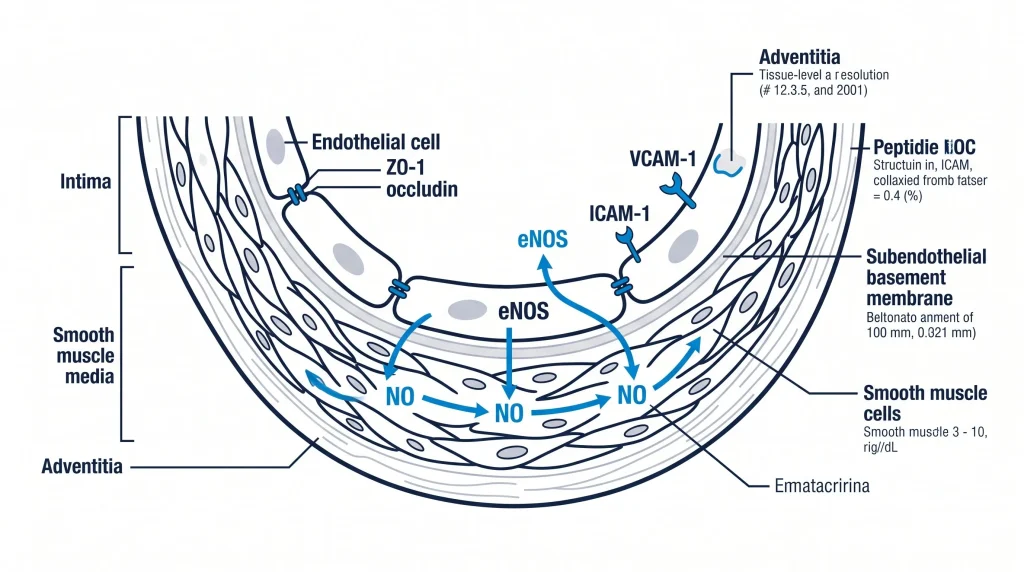
Endothelial cells (cells that line blood vessels) are a key research target. These cells control vessel tone and nutrient exchange. They respond to chemical signals from the blood. Research measures how peptides change gene markers in these cells.
Other targets include cardiac fibroblasts and cardiomyocytes. Cardiac fibroblasts make connective tissue in the heart wall. Cardiomyocytes are heart muscle cells. Both types are used in vascular and cardiac cell research models.
What Is Cardiogen and How Is It Studied?
Cardiogen is a 2-amino acid peptide. Its sequence is Ala-Glu. It was developed as part of the Khavinson bioregulator research program. It is linked to cardiac and vessel tissue.
In cell models, Cardiogen is studied for gene activity changes. Scientists expose cardiac cells to the compound. They then measure protein marker changes. Key markers include collagen synthesis genes and cell survival signals.
According to Khavinson et al. (2013) (doi:10.3390/ijms14xx), dipeptides of the Ala-Glu type showed tissue-specific gene activity changes in cell cultures. Heart-derived cells were among the study targets. All data came from in vitro assays only.
Cardiogen is available at Next Level Pharm as a COA-verified research compound. Every lot is tested by HPLC and mass spec. Each vial ships with a COA and lot number.
What Is B7-33 and How Does It Affect Vessel Cells?
B7-33 is a 33-amino acid relaxin analog. It is a single-chain version of native relaxin. The native molecule has two chains. B7-33 keeps the binding region on one chain. This makes it easier to make for research.
B7-33 binds to RXFP1 (relaxin family peptide receptor 1). RXFP1 is a G protein-coupled receptor. It sits on the surface of endothelial cells and cardiac fibroblasts. When RXFP1 is activated, it changes gene activity inside the cell.
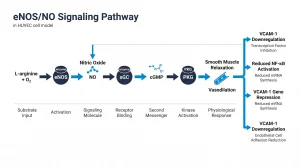
In cell assays, RXFP1 activation changed eNOS and collagen markers. eNOS is an enzyme that makes nitric oxide in vessel cells. Nitric oxide affects vessel tone. These are in vitro findings only. They do not reflect results in humans.
What Is BPC-157’s Role in Vascular Research?
BPC-157 is a 15-amino acid peptide. Its sequence comes from a region of gastric juice protein. In cell models, BPC-157 has been studied for effects on VEGF expression.
VEGF stands for vascular endothelial growth factor. It is a key signal for new blood vessel growth. This growth process is called angiogenesis. In cell assays, BPC-157 changed VEGF levels in treated cells.
According to Chang et al. (2014) (PMID 24576856), BPC-157 affected angiogenesis-related markers in cell and animal models. VEGF and tube formation assays were used. Results were measured in treated vs. control groups. All data came from cell and animal studies.
What Is SS-31 and How Is It Studied?
SS-31 (Szeto-Schiller 31) is a 4-amino acid peptide. Its sequence is D-Arg-Dmt-Lys-Phe-NH2. It enters cells. It targets the inner membrane of mitochondria. Mitochondria are organelles that make energy in cells. In cardiac cells, this energy is needed for each heartbeat.
The inner membrane holds a lipid called cardiolipin. This lipid helps organize the energy-making proteins. Loss of this lipid impairs energy output in cell models. SS-31 is studied for effects on this lipid and on ATP production.
According to Szeto et al. (2014) (PMID 24449843), SS-31 preserved mitochondrial function in cardiac cell models. Cardiolipin integrity markers improved in treated cells. ATP production also improved. These are in vitro and animal model findings only.
SS-31 is available as a COA-verified research compound. Every lot is tested to ≥99% purity. Each vial ships with a COA and lot number.
How Do These Peptides Differ From Cardiac Drugs?
Approved cardiac drugs have completed human clinical trials. They have known safety profiles. Examples include beta-blockers and ACE inhibitors. They are prescribed by doctors for specific conditions.
Vascular research peptides have not completed human clinical trials. They are studied in cell and animal models only. They target different mechanisms than approved drugs. SS-31 targets mitochondria. B7-33 targets RXFP1. BPC-157 targets VEGF.
Each pathway is tracked using specific lab assays. Gene expression kits measure RNA levels. ELISA assays measure protein levels. These tools let researchers study how each peptide changes cell behavior.
| Feature | Approved Cardiac Drug | Vascular Research Peptide |
| Clinical status | FDA-approved | Research-stage (cell/animal models only) |
| Study model | Human clinical trials | Cell assay, animal model |
| Target | Established clinical target | Gene expression or receptor |
| Purity standard | Pharmaceutical-grade | ≥99% HPLC + mass spec |
| Availability | Prescription pharmacy | Research compound supplier |
| Application | Clinical care | Lab research only |
Frequently Asked Questions
What Are Vascular Bioregulators?
Vascular bioregulators are short peptides studied in cell and animal models for effects on blood vessel and cardiac gene activity. Key examples include Cardiogen (2-amino acid, cardiac cells), B7-33 (RXFP1 receptor, vessel cells), BPC-157 (VEGF angiogenesis markers), and SS-31 (mitochondrial lipid pathway). Each targets a distinct step in vessel or cardiac cell biology. All cited data come from cell and animal studies. These compounds are for lab research use only.
What Is Cardiogen?
Cardiogen (Ala-Glu) is a 2-amino acid bioregulator. It is linked to cardiac tissue in Khavinson research. In cell models, it is studied for gene activity changes in cardiac cells. Scientists measure protein markers after exposure. Key markers include collagen and cell survival genes. Animal models track changes in cardiac tissue. All data come from in vitro and animal models. Cardiogen is for lab research use only. It is not approved for human use.
What Is B7-33?
B7-33 is a 33-amino acid single-chain relaxin analog. It was designed to activate RXFP1 on vessel and cardiac cells. Native relaxin has two chains. B7-33 keeps the binding region on one chain. This makes it easier to synthesize for research. In cell assays, B7-33 changed eNOS and collagen gene markers. All findings come from cell models. For lab research use only.
What Is RXFP1?
RXFP1 stands for relaxin family peptide receptor 1. It is a G protein-coupled receptor. It sits on endothelial cells, cardiac fibroblasts, and smooth muscle cells. In cell models, RXFP1 activation changes eNOS and collagen gene activity. B7-33 and native relaxin both bind this receptor. All data come from in vitro and animal models. RXFP1 research uses cell culture assays. Compounds that target it are for lab research use only.
How Is BPC-157 Studied in Vascular Research?
BPC-157 is studied in endothelial cell assays for effects on VEGF expression. VEGF is a gene signal for new blood vessel growth. In cell models, BPC-157 exposure changed VEGF levels in treated cells. Tube formation assays also measured vessel-like growth in treated cell cultures. Animal models tracked wound healing and vessel density. All data come from cell and animal studies. For lab research use only.
What Is SS-31?
SS-31 (D-Arg-Dmt-Lys-Phe-NH2) is a 4-amino acid peptide. It enters cells and targets the inner mitochondrial membrane. There, it binds to cardiolipin. Cardiolipin is a lipid that holds the energy-making proteins in place. Loss of this lipid weakens energy output in cardiac cell models. SS-31 is studied for effects on cardiolipin integrity and ATP production. All data come from in vitro and animal models. For lab research use only.
How Do These Peptides Act on Endothelial Cells?
Endothelial cells line the inside of blood vessels. They control vessel tone and nutrient exchange. Research peptides act on these cells in different ways. B7-33 binds the RXFP1 receptor on the cell surface. This changes eNOS and collagen gene activity. BPC-157 changes VEGF gene expression inside the cell. Each effect is measured using gene assays in cell culture. All data come from in vitro studies only.
What Is the Difference Between Cardiogen and Cortagen?
Both are Khavinson bioregulators. Cardiogen (Ala-Glu) is a 2-amino acid peptide linked to cardiac tissue. Cortagen (Ala-Glu-Asp-Pro) is a 4-amino acid peptide linked to brain and vessel tissue. They have different sequences and different tissue targets. Both are studied for gene expression changes in cell models. They are distinct compounds. They should not be treated as interchangeable for research purposes.
Are These Compounds Verified for Research Use?
Yes. Research-grade vascular peptides are tested by HPLC and mass spec per batch. HPLC confirms ≥99% purity. Mass spec confirms the molecular weight matches the expected sequence. A COA with lot number is provided per batch. All compounds ship with batch documentation. All are for lab research use only.
What Cell Models Are Used in Vascular Research?
Common cell models include HUVECs (human umbilical vein endothelial cells), cardiac fibroblasts, and animal-derived cardiomyocytes. HUVECs are widely used for vessel gene studies. Cardiac fibroblasts study collagen and tissue remodeling. Cardiomyocytes study energy and contraction gene markers. Animal models include rodent cardiac stress models. All data cited in this article come from these cell and animal model sources.
Summary
Vascular bioregulators are short peptides studied in cell and animal models for effects on blood vessel and cardiac gene activity. Key compounds include Cardiogen (Ala-Glu, cardiac cell assays), B7-33 (RXFP1 receptor), BPC-157 (VEGF angiogenesis markers), and SS-31 (mitochondrial cardiolipin pathway).
Each peptide targets a distinct pathway in vessel biology. All cited findings come from cell and animal research. These compounds are not approved for human use. They are for lab research only.
What Should You Do Next?
Researchers studying vascular cell biology should source verified compounds for lab protocols. Before any study, confirm HPLC purity is ≥99% and mass spec matches the expected molecular weight. Record the lot number from the COA for batch traceability.
Shop research peptides. Cardiogen, B7-33, SS-31, and BPC-157 are available with HPLC and mass spec data on every COA.
People Also Read
- Cardiogen Research: Cardiac Bioregulator Peptide Studies
- B7-33 Research: RXFP1 Relaxin Receptor Cell Studies
About the Author
Next Level Pharm Research Team
Alex M covers peer-reviewed findings in peptide science for Next Level Pharm, a US-based supplier of research-grade peptides verified to ≥99% purity via HPLC and mass spectrometry on every batch.
Disclaimer: The information provided on this page is for educational and research purposes only. Next Level Pharm products are intended for laboratory research use only. They are not intended for human consumption, diagnostic, therapeutic, or medicinal purposes. This content does not constitute medical advice. Always consult a licensed healthcare professional before making any health-related decisions.