
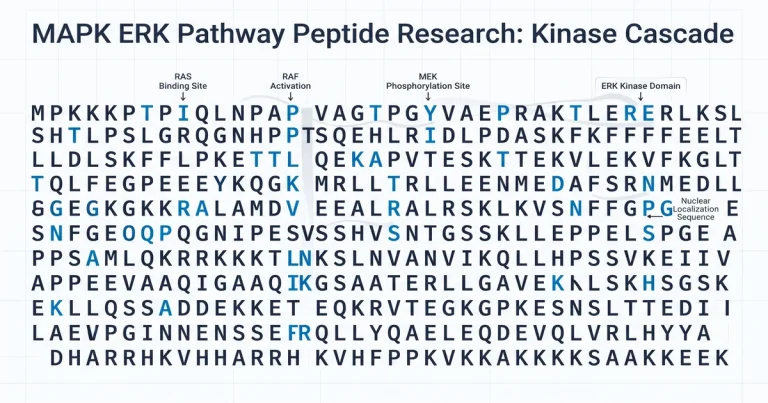
MAPK ERK Pathway Peptide Research: Kinase Cascade
MAPK ERK pathway peptide research maps the RAS-RAF-MEK-ERK kinase cascade and how peptides modulate signal transduction from surface receptors to DNA.
MAPK ERK pathway peptide research maps the RAS-RAF-MEK-ERK kinase cascade and how peptides modulate signal transduction from surface receptors to DNA.
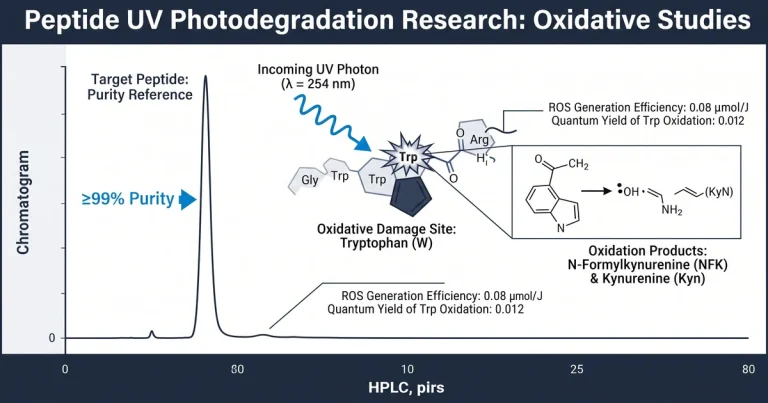
Peptide UV photodegradation studies show aromatic amino acids are highly susceptible to oxidation from UVA and UVB light, impacting sample purity.
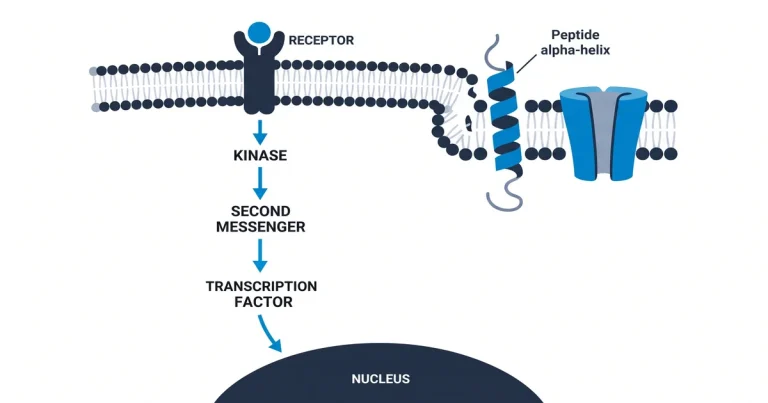
Explore peptide-lipid membrane interaction research, a key area of biophysics. Studies show peptides can alter membrane properties at low micromolar.
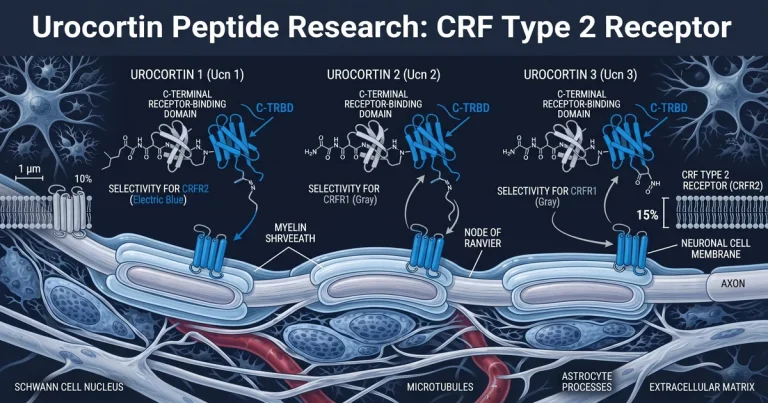
Urocortin peptide research studies three CRF family neuropeptides and their binding to CRFR1 and CRFR2 receptors in lab stress response models.
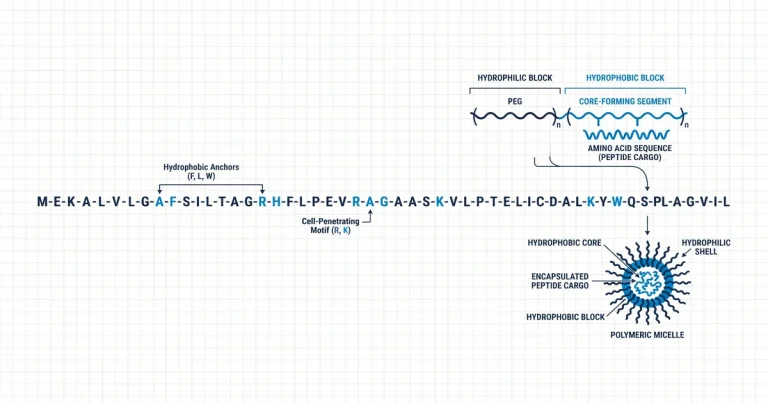
Polymeric micelle peptide research uses block copolymers to form core-shell carriers. Covers assembly, loading methods, challenges, and future directions.
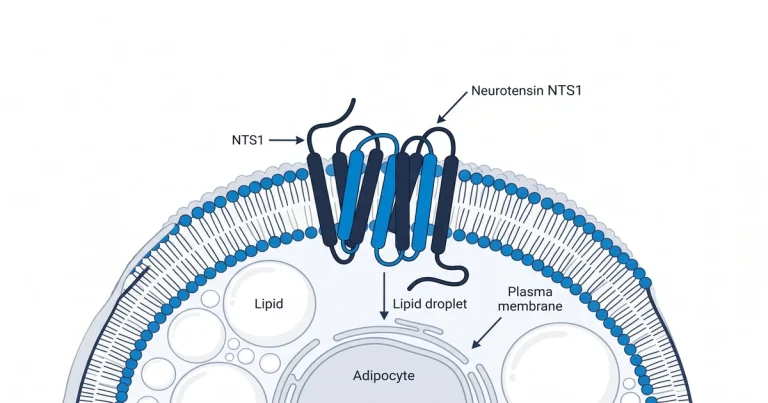
Neurotensin peptide research examines how this 13-amino acid chain binds the NTS1 receptor to modulate neural signaling pathways in lab models.
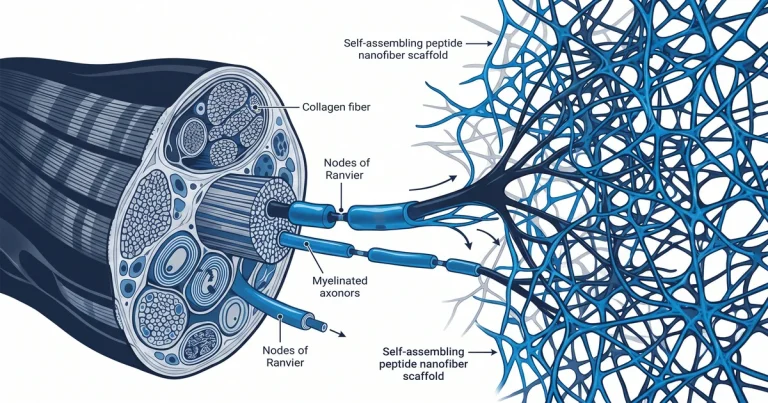
Peptide nanofiber scaffolds self-assemble into 3D hydrogels used in tissue research. This guide covers assembly triggers, ECM mimicry, and scaffold study.
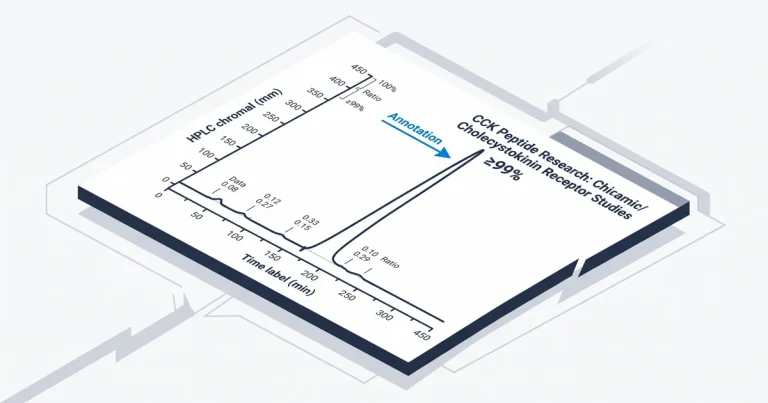
CCK peptide research studies how cholecystokinin signals through CCK1 and CCK2 receptors to regulate digestive function and satiety in laboratory models.
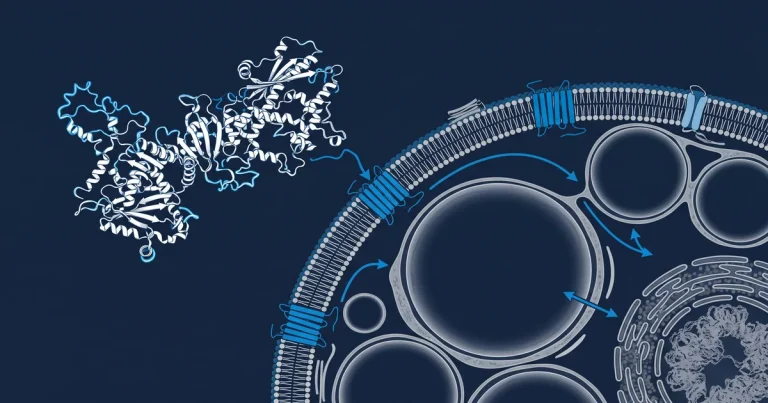
Neuropeptide Y research examines how this 36-amino acid peptide binds NPY receptor subtypes Y1 through Y5 to regulate energy balance and neural signaling.
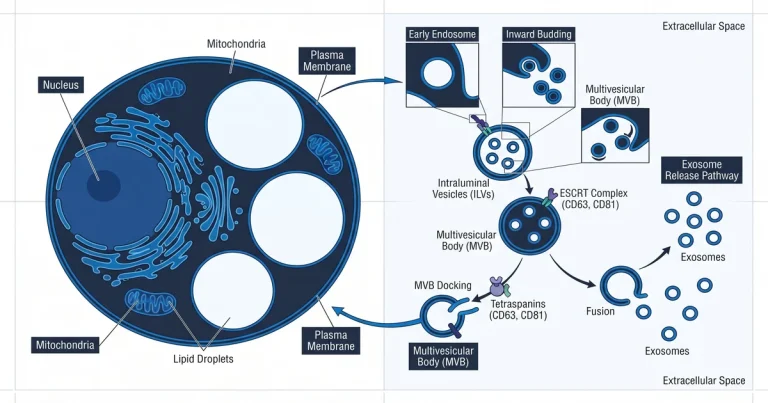
Exosome peptide delivery uses 30-150 nm vesicles as nanocarriers. This guide covers vesicle loading, delivery tracking, and barriers in lab research.