
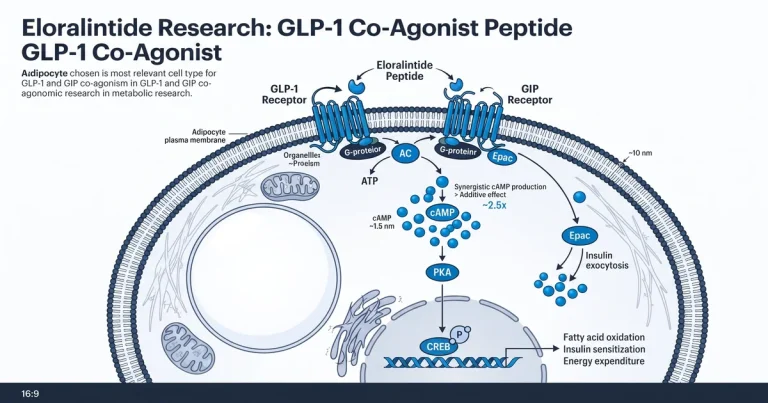
Eloralintide Research: Selective AMY1R Agonist Peptide Studies
Eloralintide is a dual GLP-1 and GIP receptor co-agonist. This research guide covers receptor binding, cAMP signaling, and structural properties.
Eloralintide is a dual GLP-1 and GIP receptor co-agonist. This research guide covers receptor binding, cAMP signaling, and structural properties.
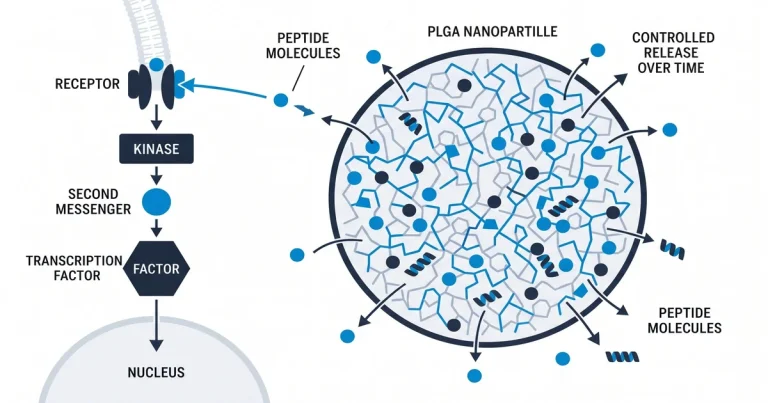
PLGA nanoparticle peptide release research studies how biodegradable polymer particles carry and release peptides over weeks in lab settings.
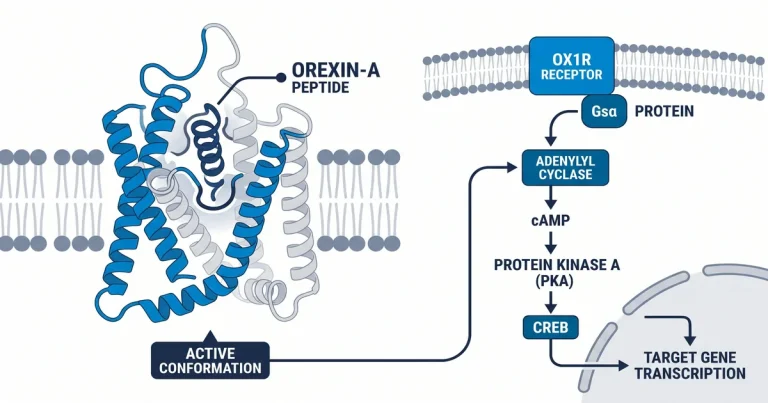
Orexin hypocretin peptide research studies how orexin-A and orexin-B bind OX1 and OX2 receptors to regulate wakefulness and energy balance.
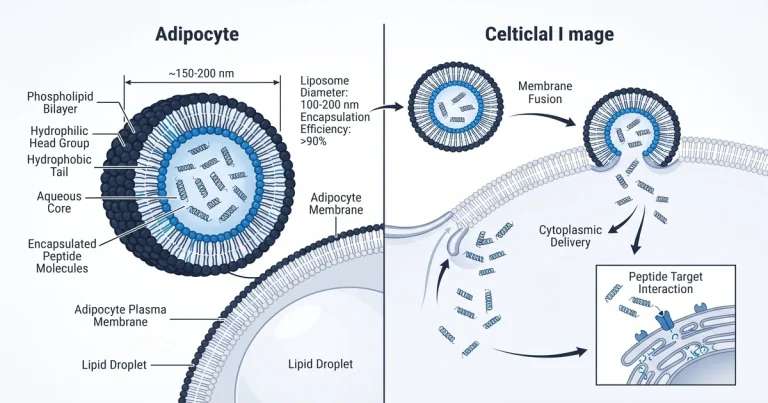
Liposomal peptide encapsulation research studies how phospholipid vesicles protect peptides in lab settings. Encapsulation yields range from 50 to 85%.
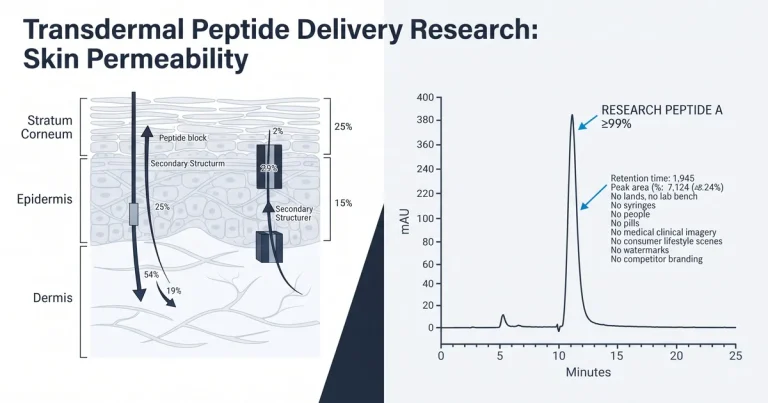
Transdermal peptide delivery research studies how peptides cross skin layers. Covers barrier biology, enhancement methods, and Franz cell measurement.
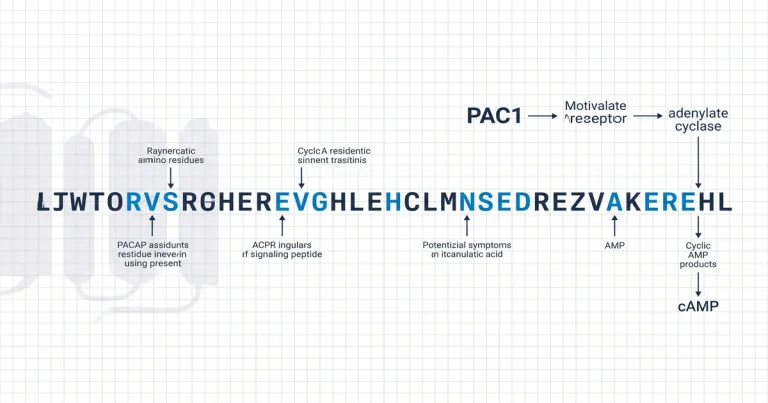
PACAP peptide research studies how this secretin superfamily neuropeptide activates adenylate cyclase via PAC1 and VPAC receptors in lab models.
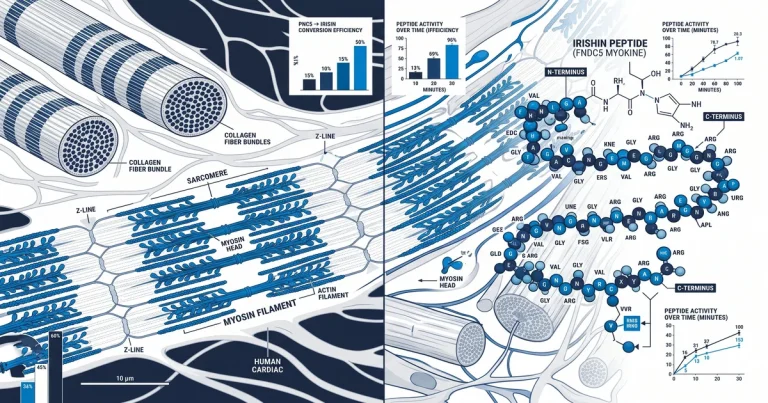
Irisin peptide research studies this FNDC5-derived myokine, examining how skeletal muscle cleaves it and how it interacts with cellular receptors.
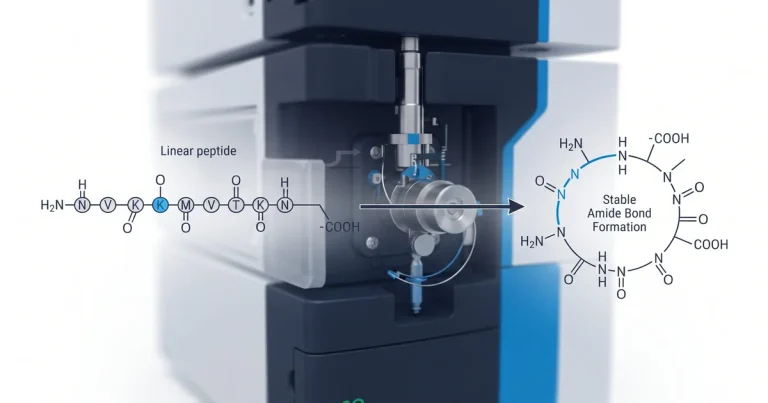
Cyclic peptide stability research examines how ring structures resist enzymatic breakdown. Covers cyclization types, synthesis methods, and HPLC.
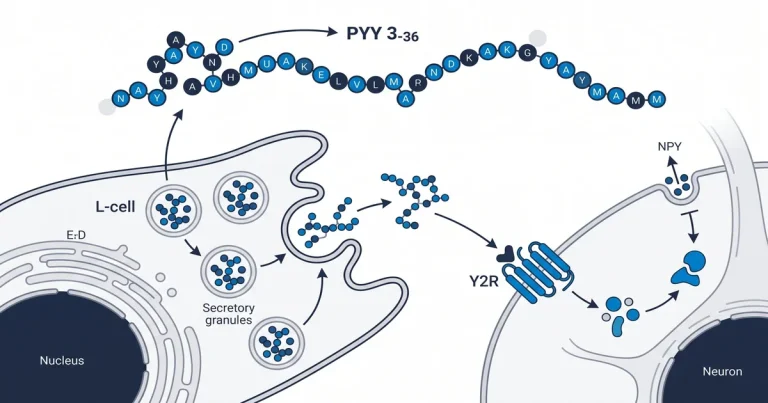
PYY 3-36 research examines how this truncated Peptide YY fragment signals satiety and appetite suppression through NPY receptor binding in cell models.
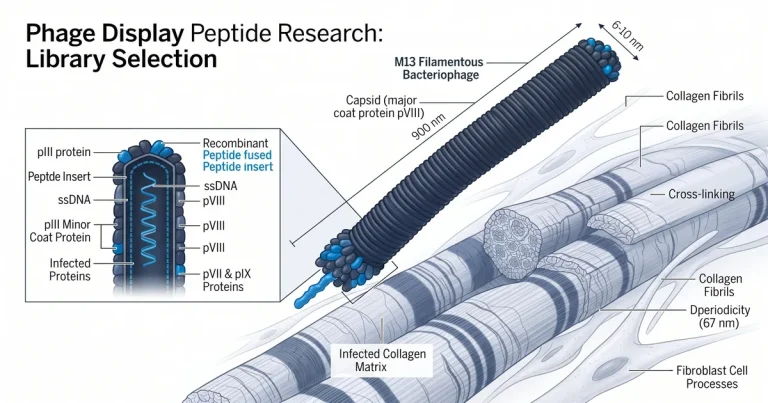
Phage display peptide library research uses M13 phages and biopanning to screen billion-sequence libraries for high-affinity binding sequences.