
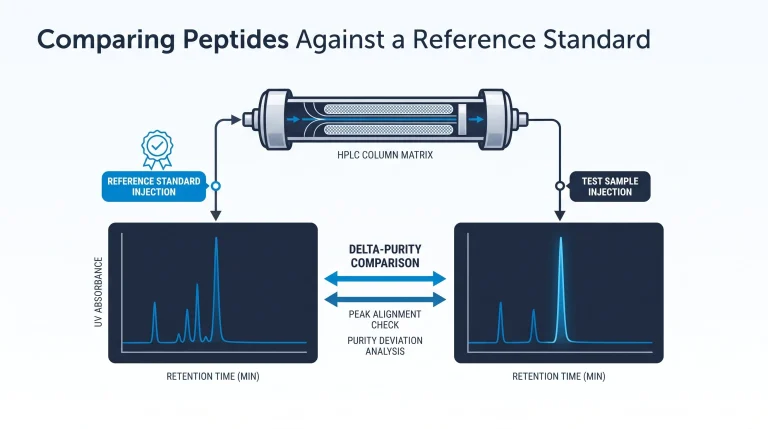
Comparing Peptides Against a Reference Standard
A peptide reference standard comparison is an analytical process used to confirm the identity and purity of a research peptide sample by matching it.
A peptide reference standard comparison is an analytical process used to confirm the identity and purity of a research peptide sample by matching it.
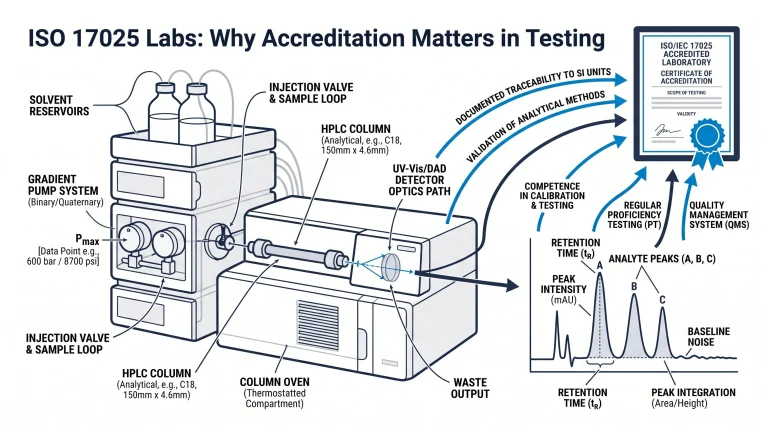
ISO 17025 testing is an international standard that proves a laboratory maintains technical competence and precise calibration systems.
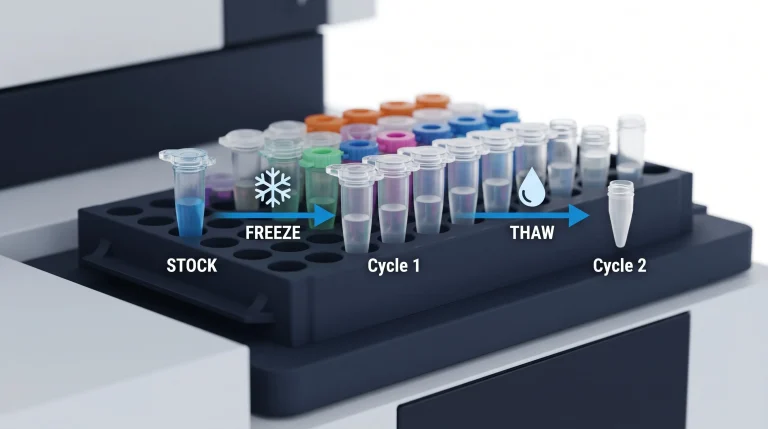
Freeze-thaw cycles form ice crystals that damage peptide structure. Most sequences degrade within 3-5 cycles. Aliquoting reduces this risk.
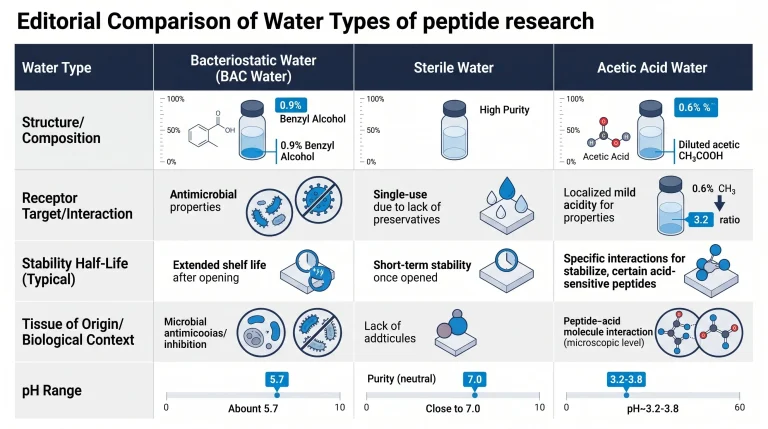
BAC water contains 0.9% benzyl alcohol and stays sterile for 28 days. Sterile water has no preservative and is for single-use only.
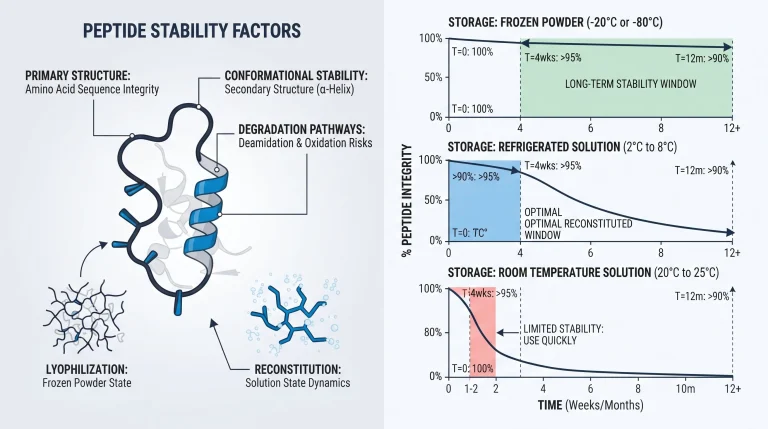
Reconstituted peptides are most stable at 2-8 degrees C in BAC water. Temperature, light, and freeze-thaw cycles accelerate breakdown.

Insulin syringe units in peptide research: a U-100 syringe holds 1 mL at 100 units. Each unit is 0.01 mL. Dead space causes volume loss at small draws.
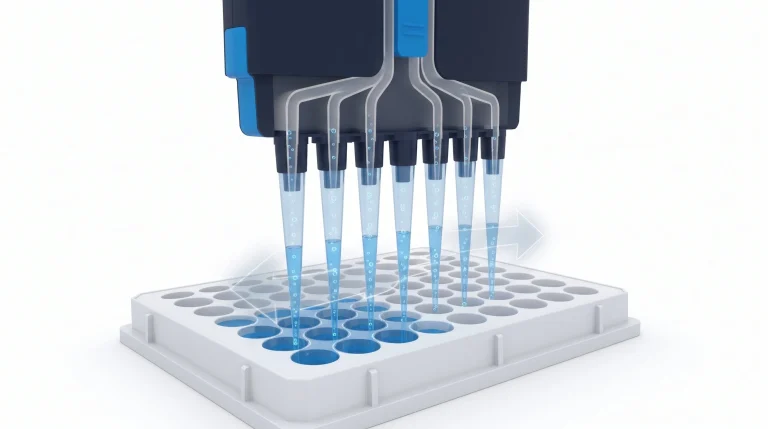
Peptide reconstitution calculation: divide mass (mg) by diluent volume (mL) for mg/mL. Multiply by 1,000 for mcg/mL. Research use only.

Peptide oxidation research covers Met and Trp residue degradation and how a plus-16 Da mass shift affects purity, identity, and lab assay results.
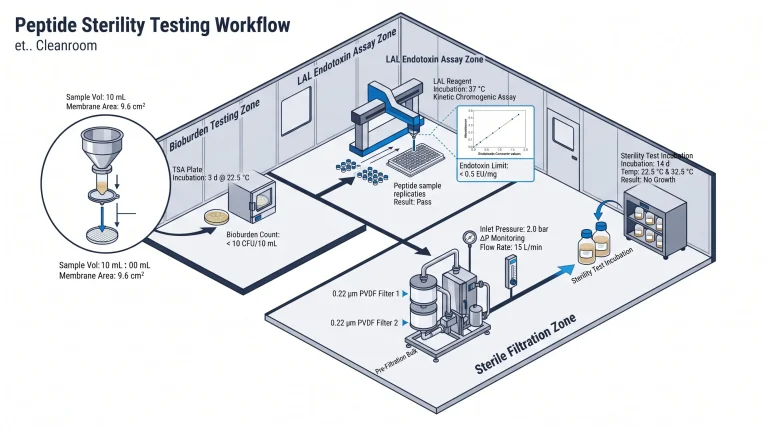
Peptide sterility testing checks for microbial contamination in research compounds. Learn about bioburden testing, LAL assays, and sterile filtration.Peptide sterility testing checks for microbial contamination in research compounds. Learn about bioburden testing, LAL assays, and sterile filtration.
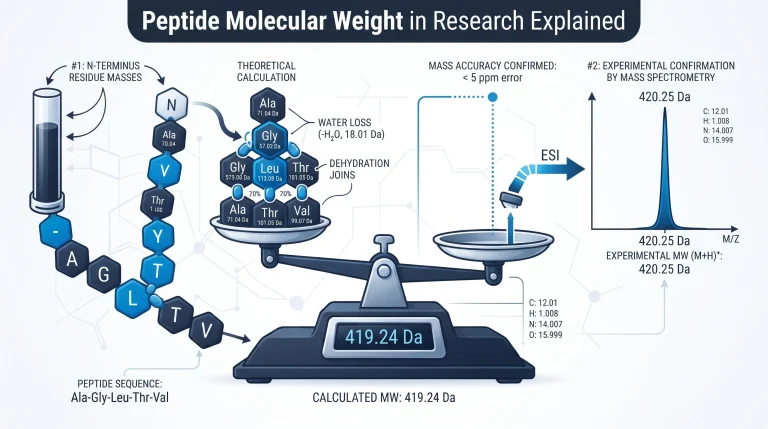
Peptide molecular weight is measured in daltons by mass spectrometry. Learn how sequence length, modifications, and purity data affect research results.