
Peptide Sterility Testing: A Research Guide

Last updated: July 2026
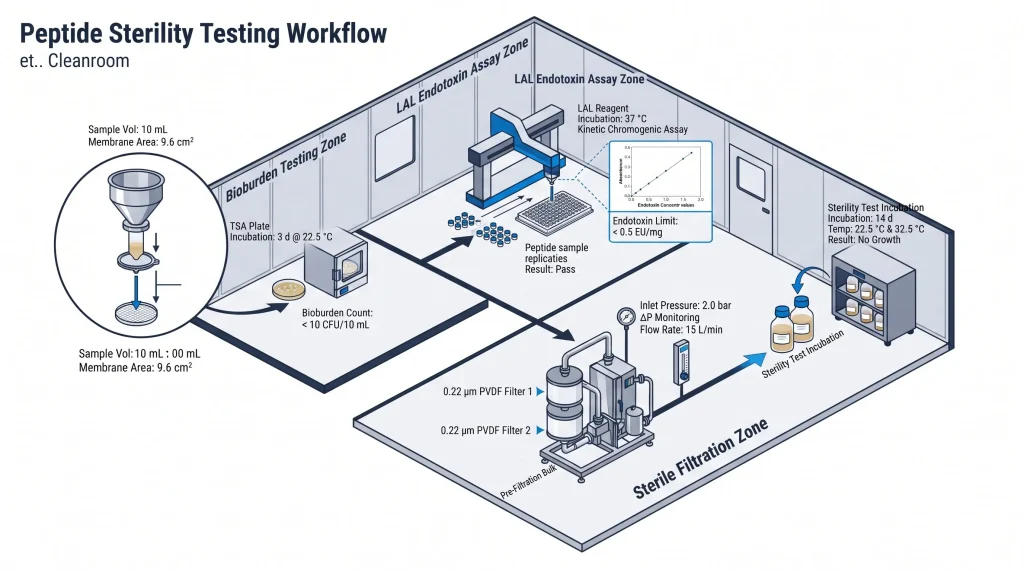
A peptide sterility testing program is a set of checks used to confirm that a research compound is free of microbial contamination. For peptides used in cell-based or in vitro assays, taint can kill cell lines and ruin studies. Key tests include bioburden testing (total microbial count), the LAL (LAL) assay for bacterial endotoxins, and sterile filtering through a 0.22-micrometer membrane. According to Huff et al. (2004), uncontrolled bioburden in research peptide lots is a leading cause of irreproducible in vitro data.
Next Level Pharm is a US-based supplier of research-grade peptides, verified to ≥99.4% purity by HPLC and mass spectrometry on every batch. Lots are lyophilized under controlled conditions and shipped with a COA that includes purity and identity data.
Sterility testing is most key when a peptide will be used in cell culture or injected into research animals. This guide covers the main tests and methods used to assess microbial taint in research-grade peptides.
Key Takeaways
- Bioburden sets the microbial baseline: Bioburden testing counts total viable microbes in a sample before sterile filtering.
- LAL tests detect endotoxins: The LAL assay detects LPS (LPS) from gram-negative bacteria. Even trace endotoxins disrupt cell assays.
- 0.22 um filtering removes bacteria: Sterile filtering through a 0.22-micrometer membrane removes bacteria from a liquid sample.
- COA-verified lots: Next Level Pharm ships lyophilized peptide lots with HPLC and mass spec data on every batch. Each lot has a traceable number.
- Research use only: All peptides in this catalog are for laboratory research use only. No clinical outcomes are claimed.
What Is Bioburden Testing for Research Peptides?
Bioburden testing counts all viable microbes in a peptide sample before sterile filtering.
Bioburden is the total number of viable bacteria, yeast, and fungi in a sample. It is measured before the final filtering step. The test is done by plating a sample on growth media and counting colony-forming units (CFU) after growth time. A low bioburden means fewer organisms need to be removed by filtering. A high bioburden means the process environment is poorly controlled.
For research peptides, bioburden data is most relevant when the peptide will be used in cell culture. Cell culture media is susceptible to taint from even small numbers of bacteria. A peptide lot with high bioburden will contaminate a cell culture if the filtering step is skipped or if the filter is improperly used.
According to the Journal of Peptide Science (2012), bioburden data on peptide lots used in cell-based assays correlates with assay variability. Lots with higher starting bioburden show more variable cell viability outcomes even after filtering.
| Test Type | Target Organism | Detection Method | Target (research use) |
| Aerobic bioburden | Bacteria | Colony count (TAMC) | Less than 100 CFU/g |
| Yeast and mold | Fungi | Colony count (TYMC) | Less than 10 CFU/g |
| Endotoxin (LAL) | Gram-negative LPS | LAL gel-clot or kinetic | Less than 1 EU/mL |
| Sterility | All viable organisms | Membrane filtering | No growth |
What Is the LAL Assay and Why Does It Matter?
The LAL assay detects bacterial endotoxins (LPS). Even very low LPS levels can trigger false results in cell assays.
The LAL (LAL) assay detects LPS (LPS), a component of the outer membrane of gram-negative bacteria. LPS is also called LPS. It is not removed by sterile filtering because it is a molecule, not a living organism. A 0.22-micrometer filter removes bacteria but not LPS.
LPS at very low levels (parts per billion) activates immune cells in culture. It triggers NF-kB and cytokine release in macrophage-based cell lines. This can look like a real biological response to the peptide under study. If a researcher does not test for LPS, they may falsely attribute an LPS-driven response to the peptide. LAL testing catches this before the assay.
According to Skov et al. (2014), LPS contamination at 0.1 EU/mL is enough to activate TLR4 in RAW264.7 macrophage cells. This level is below what some researchers test for, making routine LAL testing on every lot key.
How Does Sterile Filtering Work for Peptide Solutions?
Sterile filtering pushes a dissolved peptide through a 0.22-micrometer filter to remove bacteria and particulates.
A 0.22-micrometer (0.22 um) syringe filter uses a membrane with pores small enough to trap bacteria. Bacteria range from 0.5 to 10 micrometers in size. Passing a peptide solution through the filter removes all bacteria but leaves the dissolved peptide in the filtrate.
Follow these steps when filtering peptide solutions.
- Use a low-protein-binding membrane (PVDF or PES) to cut peptide loss.
- Filter into a sterile vessel inside a laminar flow hood.
- Use one filter per batch and do not reuse filters.
- Test the filtrate by LAL assay to confirm LPS status.
Sterile filtering does not replace LPS testing. LPS molecules pass through the 0.22 um membrane. Researchers who need LPS-free peptide solutions must use LPS removal columns or LPS removal steps in addition to filtering.
Browse MOTS-c and SS-31 product pages for lot-specific COA data including purity from controlled synthesis environments.
What Is the Membrane Filtering Sterility Test?
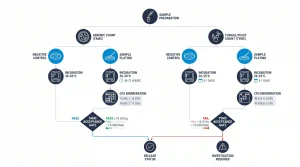
The membrane filtering sterility test checks whether any viable microbes pass through a 0.22 um filter after filtering.
The membrane filtering sterility test is a direct check for living organisms in the final filtered solution. The filtered sample is passed through a 0.45-micrometer detection membrane. The membrane is then placed on growth media. If any organisms remain, they will grow into visible colonies. No colony growth after 14 days of incubation is a sterile pass.
This test is used for clinical-grade products. For research-grade peptides, it is optional but useful when the lot will be used in long-duration cell culture studies. Many research suppliers do not run full membrane filtering sterility testing on research-grade lots. Researchers running sensitive cell assays may choose to run their own in-house sterility check after receiving a lot.
How Is LPS Removed from Peptide Solutions?
LPS is removed from peptide solutions using polymyxin B columns, activated charcoal, or specific ion-exchange steps.
Standard sterile filtering (0.22 um) does not remove LPS. A separate LPS removal step is needed for assays that are sensitive to LPS. Polymyxin B-agarose columns are the most common method. Polymyxin B binds LPS directly. The peptide passes through the column while LPS is retained. The eluate is then tested by LAL assay to confirm LPS reduction below the target level.
Activated charcoal also traps LPS but is less specific and may remove peptides along with LPS. Size filtering is effective when the peptide and LPS differ significantly in size. For most research peptides (1-5 kDa), LPS (about 10 kDa) is larger and can be separated by size filtering.
Browse KPV and NAD+ for examples of lyophilized research lots from controlled synthesis environments.
What Research Tools Support Peptide Sterility Testing?
LAL assay kits, 0.22 um low-binding syringe filters, and COA-verified peptide lots are the core tools for sterility research.
Research teams need a verified peptide lot to run any sterility study. The lot must match the published reference standard for molecular weight and purity. Next Level Pharm verifies each peptide lot by HPLC and mass spectrometry before shipping. Standard tools include a LAL kinetic assay kit, 0.22 um PVDF syringe filters, and sterile collection vessels. A laminar flow safety cabinet is also needed. View the research peptide catalog for lot-specific COA and purity data.
Frequently Asked Questions
What is peptide sterility testing?
Peptide sterility testing is a set of checks that confirm a research compound is free of microbial taint. Key tests include bioburden testing (total colony-forming unit count), the LAL assay for bacterial endotoxins, and membrane filtering sterility testing. These checks are most key when the peptide will be used in cell culture or animal research models. For research use only, sterility data is not required for all lots but is needed for sensitive assays.
What is the LAL assay used for in research?
The LAL (LAL) assay detects LPS (LPS), also known as LPS. LPS is a component of gram-negative bacterial membranes. It can activate immune cells at very low levels, even below 0.1 EU/mL. This can produce false-positive results in cell assays by triggering cytokine release. The LAL assay is run on the peptide solution to confirm LPS levels are below the threshold for the target assay system.
Does 0.22 um filtering remove endotoxins?
No. A 0.22 um syringe filter removes bacteria and particulates but not endotoxins. LPS (LPS) molecules are much smaller than bacteria and pass through 0.22 um pores. A separate LPS removal step is needed, such as a polymyxin B column or activated charcoal trapping. After LPS removal, test the solution by LAL assay. Confirm the LPS level is below the limit for the assay system in use.
What is bioburden in the context of peptide research?
Bioburden is the total number of viable microbes in a peptide sample, measured before sterile filtering. It is reported in colony-forming units per gram (CFU/g). A lower bioburden means fewer organisms are present in the starting material. Bioburden data is used to assess manufacturing environment control. High bioburden lots may still pass sterility after filtering, but they carry a higher risk if the filtering step fails. Bioburden limits for research peptides are often below 100 CFU/g.
What is LPS and why does it matter in cell assays?
LPS is LPS (LPS), a molecule found in the outer membrane of gram-negative bacteria. It is not a living organism and is not removed by sterile filtering. At very low levels (0.1 EU/mL), LPS activates TLR4 receptors on immune cells. This triggers NF-kB and cytokine release that can look like a real biological signal. Researchers using macrophage or immune cell lines must test for LPS to avoid misinterpreting LPS-driven responses as peptide-driven effects.
What is membrane filtering sterility testing?
Membrane filtering sterility testing is a direct check for viable microbes in a filtered liquid sample. The filtered sample is passed through a 0.45 um membrane. The membrane is placed on growth media and incubated for 14 days. No colony growth is a sterile pass. This test follows USP and Ph. Eur. guidelines. It is used for clinical-grade products. For research-grade peptides, it is optional but used when the lot will be placed in sensitive, long-duration cell culture.
How should peptide solutions be filtered for cell culture use?
Dissolve the peptide in the right solvent, then filter through a 0.22 um low-protein-binding syringe filter (PVDF or PES membrane). Filter into a sterile tube inside a laminar flow safety cabinet. Use a fresh filter for each batch and do not reuse filters. After filtering, test by LAL assay if the assay is LPS-sensitive. Filter slowly and avoid excessive pressure that can damage the membrane. Discard the first 0.5 mL to flush the filter dead volume before collecting the sample.
What is an EU/mL limit for LPS in peptide research?
EU/mL stands for LPS units per milliliter. It is the unit used in LAL assay results. For most cell-based research assays, a limit of 1 EU/mL is used as the cutoff. Sensitive assays using macrophage or dendritic cell lines may require less than 0.1 EU/mL. In vitro systems that measure NF-kB or cytokine responses are the most sensitive. Researchers should set the LPS limit based on the sensitivity of the specific cell type and assay format they are using.
Can lyophilized peptides have sterility concerns?
Lyophilized (freeze-dried) peptides have a lower risk of microbial growth than solution stocks because dry powder does not support organism growth. However, taint can occur during manufacturing if the environment is not controlled. After dissolution, the peptide solution can support microbial growth if not filtered. Researchers should filter reconstituted peptide solutions before use in cell culture. Lyophilized lots stored cold and dry maintain their purity and are less prone to contamination than solution stocks.
What is the difference between sterility and purity for peptides?
Purity refers to the chemical composition of a peptide lot, measured by HPLC as a percentage. Sterility refers to the absence of viable microbes. A peptide can be ≥99% pure by HPLC and still be contaminated with bacteria or LPS. These are two separate quality attributes. HPLC purity does not indicate microbial status. Researchers need both purity data (from HPLC and mass spec on the COA) and sterility data (from bioburden and LAL testing) for sensitive assays.
Summary
Peptide sterility testing covers three main areas: bioburden testing, LPS testing by LAL assay, and sterile filtering. Each addresses a different type of taint. Bioburden counts living organisms before filtering. LAL testing detects LPS that passes through filters. Sterile filtering removes bacteria from dissolved peptide solutions.
LPS is the most common source of false results in cell-based peptide research. Even trace LPS levels can activate immune cells and mimic a biological response to the peptide. Routine LAL testing on every lot used in cell culture is the standard practice.
Next Level Pharm supplies lyophilized peptide lots from controlled synthesis environments. Every batch is verified by HPLC and mass spec before shipping. Researchers who need full sterility data should run in-house LAL and bioburden testing before use in sensitive assays.
What Should You Do Next?
Researchers should select sterility and endotoxin checks that match the sensitivity of the cell model. Confirm the COA lot number and purity before beginning bioburden testing. Record membrane, assay, sample, and lot details in the lab log for each run. Researchers sourcing these lab peptides can shop research peptides with full COA and lot traceability.
People Also Read
About the Author
Next Level Pharm Research Team
Alex M covers peer-reviewed findings in peptide science for Next Level Pharm, a US-based supplier of research-grade peptides verified to ≥99% purity via HPLC and mass spectrometry on every batch.
Disclaimer: For research purposes only. Not intended for human consumption. Next Level Pharm products are not intended for diagnostic, therapeutic, or medicinal use. This content does not constitute medical advice. Always consult a licensed healthcare professional before making any health-related decisions.