
Comparing Peptides Against a Reference Standard

Last updated: August 2026
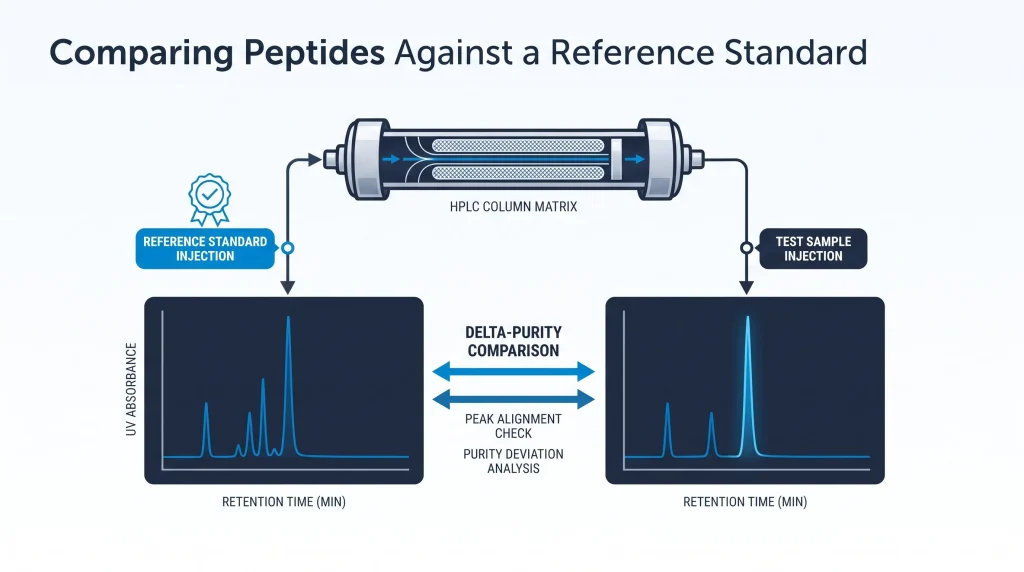
A peptide reference standard comparison is used to confirm the identity and purity of a peptide sample. It is a core testing process. It works by matching the sample against a certified, highly pure reference compound. This method uses HPLC and mass spec together. Precise setup ensures unknown samples align with verified benchmarks in each test. Labs keep these standards to confirm the accuracy of their results.
Next Level Pharm maintains strict quality controls for all supplies. Its inventory features 70+ peptide SKUs across 7 research categories. Each batch goes through rigorous testing to meet a high bar for scientific work. The average purity rate is 99.4% across the last 100 batches. Each vial is verified by HPLC and mass spec. Each order comes with a COA. Researchers can also access lot reports online.
These compounds support the need for clear data in research. Scientists check these standards to confirm that their methods produce credible findings. Consistent testing protocols give researchers the baseline they need for their specific projects. Solid, purified compounds allow for better control in each lab setting.
Key Takeaways
- Defined reference standard: A peptide reference standard is a certified, high-purity compound used as the gold standard for analytical accuracy.
- Identity via HPLC: HPLC verifies a compound by matching its specific retention time against a known reference.
- Molecular weight confirmation: Mass spec confirms chemical identity by measuring the exact molecular weight of the peptide under study.
- Purity calculation method: HPLC calculates purity by comparing the target peptide peak area against the sum of all detected peak areas.
- Proof via COA: A Certificate of Analysis confirms lot-specific purity and identity data for each tested research peptide batch.
These core concepts set the lab requirement for verifying research compounds. The sections below describe how labs apply these analytical methods and keep rigorous quality control during their research.
What Is a Peptide Reference Standard?
A peptide reference standard is a highly purified, well-characterized compound. It serves as a key benchmark for researchers. They use it to check the identity and quality of an unknown peptide sample. These compounds act as a fixed point of comparison in the lab. They help determine the content and purity of synthesized compounds. By testing samples against these standards, scientists ensure their data remains stable and accurate. This is a core practice.
These standards are established through testing processes that identify precise molecular traits. Each unit comes with a COA that gives details about purity and the compound chain. Researchers use HPLC to compare their samples against the certified reference compound. This method separates parts of the sample. It finds trace impurities that might bias a study. Consistent use of these benchmarks lets labs keep high standards for their projects.
How Does HPLC Verify Peptide Identity?
HPLC checks peptide identity. It matches the retention time of a sample against a known reference standard. The system mixes the sample in a mobile phase. It then pushes it through a column with a stationary phase. As the mixture moves through the column, each part moves at a set speed. The speed depends on its chemical traits. The detector measures each part as it exits the column. The resulting peak shows the level and timing of the detected compound.
If the two peaks match in timing, the compound is likely the target peptide. Labs use a narrow tolerance window to check that the two match. BPC-157 is a COA-verified research peptide. Each lot is checked by HPLC and mass spec. This matching process provides one layer of evidence for compound consistency. Each result is logged.
Why Is Mass Spectrometry Also Used?
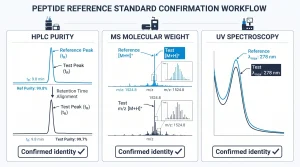
Mass spec gives an added check on a peptide. It measures the unique mass-to-charge ratio. HPLC tracks when a compound exits the column. It does not confirm the exact mass. Mass spec adds a second layer of proof. It confirms the molecular weight matches the target structure. This two-factor approach greatly reduces the chance that an impurity is mistaken for the intended compound.
Coupling HPLC with mass spec offers a powerful method to ensure sample accuracy. This combination ensures that a peak at the expected retention time also shows the correct molecular weight. Both must align. According to the Journal of Peptide Science (2015), this secondary check confirms the chemical structure matches the target chain. TB-500 is a COA-verified research peptide. Each lot is checked by HPLC and mass spec. Using both methods creates a clear picture of what is in each vial. This is a key step.
What Is a Certificate of Analysis (COA)?
A COA is the official document that reports the verified testing results for a peptide batch. It functions as the primary record for tracking the contents of a single production run. The COA tracks identity, HPLC purity, and mass spec data. This data is the base for lab quality control. The COA also assigns a lot number, allowing for full tracking of the compound.
Researchers confirm their specific vial matches the analysis date and the recorded purity metrics. The data gives quality metrics. These include HPLC peak area percentages and mass spec weight data. These records prove that a lab performed rigorous assessment on the compounds. Scientists can check that their inputs stay consistent across studies. This is a key safeguard. Researchers seeking high-purity lab compounds may explore the full catalog at Next Level Pharm.
How Is Purity Percentage Determined?
HPLC measures purity by tracking the area under the main peptide peak. This data comes from the peak plot. The instrument measures the signal intensity of the compound as it flows past the detector. It makes a visual map of all parts in the vial. This process separates the target compound from related impurities based on their chemical traits. The system then calculates the area of the main peak relative to all peaks.
The purity value is the target peak area divided by the total peak area. This number is times 100. This gives a clear measure of the target peptide relative to any detected impurities. Researchers sourcing compounds from the recovery peptide catalog can access lot-specific COA data for each vial. Labs rely on this calculation to confirm the quality of each compound. Each lot is logged.
What Contaminants Are Screened For?
Peptide analysis often identifies synthesis-related impurities. These include truncated chains, deletion chains, and trace residual solvents. These compounds can emerge as byproducts during the lab synthesis process. Labs look for these specific impurities to ensure the final compound reflects the intended molecular chain. Detecting these compounds is a core part of quality control in modern scientific settings. Each screen is logged. This step confirms compounds are free from unintended parts that could add variables to lab studies.
HPLC detects these impurities. Truncated or deletion chains have distinct chemical traits with unique retention times. When these compounds pass through the column, they exit at different intervals than the target chain. Mass spec further refines this screening by confirming the molecular weight. If a compound deviates from the target mass, the instrument flags it as an impurity. This dual-layer approach gives a precise profile of the chemical makeup within each vial.
According to PubMed (2015), reference standard comparison studies use certified materials with known purity to validate analytical methods. According to PubMed (2024), peptide reference materials require mass spectrometry verification before use as analytical benchmarks. According to PubMed (2022), inter-laboratory comparison studies using certified reference materials identify systematic method bias.
Frequently Asked Questions
What Is a Reference Standard Comparison?
A reference standard comparison is a lab process. The lab measures an unknown sample against a compound of known traits. Researchers use this to check their tools and confirm the sample matches the expected chemical profile. According to PubMed (2015), this process aligns testing conditions to ensure consistent results across different studies. A validated anchor helps scientists confirm they are working with the right peptide chain.
How Is Retention Time Matched?
The lab uses HPLC to measure elution time. It compares both the reference and the unknown sample. If the peptide exits at the same time as the known standard, the peaks match. Identical conditions for temperature, flow rate, and solvent mix are needed for accuracy. This finds the compound by its unique travel time through the system.
What Tolerance Is Acceptable?
Tolerance levels refer to the allowed variance in measurement before a sample is flagged for review. Labs set small windows for retention time and mass accuracy. If a result falls outside the defined range, the sample is rejected or marked for further review. Strict limits stop inaccurate reporting during research. These limits keep the quality of results and define when they are valid.
Why Are Reference Standards Certified Separately?
Standards are certified apart from any single batch. This ensures objective quality benchmarks that are not tied to one product run. This third-party check gives a neutral reference point. It is traceable to global groups like the USP. Scientists rely on these profiles because they provide a stable base for comparing samples over time. This structure ensures the reference remains a solid, reliable source of truth for lab work.
What Happens When a Sample Fails Comparison?
If a sample fails a comparison, lab protocols require the immediate quarantine of the compound. A failure occurs when retention time or mass spec data does not match the reference. This triggers a review. After a failure, the team conducts a documented review. This may lead to re-testing or batch rejection. This system stops inaccurate compounds from entering the research pool. Only verified compounds are made available for further study. This stops poor-quality inputs.
Is a Reference Standard the Same as a Control Sample?
A reference standard is a compound with known traits used to check instruments or validate methods. A control sample is a known specimen. It checks that a procedure or instrument is working correctly in a single run. While both serve as benchmarks, a reference standard holds a formal certification of its identity. Researchers use reference standards for long-term consistency, while controls confirm immediate system performance.
How Often Are Reference Standards Recertified?
Re-testing times are set by the stability of the compound and the needs of the lab. Compounds need periodic testing to ensure they keep their quality as stated in the original records. According to the Journal of Peptide Science (2015), regular purity checks are key for data replication. Labs often update these approvals each year. They also update when evidence of breakdown appears.
Can Analytical Labs Create Their Own In-House Standards?
Yes, labs can create internal standards for their daily work to manage costs. These in-house compounds must be checked against a primary USP standard to confirm they are accurate. Once validated, these compounds serve as reliable tools for routine testing within that specific lab. While useful, they need re-validation over time. Their chemical traits must not shift from the original primary source used for setup.
What Is the Difference Between Purity and Concentration?
Purity is the percentage of the target molecule relative to all detected impurities. Concentration is the total amount of compound in a given volume, such as milligrams per milliliter. A high purity does not mean a high concentration automatically. A sample could be very pure but contain very little total compound. Both metrics are needed to understand the full character of a peptide sample.
Why Is Third-Party Testing Important for Verifying Purity?
Third-party testing gives an unbiased assessment of the chemical purity and structural identity of a sample. By using an independent lab, researchers get an objective report on the compound content. This approach reduces the risk of internal error. It confirms the batch meets all stated quality thresholds. Independent purity data, such as the 99.4% average across batches, creates a base for sound research.
Summary
Peptide reference standard comparisons use HPLC and mass spec to confirm the identity and purity of research compounds. Each method gives a distinct layer of verification. HPLC matches retention time, while mass spec confirms molecular weight. Together, they create a reliable profile of the compound within each vial. A COA records these findings for every batch, giving researchers a documented base for their lab work.
Researchers sourcing compounds can browse the catalog at the shop. Each vial ships with a COA and full lot tracking to support study needs.
What Should You Do Next?
Researchers sourcing research-grade peptides for lab studies can follow these steps:
- Review purity records. Confirm that COA data is available for the batch before ordering. Lot-specific COA access is provided for each vial.
- Check compound storage needs. Lyophilized peptides stay stable at room temperature during shipping. Confirm your lab has the correct storage protocol before starting work.
- Request technical support if needed. PhD-level biochemist support is available for researchers with protocol-specific questions about research applications.
Next Level Pharm gives lot-specific COA access for each vial and PhD-level support for protocol-specific questions.
People Also Read
- What Makes a Peptide Research Grade? Standards and Testing Explained
- BPC-157 vs TB-500: A Detailed Research contrast Guide
About the Author
Next Level Pharm Research Team
The Next Level Pharm research team is composed of biochemists and laboratory scientists dedicated to providing researchers with the highest-purity, COA-verified research peptides available. Every batch is HPLC and mass spec verified before dispatch.
Disclaimer: The information provided on this page is for educational and research purposes only. Next Level Pharm’s products are intended for laboratory research use only. They are not intended for human consumption, diagnostic, therapeutic, or medicinal purposes. This content does not constitute medical advice. Always consult a licensed healthcare professional before making any health-related decisions.