
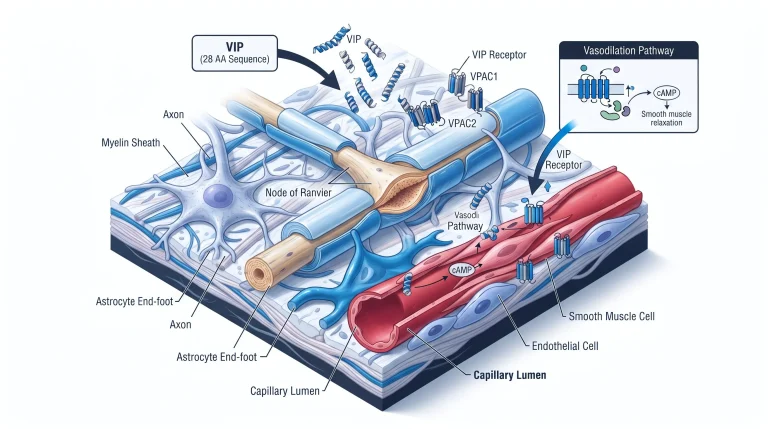
VIP Research: Vasoactive Intestinal Peptide Studies
VIP is a neuropeptide hormone belonging to the secretin/glucagon family that functions as a neuromodulator and neurotransmitter in various tissues.
VIP is a neuropeptide hormone belonging to the secretin/glucagon family that functions as a neuromodulator and neurotransmitter in various tissues.
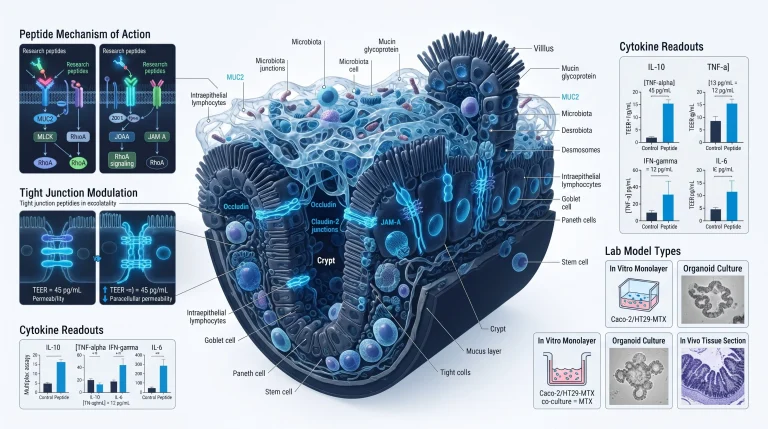
Last updated: July 2026 A peptide gut mucosal biology study is a controlled lab model that tests how small protein chains interact with the intestinal lining. The gut mucosa is the inner lining of the intestine. It is made of gut cells, a mucus layer, and an underlying layer of connective tissue. Peptides like BPC-157 […]
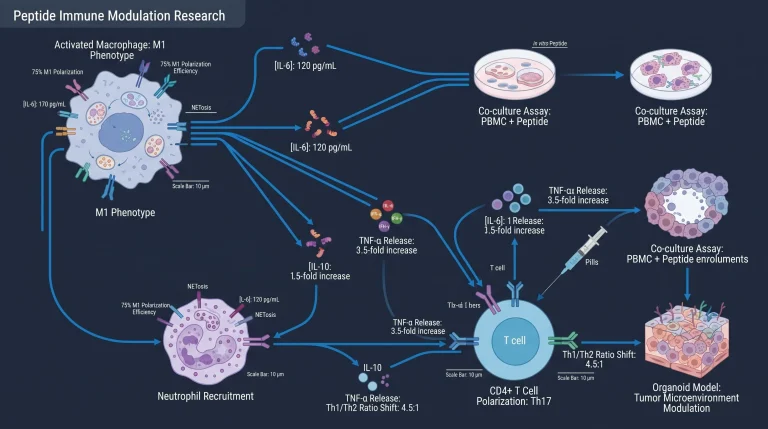
Peptide immune modulation research studies how KPV, BPC-157, and Epithalon change cytokine output and T-cell activity in preclinical lab models.
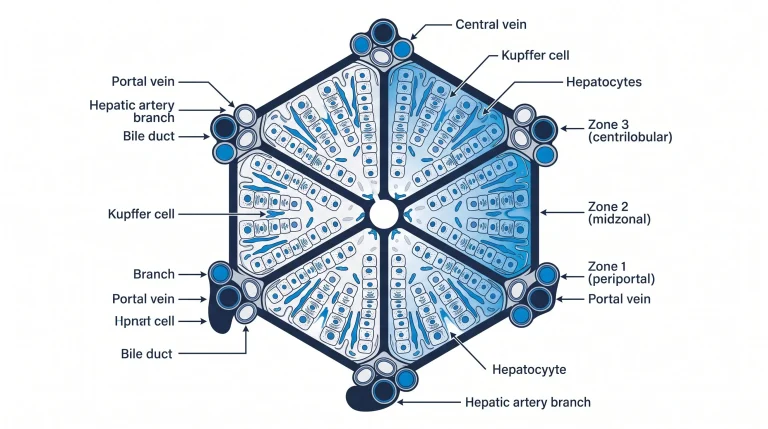
Liver bioregulator research: BPC-157, AICAR, and SS-31 studied in hepatocyte cell and animal models. Liver cell and metabolic pathway data.
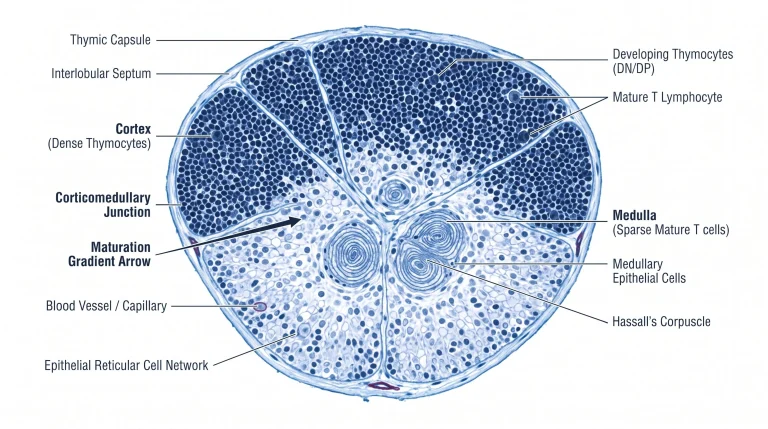
Thymus immune bioregulator research: Thymalin, Epithalon, Selank, and KPV studied in immune and T-cell models. Cell and animal model data.
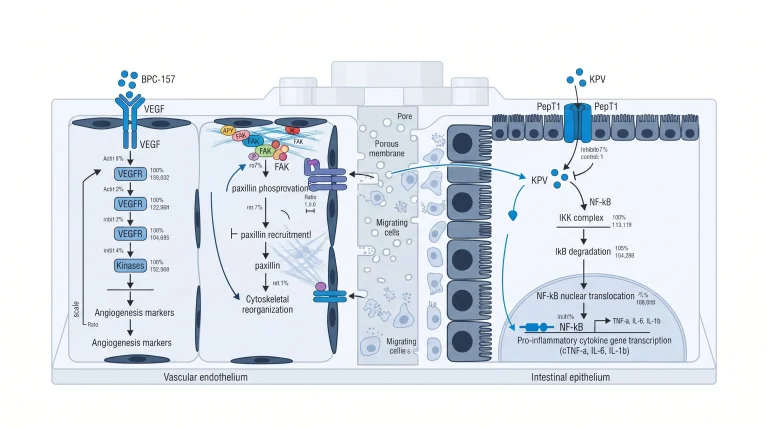
BPC-157 vs KPV peptide research comparison. BPC-157 signals via VEGF and nitric oxide. KPV blocks NF-kB through PepT1.
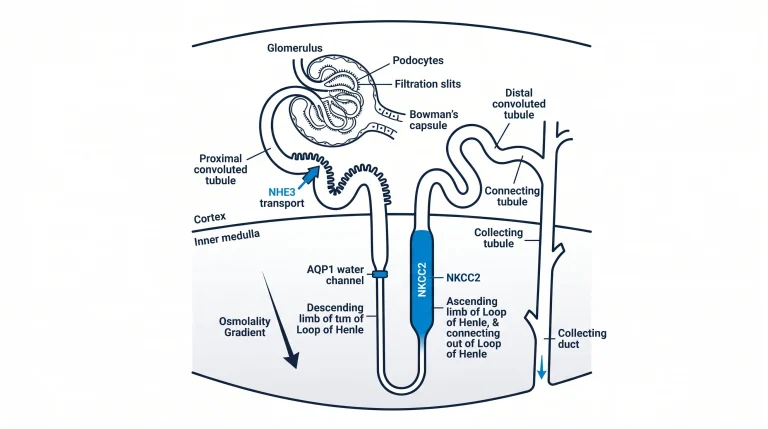
Kidney bioregulator research: KPV, BPC-157, ARA-290, and SS-31 studied in nephron and tubular cell models. Cell and animal model data.
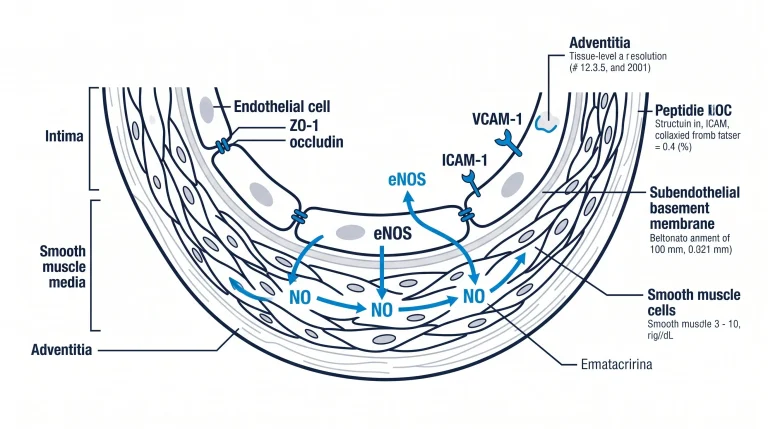
Vascular bioregulator research: cardiogen, B7-33, BPC-157, and SS-31 in endothelial and cardiac cell models. Cell and animal model data.
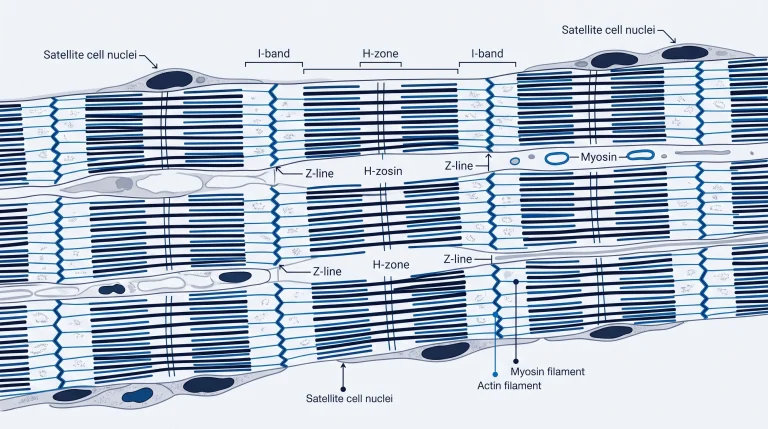
Research review of muscle bioregulators: myostatin pathway, ACE-031, MOTS-c, and MGF in cell and animal models. Lab research use only.
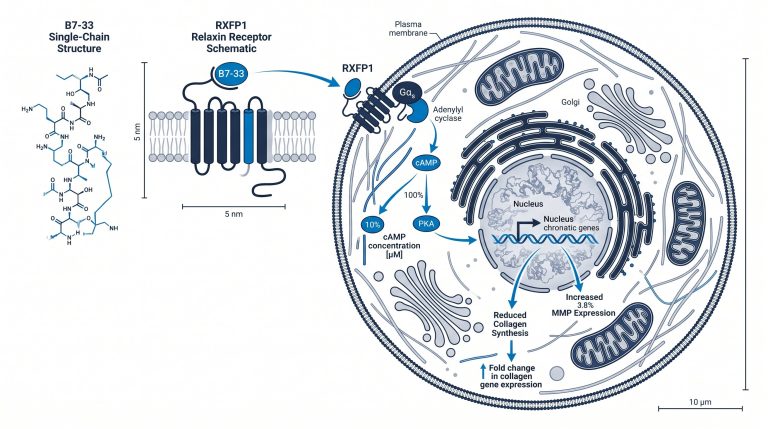
Explore B7-33 research: single-chain relaxin-2 analog, RXFP1 receptor, collagen I ELISA, Griess assay, and fibroblast cell model methods for lab use.