
BPC-157 vs TB-500: A Detailed Research Comparison Guide

Last updated: May 2026
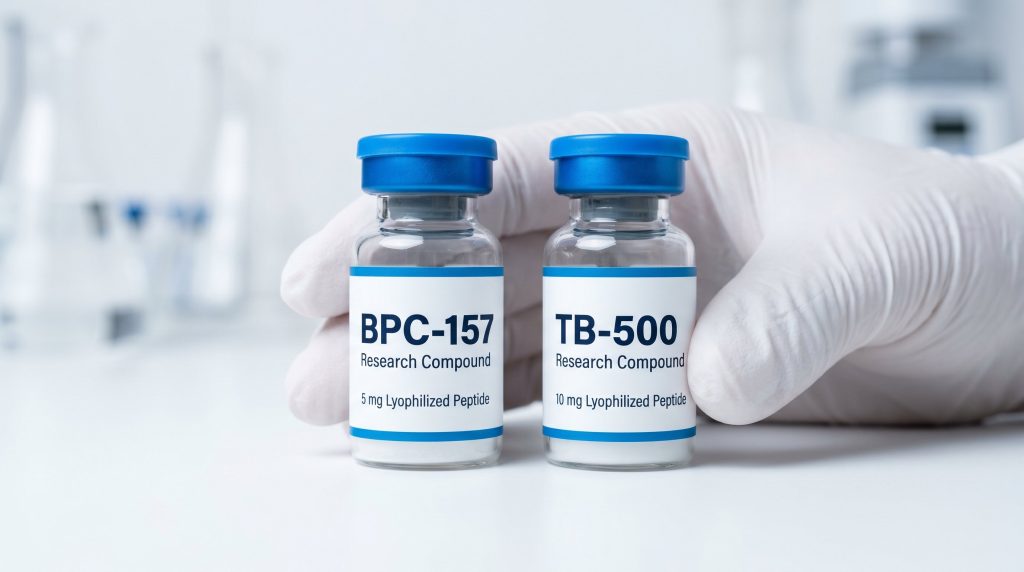
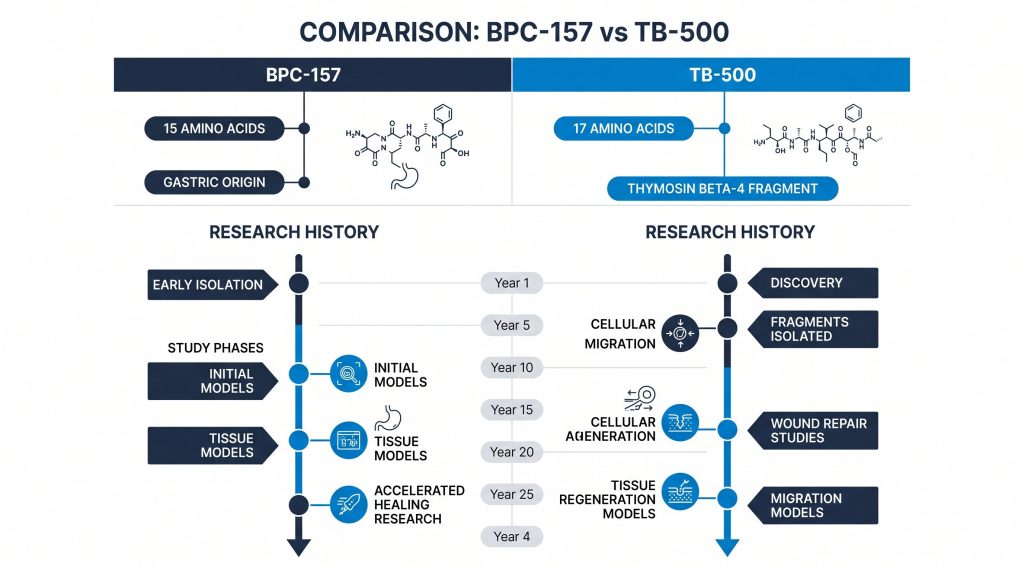
A research comparison of BPC-157 and TB-500 looks at two synthetic peptides studied for tissue repair, angiogenesis, and wound healing in lab models. The two compounds are different molecules with different mechanisms, even though they often show up in the same research conversations. BPC-157 is a 15-amino-acid peptide from a gastric protein. TB-500 is a 17-amino-acid fragment of thymosin beta-4. They are not interchangeable.
Next Level Pharm supplies research-grade BPC-157 and TB-500 to labs and independent researchers. Every batch is verified to at least 99 percent purity by HPLC and mass spec, with a Certificate of Analysis tied to the exact lot delivered.
The sections below cover what each peptide is, how they differ at the molecular level, the mechanisms studied for each, what happens when they appear together in research protocols, and what to check when sourcing research-grade material.
Key Takeaways
- Structure: BPC-157 is a 15-amino-acid pentadecapeptide. TB-500 is a 17-amino-acid synthetic fragment of thymosin beta-4. Different molecules, different research lineages.
- Mechanism focus: BPC-157 research targets angiogenesis, VEGF expression, and tendon and gut repair. TB-500 research targets actin sequestration, cell migration, and cardiac and corneal repair.
- Research bases: BPC-157 has the broader research footprint across organ systems. TB-500 has deeper work in cardiovascular and ophthalmic research models.
- Combined protocols: Some research has examined the two together, but controlled comparison data is limited.
- Quality check: Both peptides need HPLC purity above 99 percent, mass spec identity confirmation, and a Certificate of Analysis on every batch.
Here is a side-by-side look at how the two peptides compare, what mechanisms each has been studied for, and what to look for in a research-grade supplier.
What Are BPC-157 and TB-500?
BPC-157 is a synthetic pentadecapeptide. It has 15 amino acids derived from a stable gastric pentadecapeptide first isolated from human gastric juice in research from the early 1990s. TB-500 is a synthetic 17-amino-acid fragment of thymosin beta-4. The full thymosin beta-4 protein is a naturally occurring actin-binding molecule, and TB-500 was developed as the active fragment for research applications.
The two compounds came from different research origins. BPC-157 was first studied in gastrointestinal research, then expanded to other organ systems. TB-500 came out of cardiovascular and wound-healing research focused on the actin-binding properties of thymosin beta-4. The research lineages shape where each compound shows up in published work today.
How Do BPC-157 and TB-500 Differ in Structure?
The structural difference goes beyond amino-acid count. BPC-157 is stable in gastric juice, which is why some research has examined oral routes in animal models. TB-500 is more typically given by parenteral routes because of its different physical properties and actin-binding mechanism. Stability and route specificity affect what experimental setups each compound fits.
Sequence differences also mean different molecular targets. According to a review in Molecular and Cellular Biochemistry (2014), BPC-157 has been associated with multiple downstream pathways including nitric oxide system modulation and growth-factor signaling. TB-500 research focuses on actin sequestration in cells undergoing migration or proliferation. The structural and target differences are why the two are picked for different research questions.
What Mechanisms Have Been Studied for Each?
BPC-157 mechanism research spans angiogenesis, neuroprotection, growth-factor expression, and nitric oxide signaling. According to a review in Current Pharmaceutical Design (2018), BPC-157 has been examined for tendon-to-bone healing, gut mucosa repair, and traumatic brain injury models. The mechanism literature emphasizes vascular endothelial growth factor expression and growth-hormone receptor pathways.
TB-500 mechanism research is narrower but more focused. According to a study in The FASEB Journal (2003), thymosin beta-4 sequesters G-actin monomers and has been studied for endothelial cell migration, dermal wound repair, and corneal healing. The synthetic TB-500 fragment retains the actin-binding property. Cardiovascular and ophthalmic research is where most TB-500 work appears in indexed databases.
Browse the recovery peptides catalog at Next Level Pharm for HPLC-verified BPC-157, TB-500, and pre-formulated stacks.
What Happens When BPC-157 and TB-500 Are Studied Together?
A subset of research has examined BPC-157 and TB-500 in combined protocols. Tissue repair models are the main context, where the angiogenic effects of BPC-157 and the cellular migration effects of TB-500 are seen as complementary in theory. Some studies in musculoskeletal injury models have used both peptides together. Controlled comparison data is limited.
Methodological variability across the available work makes cross-study comparison hard. The combined-protocol literature is smaller than the single-peptide literature for either compound. Researchers planning combined-protocol work should read the available studies carefully before designing experimental conditions. The Next Level Pharm GLOW Stack packages BPC-157 plus TB-500 plus GHK-Cu in one preparation for researchers who want all three peptides verified from the same supplier.
What Defines Research-Grade Quality for Both?
Research-grade quality means the same three checks for both peptides. HPLC purity at 99 percent or above. Mass spec confirmation that the molecule matches the label. A Certificate of Analysis for every batch. Both BPC-157 and TB-500 have appeared in independent reviews with identity and purity problems from unverified suppliers, which makes documentation especially important for replication work.
According to a study in Drug Testing and Analysis (2020), products from unverified sources frequently failed identity or purity confirmation. Some labeled BPC-157 and TB-500 preparations contained degraded or substituted material. The reproducibility of any research outcome depends on confirming the compound matches the label. The verification chain that supports that certainty is the central function of a lot-level COA.
Established suppliers such as Peptide Sciences and Mile High Compounds operate in the same research peptide category. Next Level Pharm differentiates on dual-method HPLC plus independent third-party mass spectrometry on every batch, lot-level COA lookup, and an average purity of 99.4% across the last 100 batches – figures that can be verified against published lot data.
| Feature | BPC-157 | TB-500 |
| Type | Synthetic pentadecapeptide | Synthetic thymosin beta-4 fragment |
| Length | 15 amino acids | 17 amino acids |
| Origin | Gastric pentadecapeptide research | Thymosin beta-4 research |
| Main mechanisms | VEGF, nitric oxide, growth factor | Actin sequestration, cell migration |
| Most-studied tissues | Tendon, gut, neuroprotection | Cardiac, corneal, dermal |
| First peer-reviewed work | Early 1990s | 2003 (TB-500 specifically) |
Frequently Asked Questions
What is the difference between BPC-157 and TB-500 in research?
BPC-157 is a 15-amino-acid synthetic peptide from a gastric pentadecapeptide. TB-500 is a 17-amino-acid synthetic fragment of thymosin beta-4. The compounds differ in molecular sequence, primary mechanism, and the research contexts where they show up most often. BPC-157 work emphasizes angiogenesis and tissue repair. TB-500 work focuses on actin binding and cell migration in cardiac, corneal, and wound healing research models.
Which peptide has more published research?
BPC-157 has a broader research base across organ systems, with work in tendon, gut, neuroprotection, and angiogenesis. TB-500 has a smaller but deeper research base concentrated in cardiac and ophthalmic models. Thymosin beta-4 research more broadly has substantial publication volume going back decades. The total publication count is comparable between the two compounds, but the distribution across research contexts differs.
What mechanisms does BPC-157 research describe?
BPC-157 research describes effects on multiple pathways. The most-cited include vascular endothelial growth factor expression, nitric oxide system signaling, growth-hormone receptor pathways, and dopamine system interaction in some neurological models. The breadth of pathway involvement is one reason BPC-157 appears across diverse preclinical models in published literature. Researchers typically pick BPC-157 when studying angiogenesis or multi-tissue repair, since few other peptides cover so many pathways in published work.
How does TB-500 work in research models?
TB-500 is built from thymosin beta-4, an actin-binding protein. The peptide sequesters G-actin monomers, which affects cell migration and proliferation rates in cell culture. According to a 2003 study in The FASEB Journal, thymosin beta-4 has been studied for endothelial cell migration, dermal wound repair, and corneal healing across published research models. The synthetic TB-500 fragment retains the actin-binding mechanism.
Has BPC-157 been studied for kidney or liver effects?
BPC-157 has been studied across multiple organ-specific research models, including kidney and liver tissue. Published work uses rodent models examining organ injury markers, with endpoints including biochemical and histological assessment of treated and control groups. The findings stay restricted to animal research contexts only. There is no clinical evidence base supporting inferences about human kidney or liver applications from the available preclinical data.
Can BPC-157 and TB-500 be used together in research?
A subset of research has examined the two together in tissue repair models. The angiogenic effects of BPC-157 and the cell migration effects of TB-500 are seen as complementary in theory. Controlled outcome data from co-administration studies remains limited. Methodological variability across the available work affects cross-study comparison. Researchers planning combined protocols should read the specific available studies before designing experimental conditions.
Are BPC-157 and TB-500 from the same peptide family?
No. BPC-157 comes from a gastric pentadecapeptide research lineage developed in the early 1990s. TB-500 is a synthetic fragment of thymosin beta-4, an actin-binding protein from the thymosin family. The two compounds share research interest in tissue repair but differ structurally, mechanistically, and in their developmental histories as documented across the published research literature on each compound separately and together.
How is research-grade peptide quality verified?
Verification involves three analytical confirmations. HPLC purity analysis confirms the compound is at 99 percent or above. Mass spec confirms the molecular weight matches the expected peptide sequence. A Certificate of Analysis documents both for the specific lot delivered. Without documented verification, the same peptide name from two suppliers can produce different research results, making the COA the practical gate for reproducible work.
Summary
BPC-157 and TB-500 are two synthetic research peptides with different structures and different research lineages. BPC-157 is a 15-amino-acid pentadecapeptide studied for angiogenesis, VEGF expression, and tissue repair across many preclinical models since the early 1990s.
TB-500 is a 17-amino-acid synthetic fragment of thymosin beta-4 studied since 2003 for actin sequestration, cell migration, and cardiac and corneal repair. Some research has examined the two together, but controlled comparison data is limited.
Research-grade sourcing requires HPLC purity above 99 percent, mass spec confirmation, and a Certificate of Analysis on every batch. Without that documentation, study results are not replicable across labs.
What Should You Do Next?
If you are working with BPC-157 or TB-500 for research, here is how to choose:
- Match the compound to the research mechanism. BPC-157 for angiogenesis, VEGF, or gut and tendon work. TB-500 for actin sequestration, cell migration, or cardiac and corneal models.
- If you want both peptides plus GHK-Cu in one prep, the GLOW Stack is the pre-formulated option.
- Ask for the Certificate of Analysis with the HPLC purity score and mass spec confirmation on every batch.
Browse the recovery peptide catalog for research-grade options shipped with full documentation.
Related research: BPC-157 mechanism of action, TB-500 mechanism of action, and the GLOW Stack (BPC-157, TB-500, GHK-Cu).
People Also Read
About the Author
Next Level Pharm Research Team
Alex M covers peer-reviewed findings in peptide science for Next Level Pharm, a US-based supplier of research-grade peptides verified to ≥99% purity via HPLC and mass spectrometry on every batch.
Disclaimer: The information provided on this page is for educational and research purposes only. Next Level Pharm’s products are intended for laboratory research use only. They are not intended for human consumption, diagnostic, therapeutic, or medicinal purposes. This content does not constitute medical advice. Always consult a licensed healthcare professional before making any health-related decisions.