
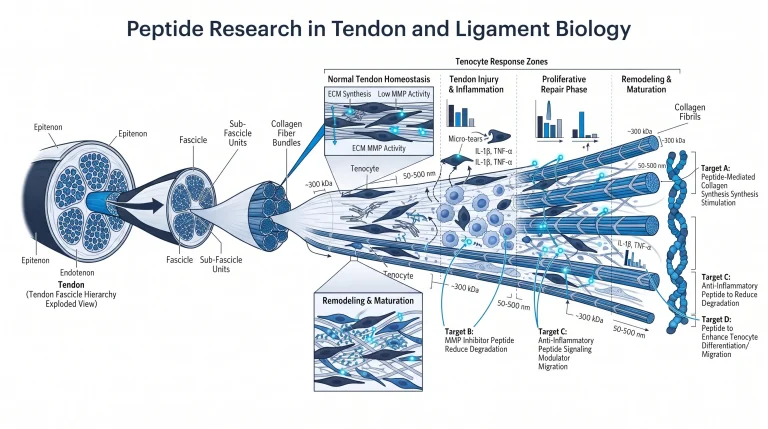
Peptide Research in Tendon and Ligament Biology
Peptide tendon repair research maps how BPC-157 and TB-500 affect collagen synthesis and tenocyte migration in lab models. COA-verified peptides for labs.
Peptide tendon repair research maps how BPC-157 and TB-500 affect collagen synthesis and tenocyte migration in lab models. COA-verified peptides for labs.
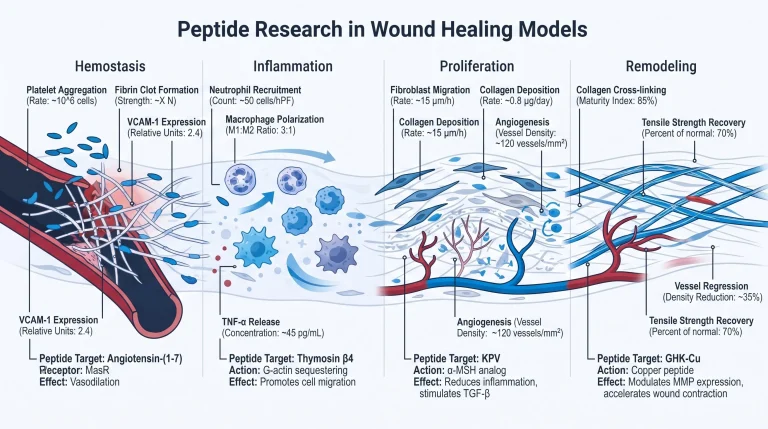
Last updated: July 2026 A peptide wound healing research model is a lab system that tests how small protein chains affect tissue repair pathways. Wounds move through four overlapping stages: hemostasis, swelling, cell growth, and tissue remodeling. Researchers study peptides that act at each stage. BPC-157, TB-500, GHK-Cu, and KPV are four compounds studied in […]
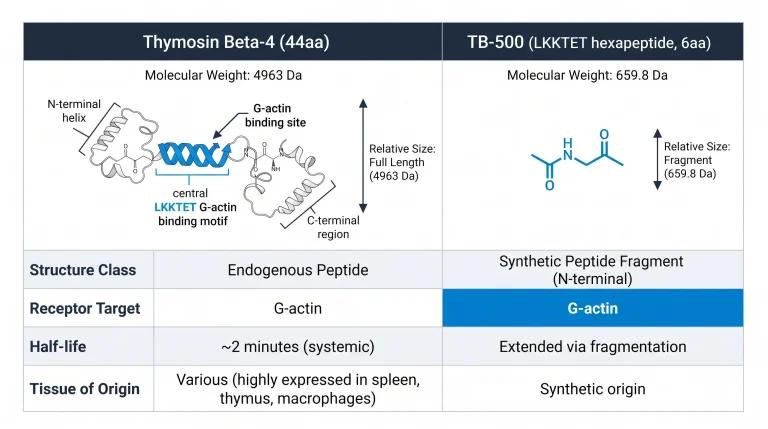
Thymosin beta-4 vs TB-500 research: full 43-aa Tb4 protein vs synthetic 17-23 fragment. Actin binding, ILK pathway, and cell migration data.
Thymosin beta-4 research: full Tb4 protein vs TB-500 17-23 fragment studies. Actin dynamics, cell migration assays in cell and animal models.
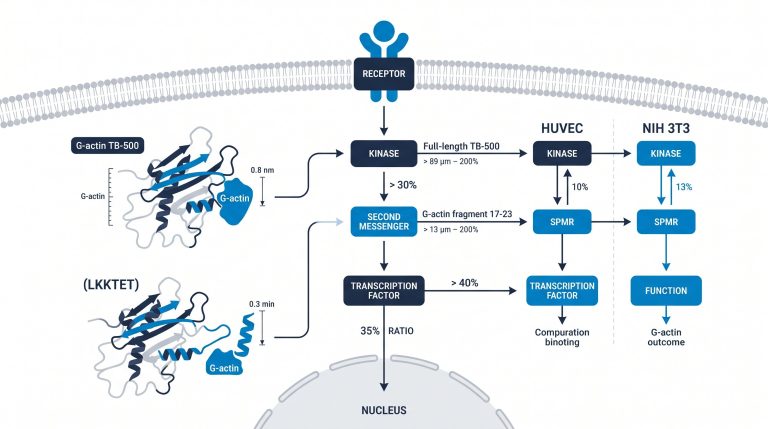
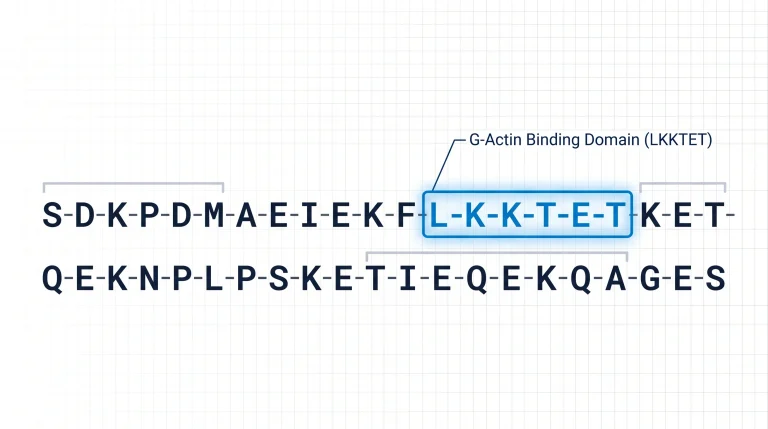
TB-500 fragment 17-23 (LKKTET) research: G-actin binding domain cell studies in HUVECs, NIH 3T3 fibroblasts, and HMEC-1 endothelial models.TB-500 fragment 17-23 (LKKTET) research: G-actin binding domain cell studies in HUVECs, NIH 3T3 fibroblasts, and HMEC-1 endothelial models.
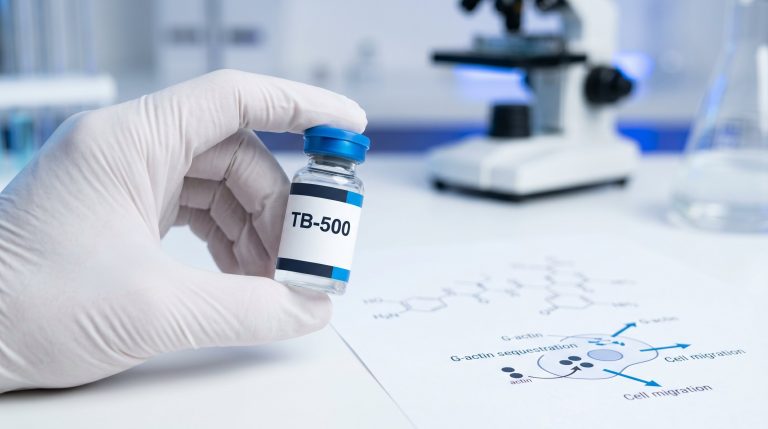
TB-500 mechanism explained: G-actin sequestration, cell migration research, angiogenesis studies, and sourcing standards for research use.
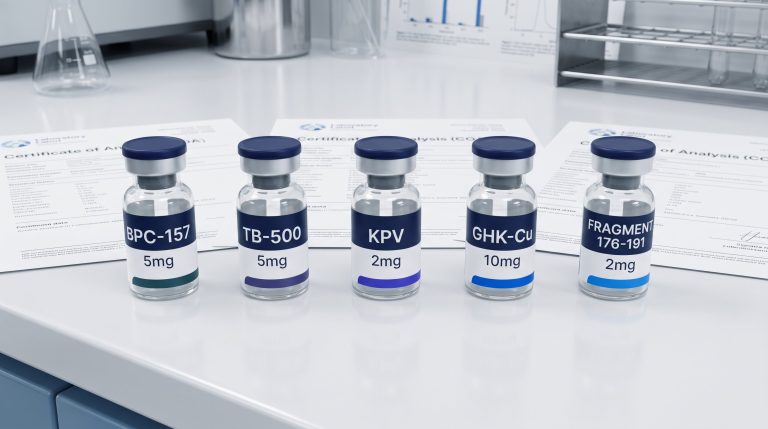
Recovery peptides comparison: BPC-157, TB-500, KPV, and GHK-Cu research mechanisms, study model findings, and COA-verified lab-grade sourcing guide.
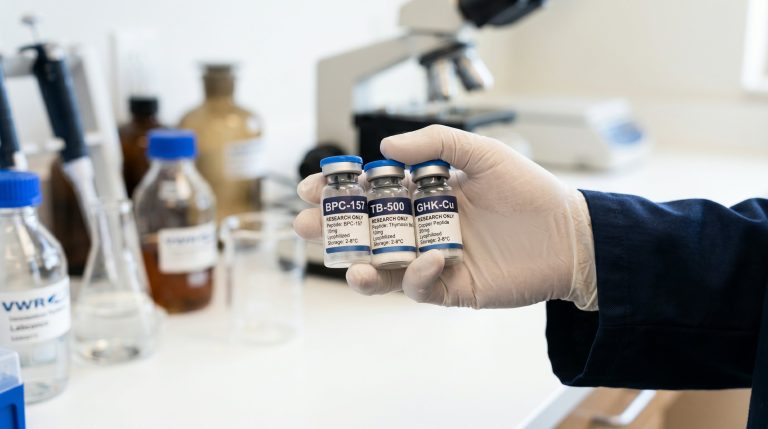
Wolverine Stack peptides explained: BPC-157, TB-500, and GHK-Cu research, how the stack came together, and what to check before buying.
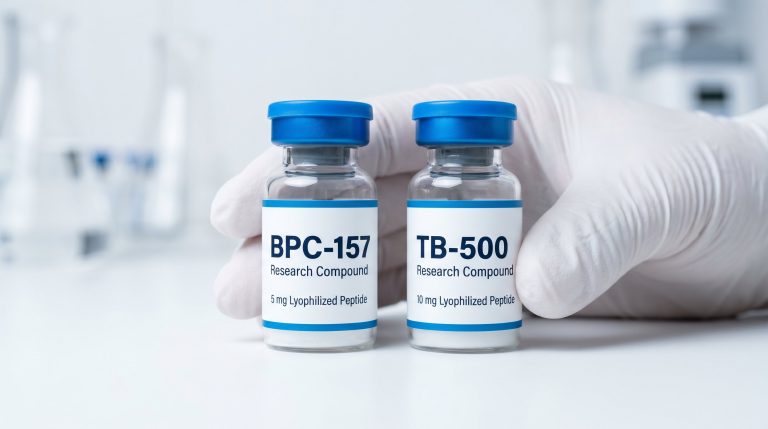
BPC-157 vs TB-500 compared: how each peptide works in research, what studies show, and what to check before buying research-grade material.