
What Is the GLOW Stack? BPC-157, TB-500, and GHK-Cu Research

Last updated: June 2026
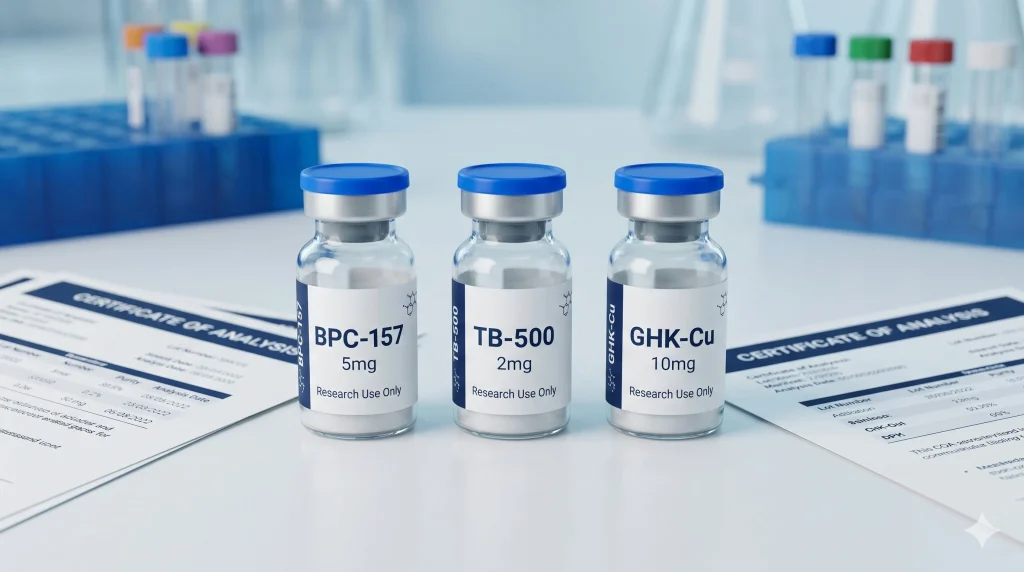
The GLOW Stack is a set of three research-grade peptides sold together: BPC-157, TB-500, and GHK-Cu. Each compound has been studied in lab and animal models. BPC-157 is a synthetic pentadecapeptide. TB-500 is a thymosin beta-4 fragment. GHK-Cu is a copper-binding tripeptide. Research on each peptide covers distinct biological pathways. Research-grade versions must reach ≥99% purity, confirmed by HPLC and mass spec, before any lab study.
Next Level Pharm is a US-based supplier of research-grade peptides verified to ≥99% purity. The GLOW Stack includes BPC-157, TB-500, and GHK-Cu as three separate lyophilized vials. Each ships with its own COA (certificate of analysis) showing HPLC and mass spec data and a lot number. The average purity across the last 100 batches is 99.4%.
Understanding each peptide in the stack helps researchers plan lab protocols. BPC-157 has been studied in rodent models of soft tissue. TB-500 has been studied for its role in actin regulation. GHK-Cu has been studied in fibroblast and skin tissue models. These are separate research areas with distinct mechanisms.
Key Takeaways
- The GLOW Stack Is Three Separate Peptides: BPC-157, TB-500, and GHK-Cu are sold as individual vials. Each has its own mechanism and research history.
- BPC-157 Is a Pentadecapeptide Studied in Rodent Models: It is a 15-amino acid sequence derived from body protection compound. Lab studies have examined it in gastrointestinal and soft tissue models.
- TB-500 Is a Thymosin Beta-4 Fragment Studied for Actin Binding: It binds G-actin and may play a role in cell migration. Animal models have examined it in tissue studies.
- GHK-Cu Is a Copper Tripeptide Studied in Fibroblast Models: The sequence is Gly-His-Lys. It binds copper (II) and has been studied for effects on collagen gene expression in cell cultures.
- Each Vial Requires Its Own COA: A valid research-grade GLOW Stack has three separate COAs. Each must show ≥99% purity by HPLC and the correct mass by mass spec.
Researchers sourcing a peptide stack should verify each compound separately. A COA from one vial does not confirm the quality of the others. All three vials must pass the same purity standard.
What Is BPC-157 and What Has Been Studied?
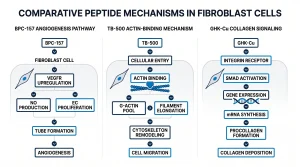
BPC-157 (body protection compound 157) is a synthetic 15-amino acid peptide. It is derived from a sequence found in human gastric juice. BPC-157 has been studied in rodent models of gastrointestinal tissue, tendon, and ligament.
Lab studies have examined changes in angiogenesis markers and cellular migration after BPC-157 treatment. These findings are from animal models only. No peer-reviewed human clinical trial data is published for BPC-157.
According to a study in J Mol Med (2017), BPC-157 has been studied in rodent models of soft tissue injury. Research has focused on its interactions with growth factor pathways and nitric oxide signaling. All findings are from preclinical models.
What Is TB-500 and What Has Been Studied?
TB-500 is a synthetic fragment of thymosin beta-4. Thymosin beta-4 is a 43-amino acid protein found in many cell types. TB-500 is the actin-binding region of this protein. It binds G-actin (globular actin) and has been studied for effects on cell migration in wound models.
Animal studies have examined TB-500 in tissue models. Researchers have measured changes in actin polymerization markers and cell movement after TB-500 administration. All findings are from animal and cell models only.
According to a study in PubMed (2003), thymosin beta-4 fragments that bind G-actin have been studied in wound and tissue repair models. TB-500 represents the active actin-binding portion of this protein in research contexts.
What Is GHK-Cu and What Has Been Studied?
GHK-Cu is a copper tripeptide. Its sequence is Gly-His-Lys. It binds copper (II) ions to form GHK-Cu. This complex has been studied in fibroblast cell cultures and skin tissue models
Lab research on GHK-Cu has examined effects on collagen gene expression, matrix metalloproteinase activity, and antioxidant pathways in cell models. These are cell-based and animal studies. They do not constitute human clinical trial data.
According to a study in Int J Mol Sci (2018), GHK-Cu has been studied for its effects on collagen synthesis genes in fibroblast cell lines. Research has examined how the copper complex interacts with cell signaling pathways relevant to extracellular matrix production.
How Does Each Peptide in the GLOW Stack Differ?
BPC-157, TB-500, and GHK-Cu have distinct sequences and mechanisms. They are studied in different tissue types. The table below summarizes key differences for research reference.
| Peptide | Type | Mechanism Studied | Primary Research Model |
| BPC-157 | 15-AA synthetic peptide | Angiogenesis, NO signaling | Rodent soft tissue models |
| TB-500 | Thymosin beta-4 fragment | G-actin binding, cell migration | Rodent wound models |
| GHK-Cu | Copper tripeptide | Collagen gene expression | Fibroblast cell cultures |
Next Level Pharm supplies the GLOW Stack at ≥99% purity per vial, COA-verified for research use. View the GLOW Stack product page. Each includes HPLC purity data, mass spec results, and a traceable lot number.
How Is Research-Grade GLOW Stack Purity Confirmed?
Each peptide in the GLOW Stack requires separate HPLC and mass spec verification. BPC-157 has 15 residues and a calculated mass of approximately 1419 Da. TB-500 is a 17-residue fragment with a calculated mass near 2113 Da. GHK-Cu is a tripeptide complex with a distinct mass after copper binding.
Next Level Pharm tests each compound by HPLC and mass spec before release. The COA for each vial includes the observed versus expected mass and the HPLC trace. BPC-157 and beauty peptides follow the same purity standard. Batches below ≥99% purity or with a mass mismatch are rejected.
Frequently Asked Questions
What Is the GLOW Stack?
The GLOW Stack is a set of three research-grade peptides sold together: BPC-157, TB-500, and GHK-Cu. Each vial is separate. Each compound has a distinct amino acid sequence, molecular weight, and research focus. BPC-157 is a 15-amino acid peptide, TB-500 is a thymosin beta-4 fragment, and GHK-Cu is a copper-binding tripeptide. All three are lyophilized and ship with individual COA documents.
What Is BPC-157 and How Has It Been Studied?
BPC-157 is a synthetic 15-amino acid peptide derived from a gastric juice protein. It has been studied in rodent models of soft tissue, gastrointestinal tissue, and tendon. Lab research has examined angiogenesis markers and nitric oxide signaling after BPC-157 treatment in animals. All published data comes from preclinical models. No peer-reviewed human clinical trial data is available for BPC-157 in research literature.
What Is TB-500 and What Is Its Mechanism?
TB-500 is the actin-binding fragment of thymosin beta-4. Thymosin beta-4 is a 43-amino acid protein expressed in many cell types. TB-500 binds G-actin (globular actin) and has been studied for its role in cell migration in wound and tissue models. Lab studies used rodent wound models. All findings are from animal and cell studies only. No human clinical trial data for TB-500 has been published in peer-reviewed literature.
What Is GHK-Cu and What Has It Been Studied For?
GHK-Cu is a copper tripeptide with the sequence Gly-His-Lys. It binds copper (II) ions. Lab research has studied its effects on collagen gene expression, matrix metalloproteinase activity, and antioxidant pathways in fibroblast cell cultures. These are cell-based and animal studies. They do not represent human clinical evidence. A valid research-grade GHK-Cu vial must show ≥99% purity on HPLC and correct mass on mass spec.
Are BPC-157, TB-500, and GHK-Cu Sold as One Vial?
No. The GLOW Stack includes three separate lyophilized vials: one for BPC-157, one for TB-500, and one for GHK-Cu. Each vial ships with its own COA showing HPLC purity and mass spec results for that specific compound. Researchers must verify each COA separately before using any vial in a lab study. Each compound has a different molecular weight and sequence that requires individual quality confirmation.
What Research Has Been Done on BPC-157 in Animal Models?
Rodent studies on BPC-157 have examined soft tissue changes, gastrointestinal tissue responses, and angiogenesis markers. Researchers have also studied tendon and ligament models. All published peer-reviewed data comes from animal models. The studies focus on cellular and vascular pathway changes in treated tissues. No human trials of BPC-157 are published in peer-reviewed literature as of the current date.
How Does GHK-Cu Affect Collagen Gene Expression?
In fibroblast cell culture studies, GHK-Cu has been shown to influence the expression of collagen-related genes. Researchers measured changes in collagen type I and type III mRNA levels in treated fibroblasts. The copper complex may interact with cell signaling pathways that regulate extracellular matrix proteins. These are cell-based findings. They do not constitute evidence of human skin or tissue effects.
How Is Each GLOW Stack Vial Verified for Purity?
Each GLOW Stack vial is verified separately by HPLC and mass spectrometry. HPLC confirms the compound accounts for ≥99% of the batch. Mass spec confirms the observed molecular weight matches the expected mass for the specific peptide sequence. BPC-157, TB-500, and GHK-Cu each have a unique expected mass. All three COAs must show passing results before any vial ships as research-grade.
What Is a COA for Peptide Research?
A COA (certificate of analysis) records test results for a specific production batch. For each GLOW Stack vial, the COA includes HPLC purity percentage, mass spec observed versus expected molecular weight, lot number, and storage conditions. The lot number lets researchers trace any vial to its production run. A valid COA with both HPLC and mass spec data is the minimum standard for research-grade peptide sourcing.
How Is the GLOW Stack Stored and Shipped?
Each GLOW Stack vial ships as a lyophilized (freeze-dried) powder stable at room temperature during transit. For long-term lab storage, vials should be kept at -20°C or lower. Each vial is sealed under inert conditions to limit oxidation. A COA with HPLC and mass spec data ships with every order. Lot numbers are included for full traceability to the specific production batch.
Summary
The GLOW Stack consists of three research-grade peptides: BPC-157, TB-500, and GHK-Cu. Each has been studied in separate lab and animal model contexts. BPC-157 is a pentadecapeptide studied in rodent soft tissue models. TB-500 is a thymosin beta-4 fragment studied for actin binding. GHK-Cu is a copper tripeptide studied in fibroblast cell cultures.
Each vial requires its own COA with ≥99% HPLC purity and correct mass spec data. All findings are from lab and animal models only. No human clinical trial data is published for any of the three peptides.
What Should You Do Next?
Researchers sourcing the GLOW Stack for lab use should verify three items on every COA. First, confirm HPLC purity is ≥99% for each vial. Second, confirm mass spec shows the correct molecular weight for BPC-157, TB-500, and GHK-Cu. Third, record the lot number for each vial.
Shop recovery peptides. Every GLOW Stack vial ships with HPLC and mass spec results and a traceable lot number.
People Also Read
- BPC-157 Mechanism of Action: A Research-Based Explainer
- GHK-Cu Research Explained: What Peer-Reviewed Studies Show
About the Author
Next Level Pharm Research Team
Alex M covers peer-reviewed findings in peptide science for Next Level Pharm, a US-based supplier of research-grade peptides verified to ≥99% purity via HPLC and mass spectrometry on every batch.
Disclaimer: The information provided on this page is for educational and research purposes only. Next Level Pharm products are intended for laboratory research use only. They are not intended for human consumption, diagnostic, therapeutic, or medicinal purposes. This content does not constitute medical advice. Always consult a licensed healthcare professional before making any health-related decisions.