
Semaglutide Research: GLP-1 Receptor Agonist Mechanism

Last updated: June 2026
A semaglutide research compound is a synthetic GLP-1 receptor agonist. GLP-1 stands for glucagon-like peptide-1, a hormone released from gut cells. Native GLP-1 has a very short half-life of about 2 minutes in blood. Semaglutide has been modified with a C18 fatty acid chain to extend this half-life. This structural change has been studied in animal models and extends half-life to about 168 hours. Lab studies have also examined its GLP-1 receptor binding in cell models. It is for lab research use only.
Next Level Pharm is a US supplier of research-grade peptides. Semaglutide is available as a research compound, verified to ≥99% purity by HPLC and mass spec. Each vial ships with a COA and a traceable lot number for full batch traceability. The average purity across the last 100 batches is 99.4%. This compound is for lab research use only.
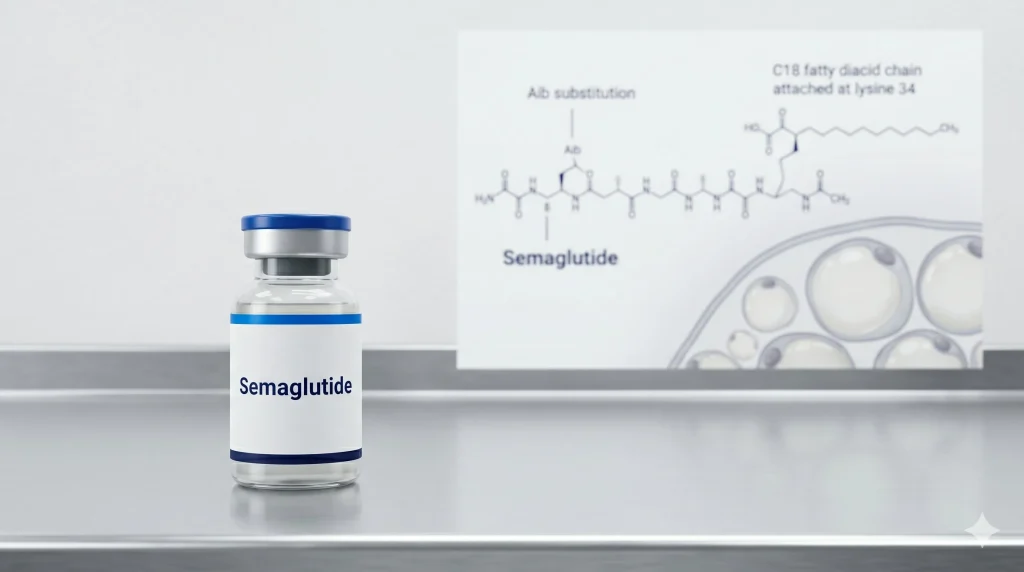
Understanding semaglutide structure helps researchers design lab protocols. The fatty acid chain and Aib substitution are key structural features. Both affect receptor binding and half-life in cell and animal studies.
Researchers studying GLP-1 receptor mechanisms may also find eloralintide relevant — it is a research-grade GIP/GLP-1 co-agonist analog available as a COA-verified, lyophilized research peptide.
Key Takeaways
- Semaglutide Is a Synthetic GLP-1 Receptor Agonist: It was built to mimic native GLP-1. The fatty acid chain is the key structural change vs native GLP-1.
- DPP-4 Resistance Is Built Into the Structure: An Aib substitution at position 8 stops DPP-4 cleavage. This keeps the peptide active longer in lab studies.
- The Fatty Acid Chain Enables Albumin Binding: A C18 diacid chain is attached at lysine 34. Albumin binding slows clearance and extends half-life in animal models.
- GLP-1 Receptor Binding Has Been Studied in Cell Models: Binding affinity data comes from in vitro assays. These findings do not apply to human therapeutic use.
- Research-Grade Semaglutide Is for Lab Use Only: It is not FDA-approved for any human application. Each batch ships with a COA showing HPLC and mass spec data.
Researchers sourcing semaglutide for lab use should verify the COA before any study. HPLC and mass spec together confirm purity and molecular identity. Both tests must be on the COA for every batch.
What Is Semaglutide and How Does It Work?
Semaglutide is a synthetic peptide that acts as a GLP-1 receptor agonist. GLP-1 stands for glucagon-like peptide-1. Native GLP-1 is released from gut cells. It has a half-life of about 2 minutes. Semaglutide has been engineered to last much longer in lab models.
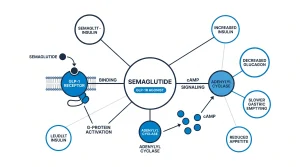
The GLP-1 receptor is a G protein-coupled receptor. When semaglutide binds this receptor, it activates an intracellular cAMP (cyclic AMP) pathway. cAMP acts as a cell signal for downstream changes. These changes have been studied in cell culture assays.
According to a study in J Med Chem (2015), semaglutide was shown to bind the GLP-1 receptor with high affinity in cell-based binding assays. These findings come from in vitro models. They do not reflect outcomes in living humans.
What Is the Structure of Semaglutide?
Semaglutide is 94% identical to native GLP-1, with two targeted structural changes. First, an Aib (alpha-aminoisobutyric acid) group replaces alanine at position 8 of the peptide chain. This change stops DPP-4 enzyme cleavage at that site. Second, a C18 fatty diacid chain is attached at lysine 34 via a short linker. This chain allows semaglutide to bind albumin in blood.
The fatty acid chain is the key feature driving half-life extension. Albumin is a large carrier protein found throughout the bloodstream. Semaglutide bound to albumin is protected from fast kidney clearance in studies. This property extends its half-life in animal models to about 7 days compared to 2 minutes for native GLP-1.
How Does Semaglutide Bind the GLP-1 Receptor?
The GLP-1 receptor is found on the surface of many cell types. Semaglutide docks at the extracellular domain of this receptor. Binding triggers a shape change in the receptor protein. This activates the G protein on the inner cell surface.
The G protein then turns on adenylyl cyclase. This enzyme makes cAMP from ATP. cAMP acts as a second messenger inside the cell. Downstream signaling changes have been measured in cell models.
According to a review in Front Endocrinol (2019), binding studies showed semaglutide has higher receptor affinity than native GLP-1. The Aib substitution at position 8 was linked to this affinity gain. All data came from in vitro assay models.
What Did Semaglutide Lab Studies Find?
Semaglutide has been studied in cell culture and animal models. cAMP levels have been measured in GLP-1 receptor-expressing cells after semaglutide treatment. Changes in downstream signaling markers have been observed in vitro.
In rodent models, semaglutide has been shown to reach target tissues. Receptor occupancy has been measured at various study concentrations in these models. All findings come from non-human models. They do not confirm the same effects in living humans.
According to a review in PubMed (2020), rodent studies showed changes in GLP-1 receptor signaling markers after semaglutide exposure. All research used animal models only. Human clinical data was not part of these studies.
| Feature | Native GLP-1 | Semaglutide |
| Amino acids | 30 | 31 |
| Position 8 | Alanine | Aib substitution |
| Fatty acid chain | None | C18 diacid at Lys34 |
| Albumin binding | Low | High |
| DPP-4 resistance | Low | High |
| Half-life (animal models) | ~2 minutes | ~168 hours |
What Is the Half-Life of Semaglutide in Studies?
Native GLP-1 has a half-life of about 2 minutes due to two fast breakdown routes. DPP-4 enzyme clips the peptide at position 8, starting rapid degradation. Kidney clearance then removes the fragments from blood quickly. Semaglutide was built to resist both of these breakdown routes.
The Aib substitution at position 8 stops DPP-4 cleavage at that site. The C18 fatty acid chain at lysine 34 enables albumin binding in blood. Albumin binding slows the kidney clearance of the peptide in studies. The combined effect has been studied in animal models, and half-life has been reported at about 168 hours in these studies.
How Is Research-Grade Semaglutide Purity Confirmed?
Research-grade semaglutide is tested by HPLC and mass spec. HPLC confirms the compound is ≥99% pure. Mass spec confirms the molecular weight matches the expected 31-amino acid sequence with the fatty acid chain.
The molecular weight of semaglutide is about 4,114 Da. Mass spec identifies the full-length peptide with the C18 chain. A mismatch in mass would signal a truncated or modified form. Next Level Pharm supplies semaglutide at ≥99% purity, COA-verified for research use. View the semaglutide product page. Each batch is rejected if HPLC purity falls below ≥99%.
Frequently Asked Questions
What Is Semaglutide?
Semaglutide is a synthetic GLP-1 receptor agonist. GLP-1 stands for glucagon-like peptide-1. Native GLP-1 is a peptide released from gut cells. Semaglutide was built to act at the GLP-1 receptor with a longer half-life in studies. Two structural changes set it apart: an Aib substitution and a C18 fatty acid chain at lysine 34. It is for lab research only.
How Does Semaglutide Bind the GLP-1 Receptor?
Semaglutide docks at the extracellular domain of the GLP-1 receptor. Binding causes a shape change in the receptor protein. This activates the G protein on the inner cell surface. The G protein turns on adenylyl cyclase, which makes cAMP. cAMP acts as a cell signal. Downstream changes have been measured in GLP-1 receptor cell models. All data comes from in vitro assays.
What Is the Aib Substitution in Semaglutide?
Native GLP-1 has an alanine at position 8. DPP-4 enzyme clips the peptide at this point, giving native GLP-1 a short half-life. Semaglutide replaces alanine at position 8 with Aib (alpha-aminoisobutyric acid). DPP-4 cannot clip this modified site. This change is one reason semaglutide has been studied for extended half-life in animal models compared to native GLP-1.
What Is the Fatty Acid Chain in Semaglutide?
A C18 fatty diacid chain is attached at lysine 34 via a short linker. This chain allows semaglutide to bind albumin, a large carrier protein. Albumin binding slows kidney clearance. Semaglutide bound to albumin has a longer half-life in blood studies. This feature has been examined in animal studies. All half-life findings come from non-human models only.
What Did Cell Model Studies Show About Semaglutide?
Cell model studies have examined GLP-1 receptor binding and downstream cAMP signaling. Semaglutide has been shown to bind the GLP-1 receptor with high affinity in vitro. cAMP levels have been measured in receptor-expressing cells after treatment. Changes in downstream signaling markers have been observed. All data comes from cell culture assays. No human clinical data applies to these in vitro findings.
What Did Animal Model Studies Show About Semaglutide?
Semaglutide has been studied in rodent and primate models. Receptor occupancy and half-life have been measured at various study levels. Changes in downstream signaling have been observed after treatment. All findings come from animal studies. They do not confirm the same effects in humans. Research-grade semaglutide is not the same product as any FDA-approved drug formulation.
How Is Research-Grade Semaglutide Purity Confirmed?
Research-grade semaglutide is verified by HPLC and mass spec. HPLC confirms ≥99% purity for the target compound. Mass spec confirms the molecular weight matches the expected 31-amino acid sequence with the C18 fatty acid chain. A COA with both results is required for each batch. Batches that fail either test are rejected before shipping to researchers.
Is Research-Grade Semaglutide Available for Lab Research?
Yes, research-grade semaglutide is sold as a lab compound. It is available as a lyophilized vial verified to ≥99% purity. Each vial ships with a COA showing HPLC and mass spec data for that batch. Research-grade semaglutide is not FDA-approved. It is not an approved drug formulation. It is for lab research use only. Verify the COA before any study.
What Differentiates Semaglutide From Native GLP-1?
Native GLP-1 has two weak points. DPP-4 enzyme clips it at position 8. Kidney clearance removes it fast. Semaglutide was built to fix both issues. The Aib substitution stops DPP-4 cleavage. The C18 fatty acid chain enables albumin binding to slow clearance. These structural changes have been studied in animal models. Half-life has been reported at about 168 hours vs 2 minutes for native GLP-1.
Summary
Semaglutide is a synthetic GLP-1 receptor agonist with two key structural changes vs native GLP-1. The Aib substitution at position 8 stops DPP-4 cleavage. The C18 fatty acid chain at lysine 34 enables albumin binding and extends half-life in animal studies.
GLP-1 receptor binding and downstream cAMP signaling have been studied in cell models. All findings come from cell and animal models. Research-grade semaglutide is for lab use only.
What Should You Do Next?
Researchers sourcing semaglutide should verify three items on every COA. First, confirm HPLC purity is ≥99%. Second, confirm mass spec shows the correct molecular weight for the 31-amino acid chain with the fatty acid modification. Third, record the lot number for traceability.
Shop research peptides at Next Level Pharm. Every batch ships with HPLC and mass spec data and a traceable lot number.
People Also Read
- Retatrutide Research: Triple Agonist Mechanism and GLP-1 Pathway Studies
- AOD-9604 Research: What Studies Show About This HGH Fragment
About the Author
Next Level Pharm Research Team
Alex M covers peer-reviewed findings in peptide science for Next Level Pharm, a US-based supplier of research-grade peptides verified to ≥99% purity via HPLC and mass spectrometry on every batch.
Disclaimer: The information provided on this page is for educational and research purposes only. Next Level Pharm products are intended for laboratory research use only. They are not intended for human consumption, diagnostic, therapeutic, or medicinal purposes. This content does not constitute medical advice. Always consult a licensed healthcare professional before making any health-related decisions.