
Khavinson Peptides: The Complete Bioregulator Research Guide

Last updated: July 2026
A Khavinson peptide is a short amino acid chain. It consists of 2 to 4 amino acids. These chains are called bioregulators. They are studied for their effects on gene activity in specific organs. According to Khavinson et al. (2002) (PMID 11756978), short amino acid chains are bound to gene promoter regions in cell models. Each compound targets one specific tissue type. All cited data come from cell and animal studies.
Next Level Pharm is a US-based supplier of research-grade peptides. Epithalon, Thymalin, and related bioregulators are available as COA-verified compounds. Each lot is verified to ≥99% purity by HPLC and mass spec. The average purity across the last 100 batches is 99.4%. Each vial ships with a COA and a traceable lot number.
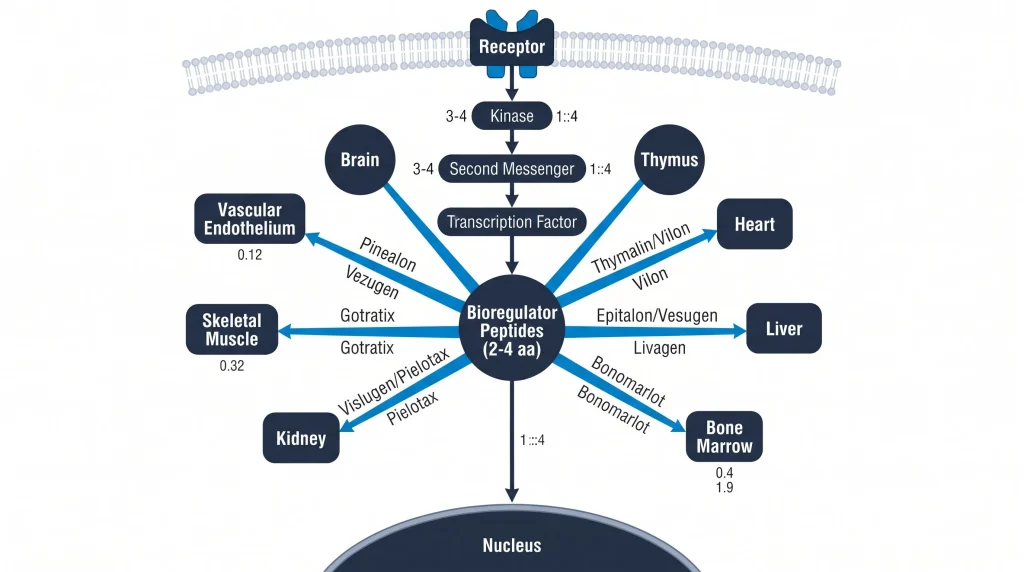
Bioregulators differ from standard peptides in one key way. Standard peptides bind to surface receptors. Bioregulators enter the cell nucleus. They bind directly to DNA. This is studied in controlled lab models.
Key Takeaways
- Khavinson Peptides Are Short Chains: These compounds consist of 2 to 4 amino acids. Each chain is studied for effects on a specific organ or tissue in cell models.
- They Bind DNA to Change Gene Activity: In cell assays, these chains bind to DNA promoter regions. This changes the rate of protein production in the target cell.
- Epithalon Is Linked to the Pineal Gland: Epithalon (Ala-Glu-Asp-Gly) is a 4-amino acid chain. It has been studied for telomerase activity in cell models.
- Thymalin Acts on Thymus Tissue: Thymalin is linked to the thymus gland. It is studied for effects on immune cell maturation in animal models.
- All Findings Come from Cell and Animal Models: Human clinical data have not been established for these compounds. They are for lab research use only.
Scientists use these peptides to study how short amino acid chains affect gene regulation. The results guide lab protocols for cell biology research.
What Are Khavinson Peptides?
A Khavinson peptide is a short chain of 2 to 4 amino acids. This type of compound is called a bioregulator. It was developed from work by Professor Vladimir Khavinson. His team studied how short amino acid chains alter gene activity in target organs. Each chain is specific to one organ system.
These peptides do not bind surface receptors on cells. They enter the cell nucleus directly. Once inside, they bind to DNA at regions called promoters. A promoter controls when a gene is active. Binding changes how much protein the gene produces.
According to Khavinson et al. (2011) (PMID 21757022), short 2 to 4 amino acid chains are bound to gene promoter regions in cell cultures. Gene activity shifted based on which promoter was targeted. All data came from in vitro assays only.
Who Developed These Research Compounds?
Vladimir Khavinson is a Russian scientist. He worked at the Saint Petersburg Institute of Bioregulation and Gerontology. His research focused on how short peptides affect gene activity. He spent decades studying how amino acid sequences change protein production in animal models.
His team tested many short peptide sequences. They mapped each sequence to a specific organ. The brain, thymus, pineal gland, and heart were all studied. The peptides were tested in cell cultures and in animal models. Results showed organ-specific shifts in gene activity.
His findings were published in journals including Peptides and the Bulletin of Experimental Biology and Medicine. These studies formed the basis for current bioregulator research.
How Do These Peptides Work in Cell Studies?
Bioregulators work by entering the cell nucleus. They bypass the surface receptor step that most peptides use. Instead, they bind directly to DNA. Each chain targets a specific DNA region called a promoter. Promoters control which genes are active.
When a promoter is activated, the gene it controls produces more protein. When suppressed, less protein is made. This is gene regulation. In cell studies, scientists measure changes in protein output after peptide exposure.
According to Khavinson et al. (2020) (Molecules), short peptide chains showed sequence-specific DNA binding in cell models. Gene activity changed based on which promoter was targeted. All cited data came from in vitro models.
What Is Epithalon and How Is It Studied?
Epithalon is a 4-amino acid bioregulator. Its sequence is Ala-Glu-Asp-Gly. It is associated with the pineal gland in research models. Researchers study it for effects on telomerase activity. Telomerase is an enzyme that adds DNA to the ends of chromosomes (called telomeres).
In cell studies, epithalon exposure has been linked to telomerase activation. More active telomerase may extend the functional life of cells in culture. These findings come from in vitro cell models only. They do not reflect outcomes in living humans.
According to Anisimov et al. (2004) (PMID 15541768), epithalon was studied in animal models for long-term effects. Telomerase activity was measured in treated groups. These are animal model findings only.
Epithalon is available at Next Level Pharm as a COA-verified research compound. Every lot is tested by HPLC and mass spec. Each vial ships with a COA and lot number.
What Is Thymalin and Why Is It Studied?
Thymalin is a bioregulator linked to the thymus gland. The thymus is an organ that trains immune cells called T-cells. In research models, thymalin is studied for effects on T-cell development. Scientists measure changes in immune cell markers after thymalin treatment.
Cell culture assays show changes in gene expression in thymus-derived cells after exposure. Animal models track immune cell counts and maturation stages. These results provide data on how short peptide chains affect immune cell biology.
Thymalin is available as a COA-verified research compound. Every lot is verified by HPLC and mass spec to ≥99% purity.
How Do These Peptides Differ From Receptor Peptides?
Standard research peptides bind to surface receptors. This is like a key fitting a lock. The receptor sends a signal into the cell. The signal can trigger fast effects, such as hormone release.
Bioregulators work differently. They skip the receptor step. They enter the cell nucleus. They bind to DNA directly. This changes which genes are active. The effect is slower and more targeted than receptor binding.
| Feature | Receptor Peptide (e.g. GHRP-2) | Bioregulator (e.g. Epithalon) |
| Binding site | Cell surface receptor | DNA promoter region |
| Speed of effect | Hours (hormone spike) | Days to weeks (gene activity shift) |
| Amino acid length | 6+ amino acids | 2-4 amino acids |
| Target | Receptor-specific | Organ-specific |
| Study metric | Hormone level | Gene expression marker |
| Purity standard | ≥99% HPLC + mass spec | ≥99% HPLC + mass spec |
Frequently Asked Questions
What Are Khavinson Peptides?
Khavinson peptides are short amino acid chains of 2 to 4 units. They are called bioregulators because they regulate gene activity in specific organs. In cell models, they bind directly to DNA promoter regions. This changes which proteins the cell produces. These compounds were developed through the research of Professor Vladimir Khavinson at the Saint Petersburg Institute. All data come from cell and animal studies. They are for lab research use only.
How Do These Peptides Work in Cell Models?
In cell models, bioregulators enter the cell nucleus and bind to DNA. They attach to promoter regions, which control gene activity. When a promoter is activated, the gene it controls produces more protein. This is different from surface-receptor peptides, which trigger fast hormone responses. Bioregulators produce slower changes tracked over days in cell cultures. Scientists measure gene expression markers to track these changes. All findings come from in vitro assays.
What Is Epithalon?
Epithalon (Ala-Glu-Asp-Gly) is a 4-amino acid bioregulator. It is linked to the pineal gland in research models. Researchers study it for effects on telomerase activity. Telomerase is an enzyme that maintains telomere length in cells. In cell studies, epithalon exposure has been linked to telomerase activation. These are in vitro findings only. Next Level Pharm supplies Epithalon at ≥99% purity for lab research. Each vial ships with a COA.
What Is Thymalin?
Thymalin is a bioregulator linked to the thymus gland. The thymus trains T-cells, the white blood cells used in immune responses. Thymalin is studied for its effects on T-cell development in animal models. Scientists measure changes in immune cell markers after treatment. Cell assays also show changes in gene expression in thymus cells. All data come from in vitro and animal models. Thymalin is for lab research use only. It is not approved for human use.
How Do Bioregulators Differ From GHRPs?
GHRPs (growth hormone-releasing peptides) bind to ghrelin receptors on cell surfaces. This triggers a fast growth hormone spike in animal models. Bioregulators do not bind surface receptors. They enter the cell nucleus and bind to DNA. This changes gene activity over a longer period. Study designs for bioregulators use gene expression assays, not hormone spike measurements. Both types of compounds are for research use only.
What Organs Do These Peptides Target?
Each Khavinson peptide is studied for a specific organ. Epithalon targets the pineal gland. Thymalin targets the thymus. Cartalax targets cartilage tissue. Cortagen targets heart and vessel tissue. Each peptide is observed for organ-specific changes in gene activity. This organ specificity is documented in cell and animal models. It is a key feature of bioregulator research design.
Are These Compounds Synthetic?
Yes. Modern research compounds are lab-synthesized. Early work used peptides extracted from animal organs. Now, synthesis ensures exact amino acid sequences and consistent purity. Synthetic production removes the risk of contamination from tissue sources. Research-grade bioregulators must meet ≥99% HPLC purity standards. Mass spec confirms the exact molecular weight for each batch before shipping.
What Is the Research History of These Peptides?
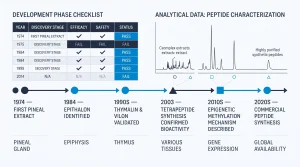
Vladimir Khavinson began studying short peptides in the 1970s. He worked at the Saint Petersburg Institute of Bioregulation and Gerontology. His team studied how short amino acid chains changed gene activity in cell and animal models. Early work used organ-extracted peptides. Later work used synthetic versions. Results showed organ-specific changes in protein production. Findings were published in peer-reviewed journals including Peptides and the Bulletin of Experimental Biology and Medicine.
How Is Research-Grade Epithalon Verified?
Research-grade Epithalon is tested by HPLC and mass spec per batch. HPLC confirms ≥99% purity for the target peptide peak. Mass spec confirms molecular weight matches the Ala-Glu-Asp-Gly (4-amino acid) sequence. A COA with lot number is provided per batch. Every batch is verified before shipping to researchers. All compounds are for lab research use only.
What Is Telomerase and Why Is It Studied?
Telomerase is an enzyme found in cells. It adds DNA to the ends of chromosomes. These ends are called telomeres. Short telomeres are linked to cell aging and death in culture models. Researchers study telomerase to understand how cells maintain their DNA over time. Epithalon has been studied for effects on telomerase activity in cell models. All findings come from in vitro and animal studies only. For research use only.
Summary
Khavinson peptides are short amino acid chains (2 to 4 units) that bind directly to DNA in target cells. They change gene activity in a specific organ. Epithalon targets the pineal gland and has been studied for telomerase effects. Thymalin targets the thymus and is studied for T-cell development.
These compounds differ from standard peptides. Standard peptides bind surface receptors. Bioregulators bind DNA directly. This produces slower, more targeted gene changes. All cited findings come from cell and animal model research.
What Should You Do Next?
Researchers studying peptide bioregulators should source verified compounds for lab protocols. Before any study, confirm HPLC purity is ≥99% and mass spec matches the expected molecular weight. Record the lot number from the COA for batch traceability.
Shop research peptides. Epithalon, Thymalin, and related bioregulators are available with HPLC and mass spec data on every COA.
People Also Read
- What Are Bioregulator Peptides? Mechanisms and Research
- Epithalon Research: What Current Studies Show
About the Author
Next Level Pharm Research Team
Alex M covers peer-reviewed findings in peptide science for Next Level Pharm, a US-based supplier of research-grade peptides verified to ≥99% purity via HPLC and mass spectrometry on every batch.
Disclaimer: The information provided on this page is for educational and research purposes only. Next Level Pharm products are intended for laboratory research use only. They are not intended for human consumption, diagnostic, therapeutic, or medicinal purposes. This content does not constitute medical advice. Always consult a licensed healthcare professional before making any health-related decisions.