
What Are Bioregulator Peptides? Mechanisms and Research

Last updated: June 2026
A bioregulator peptide is a short amino acid chain from a tissue-linked protein. Bioregulators are 2-4 amino acids long. They were first described by Dr. Vladimir Khavinson in Soviet-era and Russian aging research. Lab studies have checked their effects on gene output in cell and animal models. Research-grade bioregulators must reach ≥99% purity by HPLC and mass spec before any lab use.
Next Level Pharm is a US supplier of research-grade peptides. Each vial is verified to ≥99% purity by HPLC and mass spec. Bioregulators such as Cartalax, Cardiogen, Cortagen, and Crystagen are sold as separate lyophilized vials. Each ships with a COA showing HPLC and mass spec data and a traceable lot number. The average purity across the last 100 batches is 99.4%.
Each bioregulator has a tissue-linked origin. Cartalax comes from cartilage. Cardiogen comes from cardiac tissue. Cortagen comes from nerve tissue. Crystagen comes from eye tissue. Each compound has a distinct sequence and a defined research focus.
Key Takeaways
- Bioregulators Are Short Tissue-Linked Peptides: Each is 2-4 amino acids long. They come from organ-specific protein fractions.
- Each Bioregulator Has One Tissue of Origin: Cartalax is from cartilage. Cardiogen is from cardiac tissue. Cartagenesis is from nerve tissue.
- Lab Research Used Cell and Animal Models: Studies checked gene output in treated cell lines. Animal model work extended these findings.
- None Are FDA-Approved Drugs: Bioregulators are for lab research only. No clinical approval exists for human therapeutic use.
- Research-Grade Purity Requires ≥99% HPLC: Mass spec confirms the molecular weight matches the target sequence. Both tests appear on the COA.
Researchers who source bioregulators for lab use should verify the COA first. HPLC and mass spec together confirm purity and molecular identity. These checks are needed for each short-sequence compound.
What Is a Bioregulator Peptide and How Is It Made?
A bioregulator peptide is a short amino acid chain extracted from an animal organ fraction. The first method used acid extraction and column separation from specific tissue types. The result is a set of short sequences linked to that tissue.
Synthetic bioregulators are now made by SPPS (solid-phase peptide synthesis). This method builds the exact sequence step by step. Synthetic versions can be verified to ≥99% purity by HPLC and confirmed by mass spec.
According to a study in PubMed (2016), Khavinson and colleagues described short peptides from organ extracts. They found tissue-linked effects on gene output in cell models. These compounds are typically 2-4 amino acids long. Synthetic forms of these sequences are used in current lab research.
What Is the Tissue Focus of Bioregulators?
Each bioregulator was named for its tissue of origin. Cartalax comes from cartilage. Cardiogen comes from cardiac tissue. Cartagenesis comes from cortical nerve tissue. Crystagen comes from eye tissue. This origin shapes the research questions studied in lab models.
The concept holds that short peptide chains from a given tissue may alter gene output in cells of that same type. This has been studied in cell cultures and animal models. It does not confirm that the compound acts on that tissue in living humans.
According to a review in Molecules (2021), tissue-linked peptide fragments altered gene switch binding in cell models. Research measured changes in mRNA levels in treated cells compared to controls.
What Did Khavinson Research Show About Bioregulators?
Dr. Vladimir Khavinson and colleagues published work on bioregulator peptides over many decades. Studies checked gene output changes in cell models. Researchers measured mRNA levels and protein output rates in treated cell lines.
Animal model studies extended these cell findings. Researchers examined tissue function markers in treated animals. All findings come from cell and animal models. They do not provide human clinical data.
According to a review in Biogerontology (2010), Khavinson lab studies in rodent models showed changes in tissue-linked gene output after treatment. The research focused on aging-related cell biology changes. All work was done in non-human models.
How Do Bioregulators Affect Gene Output in Cells?
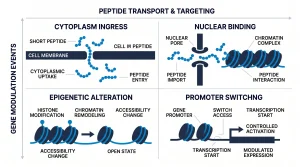
The proposed mechanism involves direct binding to DNA control regions. Short peptides can enter the cell nucleus and bind to chromatin. This binding may alter gene switch access at the promoter site.
Cell culture studies have measured changes in mRNA output for specific genes after treatment. These changes are seen in vitro. No human clinical data supports claims about gene output in living humans.
| Bioregulator | Tissue Source | Sequence | Research Focus |
| Cartalax | Cartilage | Ala-Glu-Asp-Gly | Cartilage gene output models |
| Cardiogen | Cardiac | Ala-Glu-Asp-Arg | Cardiac cell gene output |
| Cortagen | Nerve | Ala-Glu-Asp-Leu | Cortical tissue gene models |
| Crystagen | Eye | Lys-Glu-Asp | Retinal cell culture studies |
| Epithalon | Pineal | Ala-Glu-Asp-Gly | Pineal gland aging models |
What Bioregulators Are Available for Lab Research?
Several bioregulators are sold as research compounds. Cartalax was studied in cartilage cell models. Cardiogen was studied in cardiac cell lines. Cortagen was studied in nerve tissue models. Crystagen was studied in eye cell cultures. Epithalon was studied in pineal gland models.
Each bioregulator is sold as a separate lyophilized vial at Next Level Pharm. All vials ship with a COA that lists HPLC purity and mass spec results. Researchers should source each compound on its own and check its individual COA.
How Is Research-Grade Bioregulator Purity Confirmed?
Research-grade bioregulators are tested by HPLC and mass spec. HPLC confirms the compound makes up ≥99% of the batch. Mass spec confirms the molecular weight matches the expected mass for the short amino acid chain.
Short bioregulators (2-4 amino acids) have low molecular weights. Mass spec easily confirms their exact masses. A mismatch signals the wrong sequence or a change in structure. Shop research peptides at Next Level Pharm to view COA data before purchase. Batches below ≥99% purity are rejected before shipping.
Frequently Asked Questions
What Is a Bioregulator Peptide?
A bioregulator peptide is a short amino acid chain, typically 2-4 amino acids, from a tissue-linked protein. The first compounds were pulled from organ fractions and studied for gene output changes in cell models. Synthetic bioregulators are now made by SPPS and tested to ≥99% purity by HPLC and mass spec. Each research vial ships with a COA showing these results.
How Are Bioregulator Peptides Made?
The first bioregulators were pulled from animal tissue by acid extraction and column separation. Synthetic versions are now made by SPPS. This method builds the amino acid chain step by step on a solid resin. After synthesis, the peptide is cleaved, purified by HPLC, and checked by mass spec. SPPS allows exact replication of the 2-4 amino acid target with defined purity.
What Is Tissue Focus in Bioregulator Research?
Tissue focus means each bioregulator came from one organ type. Lab studies then checked its effects in cell lines from that same tissue. Cartalax is from cartilage, Cardiogen from cardiac tissue. This concept guides research design. It does not confirm that the compound acts on that tissue in a targeted way in living organisms outside lab models.
What Is Cartalax?
Cartalax is a synthetic bioregulator with the sequence Ala-Glu-Asp-Gly. It was derived from cartilage tissue fractions in Khavinson lab research. Lab studies have checked its effects on gene output in cartilage cell models. All findings come from cell and animal studies. Cartalax is not FDA-approved. It is sold for lab research use only with a COA showing HPLC and mass spec data.
What Is Cardiogen?
Cardiogen is a synthetic bioregulator with the sequence Ala-Glu-Asp-Arg. It was isolated from cardiac tissue. Lab research has checked Cardiogen effects on gene output in cardiac cell lines. All data comes from cell and animal models. No human clinical data is published for Cardiogen. It is sold for lab research only and ships with a COA showing ≥99% HPLC purity.
What Is Cortagen?
Cortagen is a synthetic bioregulator derived from cortical nerve tissue. Lab studies have checked its effects on gene output in nerve cell models. Researchers measured changes in mRNA levels in treated cell cultures vs controls. All findings come from cell and animal models. Cortagen is not an FDA-approved drug. It is sold for lab research only with a verified COA from each production batch.
How Do Bioregulators Affect Gene Output?
The proposed mechanism involves short peptides entering the cell nucleus and binding to chromatin near gene promoters. This may alter gene switch access and change mRNA output for specific genes. Cell culture studies have measured these changes in treated cells. Findings are from in vitro models only. No peer-reviewed human data supports claims about gene output in living humans after bioregulator exposure.
How Is Research-Grade Bioregulator Purity Confirmed?
Research-grade bioregulators are tested by HPLC and mass spec. HPLC confirms ≥99% purity for the target compound. Mass spec confirms the molecular weight matches the expected mass for the 2-4 amino acid sequence. A COA with both results is required for each batch. Batches that fail purity or mass checks are rejected before shipping to researchers.
Are Bioregulator Peptides Sold for Lab Research?
Yes, several bioregulators are sold as research-grade compounds. Each comes as a separate lyophilized vial with its own COA. The COA shows HPLC purity and mass spec data for that batch. These compounds are not FDA-approved. They are not for human use. Before any lab study, confirm HPLC purity is ≥99% and mass spec shows the correct molecular weight.
Summary
Bioregulator peptides are short 2-4 amino acid chains from tissue-linked protein fractions. Khavinson and colleagues studied their effects on gene output in cell and animal models. Examples include Cartalax (cartilage), Cardiogen (cardiac), Cortagen (nerve), and Crystagen (eye).
None are FDA-approved drugs. All are for lab research only. Research-grade versions require ≥99% purity confirmed by HPLC and mass spec on every batch.
Researchers should verify each COA before use. The COA should show HPLC purity and a matching mass spec result for the stated sequence.
What Should You Do Next?
Researchers sourcing bioregulator peptides should verify three items on every COA. First, confirm HPLC purity is ≥99%. Second, confirm mass spec shows the correct molecular weight for the 2-4 amino acid chain. Third, record the lot number for traceability.
Shop research peptides. Every bioregulator batch ships with HPLC and mass spec data and a traceable lot number.
People Also Read
- Epithalon Research Explained: What Current Studies Show
- What Are Longevity Peptides? A Complete Research Review
About the Author
Next Level Pharm Research Team
Alex M covers peer-reviewed findings in peptide science for Next Level Pharm, a US-based supplier of research-grade peptides verified to ≥99% purity via HPLC and mass spectrometry on every batch.
Disclaimer: The information provided on this page is for educational and research purposes only. Next Level Pharm products are intended for laboratory research use only. They are not intended for human consumption, diagnostic, therapeutic, or medicinal purposes. This content does not constitute medical advice. Always consult a licensed healthcare professional before making any health-related decisions.