
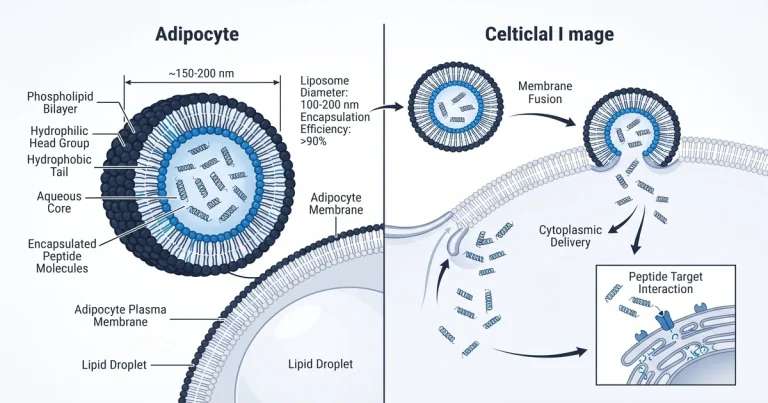
Liposomal Peptide Encapsulation Research: Bilayer Studies
Liposomal peptide encapsulation research studies how phospholipid vesicles protect peptides in lab settings. Encapsulation yields range from 50 to 85%.
Liposomal peptide encapsulation research studies how phospholipid vesicles protect peptides in lab settings. Encapsulation yields range from 50 to 85%.
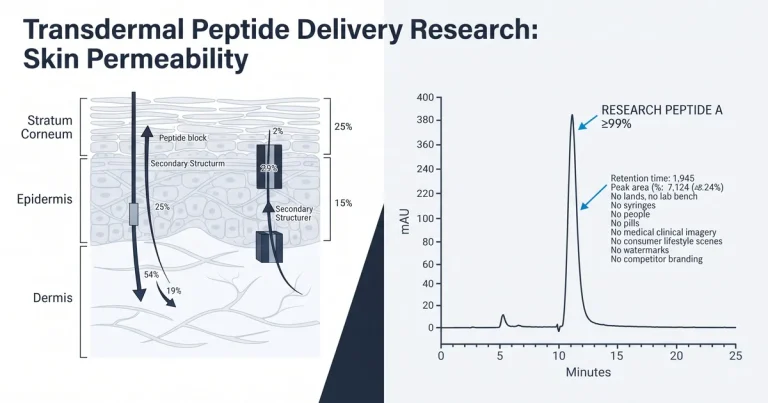
Transdermal peptide delivery research studies how peptides cross skin layers. Covers barrier biology, enhancement methods, and Franz cell measurement.
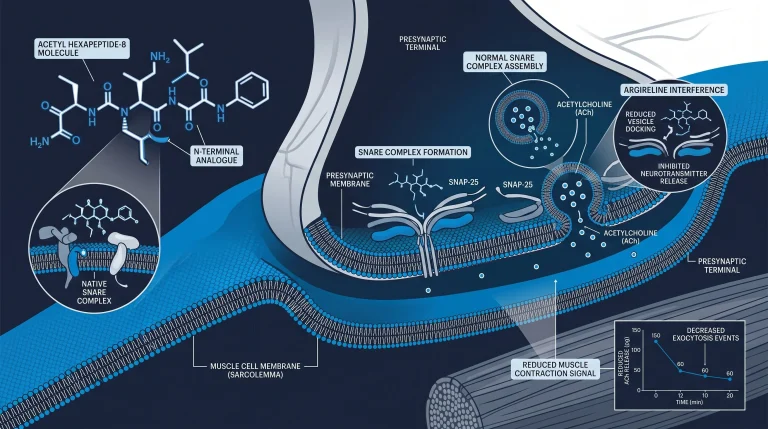
Argireline is a synthetic peptide fragment of SNAP-25 designed for research into its effects on expression lines and neurotransmitter pathways.
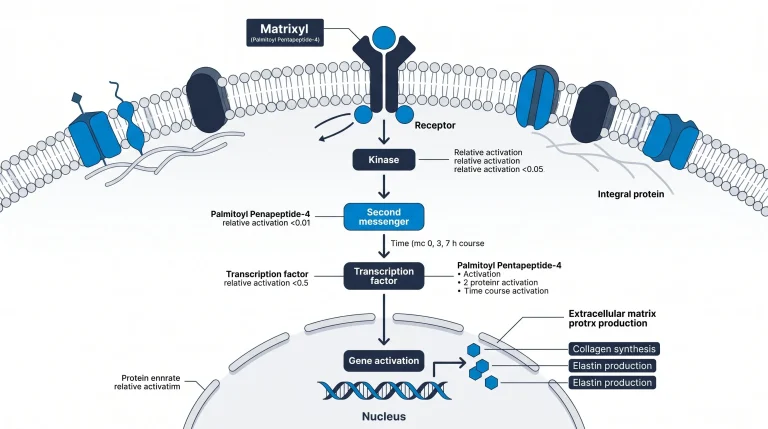
Matrixyl peptide is a synthetic fragment derived from human pro-collagen I that researchers study for its influence on the extracellular matrix.
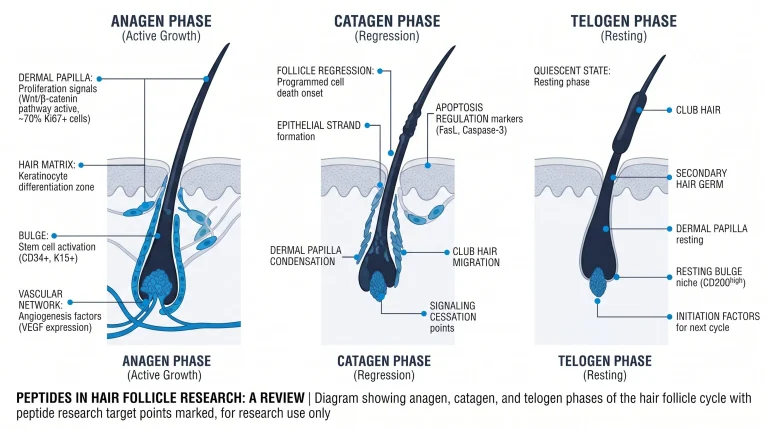
Peptide hair follicle research maps how compounds like GHK-Cu affect the anagen phase and follicle stem cell activity in lab models. COA-verified for labs.
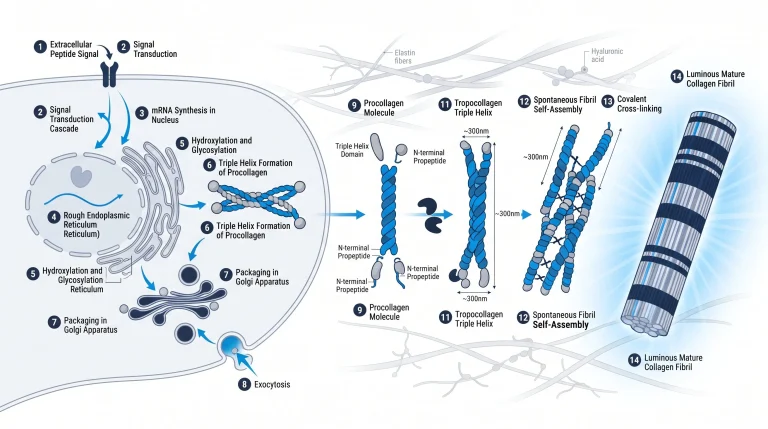
Collagen peptide synthesis research maps how peptides signal fibroblasts. Studies on GHK-Cu show effects on COL1A1 gene expression in lab models.
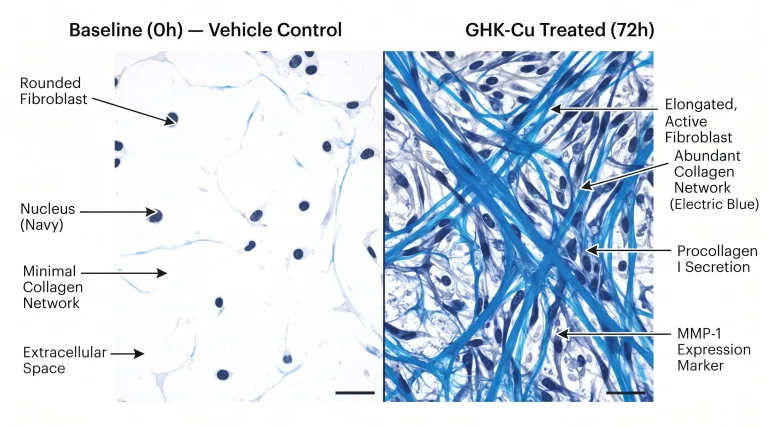
GHK-Cu skin research: collagen synthesis, fibronectin, and keratinocyte gene markers in cell and animal models. No human outcomes are claimed.
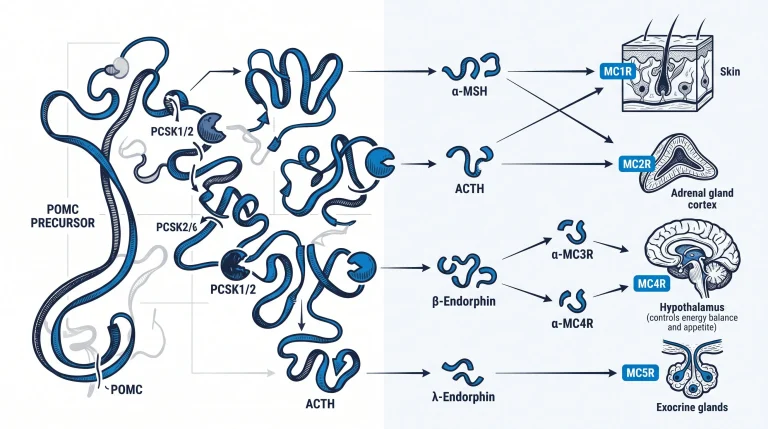
Melanocortin receptor system: five subtypes MC1R-MC5R, primary locations, key ligands, and research applications. COA-verified peptides for lab use.
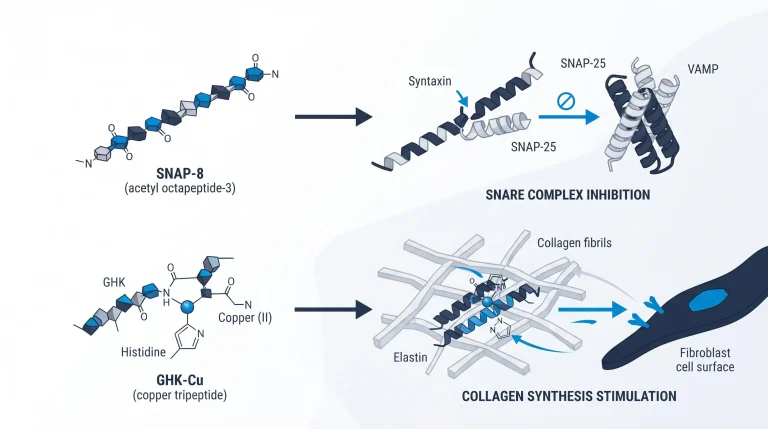
Compare SNAP-8 vs GHK-Cu peptide research: SNARE complex inhibition vs copper TGF-beta-1 signaling. COA-verified, lab-grade supply from Next Level Pharm.
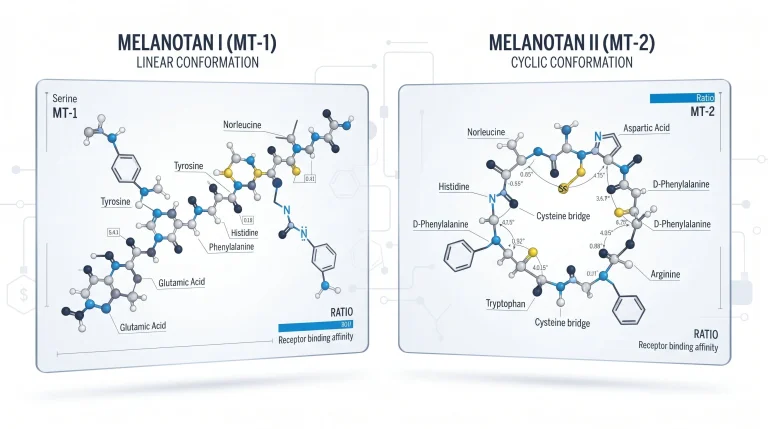
Compare Melanotan 1 vs Melanotan 2 on receptor selectivity, molecular structure, and primary research applications. COA-verified peptides for lab use only.