
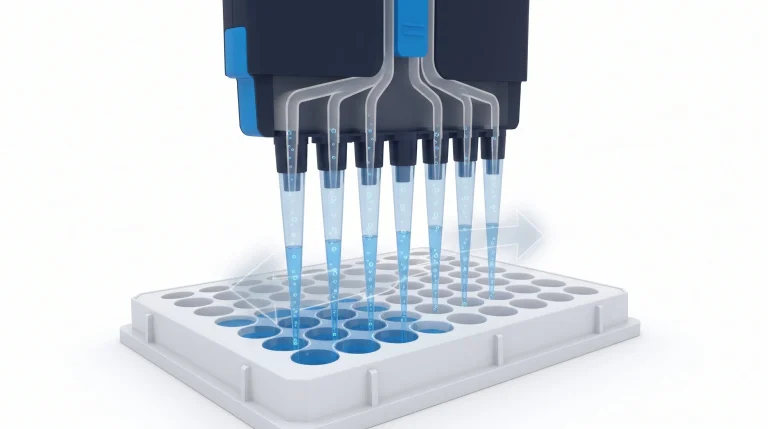
How to Calculate Peptide Reconstitution Concentration
Peptide reconstitution calculation: divide mass (mg) by diluent volume (mL) for mg/mL. Multiply by 1,000 for mcg/mL. Research use only.
Peptide reconstitution calculation: divide mass (mg) by diluent volume (mL) for mg/mL. Multiply by 1,000 for mcg/mL. Research use only.
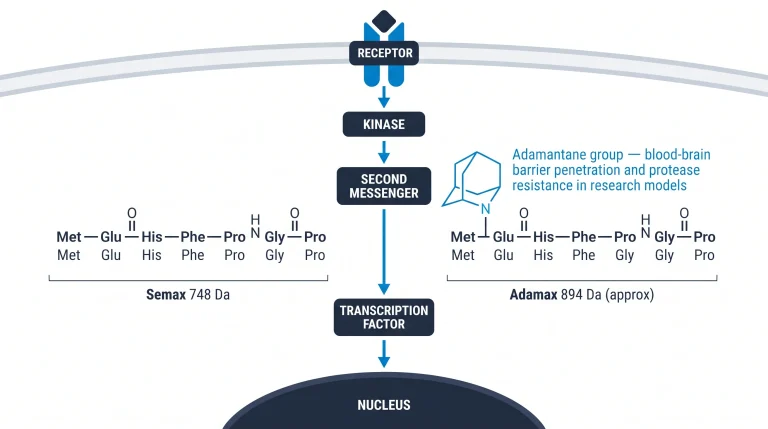
Adamax is a Semax analog modified with an adamantane group. Research indicates this change may increase neurotropic activity by up to 100x over Semax.
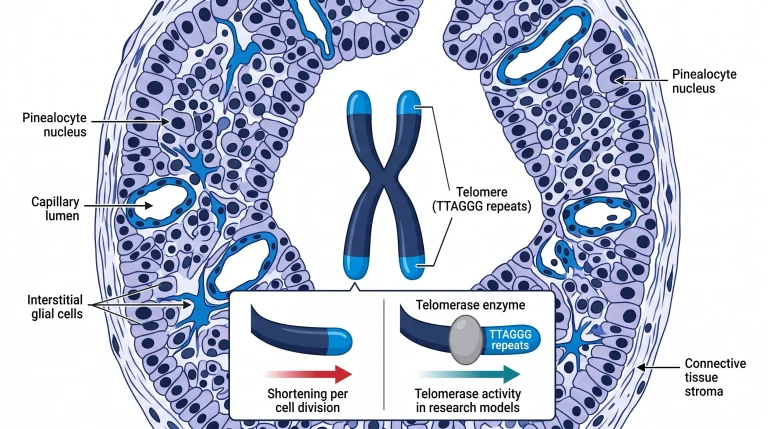
Epithalon telomere research shows a 1.6-fold rise in telomerase activity in lab studies. Examines the pineal bioregulator’s role in cellular aging.
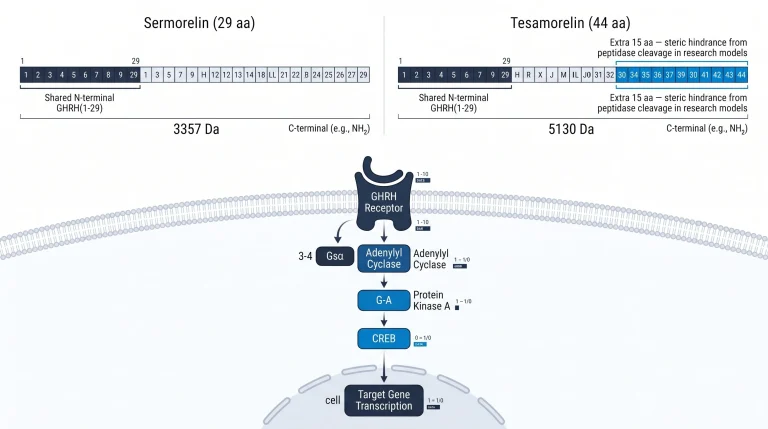
A research-based comparison of sermorelin vs tesamorelin. Tesamorelin’s half-life is ~63 minutes, far longer than sermorelin’s ~12 minutes.

Retatrutide is a triple agonist (GLP-1, GIP, GCGR). It differs from tirzepatide by adding glucagon receptor binding. Tirzepatide is a dual agonist (GLP-1, GIP).

A GLP-1 analog comparison covers semaglutide, liraglutide, and dulaglutide: structure, half-life, and receptor binding research in metabolic animal models.
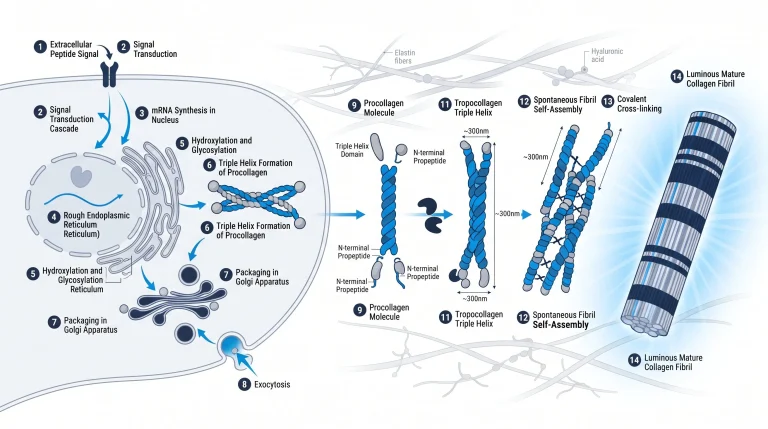
Collagen peptide synthesis research maps how peptides signal fibroblasts. Studies on GHK-Cu show effects on COL1A1 gene expression in lab models.
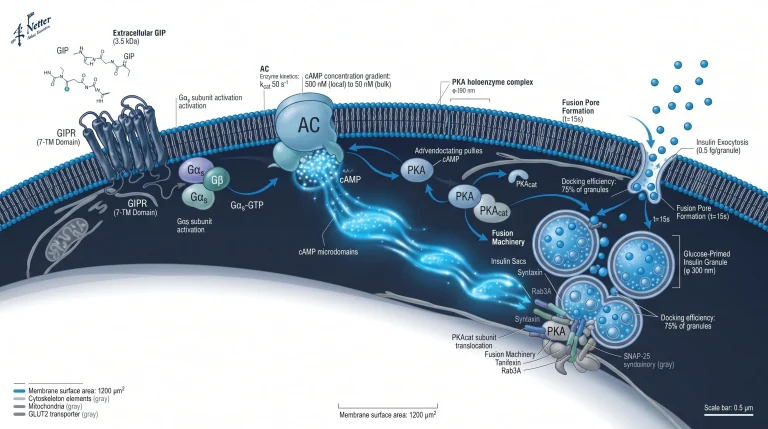
GIP receptor peptide research maps how this class B GPCR triggers glucose-dependent insulin signaling. Studies examine dual agonists in lab models.
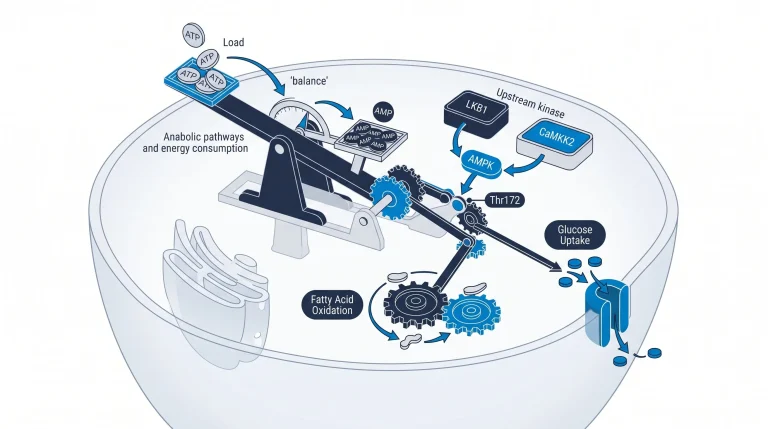
AMPK pathway peptide research maps how cells sense low energy and shift metabolism. Studies show AICAR and related compounds trigger AMPK in lab models.

Blood-brain barrier peptide research maps how peptides enter the CNS. Studies on Semax and Selank show these cross via active transport in lab models.