
TFA in Peptides: Residual Salt and Purity Research
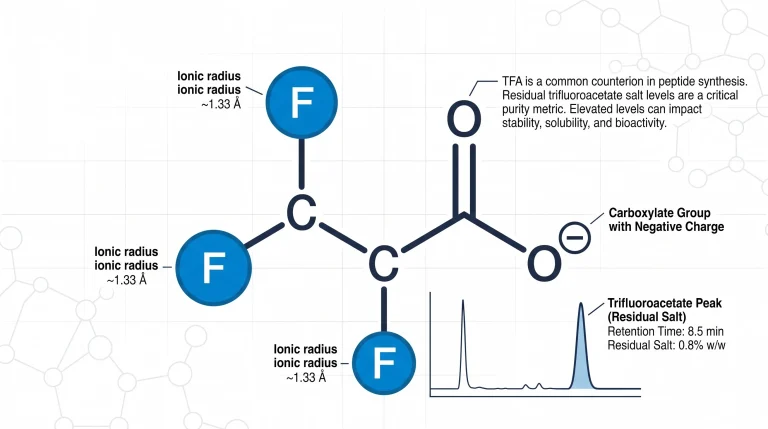
TFA (trifluoroacetic acid) is a standard counterion from HPLC peptide purification. It adds 5 to 15 percent non-active mass to labeled vial weight.
TFA (trifluoroacetic acid) is a standard counterion from HPLC peptide purification. It adds 5 to 15 percent non-active mass to labeled vial weight.
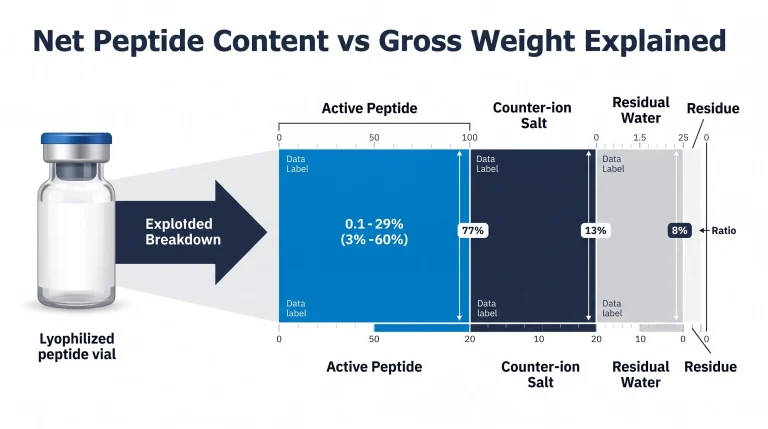
Net peptide content is the true mass of active peptide in a vial. Gross weight adds counterion and water that can overstate content by 10 to 30 percent.
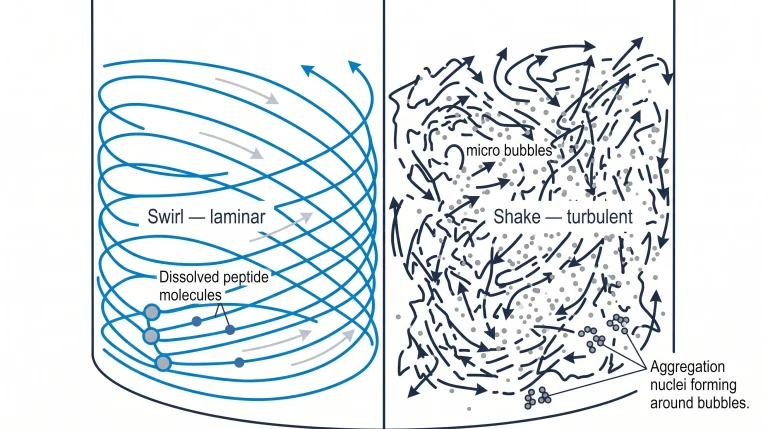
Peptide vials must be swirled, not shaken. Shaking creates shear forces that trigger aggregation and reduce sample purity in research assays.
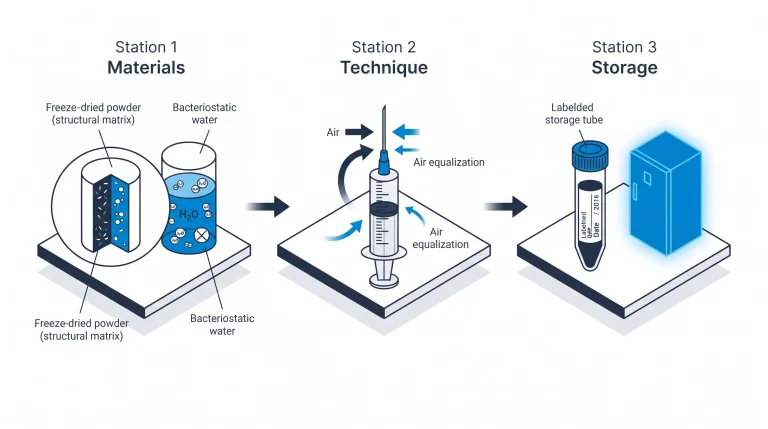
BPC-157 reconstitution is the lab process of dissolving freeze-dried peptide in bacteriostatic water for sample preparation in research assays.
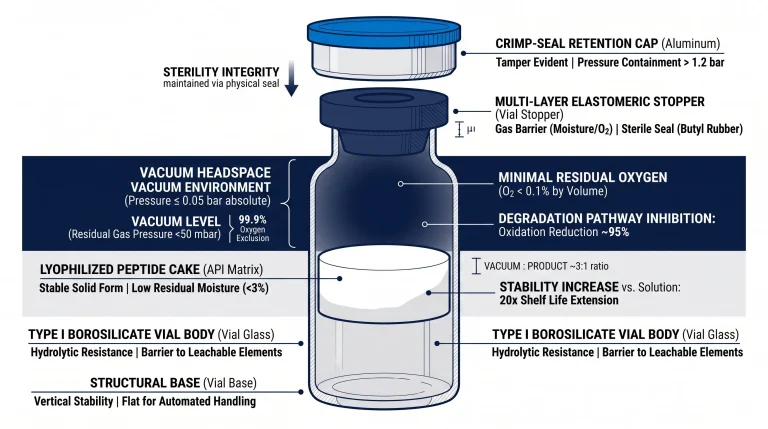
A peptide vial vacuum seal removes oxygen and moisture before hermetic closure, protecting freeze-dried peptides from oxidation and hydrolysis.
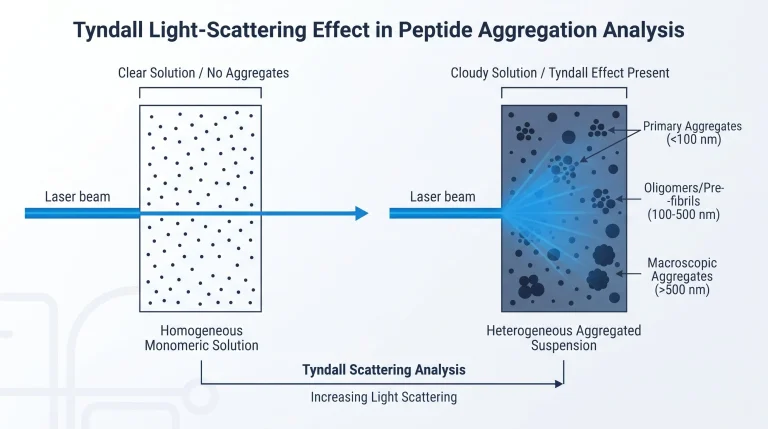
A cloudy peptide vial signals aggregation, precipitation, or bacterial growth. Learn how each cause differs and how to prevent it.
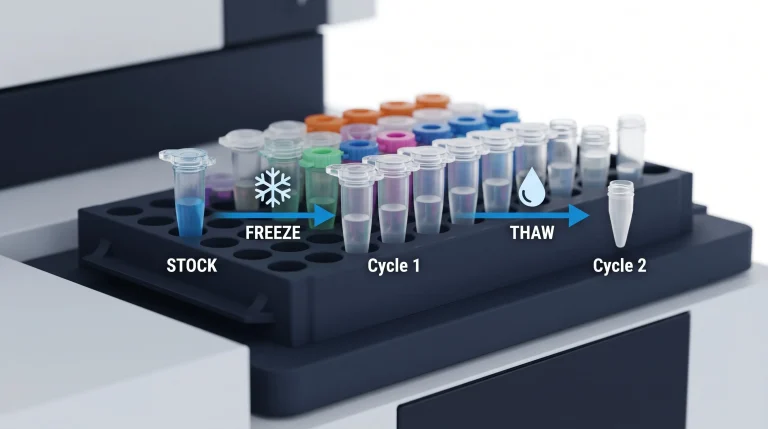
Freeze-thaw cycles form ice crystals that damage peptide structure. Most sequences degrade within 3-5 cycles. Aliquoting reduces this risk.
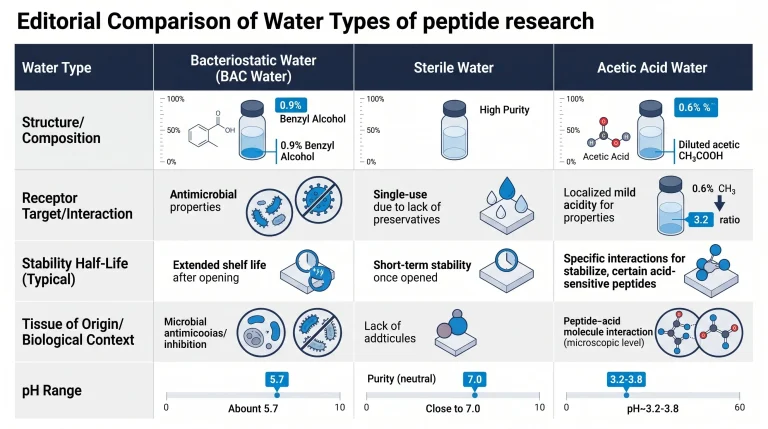
BAC water contains 0.9% benzyl alcohol and stays sterile for 28 days. Sterile water has no preservative and is for single-use only.
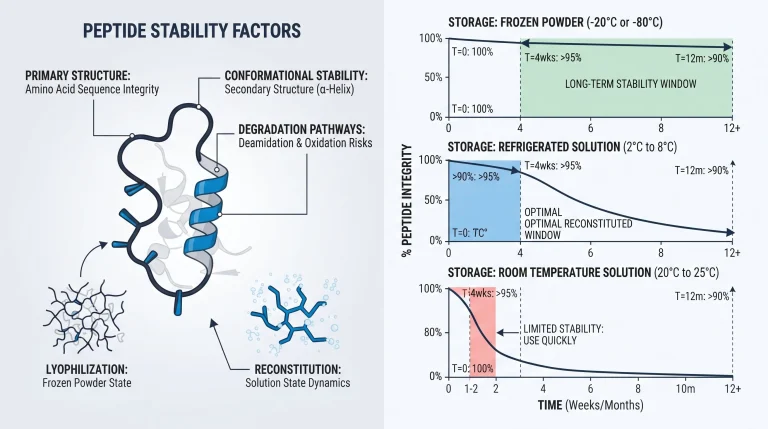
Reconstituted peptides are most stable at 2-8 degrees C in BAC water. Temperature, light, and freeze-thaw cycles accelerate breakdown.
Insulin syringe units in peptide research: a U-100 syringe holds 1 mL at 100 units. Each unit is 0.01 mL. Dead space causes volume loss at small draws.