
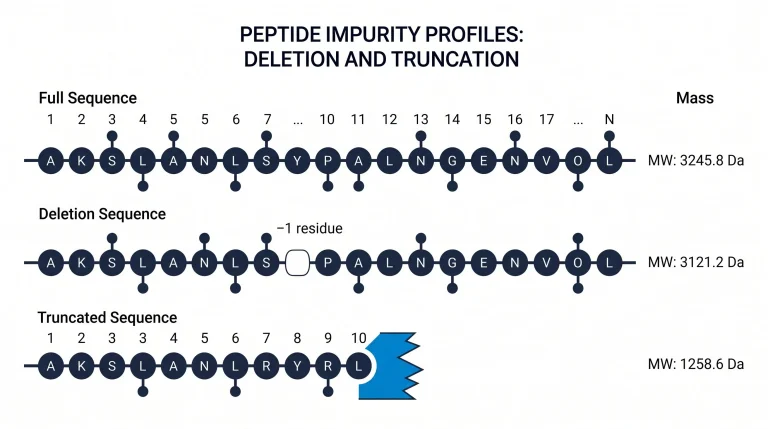
Peptide Impurity Profiles: Deletion and Truncation
A peptide impurity profile maps deletion sequences, truncated chains, and chemical modifications per lot. Learn how HPLC and MS build a full COA.
A peptide impurity profile maps deletion sequences, truncated chains, and chemical modifications per lot. Learn how HPLC and MS build a full COA.
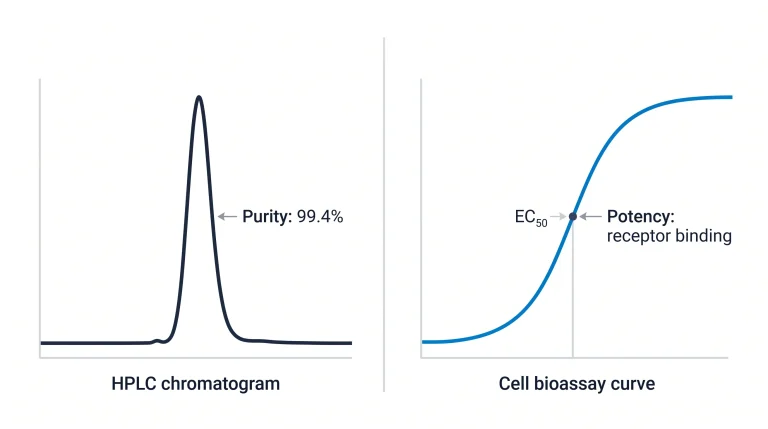
Peptide purity is the HPLC-confirmed percent of target compound per lot. Potency is the bioassay-measured biological response. Learn what a COA shows.
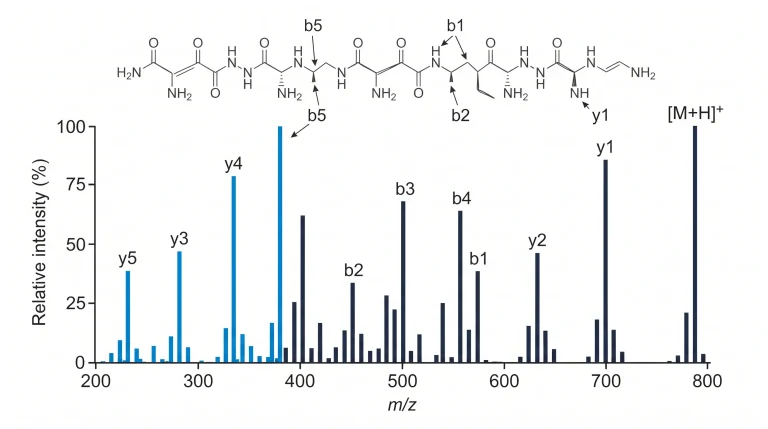
Peptide identity confirmation uses mass spectrometry and HPLC to verify molecular weight and purity of every research lot. Learn how COA data is generated.
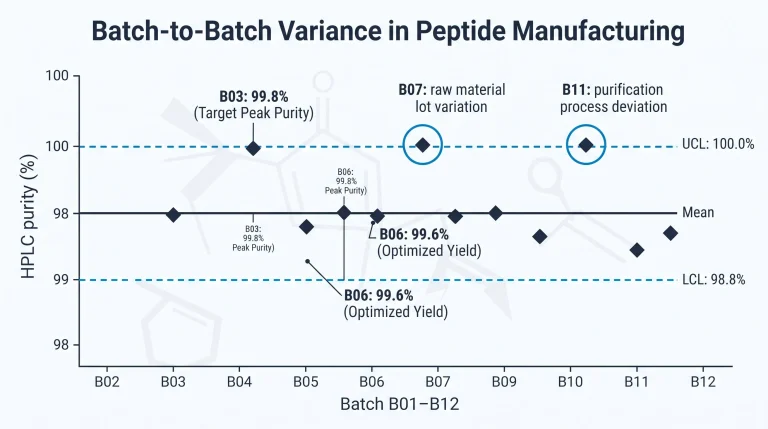
Batch-to-batch peptide variance is the measured purity difference between production runs. HPLC, mass spec, and lot-specific COAs verify each batch.
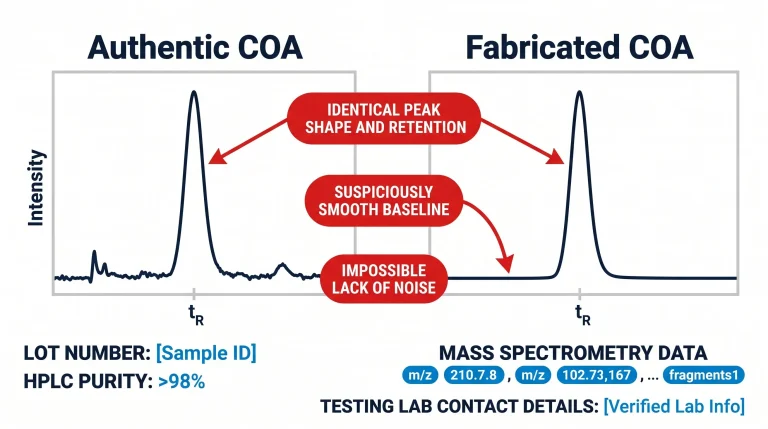
Fake peptide COAs show round purity numbers, missing lab details, and reused chromatograms. Learn to verify any COA using ISO accreditation checks.
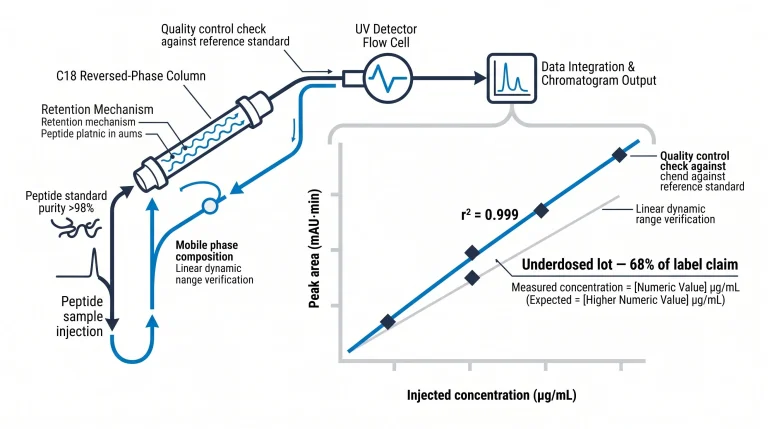
Underdosed peptides have high purity but low actual concentration. Net peptide weight on the COA verifies the true active amount per vial.
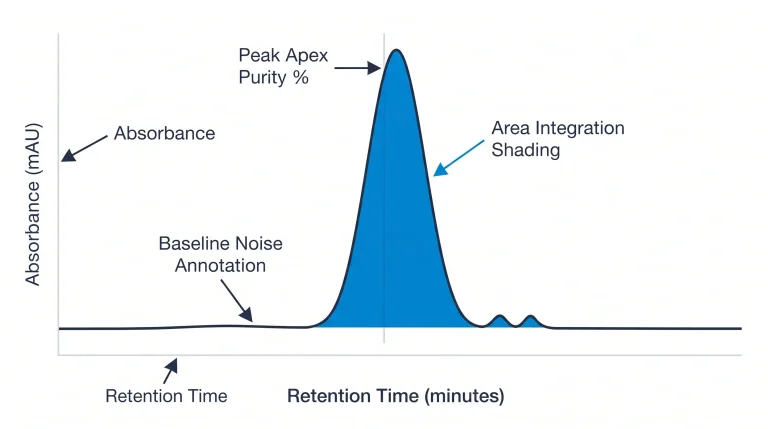
An HPLC chromatogram plots retention time vs detector response. The main peak area percent gives purity. Learn to read peptide COA chromatograms.
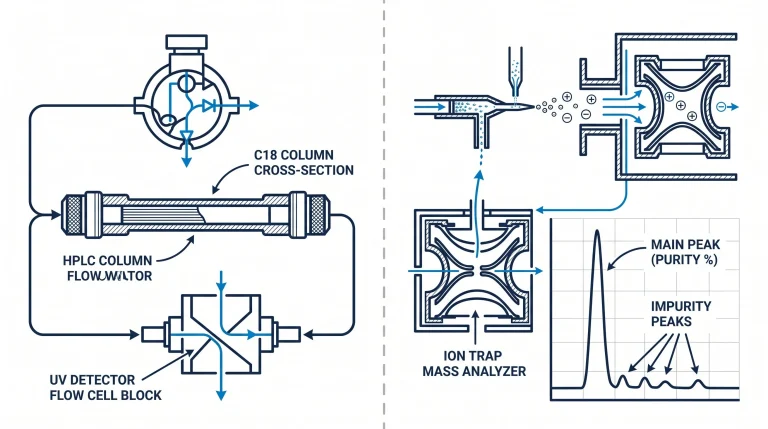
HPLC measures peptide purity and mass spectrometry confirms molecular identity. Both tests are required for a valid research peptide COA.
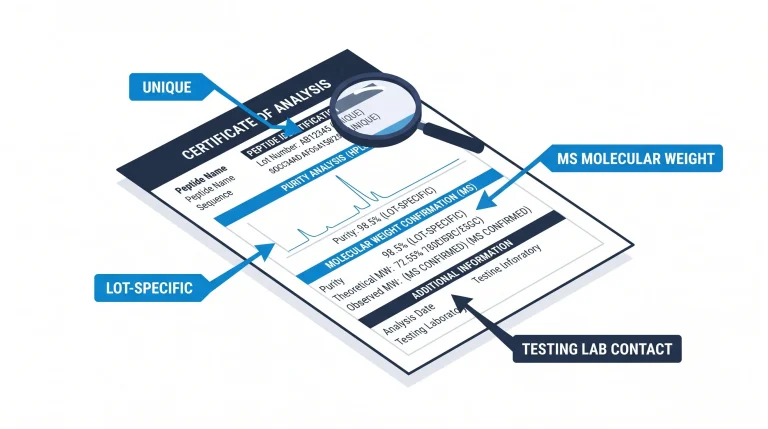
A lot-specific COA links a unique batch number to the HPLC and mass spec test data for that exact vial, enabling full batch traceability
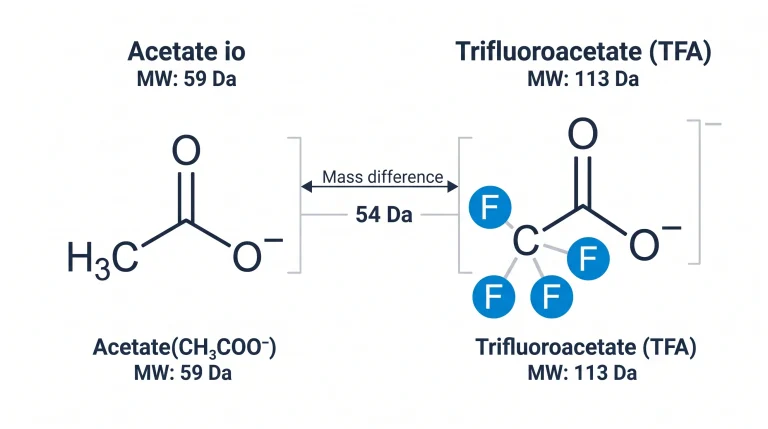
Acetate and TFA are the two most common counterions in research peptides. TFA adds more non-active mass and may lower pH in sensitive cell assays.