
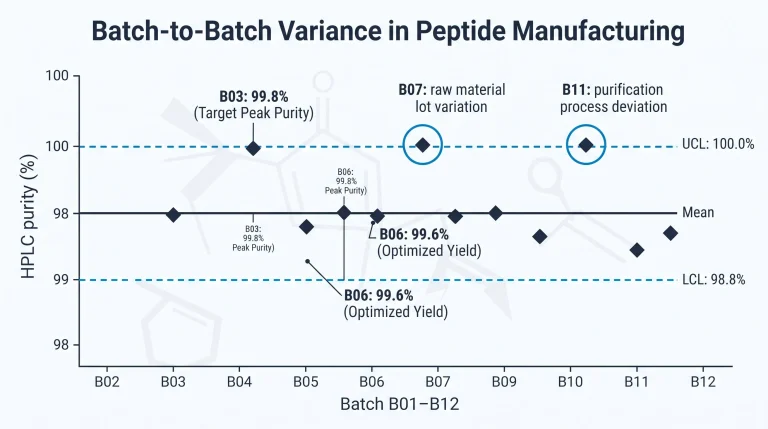
Batch-to-Batch Variance in Peptide Manufacturing
Batch-to-batch peptide variance is the measured purity difference between production runs. HPLC, mass spec, and lot-specific COAs verify each batch.
Batch-to-batch peptide variance is the measured purity difference between production runs. HPLC, mass spec, and lot-specific COAs verify each batch.
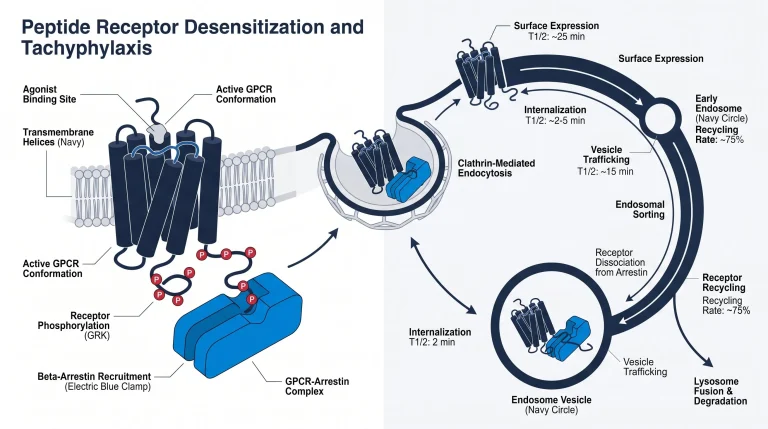
Peptide receptor desensitization is a biological process where cells become less responsive to a peptide or hormone.
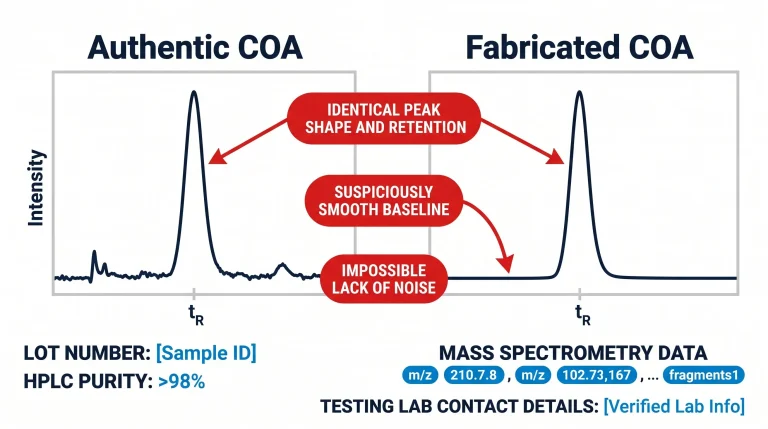
Fake peptide COAs show round purity numbers, missing lab details, and reused chromatograms. Learn to verify any COA using ISO accreditation checks.
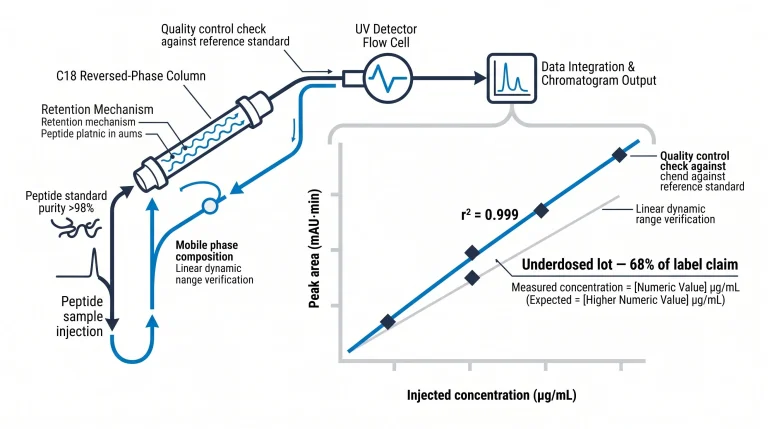
Underdosed peptides have high purity but low actual concentration. Net peptide weight on the COA verifies the true active amount per vial.

Sublingual peptide research is the scientific investigation of how peptides are absorbed into the bloodstream through the mucous membranes.
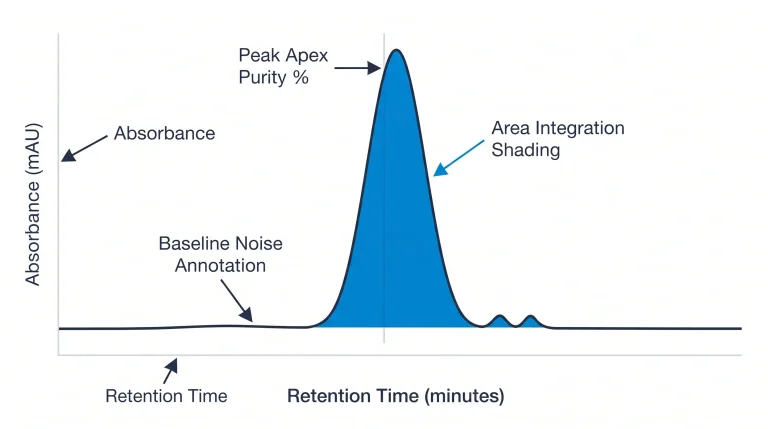
An HPLC chromatogram plots retention time vs detector response. The main peak area percent gives purity. Learn to read peptide COA chromatograms.
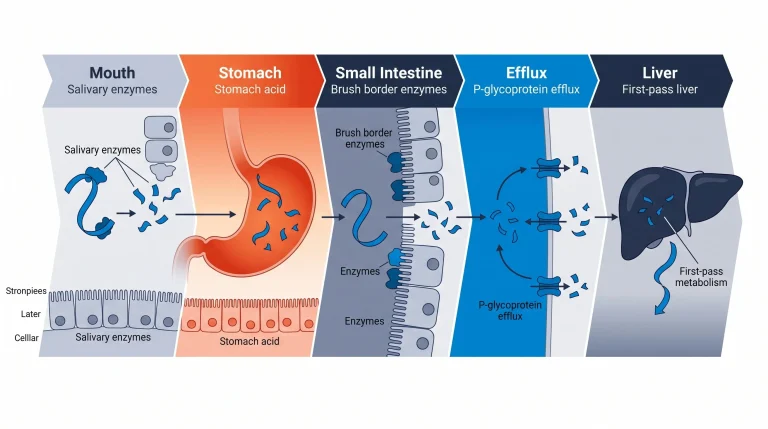
Oral peptide bioavailability is the fraction of an orally administered peptide that reaches systemic circulation unchanged.
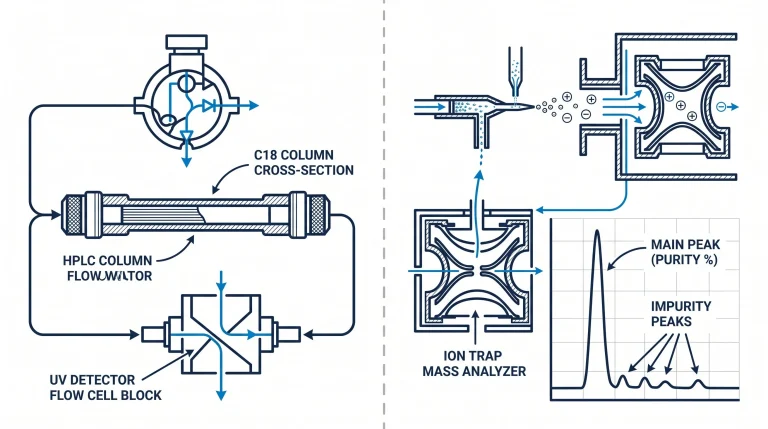
HPLC measures peptide purity and mass spectrometry confirms molecular identity. Both tests are required for a valid research peptide COA.

Peptide compatibility mixing is the chemical process of combining multiple distinct peptide molecules into a single solution to assess their stability.
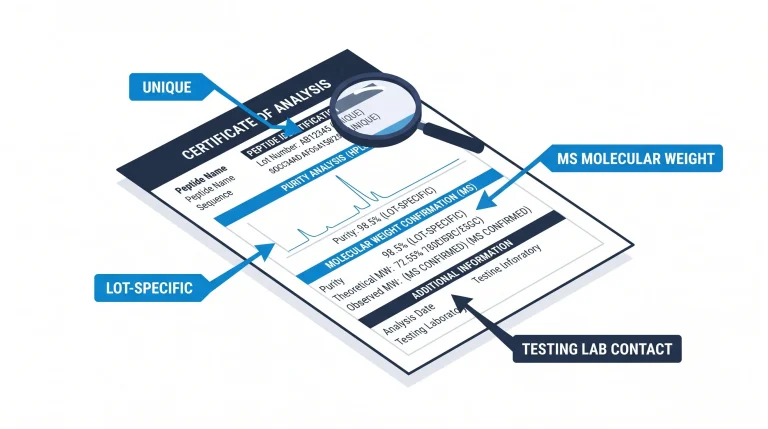
A lot-specific COA links a unique batch number to the HPLC and mass spec test data for that exact vial, enabling full batch traceability