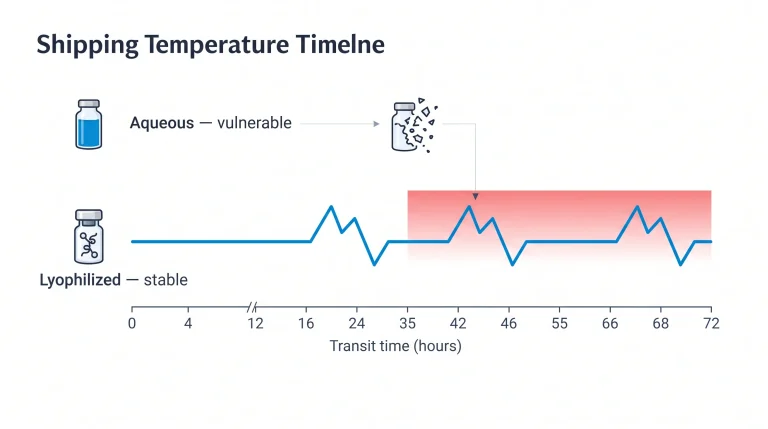
Does Peptide Shipping Require Cold Chain? Research
Research review of cold chain requirements for freeze-dried vs. liquid peptides: transit stability, temperature effects, and ICH Q1A validation.
Research review of cold chain requirements for freeze-dried vs. liquid peptides: transit stability, temperature effects, and ICH Q1A validation.
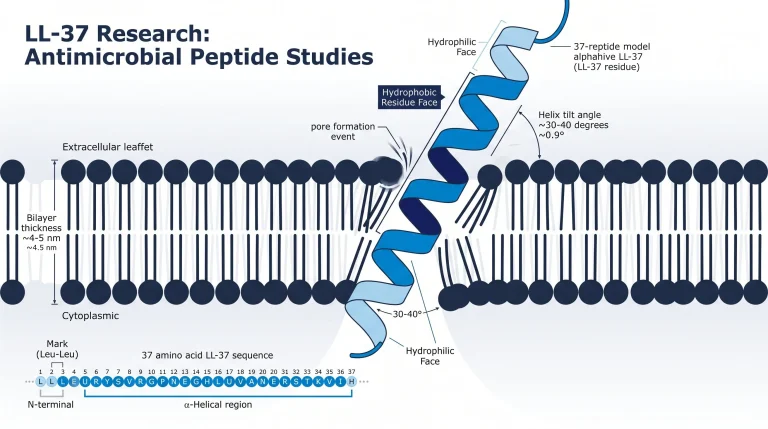
LL-37 is a 37-amino acid human cathelicidin studied for membrane disruption and immune signaling. Learn what research-grade LL-37 COA data shows.
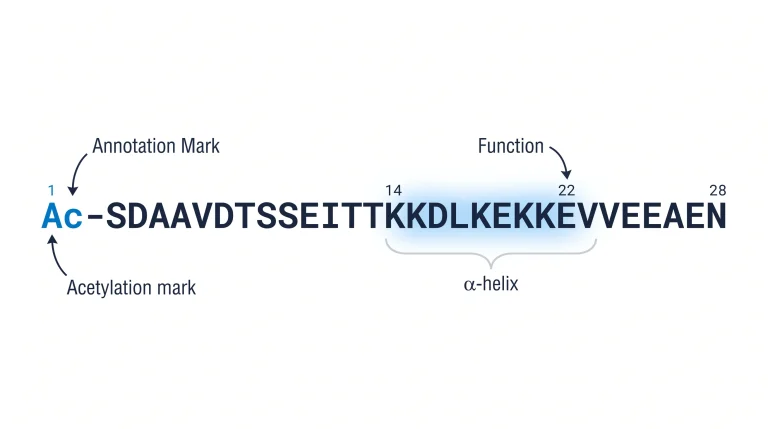
Thymosin Alpha-1 is a 28-amino acid peptide studied for T-cell maturation and toll-like receptor signaling. Learn what research-grade TA-1 COA data shows.
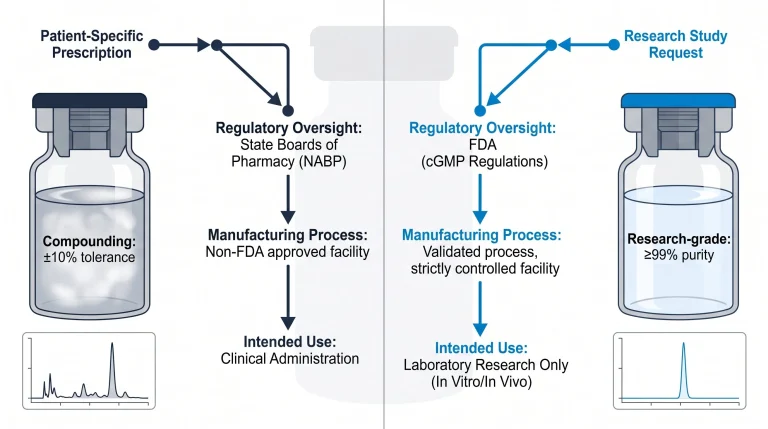
Compounded peptides are drugs created by state-licensed pharmacies, while research peptides are chemical compounds intended only for non-human.
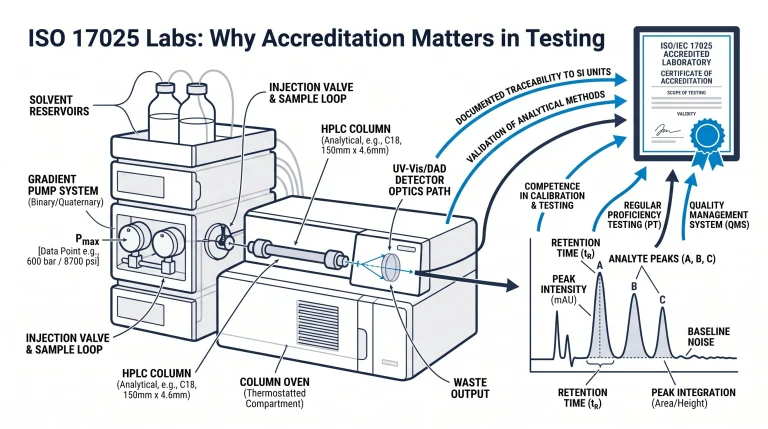
ISO 17025 testing is an international standard that proves a laboratory maintains technical competence and precise calibration systems.
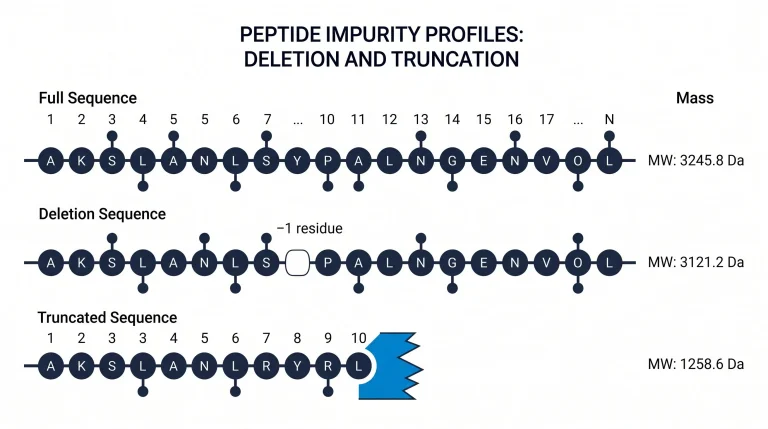
A peptide impurity profile maps deletion sequences, truncated chains, and chemical modifications per lot. Learn how HPLC and MS build a full COA.
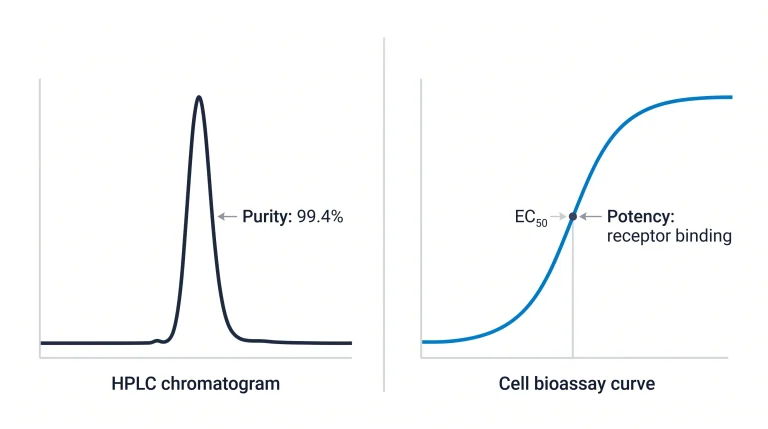
Peptide purity is the HPLC-confirmed percent of target compound per lot. Potency is the bioassay-measured biological response. Learn what a COA shows.
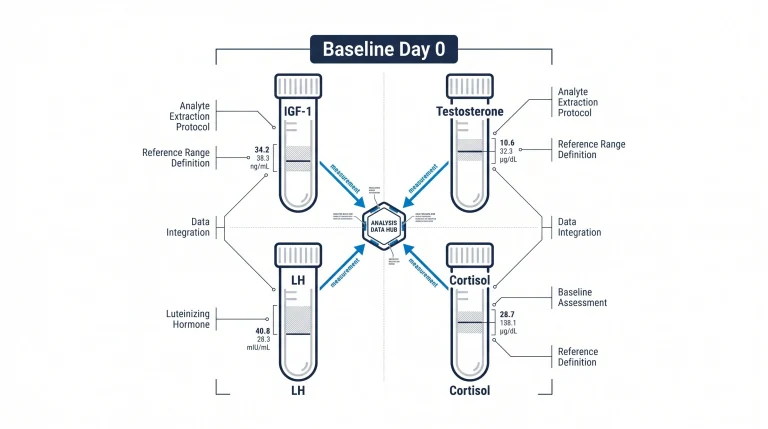
Baseline biomarkers are quantifiable biological characteristics measured before the introduction of a research compound to establish a control state.
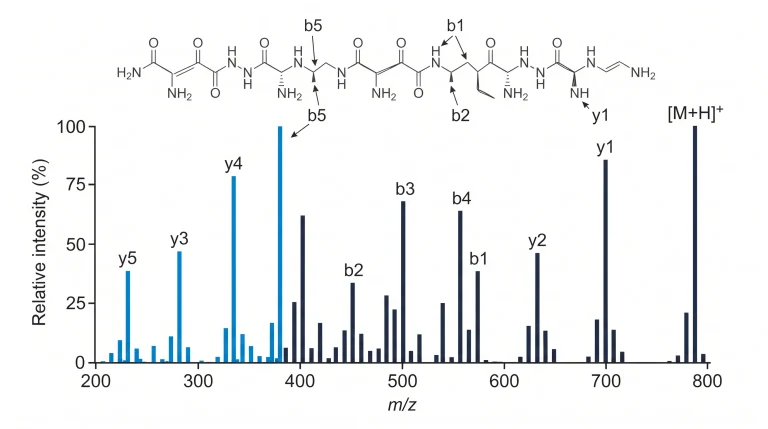
Peptide identity confirmation uses mass spectrometry and HPLC to verify molecular weight and purity of every research lot. Learn how COA data is generated.
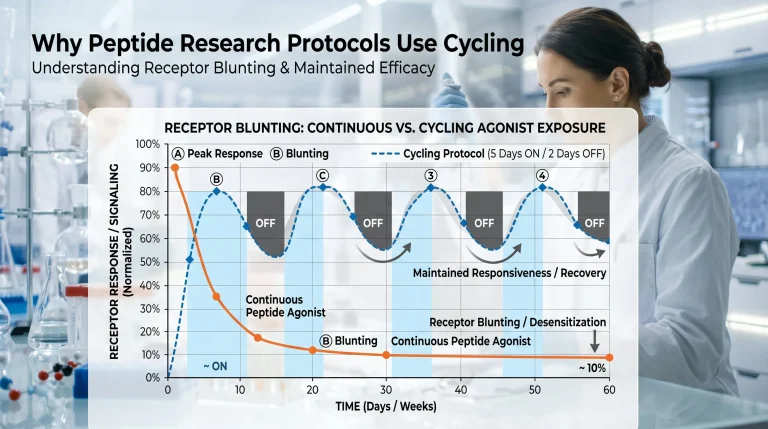
Peptide cycling is a research practice where scientists alternate between periods of compound administration and distinct intervals defined.