
Baseline Biomarkers in Peptide Research Design

Last updated: August 2026
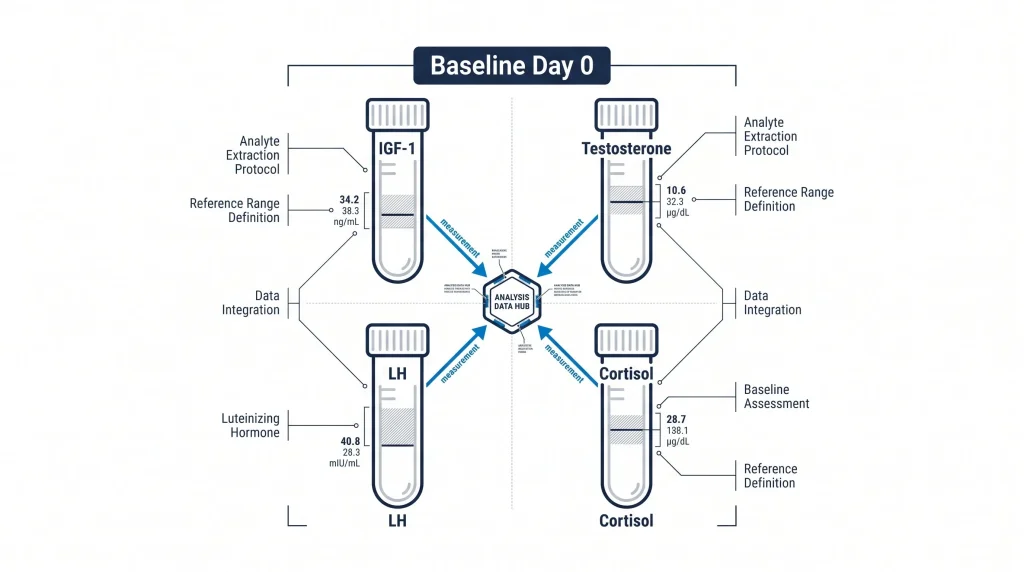
A baseline biomarker is a tracked cell trait. It is recorded before any research compound is added. These readings set a fixed control state. They give researchers a clear reference point. Changes in cell action can then be tracked across the study. Labs now monitor over 70 active peptide SKUs across seven research categories. Setting these values is the first step to observing how peptide chains affect cell pathways.
Next Level Pharm maintains internal quality controls for each compound. All peptides are verified by HPLC and mass spectrometry on every vial. The brand provides a COA with each order. Every batch is third-party tested.. This process achieves a 99.4% average purity across the last 100 batches.
These standards help labs keep conditions steady during the initial research phase. Baseline biomarkers form the foundation for assessing how peptide mimetics affect receptor binding. Researchers use a control group to isolate effects from external variables. This approach reduces data bias. Accurate tracking of pre-introduction biomarkers is a core requirement for sound research.
Key Takeaways
- Establishes a Control State: Baselines create a starting reference point. This lets researchers isolate the specific effects of a peptide from outside factors.
- Improves Accuracy: Pre-test data is compared against trial results. This raises the data power of findings. Clear baselines separate real peptide effects from normal cell shifts.
- Panel Specificity: Biomarker panels should match the lab mode of the research peptide. For example, IGF-1 levels are relevant for growth hormone releasers in lab models.
- Accounts for Variation: Multiple baseline samples ensure one outlier does not skew study data. This accounts for per-subject changes over the research period.
- Standards Are Essential: Data quality depends on proven assays like ELISA or LC-MS. Strict adherence to good lab practice keeps test results steady.
The following sections explore how these principles apply. Researchers can read ahead to select the biomarkers relevant to their specific lab objectives.
Why Are Baselines Vital in Peptide Studies?
Baselines establish a pre-study start control state for each subject. This lets researchers link observed changes to the peptide under study. Measuring biomarkers before a protocol begins gives a clear view of the starting point. This foundation is needed for detecting meaningful change.
A baseline reduces the impact of confounding factors. It also raises the data power of results. A controlled approach isolates the specific effects of a compound from random noise. Without this initial data, it is hard to separate real study effects from normal variance. BPC-157 is one COA-verified research peptide where proper baseline tracking ensures each observation rests on a written starting value. Each lot is verified by HPLC and mass spec before dispatch.
What Markers Are Key for GH Peptides?
Primary biomarkers for growth hormone research include IGF-1 (Insulin-like Growth Factor 1). Researchers also track serum GH levels and fasting glucose. These markers reveal the status of the somatotropic axis. Researchers focus on IGF-1 as a proxy for total hormone exposure. Its levels stay more stable in the blood than rapid GH pulses.
CJC-1295 and similar GHRH variants are studied with GHRP variants using these marker panels. They measure cell responses to pituitary signals. According to PubMed (2016), serum IGF-1 levels correlate with the output of growth hormone releasers. Tracking these changes lets researchers map how specific peptides shift somatotropic axis balance in controlled models.
How Are Metabolic Baselines Established?
Body baselines start with a specific panel of biomarkers from a fasted subject. Key markers include fasting blood glucose, HbA1c, and a full lipid panel. These markers provide a snapshot of hormone and body health. Research from the NIH (2021) shows these tests reveal how internal systems control fuel storage and glucose uptake.
Standardized collection protocols reduce noise in diet data. Blood draws are done at a fixed time of day after an overnight fast. This precision is needed for studies involving GLP-1 agonists. Body state acts as a primary factor in those trials. Shifts in circadian rhythm or food intake can mask the true effect of a peptide on glycemic control. Researchers control these factors to ensure baseline values are sound.
Why Does Intra-Individual Variation Matter?
Cell markers fluctuate normally within one subject over time. A single measurement often fails to reflect a true baseline. Researchers account for these shifts to avoid false leads. Multiple readings over several days give a stable mean. Labs define the range of normal change.
This process allows researchers to calculate the CV (ratio of spread to mean) (CV) for a specific marker. The CV is the ratio of the spread-to-mean ratio. It is a simple way to assess data’s steady output. C-reactive protein, for example, has a high CV. Its levels shift based on stress or minor immune action. According to PubMed (2016), repeated data collection reduces the chance of misreading cell noise as a major study response.
What Are Common Panels for Recovery Peptides?
Common panels for recovery peptides measure markers of inflammation and tissue repair. These include CRP (C-reactive protein), IL-6 (Interleukin-6), and TNF-alpha (Tumor Necrosis Factor-alpha). These markers let researchers monitor shifts in body swelling. By tracking changes from a stable baseline, researchers measure the specific effects of agents like BPC-157.
Testing panels for recovery compounds focus on proteins that control immune response. Research from the NIH (2020) shows that tracking TNF-alpha gives a clearer view of tissue responses. Monitoring these markers helps assess how BPC-157 modulates the local environment at a cell level. Standard assays keep results comparable across varied research settings.
How Are Marker Assays Standardized?
Marker assays use proven methods such as ELISA and LC-MS to reach high precision. ELISA (Enzyme-Linked Immunosorbent Assay) detects specific proteins fast. LC-MS (Liquid Chromatography-Mass Spectrometry) detects compounds by mass. These tools link a raw sample to a known concentration. This rigor allows labs to share a common standard for data collection.
To keep data steady, labs run control samples alongside the main group. This monitors assay precision over time. Following Good Lab Practice (GLP) standards keeps quality benchmarks in place. Researchers sourcing Fitness & GH peptides for marker studies need this level of assay rigor. Strict controls minimize variance between test runs.
According to PubMed (2022), baseline biomarker values show significant inter-individual change for hormone markers. According to PubMed (2023), pre-study biomarker panels improve result reading in peptide research. According to PubMed (2016), standardized baseline protocols reduce confounding in longitudinal lab studies.
| Biomarker | Research Context | Primary Assay | Key Controlled Variable |
| IGF-1 | GH peptide studies | LC-MS or immunoassay | Age and sex normalization |
| Fasting glucose | Metabolic research | Enzymatic assay | Fasting duration |
| CRP | Recovery peptides | ELISA | Collection timing |
| TNF-alpha | Inflammation studies | Multiplex assay | Sample temperature |
| Insulin | Metabolic or GH studies | Immunoassay | Fasting and circadian phase |
Frequently Asked Questions
Why do studies establish baselines first?
Baseline data gives a starting point for measuring effects on a cell system. Without knowing the normal state of the subject, researchers cannot track shifts caused by a peptide. These values ensure later changes are measured against a known, written condition. This reduces the chance of mistaking random cell shifts for a real compound response. Accurate baselines protect the quality of the study data.
Which biomarkers are measured in GH research?
Growth hormone research monitors IGF-1 (Insulin-like Growth Factor 1) and fasting insulin levels. These track body action in study subjects. Researchers also measure blood glucose and lipid profiles. These show shifts in hormonal regulation over time. By assessing these biomarkers, researchers identify how a peptide affects the broader hormone system. Results are compared to standard control groups from the same study.
How do body studies set baselines?
Body studies monitor subject parameters over a specific period before the study start. This phase includes controlled fasting cycles and multiple blood draws to keep values stable. Researchers track steady output in glucose levels, insulin sensitivity, and lipid panels. Research from the NIH (2021) confirms this stabilization period is vital. Sudden shifts in diet or action can bias the data if not controlled during this window.
Why does per-subject change matter?
Normal biomarker fluctuation within one subject occurs over time. If a researcher does not account for daily changes, a normal shift may look like a peptide effect. Studying these variances allows for a more precise study. A range of normal movement is set before study starts. Understanding this cell noise helps detect meaningful data during the study phase. Multiple readings reduce the risk of misreading.
How are baseline panels standardized?
Standardization uses the same collection methods and lab assays for each subject. Researchers process samples at the same time of day and under identical fasting conditions. This minimizes outside factors that can skew results. Research from the USP (2022) confirms that unified protocols keep checks valid and steady. Consistency protects data quality and allows accurate checks across different test groups in the study.
What is a biomarker in a research study?
A biomarker is a key cell indicator found in a subject. Common examples include enzymes, hormones, and proteins found in blood. These signal how a system is functioning at a given time. Researchers use these markers to monitor the progress of a study. Tracking biomarkers shows how specific cell pathways change in response to the research factors. They are the core data tool for any peptide study.
How often are baseline measurements taken?
Baseline measurements are taken multiple times over several days or weeks. This ensures stability across the measurement window. The number of samples depends on the specific biomarker and its variability in the model. Collecting data across different days creates a steady average. This durable means gives researchers high confidence in the starting point of their study. Daily fluctuations are averaged out across the collection window.
What is the CV (ratio of spread to mean) for a biomarker?
The CV (CV (ratio of spread to mean)) is a data-based measure. It represents the ratio of a spread-to-mean ratio. The CV shows how much a specific biomarker fluctuates relative to its average value. A lower CV indicates a stable biomarker. A higher value suggests more volatility. Researchers use the CV to determine if a data shift is meaningful or reflects normal cell movement. It is a standard quality check in lab research.
Summary
Baseline biomarkers give every peptide research study a verified starting point. Measuring specific cell traits before compound introduction establishes the control state needed for sound results. Panels should match the mechanism of the research peptide. This means IGF-1 for growth hormone releasers or CRP for recovery compounds. Standard assay methods and repeated sampling reduce noise and protect data quality.
Researchers sourcing research peptides can explore the extensive catalog at Next Level Pharm. Each vial ships with a valid COA to ensure full lot tracking for lab work.
What Should You Do Next?
Researchers sourcing research-grade peptides for lab studies can follow these steps:
- Review purity documentation. Confirm COA data is on hand for the batch before ordering. Next Level Pharm provides lot-specific COA access for each vial.
- Check compound storage requirements. Lyophilized peptides stay stable at room temperature during shipping. Confirm your lab has the correct storage protocol before beginning work.
- Request technical support if needed. PhD-level biochemist support is on hand for researchers with protocol-specific questions about research applications.
People Also Read
- What Makes a Peptide Research Grade? Standards and Testing Explained
- Sermorelin vs CJC-1295: What Research Shows About Each GHRH variant
About the Author
Next Level Pharm Research Team
The Next Level Pharm research team is composed of biochemists and lab scientists dedicated to providing researchers with the highest-purity, COA-verified research peptides given. Every batch is HPLC and mass spec verified before dispatch.
Disclaimer: The information provided on this page is for educational and research purposes only. Next Level Pharm’s products are intended for lab research use only. They are not intended for human consumption, diagnostic, therapeutic, or medicinal purposes. This content does not constitute medical advice. Always consult a licensed healthcare professional before making any health-related decisions.