
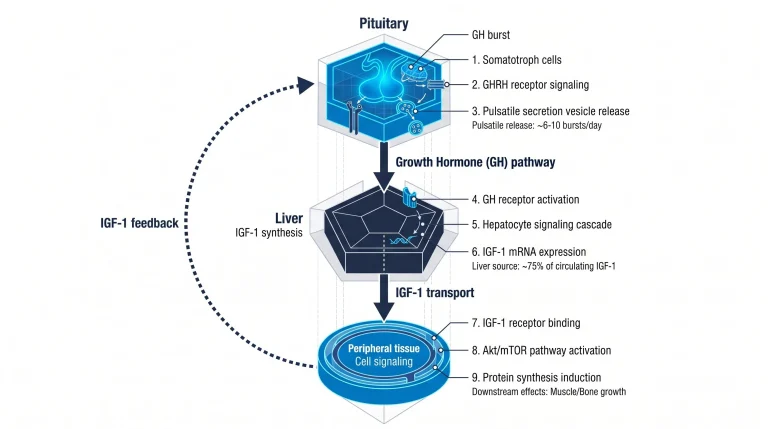
IGF-1 as a Research Biomarker: What It Measures
IGF-1 is an indirect but stable measure of integrated growth hormone secretion and the activity of the somatotropic axis.
IGF-1 is an indirect but stable measure of integrated growth hormone secretion and the activity of the somatotropic axis.
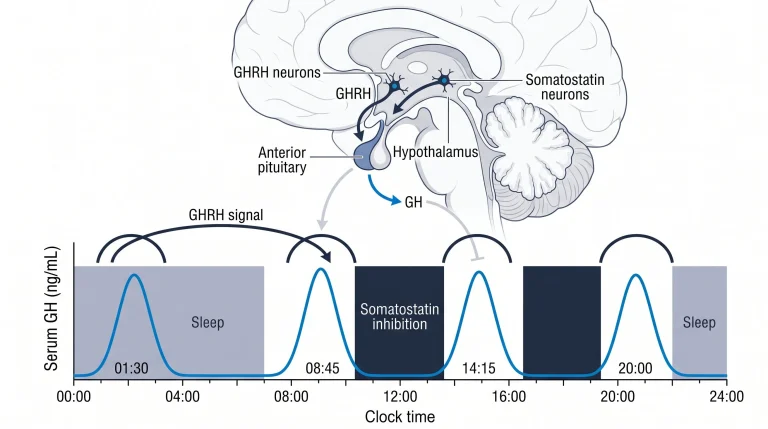
GH pulsatility is the natural, rhythmic secretion of growth hormone from the anterior pituitary gland in discrete bursts rather than a continuous flow.
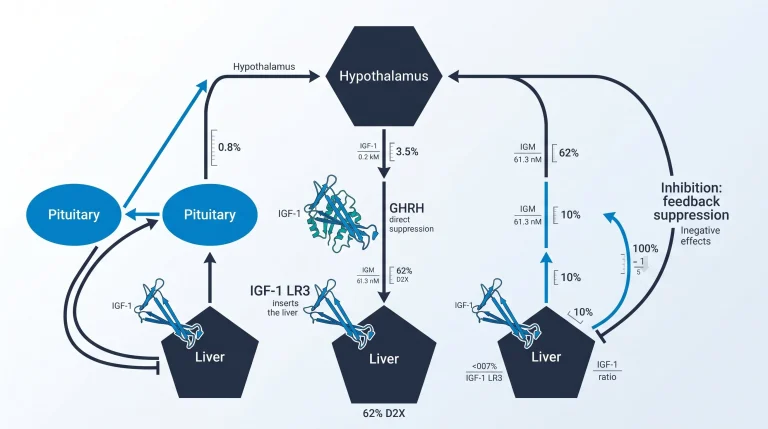
IGF-1 LR3 is a synthetic analog of human Insulin-like Growth Factor-1, modified to resist binding by inhibitory proteins for extended systemic duration.
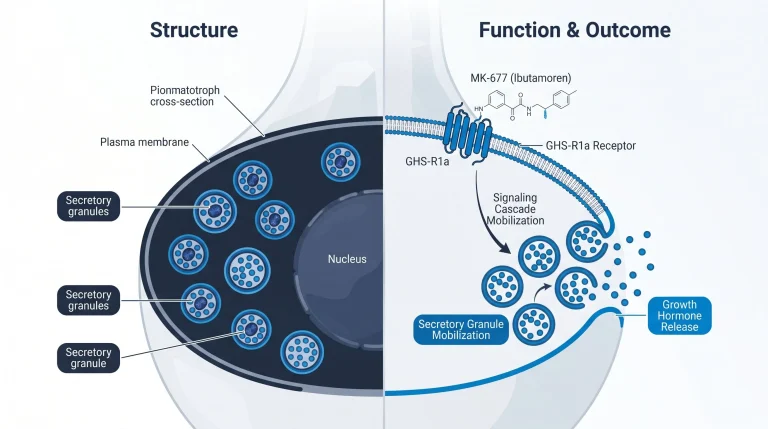
MK-677 is a non-peptide, orally active growth hormone secretagogue that mimics the action of ghrelin. This research compound stimulates the pituitary.
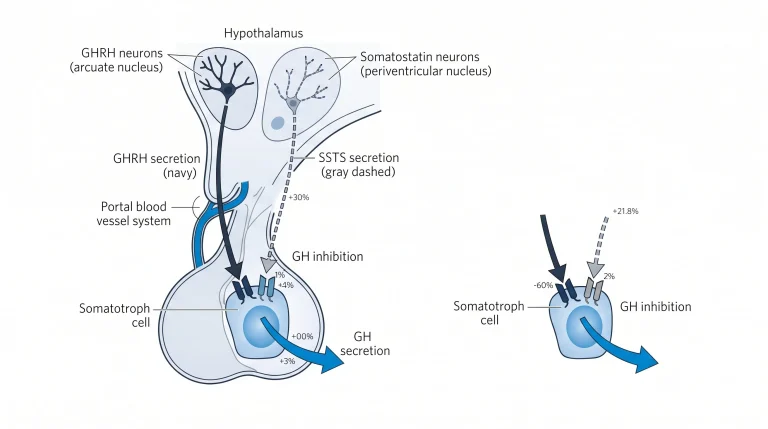
GHRH is a hypothalamic peptide that signals the pituitary to release growth hormone. Analogs like CJC-1295 extend this signal for extended lab research.
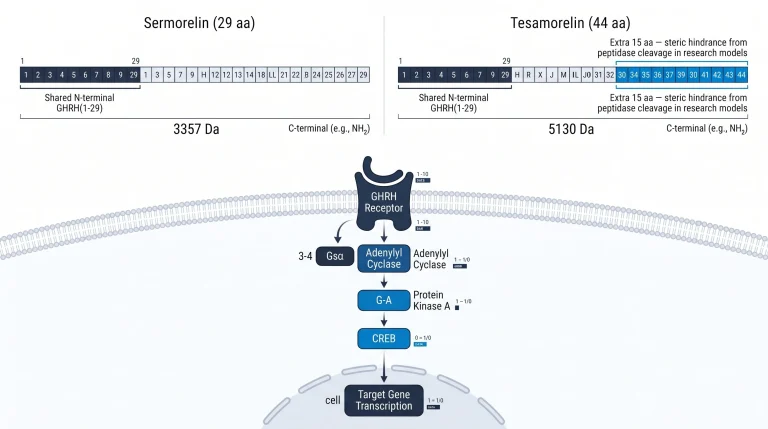
A research-based comparison of sermorelin vs tesamorelin. Tesamorelin’s half-life is ~63 minutes, far longer than sermorelin’s ~12 minutes.
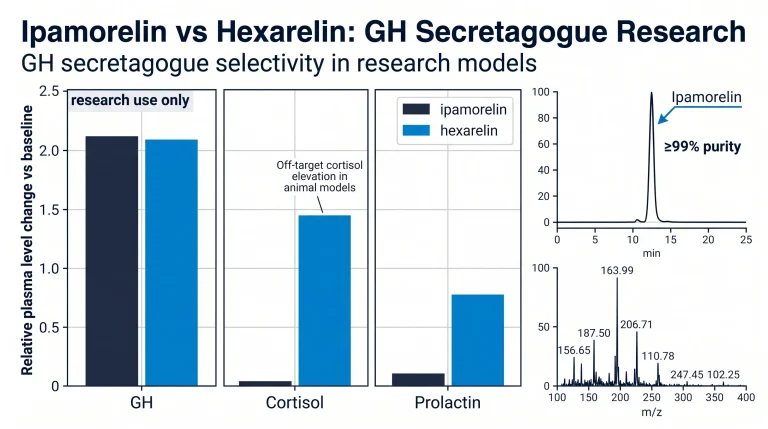
Ipamorelin vs hexarelin: ipamorelin is a selective GHS-R1a agonist. Hexarelin is more potent but elevates cortisol and prolactin in research models.
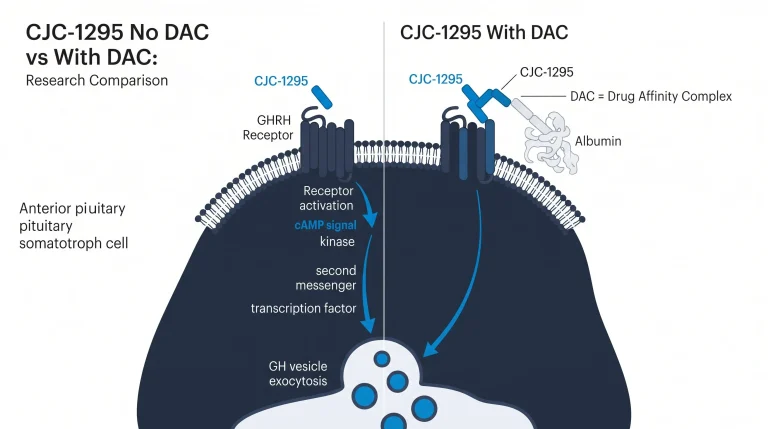
CJC-1295 No DAC vs with DAC: the DAC version extends half-life to 6-8 days via albumin binding. No DAC mimics pulsatile GH release in pituitary research.
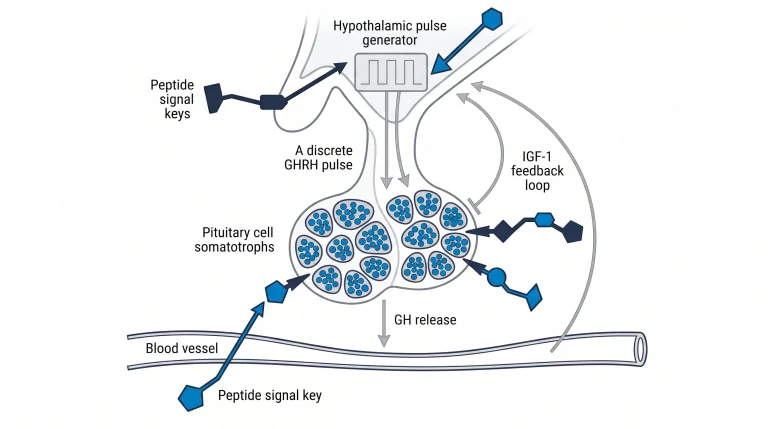
HPA axis peptide research covers GHRH analogs and GH secretagogues. Studies map how the hypothalamus and pituitary control GH pulse output in lab models.
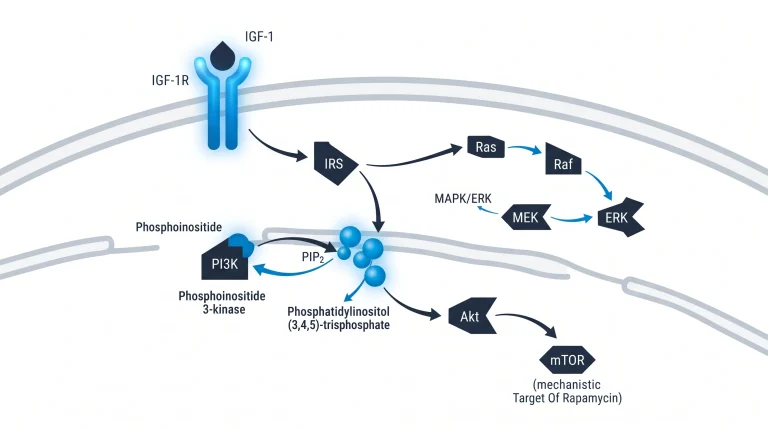
IGF-1 pathway research maps PI3K, Akt, and mTOR signaling. Studies show this cascade regulates cell growth, protein production, and survival in lab models.