
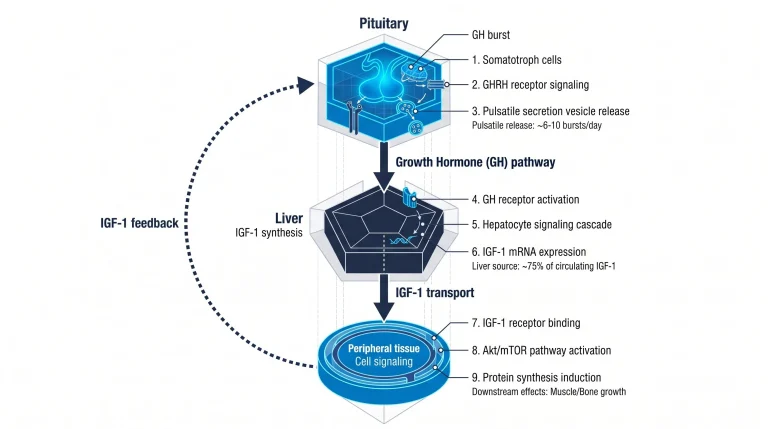
IGF-1 as a Research Biomarker: What It Measures
IGF-1 is an indirect but stable measure of integrated growth hormone secretion and the activity of the somatotropic axis.
IGF-1 is an indirect but stable measure of integrated growth hormone secretion and the activity of the somatotropic axis.
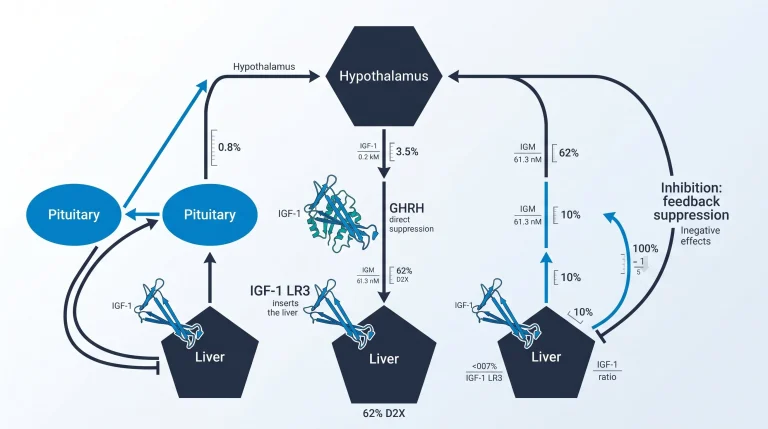
IGF-1 LR3 is a synthetic analog of human Insulin-like Growth Factor-1, modified to resist binding by inhibitory proteins for extended systemic duration.
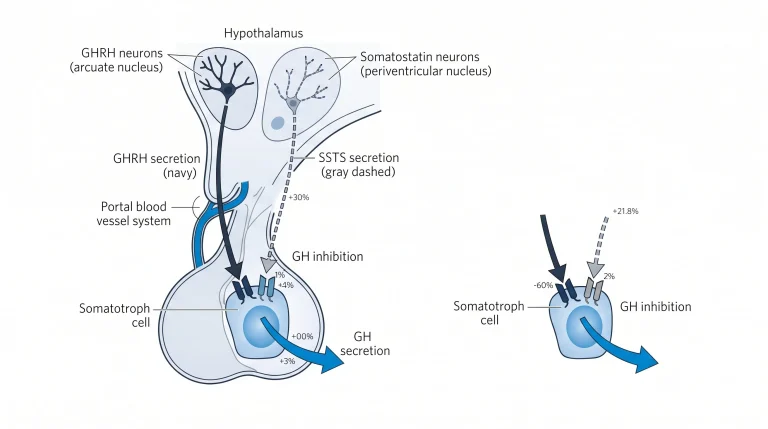
GHRH is a hypothalamic peptide that signals the pituitary to release growth hormone. Analogs like CJC-1295 extend this signal for extended lab research.
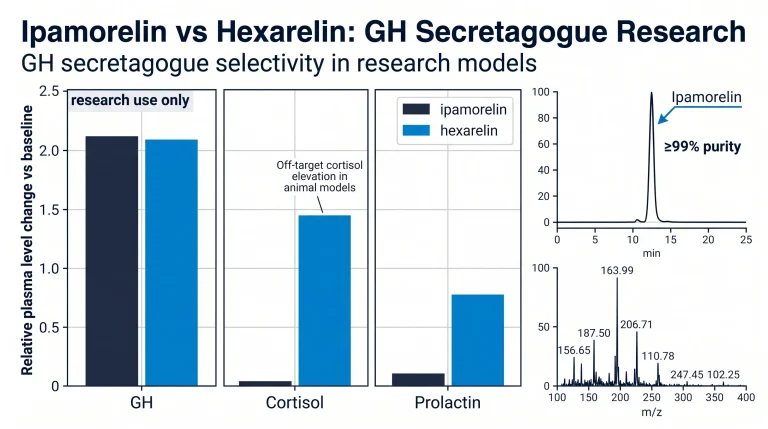
Ipamorelin vs hexarelin: ipamorelin is a selective GHS-R1a agonist. Hexarelin is more potent but elevates cortisol and prolactin in research models.
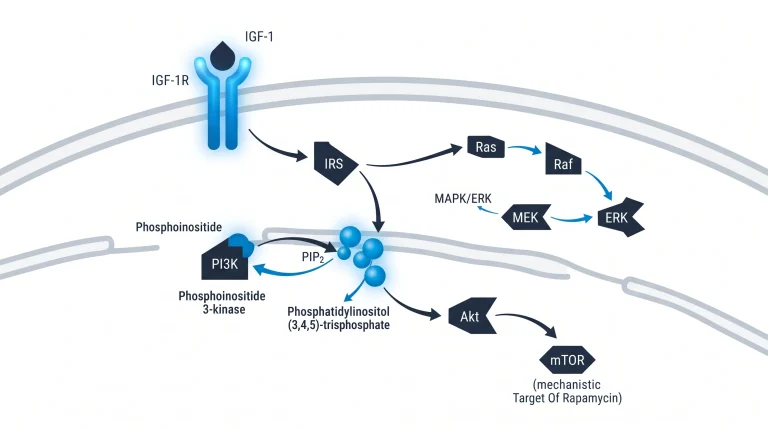
IGF-1 pathway research maps PI3K, Akt, and mTOR signaling. Studies show this cascade regulates cell growth, protein production, and survival in lab models.
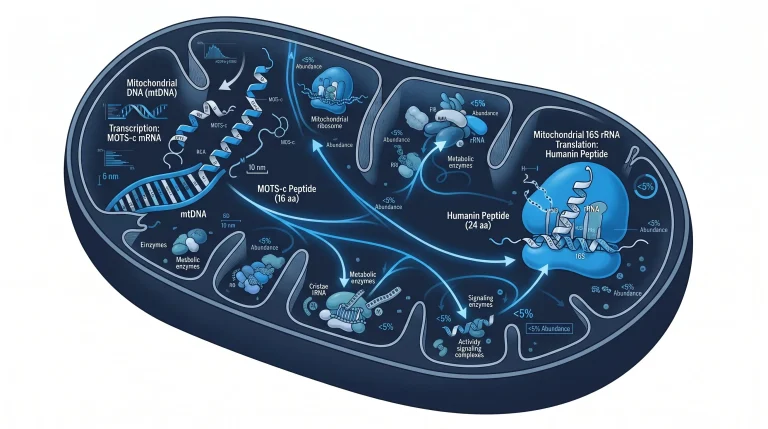
MOTS-c vs humanin research compares two mitochondrial peptides. MOTS-c targets AMPK. Humanin targets gp130 and STAT3. Both COA-verified for labs.
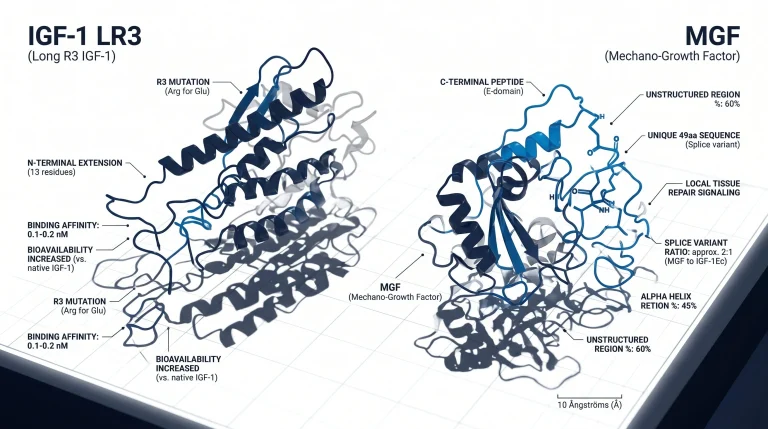
An igf-1 lr3 vs mgf research comparison examining structure, half-life, receptor binding, and research applications of these two IGF-1 gene variants.

A research overview of MGF: an IGF-1 splice variant with a unique E-domain, studied in cell and animal models for satellite cell and IGF-1R activity.

A research overview of PEG-MGF: a PEGylated form of Mechano Growth Factor studied in cell and animal models for IGF-1R binding and satellite cell activity.
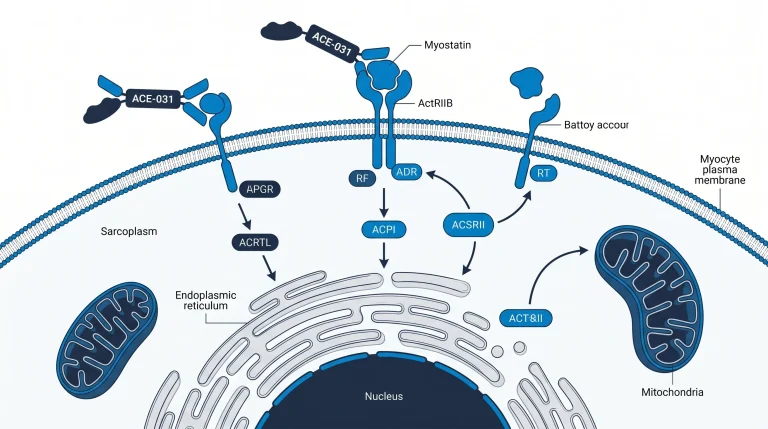
ACE-031 research covers how this ActRIIB fusion protein blocks myostatin, key preclinical muscle data, and Phase 1 clinical trial history.