
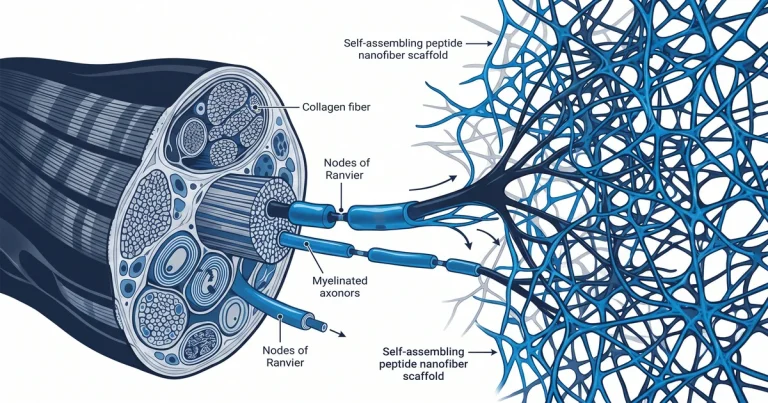
Self-Assembling Peptide Nanofiber Research: Scaffold
Peptide nanofiber scaffolds self-assemble into 3D hydrogels used in tissue research. This guide covers assembly triggers, ECM mimicry, and scaffold study.
Peptide nanofiber scaffolds self-assemble into 3D hydrogels used in tissue research. This guide covers assembly triggers, ECM mimicry, and scaffold study.
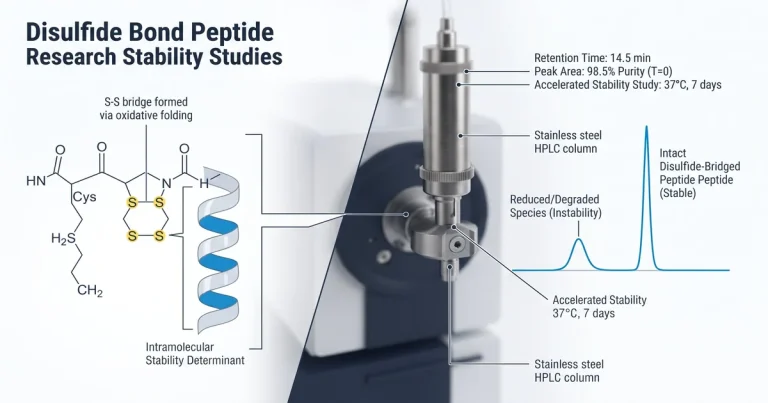
Disulfide bond peptide research studies how S-S bridges between Cys sites raise peptide stability against heat and enzymes in lab assays.
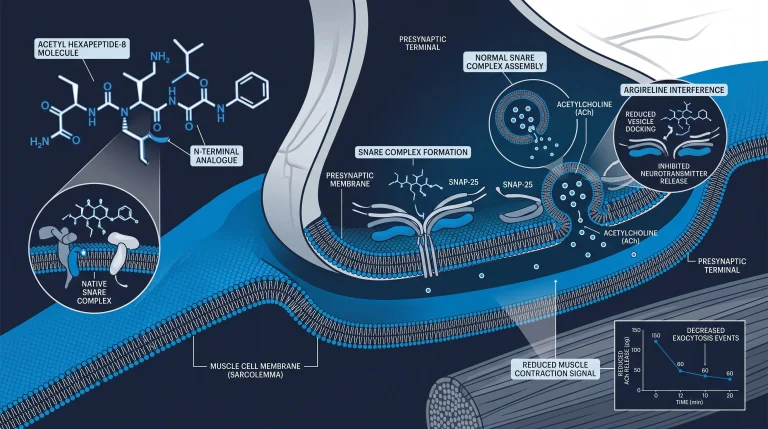
Argireline is a synthetic peptide fragment of SNAP-25 designed for research into its effects on expression lines and neurotransmitter pathways.
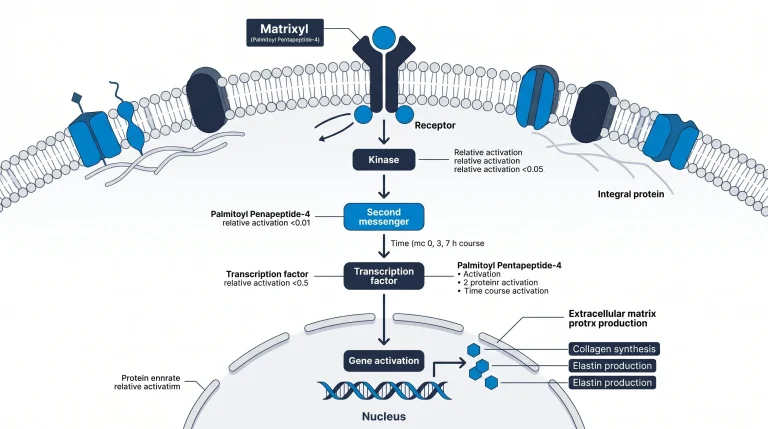
Matrixyl peptide is a synthetic fragment derived from human pro-collagen I that researchers study for its influence on the extracellular matrix.
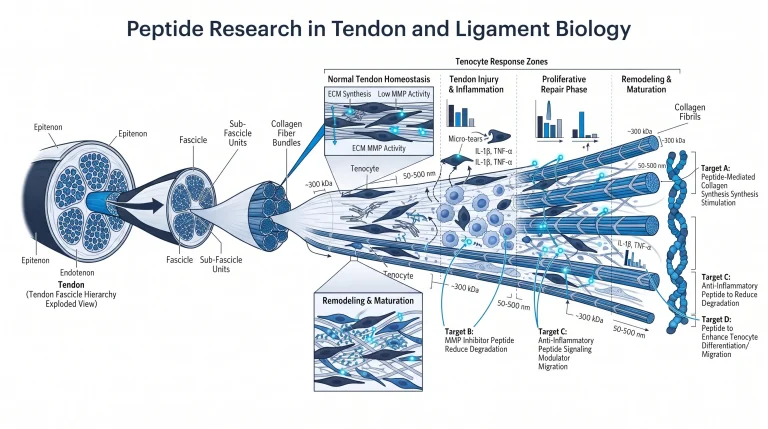
Peptide tendon repair research maps how BPC-157 and TB-500 affect collagen synthesis and tenocyte migration in lab models. COA-verified peptides for labs.
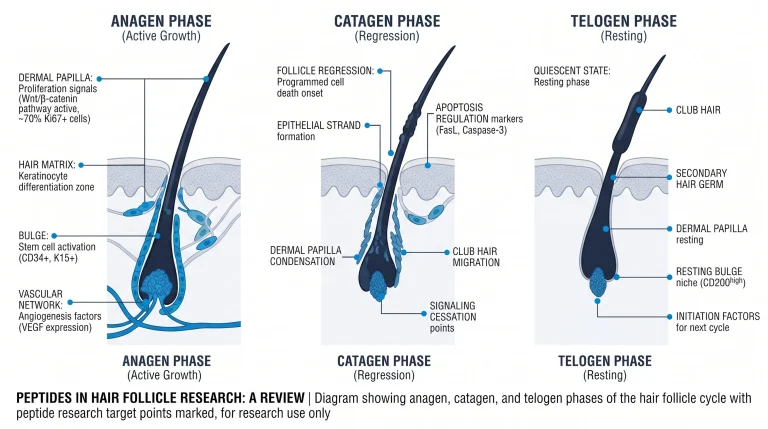
Peptide hair follicle research maps how compounds like GHK-Cu affect the anagen phase and follicle stem cell activity in lab models. COA-verified for labs.
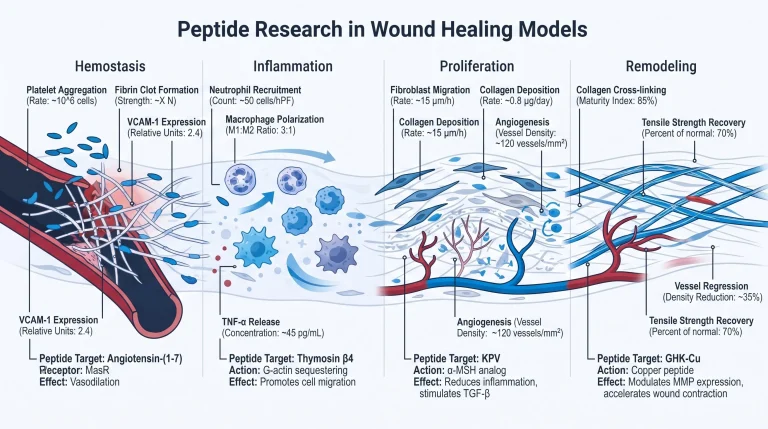
Last updated: July 2026 A peptide wound healing research model is a lab system that tests how small protein chains affect tissue repair pathways. Wounds move through four overlapping stages: hemostasis, swelling, cell growth, and tissue remodeling. Researchers study peptides that act at each stage. BPC-157, TB-500, GHK-Cu, and KPV are four compounds studied in […]
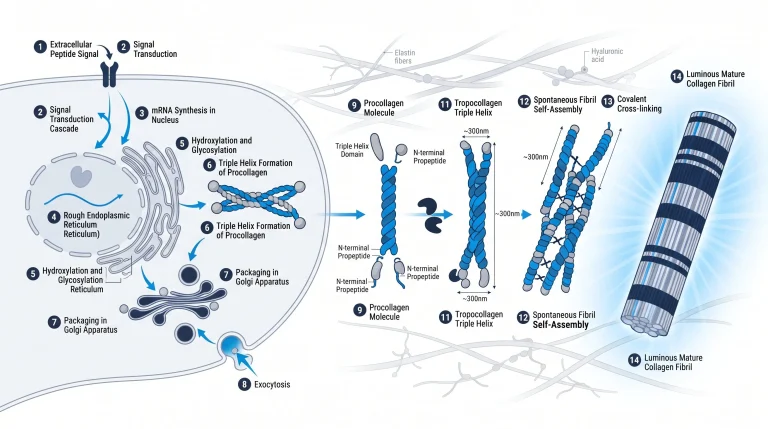
Collagen peptide synthesis research maps how peptides signal fibroblasts. Studies on GHK-Cu show effects on COL1A1 gene expression in lab models.
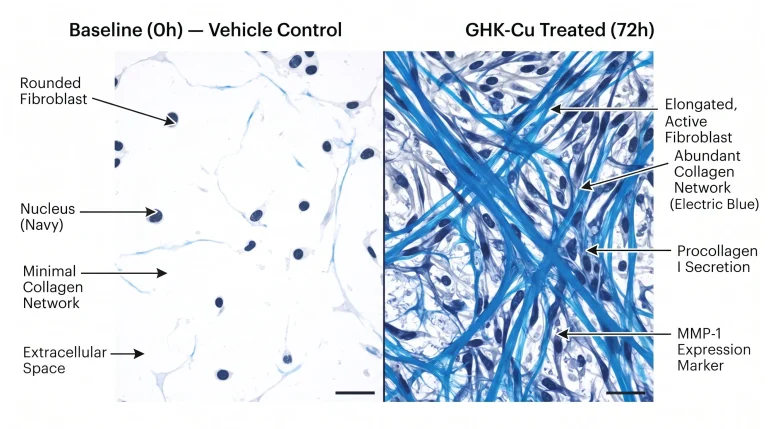
GHK-Cu skin research: collagen synthesis, fibronectin, and keratinocyte gene markers in cell and animal models. No human outcomes are claimed.
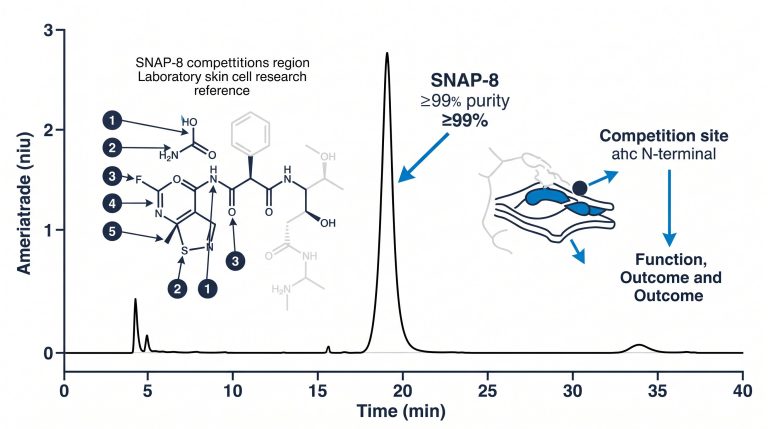
SNAP-8 research on SNARE complex modulation in skin cell models. Data on SNAP-25 competition, vesicle release assays, and neuromuscular studies.