
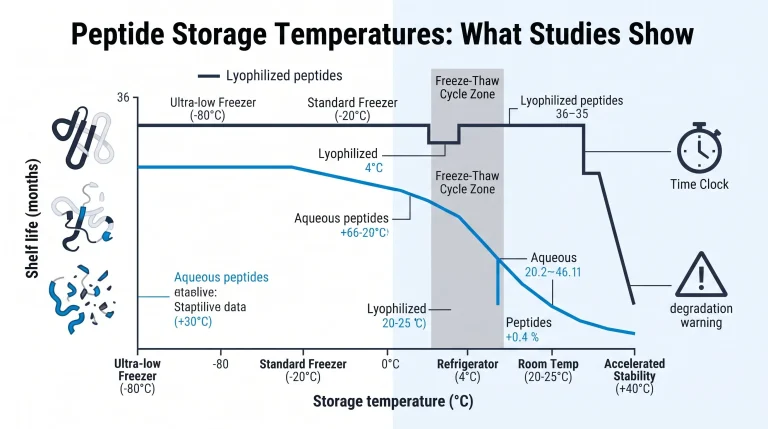
Peptide Storage Temperatures: What Studies Show
Peptide storage temperature research is the scientific investigation of how temperature, humidity, light, and time impact the chemical stability.
Peptide storage temperature research is the scientific investigation of how temperature, humidity, light, and time impact the chemical stability.
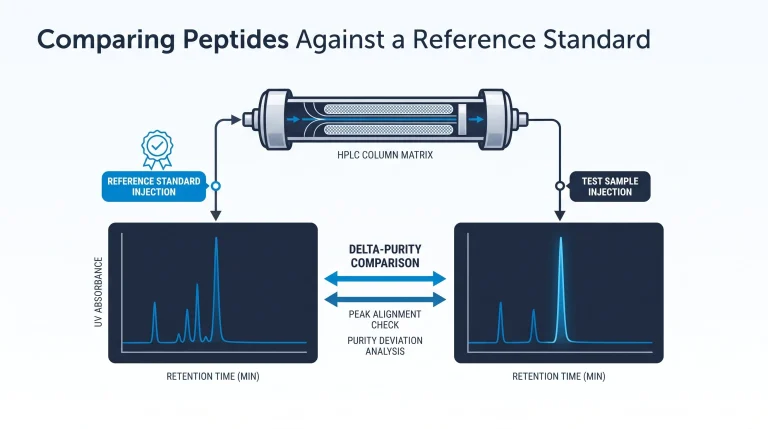
A peptide reference standard comparison is an analytical process used to confirm the identity and purity of a research peptide sample by matching it.

Peptide research documentation is the systematic recording of experimental inputs, conditions, and procedures that allows others to verify findings.
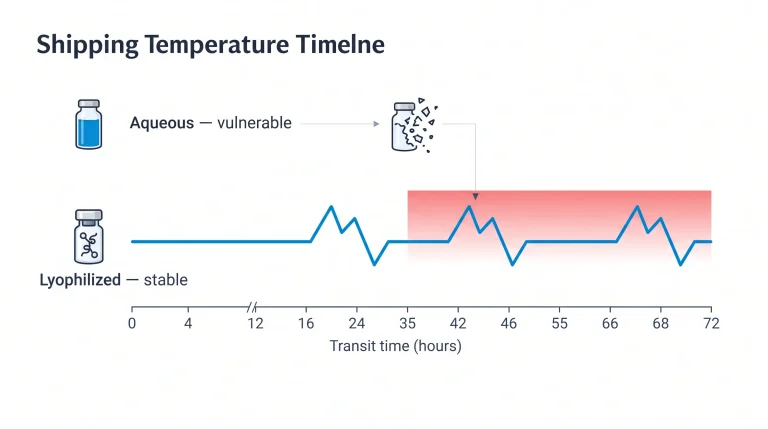
Research review of cold chain requirements for freeze-dried vs. liquid peptides: transit stability, temperature effects, and ICH Q1A validation.
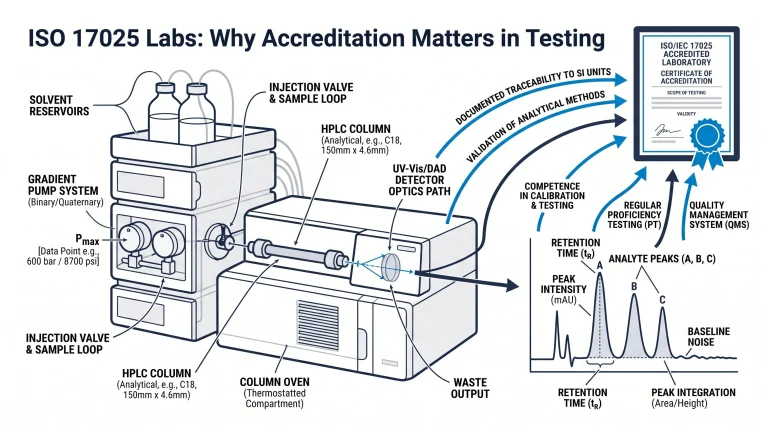
ISO 17025 testing is an international standard that proves a laboratory maintains technical competence and precise calibration systems.
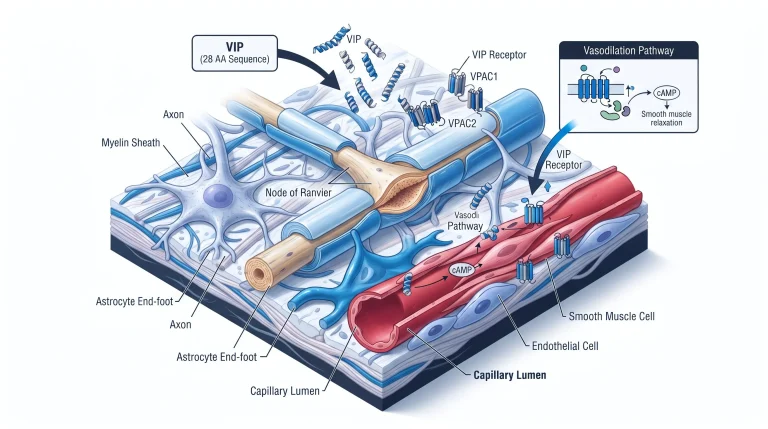
VIP is a neuropeptide hormone belonging to the secretin/glucagon family that functions as a neuromodulator and neurotransmitter in various tissues.

Argireline is a synthetic peptide fragment of SNAP-25 designed for research into its effects on expression lines and neurotransmitter pathways.
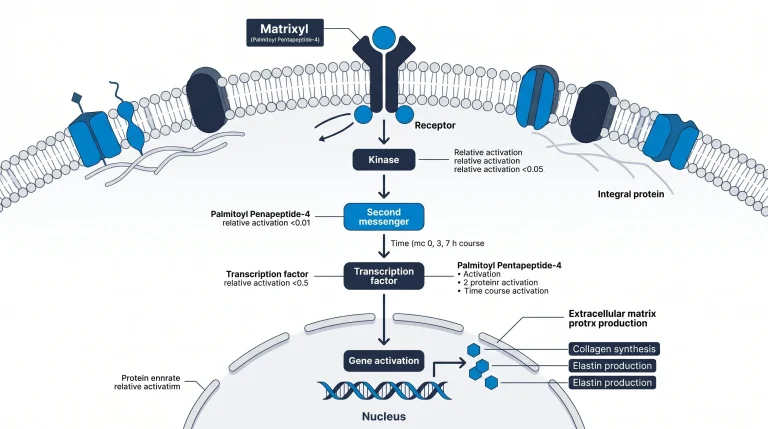
Matrixyl peptide is a synthetic fragment derived from human pro-collagen I that researchers study for its influence on the extracellular matrix.
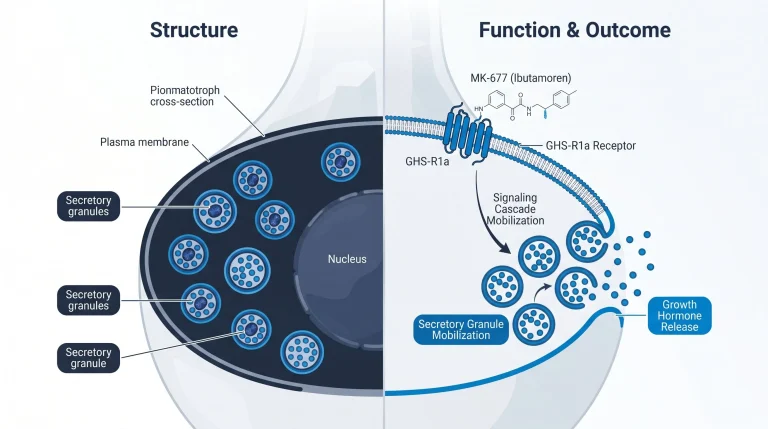
MK-677 is a non-peptide, orally active growth hormone secretagogue that mimics the action of ghrelin. This research compound stimulates the pituitary.
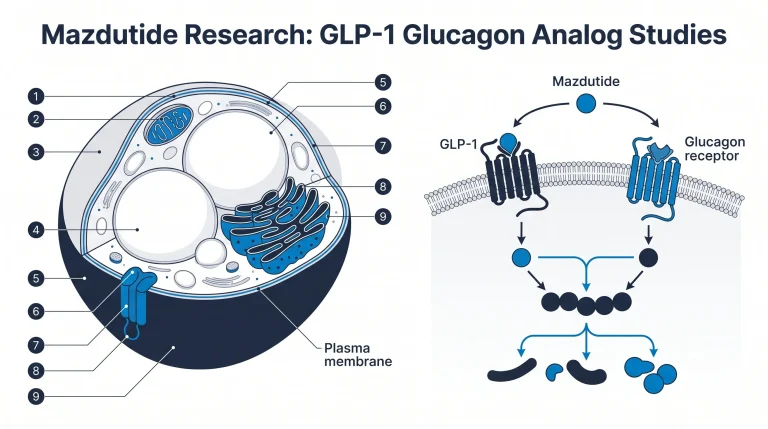
Mazdutide is a synthetic peptide research compound designed to simultaneously activate the glucagon-like peptide-1 receptor and the glucagon receptor.