Research-Grade Peptides: Purity Standards and Sourcing

Last updated: May 2026
A research-grade peptide is a compound made to meet set purity and identity limits for lab work. These compounds are produced under strict terms and tested by defined methods before supply. Purity affects data quality in every assay type. Low-purity vials add unwanted factors that change test results. Researchers use supplier records to confirm compounds meet stated specs. This guide covers purity limits, test methods, COA needs, and common red flags in peptide supply chains.
Next Level Pharm is a US-based peptide supplier. Every vial is tested by HPLC and mass spec before dispatch. Lot-specific COA records are included with each order. Peptides ship in freeze-dried form from US-based stock with 48-hour average dispatch.
Research-grade is not the same as drug-grade. The term refers to compounds for lab use only, not for human use. Published peptide studies need consistent purity to produce valid and repeatable data.
Key Takeaways
- Purity Limit: Research-grade peptides require at least 99% purity, confirmed by HPLC and mass spec.
- Dual Testing: HPLC checks purity by peak area; mass spec confirms compound mass and chain ID.
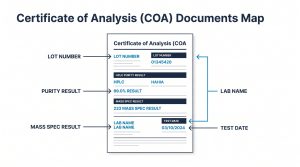
- COA Format: A valid COA includes lot number, purity result, test method, and lab name.
- Storage Form: Freeze-dried peptides stay stable in transit without cold storage.
- Red Flags: No lot-specific COA, vague purity claims, and no supplier address are warning signs.
Purity checking is not optional for valid research. Impure compounds cannot produce repeatable data.
What Does Research-Grade Peptide Mean?
Research-grade is a supply term, not a legal class. It means compounds made to at least 99% purity and tested by set methods. HPLC and mass spec are the two main test methods. Each lot has a traceable COA with purity data. These compounds are for in vitro work, in vivo animal studies, and lab analysis only. They are not for human use.
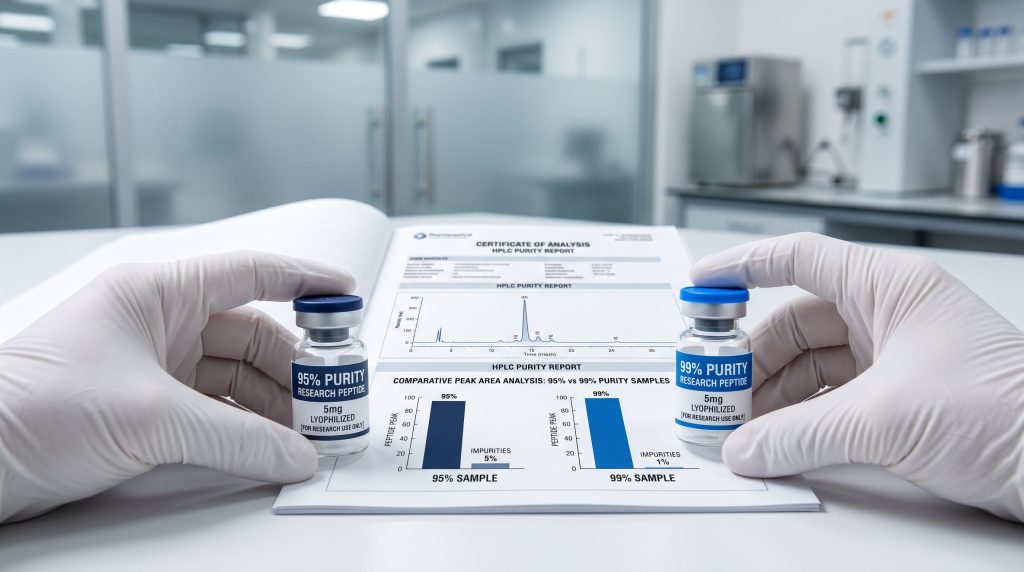
Purity gaps between 95% and 99% look small but affect assay results. A 95% lot has up to 5% unknown items in the sample. These items compete in binding assays, change cell health readings, and affect binding effect curves. At 99% purity, bad items fall below 1%, which cuts error in most assay types. Next Level Pharm tests every vial to at least 99% using both HPLC and mass spec before dispatch.
How Is Peptide Purity Measured?
HPLC is the main method for checking peptide purity. The method splits compounds by how they bind to a fixed phase. Each compound exits at a set time called its elution time. The target peptide’s peak area is split by the total detected peak area. A result above 99% means the target compound is the main species in the lot.
According to a peptide analysis study (2018), RP-HPLC is the standard purity method for synthetic peptide lots. Mass spec detects cut sequences, missing amino acids, and wrong amino acid swaps that HPLC cannot catch by area alone. These errors change the compound’s mass. A compound with the right purity score but wrong mass is not the target compound. Both methods give a full ID and purity profile for each lot.
What Is a COA and Why Does It Matter?
A COA is a record of test results for a specific lot. It includes the lot number, compound name, purity result, test method, and test date. A COA from an outside lab carries more weight than one made in-house. Outside labs have no stake in a high purity result, which cuts reporting bias.
According to an analytical methods review (2017), COA records for synthetic compounds should name the test method, calibration date, and analyst ID. A supplier that cannot share a COA on request cannot confirm their compound’s purity. Lot-specific COAs link each result to one batch only. Batch-level COAs cover many lots and cannot show change between runs.
What Red Flags Should Researchers Avoid?
Several signs point to low quality in peptide supply chains. Researchers should check for these before ordering.
Common red flags:
- No COA on file, or a batch COA that is not lot-specific.
- Purity claims with no test method named.
- No physical address or lab site listed.
- Pricing far below the normal market range.
- No research support or no reply to research queries.
According to a supply chain quality review (2020), missing records are a key source of data change in peptide research. Lot records let researchers trace any odd result to a specific batch. Suppliers with no lot records cannot support repeatable work.
Browse research peptides at Next Level Pharm to see lot-specific COA access with HPLC and mass spec results on every order.
How Should Research Peptides Be Stored?
Freeze-dried (lyophilized) peptides are the standard form for peptide supply and shipping. Freeze-drying removes water from the compound under vacuum at low heat. This keeps the compound stable without cold storage during transit. Most freeze-dried peptides stay stable at room temperature for several weeks in shipping. Stability extends to months in cold storage and to one to two years at minus 20 degrees C.
Key storage steps for research labs:
- Keep vials sealed and away from direct light.
- Store at 2 to 8 degrees C for short-term use.
- Store at minus 20 degrees C for long-term storage.
- Avoid repeat freeze-thaw cycles, which cut purity over time.
- Log receipt date and storage terms for each lot.
Purity at dispatch does not mean purity at the point of use if storage steps are not followed.
What Should a Quality Supplier Provide?
A quality supplier provides more than a vial. The supply chain should include records, test proof, and research support. Researchers checking suppliers should ask specific questions before placing an order.
| Feature | Minimum | Higher Standard |
| Purity | 95% or above by HPLC | 99% or above by HPLC + mass spec |
| COA type | Batch-level record | Lot-specific with lab name |
| Storage form | Freeze-dried | Freeze-dried + cold option |
| Dispatch time | 5 to 7 days | 48-hour average |
| Support | Email only | Research team on call |
Next Level Pharm meets the higher standard across all five areas. Every lot is tested by HPLC and mass spec, which results in a lot-specific COA linked to each order. US-based stock enables 48-hour average dispatch. Compounds ship in freeze-dried form and stay stable in transit.
Frequently Asked Questions
What is the minimum purity for research-grade peptides?
Most published peptide studies use compounds at 95% purity as a floor. For binding assays, cell health models, and in vivo work, 99% or above is the set standard. Items above 1% add extra factors that change binding curves and receptor values. Protocol design should set the minimum purity level before ordering. Lot-specific COA records confirm the purity of each compound at the time of testing, before dispatch to the lab.
What does HPLC measure in a peptide lot?
HPLC splits compounds in a sample by how they bind to a fixed phase. Each compound exits at a set time. The area under each peak reflects how much of that compound is in the sample. Purity is shown as the target peptide’s peak area split by all detected peak areas. A result above 99% means the target compound is more than 99% of the total sample area. HPLC alone does not confirm compound mass.
What does mass spec confirm for peptides?
Mass spec measures the mass-to-charge ratio of ions in a sample. For peptides, this confirms the mass of the synthesized compound. The measured mass is checked against the target mass from the amino acid chain. Missing amino acids, added amino acids, or wrong swaps shift the mass and are found by mass spec. A compound with the right HPLC purity but a wrong mass is not the target compound. Both methods give dual proof of ID and purity.
What should a peptide COA include?
A COA should include the compound name, lot number, synthesis date, purity result, and test method. Calibration date and analyst ID are also standard. Lot-specific COAs are more reliable than batch-level COAs because they trace results to one batch only. Outside COAs from approved labs give stronger proof than in-house records. A full COA with lot number and HPLC or mass spec data lets researchers confirm purity claims before a study starts.
How long does a freeze-dried peptide stay stable?
Stability depends on the peptide’s chain and storage terms. Most freeze-dried peptides stay stable at room temperature for four to six weeks during shipping. In cold storage at 2 to 8 degrees C, most lots are stable for several months. Long-term storage at minus 20 degrees C keeps most lots good for one to two years. Peptides prone to damage by oxygen or clumping may break down faster. Lot-specific stability data is noted on the COA at time of testing.
Why do some peptide suppliers price below market rates?
Low pricing often reflects less spend on testing, raw material quality, or records. A compound checked only by UV light costs less to produce than one tested by HPLC and mass spec. These savings shift to the researcher as data risk. Low-cost impure compounds lead to higher total cost when tests must be run again due to poor results. Treating pricing far below market as a red flag prompts researchers to ask for records before ordering.
What is a red flag in peptide supplier records?
Red flags include a COA that omits the test method. Batch-level COAs and in-house purity claims without outside lab proof are also concerns. Suppliers that will not share records on request cannot support outside review. An undated or unsigned COA signals weak quality control. A full COA with lab name, lot number, and HPLC or mass spec data lets researchers confirm compound quality before placing a supply order.
Is higher purity always needed for every study?
Not always. For basic or low-detail assays, 95% purity compounds may give valid results. For binding studies, cell health models, and precise work, 99% or above cuts the chance that bad items skew results. Researchers should match purity needs to their assay’s detail level before ordering. A purer lot adds a small cost but removes a large source of data change across repeated tests. Study design should set the minimum purity as part of the test plan.
How does COA data support repeatable research?
A lot-specific COA creates a traceable record linking a test result to a specific batch. When a result is odd, the COA lets researchers check whether purity or ID differed from prior lots. Without lot-specific records, data change cannot be traced to its source. Published research increasingly asks for compound purity and lot data in methods sections. COA records with each order support the proof standard expected in peer-reviewed science work.
Summary
Research-grade peptides are compounds made to meet set purity and identity limits for lab study. HPLC and mass spec are the standard methods for checking purity and compound mass. A valid COA includes a lot number, test method, purity result, and lab name. Suppliers that cannot provide lot-specific records from approved labs cannot support repeatable research.
Purity limits matter most in detailed assays. A 1% bad-item load in a 99% pure compound is far less harmful than 5% in a 95% lot. Researchers should confirm purity records, storage terms, and dispatch times before ordering.
What Should You Do Next?
Researchers sourcing compounds for lab studies should check supplier records before ordering. Request a sample COA and confirm it is lot-specific, names the test method, and comes from an approved outside lab.
Shop research-grade peptides to see lot-specific COAs and HPLC and mass spec results included with every order.
For more on COA structure and fields, see peptide COA standards explained.
People Also Read
- What Is a Peptide COA? Certificate of Analysis Standards Explained
- What Is Lyophilization? How Freeze-Drying Preserves Peptide Integrity
About the Author
Next Level Pharm Research Team
Alex M covers peer-reviewed findings in peptide science for Next Level Pharm, a US-based supplier of research-grade peptides verified to at least 99% purity via HPLC and mass spectrometry on every batch.
Disclaimer: The information provided on this page is for educational and research purposes only. Next Level Pharm’s products are intended for laboratory research use only. They are not intended for human consumption, diagnostic, therapeutic, or medicinal purposes. This content does not constitute medical advice. Always consult a licensed healthcare professional before making any health-related decisions