What Is Lyophilization? How Freeze-Drying Preserves Peptide Integrity

Last updated: May 2026
A lyophilized peptide is a compound from which water has been removed by freeze-drying. The process turns ice to vapor without passing through a liquid phase. This is called sublimation. Removing water this way locks the peptide in a dry, stable form. Shelf life extends from a few weeks in liquid to 12 to 24 months at -20°C. Researchers choose lyophilized peptides for long shelf life and safe shipping at room temperature.
Next Level Pharm tests each peptide by HPLC and mass spec before dispatch. Every lot ships as a freeze-dried solid from US-based stock. A lot-specific COA ships with each order. Vials are stable during transit without cold storage.
Most labs use lyophilized peptides but may not know how the process works. Knowing the three stages of freeze-drying helps researchers store peptides correctly and read COA data with confidence.
Key Takeaways
- What Lyophilization Means: Lyophilization is freeze-drying. It removes water from a frozen peptide by turning ice to vapor under low pressure.
- Three Stages: The process has three stages: freezing, primary drying, and secondary drying.
- What It Stops: Removing water blocks the four main ways peptides break down: bond breakdown, oxidation, clumping, and microbial growth.
- Shipping Benefit: Lyophilized vials ship safely at room temperature. No cold storage is needed in transit.
- After Dissolving: Split the lot into single-use portions. Store at -20°C and use within 30 days.
Researchers who understand each stage can make better storage choices and read COA data more clearly.
What Does Lyophilization Mean for Peptides?
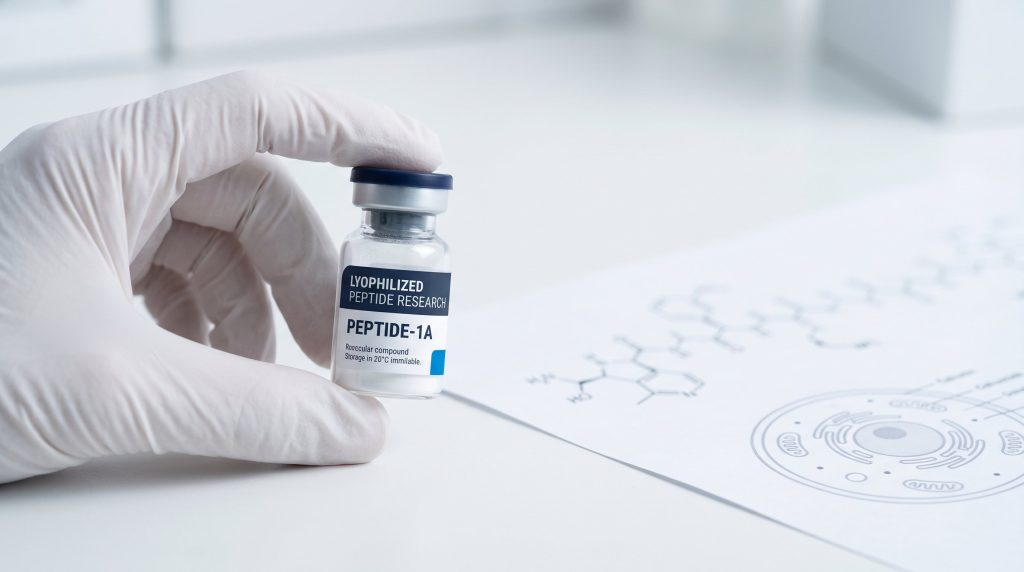
A lyophilized peptide has had all free water removed by freeze-drying. The result is a dry solid, usually a white powder or cake, in a sealed vial. This form is stable for long periods when sealed and kept cold. It must be dissolved in a solvent before use in a lab assay.
In practical research terms, lyophilization is gentle water removal without heat or chemicals. According to a peptide stability review (2020), freeze-dried peptide forms hold purity for 12 to 24 months at -20°C. Liquid forms show measurable loss within weeks. The dry state cuts off the main routes of breakdown and keeps the 3D shape of the peptide intact.
How Does the Freeze-Drying Process Work?
Freeze-drying has three stages. Each stage removes a different type of water from the peptide.
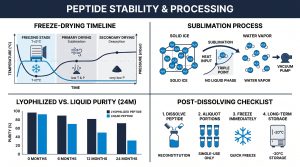
- Stage 1 – Freezing: The peptide solution cools to -40°C or colder. This turns all water to ice and locks the peptide in place. Rapid cooling makes small ice crystals. Small crystals cause less stress to the peptide during drying.
- Stage 2 – Primary Drying: Chamber pressure drops below 0.5 mbar. Ice turns to vapor and leaves the vial. This is sublimation: ice shifts straight to vapor, skipping the liquid phase. This stage removes about 95% of the water in the vial.
- Stage 3 – Secondary Drying: Temperature rises slightly to 20-40°C at continued low pressure. This pulls out water bound to the peptide surface. Residual moisture falls below 1%. According to a lyophilization review (2019), residual moisture below 1% gives the longest shelf life for peptide and protein forms.
Browse lyophilized recovery peptides at Next Level Pharm, each with a lot-specific COA showing purity and mass spec data.
Why Are Peptides Freeze-Dried Instead of Liquid?
Peptides in liquid form break down through four main routes: bond breakdown, oxidation, clumping, and microbial growth. All four need free water to proceed. Freeze-drying removes water and stops all four routes at once.
According to a storage comparison study (2017), lyophilized peptide lots showed less than 2% change in purity over 24 months at -20°C. Matched liquid lots showed 15 to 30% purity loss in the same period. The practical result for labs is clear. Freeze-dried stock can be ordered in bulk, stored at -20°C, and dissolved in small portions as needed. Liquid stock must be used quickly after arrival.
Lyophilized vials also ship at room temperature. No cold storage or dry ice is needed in transit. This cuts shipping cost and removes the risk of purity loss from cold-chain breaks.
What Does Freeze-Drying Preserve in Peptides?
Peptides above about 10 amino acids form specific shapes, such as helices and loops. These shapes matter for bioactivity in lab tests. Liquid storage at room temperature disrupts these shapes over days to weeks.
Freeze-drying preserves shape through two steps. First, the frozen state locks the peptide in place before drying begins. Second, small residual water molecules form bonds around polar groups during secondary drying. This process is called water substitution. It mimics the role bulk water plays in the liquid phase. The dry vial holds the same shape as the original solution.
HPLC purity data on the COA confirms no new breakdown products appeared during drying. Mass spec confirms the molecular weight is intact. Both data points together show that freeze-drying did not alter the compound.
How Should Lyophilized Peptides Be Stored?
Storage conditions after freeze-drying set the shelf life of the compound. Use the steps below based on published protocols for research-grade lyophilized peptides.
Before dissolving:
- Store sealed vials at -20°C for up to 24 months.
- Store at 4°C for short-term use within 30 days.
- Allow vials to reach room temperature before opening.
- Never open a cold vial: room-air moisture will enter and raise water levels.
After dissolving:
- Split into single-use portions right away.
- Store portions at -20°C and use them within 30 days.
- Avoid freezing and thawing the same portion more than once to prevent clumping.
Good storage habits mean each study session starts with a fresh, single-use portion from a verified lot.
How Do Lyophilized and Liquid Peptides Compare?
The table below shows key differences between lyophilized and liquid peptide forms for research labs.
| Feature | Lyophilized | Liquid |
| Shipping temperature | Room temperature | 2-8°C or dry ice |
| Shelf life (sealed) | 12-24 months at -20°C | 1-4 weeks at -80°C |
| Main risks | Moisture after opening, freeze-thaw after dissolving | Bond breakdown, clumping, microbial growth |
| Shape preservation | Locked during drying | Slowly disrupted in solution |
| Post-use handling | Single portions at -20°C | Use quickly after preparation |
| COA method | HPLC and mass spec before and after drying | HPLC at time of mixing only |
Frequently Asked Questions
What is lyophilization?
Lyophilization is freeze-drying. The three-stage process removes water from a frozen peptide solution. In stage one, the solution freezes solid. In stage two, low pressure turns ice to vapor, which leaves the vial. In stage three, a slight rise in temperature pulls out water bound to the peptide surface. The result is a dry solid with less than 1% residual moisture. The peptide holds its shape and purity in this dry form.
Why are peptides freeze-dried instead of kept in liquid form?
Peptides in liquid break down through bond breakdown, oxidation, clumping, and microbial growth. All four routes need free water. Freeze-drying removes water and stops all four routes at once. Lyophilized lots hold purity for 12 to 24 months at -20°C. Liquid lots show measurable loss within weeks. Freeze-drying also makes peptides stable at room temperature during shipping, so no cold-chain transit is needed.
How does sublimation work in freeze-drying?
Sublimation is the direct shift from solid ice to vapor, skipping the liquid phase. In freeze-drying, low chamber pressure drops below the vapor pressure of ice at the product temperature. Ice turns to vapor and gets captured by a condenser. Because the peptide never passes through a liquid phase, bond breakdown and oxidation cannot occur during primary drying. This keeps the compound dry and stable throughout the drying cycle.
What does lyophilized mean for a peptide vial?
A lyophilized vial contains a dry peptide solid, usually a white powder or cake in a sealed vial. The peptide was dissolved, frozen, and then dried under vacuum. The dry form is stable for 12 to 24 months at -20°C in a sealed vial. It ships safely at room temperature. Before use in a lab, the solid must be dissolved in a suitable solvent. The COA records purity and mass spec data for the dry form at time of testing.
How do you dissolve a lyophilized peptide for lab use?
A lyophilized peptide must be dissolved in a solvent before use in an assay. The type of solvent depends on the peptide. Common solvents include sterile water, acetonitrile, or DMSO. After dissolving, split the lot into single-use portions right away. Store portions at -20°C. Use each portion within 30 days and avoid refreezing the same portion more than once to prevent purity loss from freeze-thaw stress.
Does lyophilization change peptide purity?
A properly run freeze-drying cycle does not change purity. HPLC and mass spec data taken after drying match the pre-drying baseline when residual moisture stays below 1%. Purity changes during drying mean the cycle was not controlled correctly. This often happens because the frozen mass warmed above its freeze point during primary drying and collapsed into liquid. A COA that shows pre- and post-drying purity data confirms the cycle was controlled correctly.
What is water substitution in freeze-drying?
Water substitution is a process where small residual water molecules form bonds around polar groups on the peptide during secondary drying. These bonds replace the bulk water the peptide was surrounded by in solution. This keeps the 3D shape of the peptide intact in the dry state. Stabilizers such as trehalose mimic this effect by forming hydrogen bonds with the peptide surface. Their use is noted in the COA along with purity data.
What should a COA include for a lyophilized peptide?
A COA for a lyophilized peptide should include HPLC purity as a percentage and mass spec data on molecular weight. It should also list lot number, test date, residual moisture below 1%, and storage guidelines. A lot-specific COA covers one production run only. A COA without a traceable lot number cannot confirm the data applies to the vials in hand. Every batch is third-party tested..
Are lyophilized peptides stable during shipping?
Yes. Sealed lyophilized vials contain less than 1% residual moisture. Without free water, bond breakdown, oxidation, and microbial growth cannot occur. The vials are stable at room temperature during transit. This differs from liquid peptide forms, which need cold-chain shipping at 2-8°C or on dry ice. Lyophilized vials do not need cold storage during transit, which cuts shipping cost and removes the risk of purity loss from temperature breaks.
Summary
Lyophilization removes water from peptide solutions by freezing the product and then turning ice to vapor under low pressure. The three stages, freezing, primary drying, and secondary drying, cut residual moisture below 1% while keeping the peptide’s 3D shape intact. This makes freeze-dried peptides stable at room temperature during shipping and extends shelf life to 12 to 24 months at -20°C.
Published data shows lyophilized lots hold purity with far less loss than liquid forms over the same period. After dissolving, splitting into single-use portions and keeping at -20°C stops the freeze-thaw cycles that cause post-dissolve purity loss.
What Should You Do Next?
- Check the COA for any lot before use. Confirm HPLC purity above 99%, mass spec confirmation, and residual moisture below 1%.
- Store sealed vials at -20°C and bring to room temperature before opening to stop condensation.
- After dissolving, split into single-use portions and store at -20°C. Use within 30 days.
Shop research-grade lyophilized peptides to get lot-specific COA data and HPLC results with every order.
People Also Read
- What Is HPLC Testing? How Peptide Purity Is Verified in Research Labs
- What Makes a Peptide Research Grade? Standards and Testing Explained
About the Author
Next Level Pharm Research Team
Alex M covers peer-reviewed findings in peptide science for Next Level Pharm, a US-based supplier of research-grade peptides verified to at least 99% purity via HPLC and mass spectrometry on every batch.
Disclaimer: The information provided on this page is for educational and research purposes only. Next Level Pharm’s products are intended for laboratory research use only. They are not intended for human consumption, diagnostic, therapeutic, or medicinal purposes. This content does not constitute medical advice. Always consult a licensed healthcare professional before making any health-related decisions