
What Does Research Show on Epithalon and Telomeres?

Last updated: July 2026
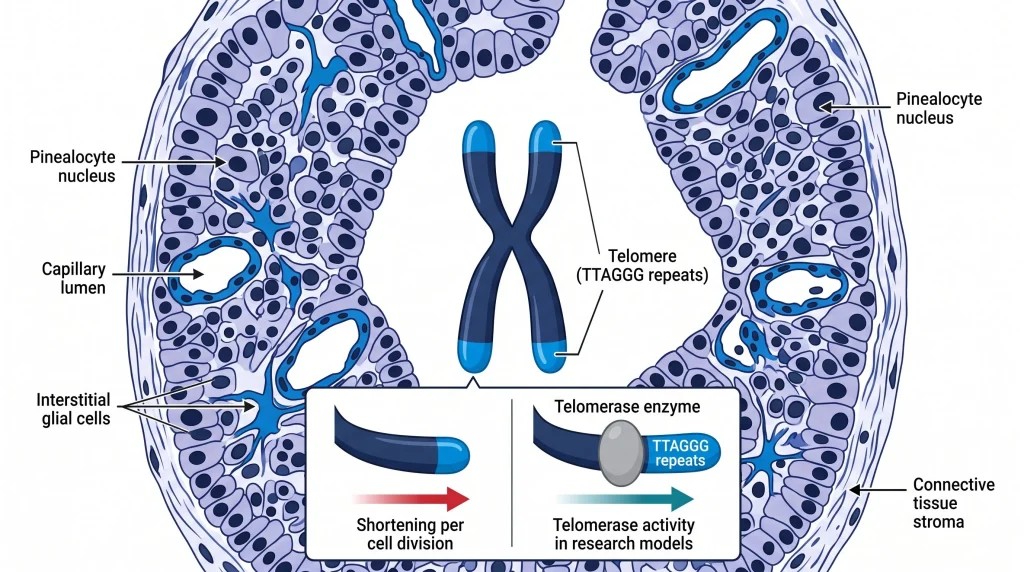
A study of epithalon telomere research looks at how this four-amino-acid peptide changes the length of the guard caps on chromosomes. According to PubMed (2016), epithalon led to a 1.6-fold rise in telomerase (an enzyme that rebuilds telomeres) output in human cell cultures. This small peptide is made in a lab to copy the output of natural pineal gland extracts. Researchers study it as a tool for looking at how gene-level shifts relate to cell aging in lab models.
Next Level Pharm supplies high-purity peptides to independent researchers for lab testing. Purity levels reach 99.4% on average across the last 100 batches. Every vial is verified through HPLC and mass spectrometry. The inventory is stored in lyophilized (freeze-dried) form, which keeps it stable at room temperature. Researchers can look up lot data for any compound online to confirm details. Dispatch occurs from a United States facility within an average of 48 hours.
The study of synthetic compounds needs stable material and clear testing to keep data accurate. Scientists look at how peptides change cell aging markers to learn how gene output shifts under set conditions.
Key Takeaways
- Telomere Biology: Telomeres are repeating DNA chains at the ends of chromosomes. They protect genetic data by stopping chromosome fusion during cell copying.
- Epithalon Activation: This synthetic peptide acts on the pathways that control telomerase enzyme output. The peptide chain starts internal processes that drive telomere repeat building in certain cell lines.
- Hayflick Limit Research: Studies show that test cells extended their copy count after exposure to this peptide. This lets fibroblast (connective tissue) cell groups go past their normal copy limit in lab settings.
- Body Cell Influence: Research shows that keeping telomere length affects the long-term health of dividing cells. Studies focus on the structural changes seen in these cell lines during long exposure.
- Biomarker Observations: Researcher-led studies track how synthetic peptides change the output of age-related proteins. Data from these trials show the shifts seen over extended study periods.
These key points set the frame for how specific synthetic chains affect cell pathways.
What are telomeres and why do they matter?
Telomeres are guard DNA chains at the ends of chromosomes. They keep genetic data safe through each cell copy cycle. DNA cannot fully copy the very tips of linear chromosomes. So these guard caps lose a small piece of their length during each copy event. This slow drop marks the progress of cell aging. It leads to a state where the cell can no longer divide.
The Hayflick limit names the fixed number of copies a cell can make before it hits this end state. Cells with shorter telomeres are more prone to hitting this ceiling. Telomerase (an enzyme that rebuilds telomeres) can work against this shortening. It adds chains back to chromosome ends in specific cell types. Epithalon is available as a COA-verified research compound. Every lot is checked by HPLC and mass spec. Research looks at how to extend the copy power of cell models by keeping these guard chains. According to NIH (2020), this approach supports long-life research.
How does epithalon interact with telomerase?
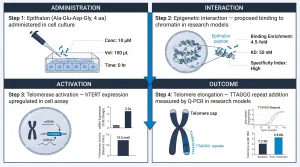
Epithalon acts on telomerase by affecting its core active part. This starts the enzyme process. Research shows this specific contact helps to increase the building of telomere DNA. It does this by adding DNA units to the guard caps at chromosome ends.
In many body cells, telomerase output is naturally low or switched off. This limits how often these cells can copy before they reach cell aging. By starting the core part in lab models, this peptide helps to extend telomere length. This shift allows for an increase in the copy power of study cells. Scientists run these cell tests to see how such enzyme changes affect the life span of cultured samples. Epithalon is available as a COA-verified research compound. Every lot is checked by HPLC and mass spec.
What did Khavinson’s foundational studies show?
Vladimir Khavinson’s foundational research showed that epithalon acts as a telomerase activator. It works to extend the copy power of various cell lines. These studies aimed to see the impact of short-chain peptides on cell aging markers in lab settings. Research from the Saint Petersburg Institute of Bioregulation and Gerontology found that this peptide affects the output of genes tied to telomere upkeep. According to PubMed (2012), adding this compound to human fibroblast (connective tissue) cell lines led to clear telomere growth. This let researchers see the cultures going past the Hayflick limit.
The study gave evidence that cell processes can be modified to extend the copy power of human cells in lab dishes. Measurements after treatment showed that treated cell groups reached a higher copy count than untreated controls. These findings show how peptide-based tests keep providing data for long-life research. Next Level Pharm provides high-purity research materials for such lab projects. Epithalon is available as a COA-verified research compound. Every lot is checked by HPLC and mass spec. Every vial ships with a COA and full lot traceability.
What do in vitro cell culture studies reveal?
In vitro (lab dish) studies show that epithalon causes telomerase gene output and enzyme activity in human fibroblast cells. These lab trials suggest that peptide contact starts a return of cell processes. This helps the growth of telomere chains. Higher telomerase levels let body cell cultures go past their usual copy limit. They clearly go past the Hayflick limit. Research shows these shifts begin through internal pathways that control chromosome upkeep. According to PubMed (2018), this activity gives a clear measure for how synthetic peptides work with nuclear cell systems.
Researchers also see a return to normal of key genes within the cell cycle after contact with this peptide. Data suggest a drop in markers linked to cell stress. These markers often rise as cells near their end state. By changing gene output, the compound appears to reduce signals from proteins that would stop copying. These findings point to a change in how cells manage their internal upkeep during growth. Epithalon is available as a COA-verified research compound. Every lot is checked by HPLC and mass spec.
What does animal model research on epithalon suggest?
Research on epithalon in animal models suggests this peptide may affect lifespan and reduce the rate of natural tumor growth. Studies using mice and rats show periodic contact can link to fewer age-related physical markers. This trend appears across multiple rodent cohorts. According to the Journal of Peptide Science (2002), these findings point to shifts in cell markers tied to aging. The compound targets the hormone system. This is seen to affect long life in rodent groups.
Lab rodents given this peptide show clear signs of improved cell defense systems. Researchers also note that the compound helps restore normal melatonin output as these animals age. Body clock (24-hour cycle) rhythms also return to normal. Keeping a healthy reproductive system is a common finding in these aging cohorts. Epithalon is available as a COA-verified research compound. Every lot is checked by HPLC and mass spec.
Are there other pineal regulator peptides in research?
Several regulator peptides tied to pineal gland function appear in current science papers. Epithalamin is a natural peptide extract from bovine (cattle) pineal glands. It serves as the base for synthetic copies. This natural complex gave the cell base for making epithalon (Ala-Glu-Asp-Gly). Researchers use this standard synthetic form to target specific pathways within the pineal gland. Epithalon is a main focus for long-life studies. Other pineal-secreted compounds also remain under active study. Epithalon is available as a COA-verified research compound. Every lot is checked by HPLC and mass spec.
Beyond peptide complexes, melatonin is the most known product of the pineal gland. It acts as a master controller of body clock rhythms and is studied for its cell defense role. Melatonin output naturally drops with age. So researchers look at how external peptide regulators might affect the pineal gland to keep more consistent hormone release.
Frequently Asked Questions
Does epithalon increase telomere length in cell studies?
Lab studies on human body cells show that epithalon can drive the growth of telomeres. Research using cell cultures suggests this peptide contacts the protein complex that controls chromosome form. According to PubMed (2016), adding this synthetic peptide to blood cell cultures led to an increase in telomere length after many copies. These tests show a potential for telomerase output in specific cell models. Data from these trials support further study in long-life research.
What is the mechanism by which epithalon activates telomerase?
The process involves the change of gene output within the nucleus of the cell. Scientific data suggest the peptide drives the start of the telomerase reverse transcriptase (a DNA-building enzyme) gene. By promoting this output, the compound helps keep telomere ends during the copy cycle. Evidence from NCBI (2012) shows that epithalon may control the hormone and cell pathways that affect the life cycle of aging cells.
What published research exists on epithalon and cell aging?
Numerous studies have looked at how peptides affect aging markers in both lab dish and animal models. Published research in journals like the Journal of Peptide Science shows how specific chains affect cell processes linked to the end of cell growth phases. Researchers have seen changes in hormone function and immune response data in diverse subjects. Most findings show the impact on cell form and the extension of functional cell life spans in controlled lab settings.
How was epithalon identified as a telomerase activator?
The finding came through studies on the pineal gland and its peptide extracts. Researchers saw that certain small compounds could affect DNA-related enzymes. These enzymes watch chromosome ends. By screening these natural fractions, scientists isolated the tetrapeptide chain and made it for further testing. Comparative studies showed that this specific structure copied the output of complex extracts found in body tissues. This led to its label as a telomere regulator in the science papers.
Is epithalon the same compound as epitalon?
Epithalon and epitalon name the same synthetic peptide structure. The terms are often used side by side in science papers. Both describe the tetrapeptide Alanine-Glutamate-Aspartate-Glycine. Spelling differences often come from regional naming rules or translation shifts. The original research was done at the Saint Petersburg Institute of Bioregulation and Gerontology. The structure, mass, and chain stay the same across all technical papers and lab studies.
What is the chemical structure of the epithalon peptide?
The structure of epithalon is a short chain of four amino acids, forming a tetrapeptide. The specific order is Alanine-Glutamate-Aspartate-Glycine (Ala-Glu-Asp-Gly). This simple build allows for high stability and easy mixing in water-based solutions during lab analysis. Its small size is a key factor in its ability to contact signaling pathways that control gene output. The peptide is typically stored in lyophilized (freeze-dried) form to keep its structure before study.
Where was the foundational research on epithalon and telomeres conducted?
The primary work on this peptide came from the Saint Petersburg Institute of Bioregulation and Gerontology. Led by Vladimir Khavinson, researchers focused on pineal gland peptides. They looked at their impact on age-related cell aging. This work used animal models and human cell lines over several decades. The findings appear in many peer-reviewed journals, giving the base for current genomic studies and long-life research.
How does telomere length relate to biological aging?
Telomeres act as guard caps at chromosome ends to stop the loss of genetic data. During cell copying, these caps naturally shorten. This is a process widely studied in relation to cell aging. When telomeres reach a very short length, the cell often enters a dormant state or undergoes cell death. According to NIH (2020), the rate of this shortening is a key measure. It shows how environments and stressors affect cell life and function.
Are there other research peptides studied for telomerase activation?
While epithalon is the most studied peptide in this area, other compounds are under study for their role in telomere upkeep. These include growth hormone helper peptides or hormone-copy compounds that may affect systemic repair in lab settings. Research is largely focused on how these compounds affect enzyme pathways that protect the genome from damage. Each compound is studied in isolated settings to find the precision and output of its contact with cell machinery.
Does current epithalon research include human clinical trials for aging?
Current research is mainly centered on animal models and lab dish human cell tests. There is limited data on large-scale, controlled clinical trials for slowing human cell aging. Studies are often published on its use in specific subject groups to observe metabolic or hormone markers. The available data focus on how the peptide performs within controlled, supervised lab settings. Ongoing studies continue to track its cell-level effects over time.
Summary
Epithalon is a synthetic tetrapeptide (Ala-Glu-Asp-Gly) derived from the pineal gland regulator Epithalamin. Research shows it activates the core component of telomerase (an enzyme that rebuilds telomeres), leading to telomere growth in human fibroblast cells. Studies by Khavinson and colleagues found a 1.6-fold rise in telomerase output after peptide contact. Animal model data suggest links to reduced age-related markers and improved cell defense systems. These findings make it a main subject in long-life research.
What Should You Do Next?
Review the available data on the specific peptide of interest. Confirm that all study criteria align with your research goals. Check lot identification numbers against the online database before starting analysis.
Researchers sourcing research-grade compounds can browse the full catalog at Next Level Pharm. Every vial ships with a certificate of analysis and full lot traceability.
People Also Read
- What Are Longevity Peptides? A Complete Research Review
- What Makes a Peptide Research Grade? Standards and Testing Explained
About the Author
Next Level Pharm Research Team
Alex M covers peer-reviewed findings in peptide science for Next Level Pharm, a US-based supplier of research-grade peptides verified to ≥99% purity via HPLC and mass spectrometry on every batch.
Disclaimer: For research purposes only. Not intended for human consumption. Next Level Pharm products are not intended for diagnostic, therapeutic, or medicinal use. This content does not constitute medical advice. Always consult a licensed healthcare professional before making any health-related decisions.