
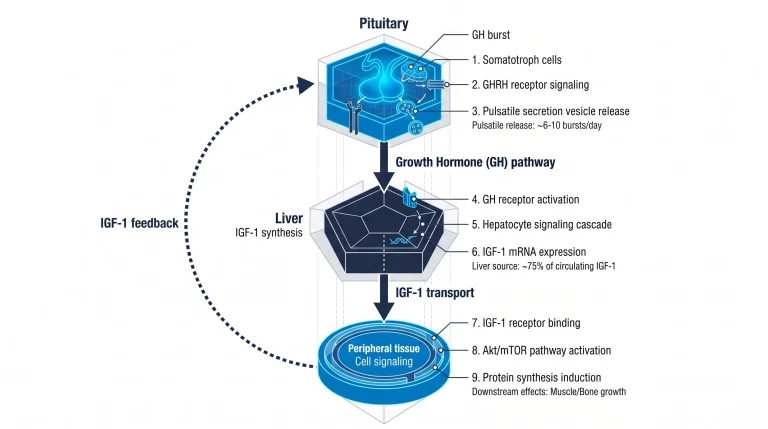
IGF-1 as a Research Biomarker: What It Measures
IGF-1 is an indirect but stable measure of integrated growth hormone secretion and the activity of the somatotropic axis.
IGF-1 is an indirect but stable measure of integrated growth hormone secretion and the activity of the somatotropic axis.
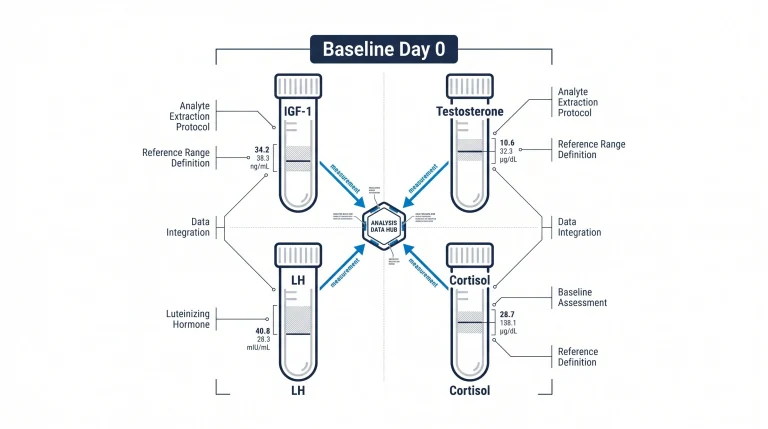
Baseline biomarkers are quantifiable biological characteristics measured before the introduction of a research compound to establish a control state.

Peptide cycling is a research practice where scientists alternate between periods of compound administration and distinct intervals defined.
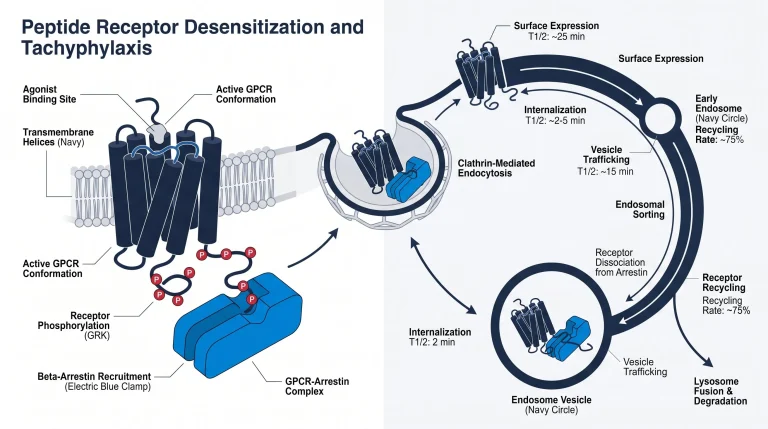
Peptide receptor desensitization is a biological process where cells become less responsive to a peptide or hormone.

Sublingual peptide research is the scientific investigation of how peptides are absorbed into the bloodstream through the mucous membranes.

Oral peptide bioavailability is the fraction of an orally administered peptide that reaches systemic circulation unchanged.

Peptide compatibility mixing is the chemical process of combining multiple distinct peptide molecules into a single solution to assess their stability.
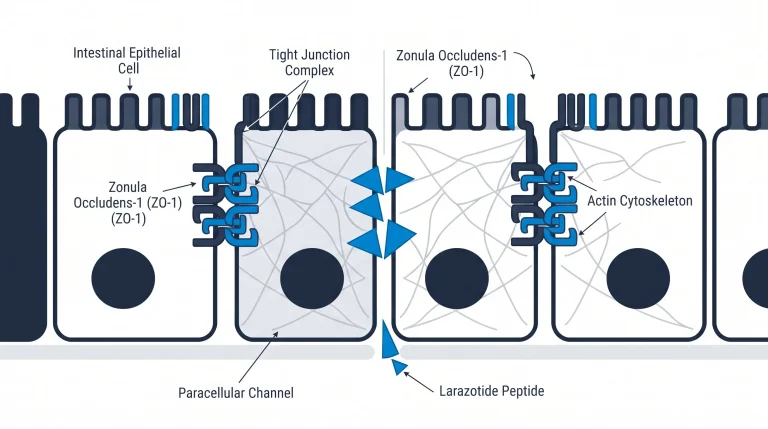
Larazotide is a synthetic octapeptide that regulates tight junctions, which are protein complexes controlling permeability between cells.
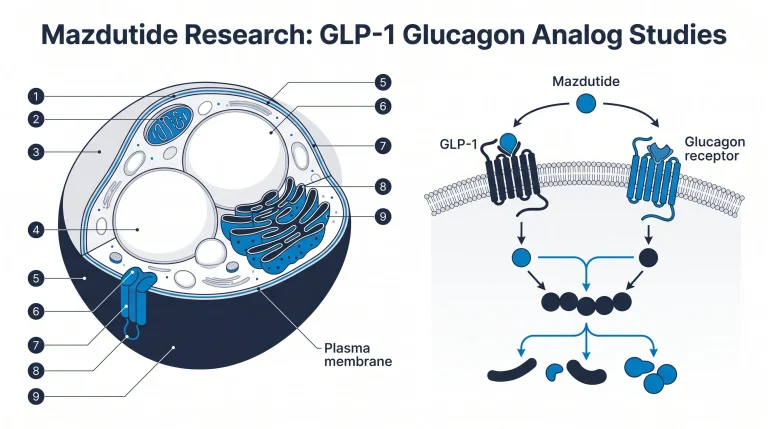
Mazdutide is a synthetic peptide research compound designed to simultaneously activate the glucagon-like peptide-1 receptor and the glucagon receptor.
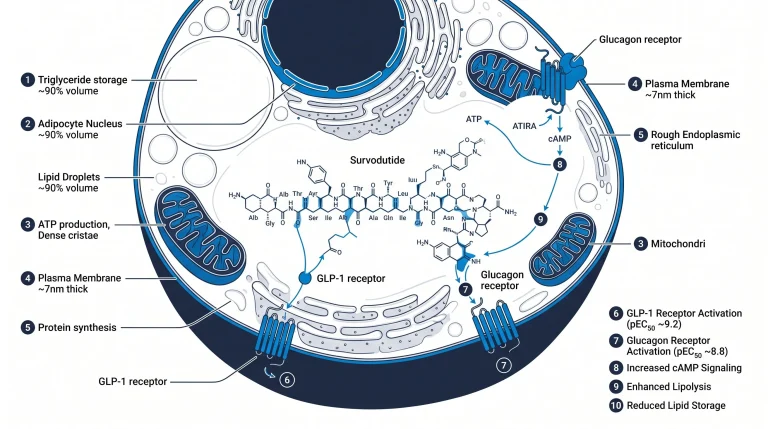
Survodutide is an investigational peptide that targets both the glucagon-like peptide-1 and glucagon receptors.