
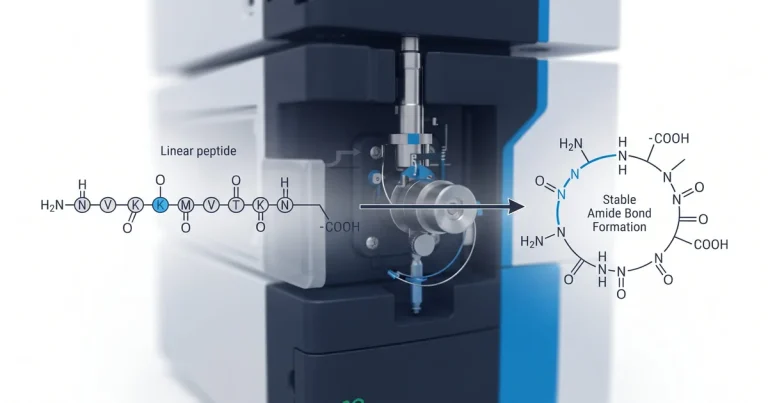
Peptide Cyclization Research: Cyclic Stability Studies
Cyclic peptide stability research examines how ring structures resist enzymatic breakdown. Covers cyclization types, synthesis methods, and HPLC.
Cyclic peptide stability research examines how ring structures resist enzymatic breakdown. Covers cyclization types, synthesis methods, and HPLC.
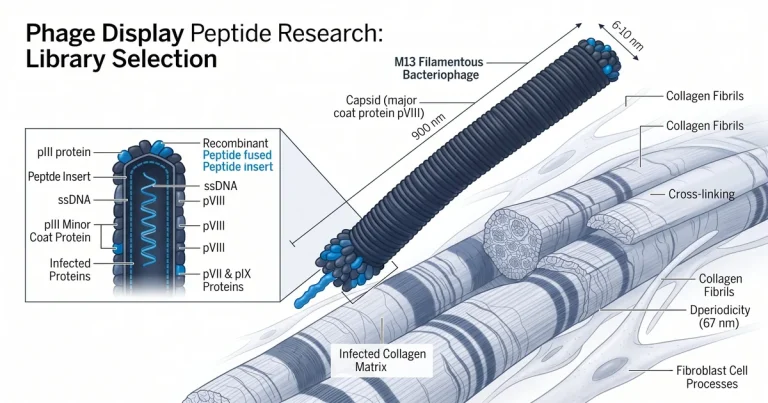
Phage display peptide library research uses M13 phages and biopanning to screen billion-sequence libraries for high-affinity binding sequences.
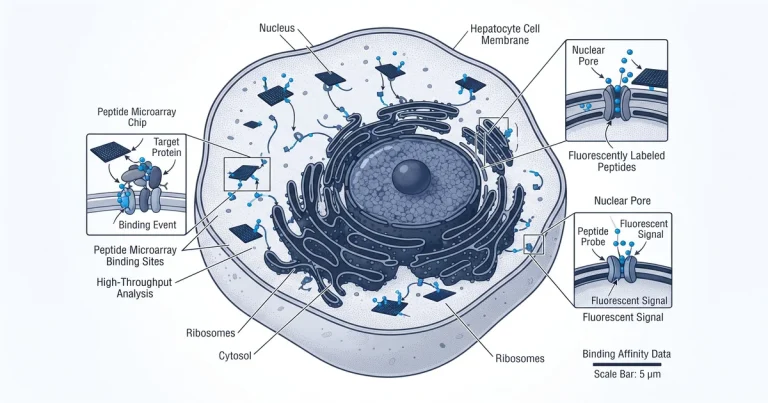
Peptide microarray binding research screens thousands of molecular interactions on one slide for epitope mapping and biomarker discovery.
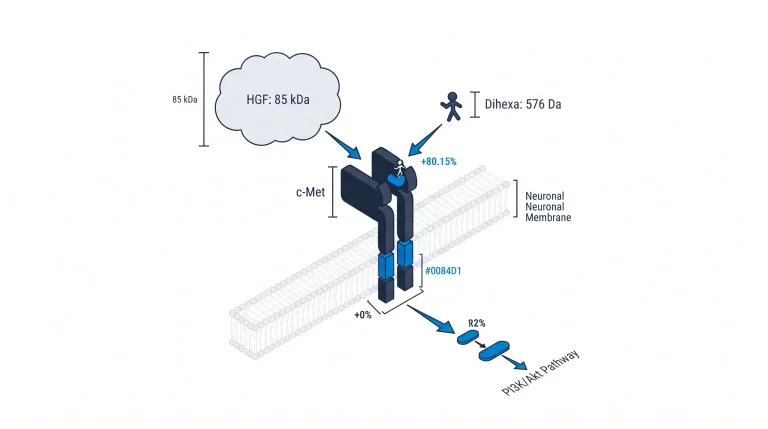
Dihexa is a small peptide studied for HGF and c-Met signaling. Research focuses on synaptogenesis in hippocampal models. Learn what COA data shows.
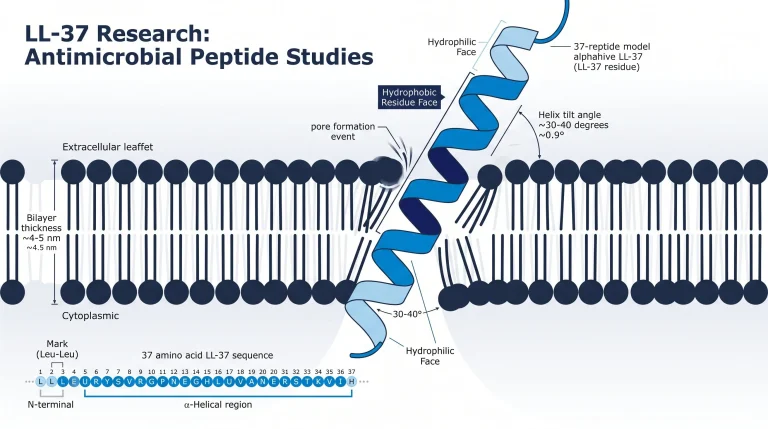
LL-37 is a 37-amino acid human cathelicidin studied for membrane disruption and immune signaling. Learn what research-grade LL-37 COA data shows.
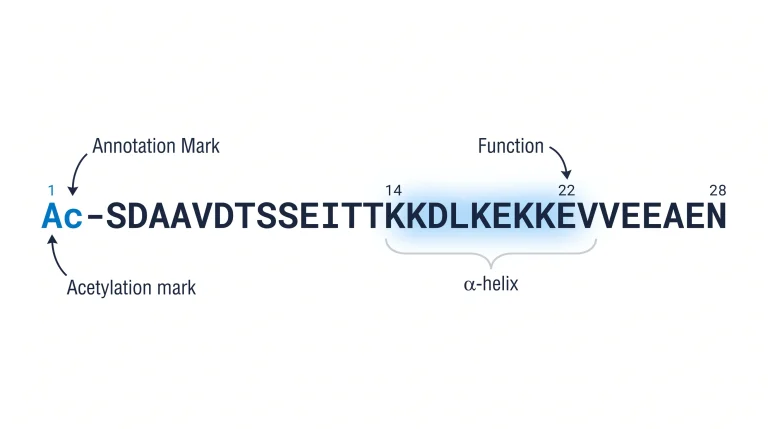
Thymosin Alpha-1 is a 28-amino acid peptide studied for T-cell maturation and toll-like receptor signaling. Learn what research-grade TA-1 COA data shows.
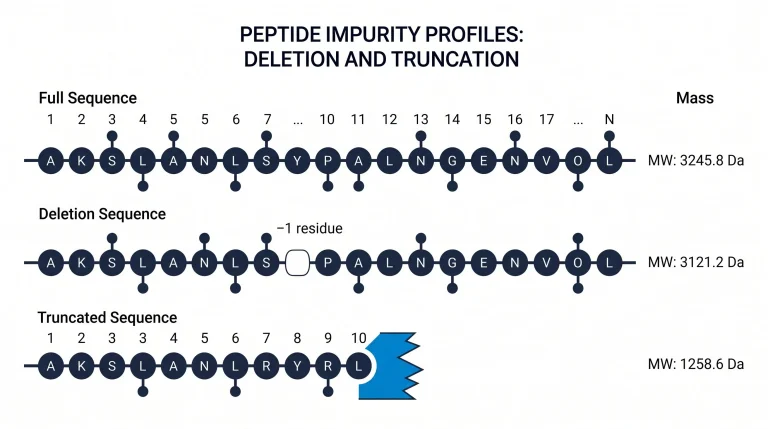
A peptide impurity profile maps deletion sequences, truncated chains, and chemical modifications per lot. Learn how HPLC and MS build a full COA.
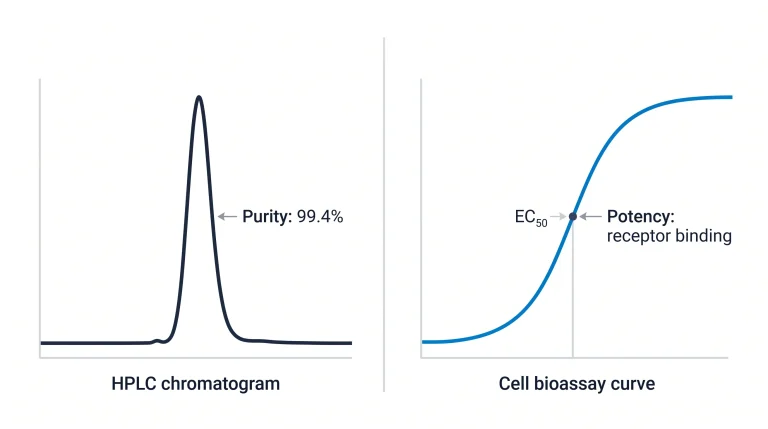
Peptide purity is the HPLC-confirmed percent of target compound per lot. Potency is the bioassay-measured biological response. Learn what a COA shows.
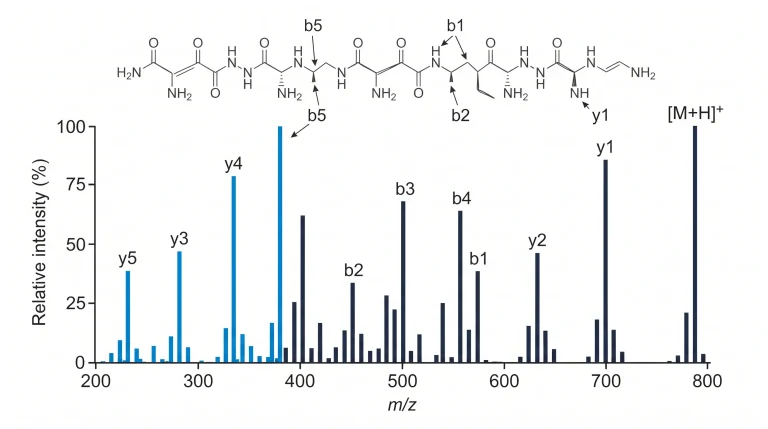
Peptide identity confirmation uses mass spectrometry and HPLC to verify molecular weight and purity of every research lot. Learn how COA data is generated.
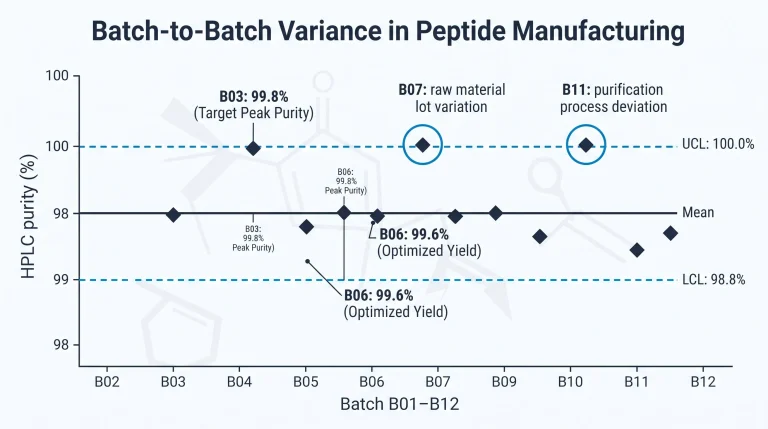
Batch-to-batch peptide variance is the measured purity difference between production runs. HPLC, mass spec, and lot-specific COAs verify each batch.