
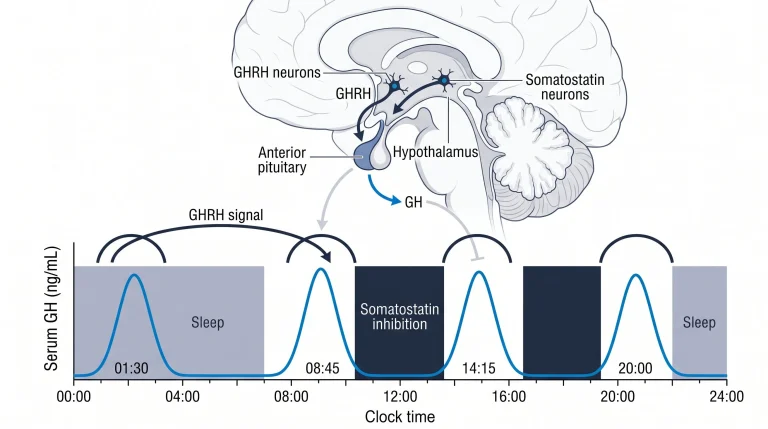
GH Pulsatility: Why Timing Matters in Research
GH pulsatility is the natural, rhythmic secretion of growth hormone from the anterior pituitary gland in discrete bursts rather than a continuous flow.
GH pulsatility is the natural, rhythmic secretion of growth hormone from the anterior pituitary gland in discrete bursts rather than a continuous flow.
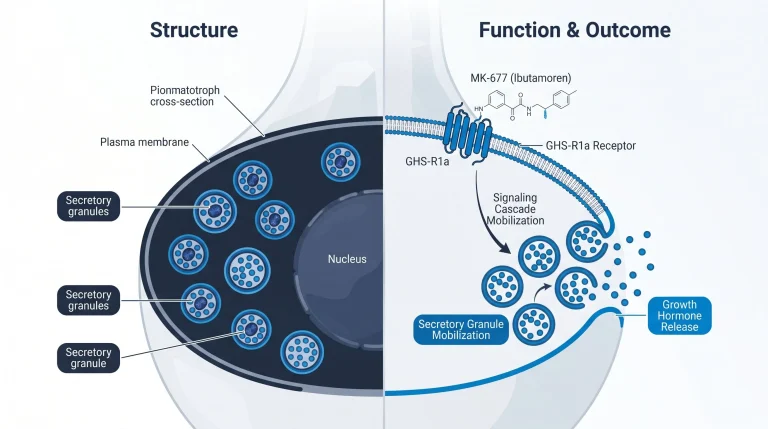
MK-677 is a non-peptide, orally active growth hormone secretagogue that mimics the action of ghrelin. This research compound stimulates the pituitary.
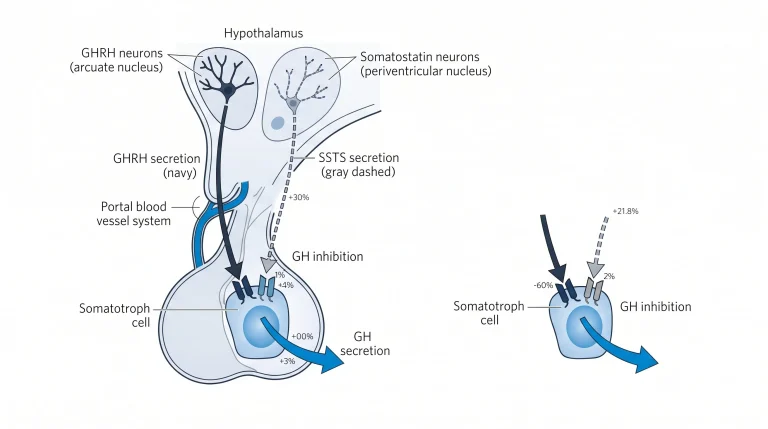
GHRH is a hypothalamic peptide that signals the pituitary to release growth hormone. Analogs like CJC-1295 extend this signal for extended lab research.
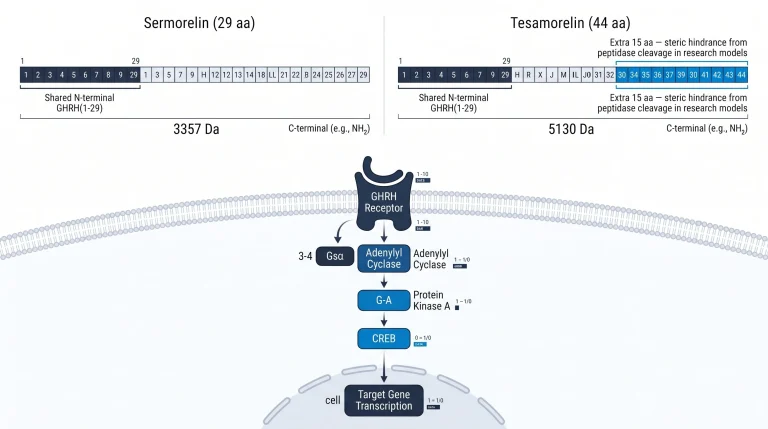
A research-based comparison of sermorelin vs tesamorelin. Tesamorelin’s half-life is ~63 minutes, far longer than sermorelin’s ~12 minutes.
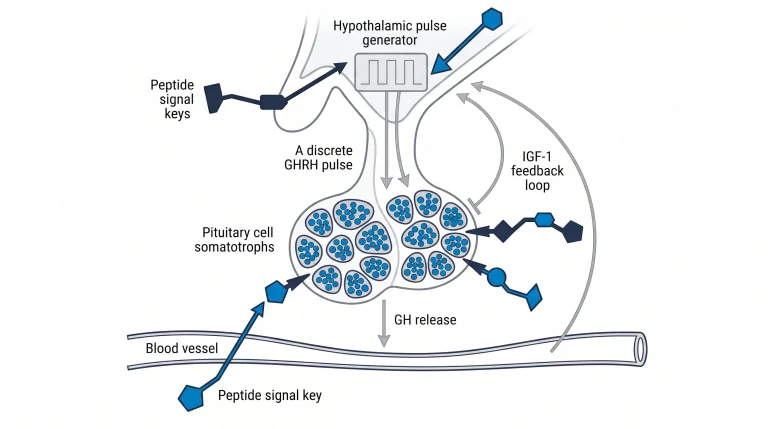
HPA axis peptide research covers GHRH analogs and GH secretagogues. Studies map how the hypothalamus and pituitary control GH pulse output in lab models.
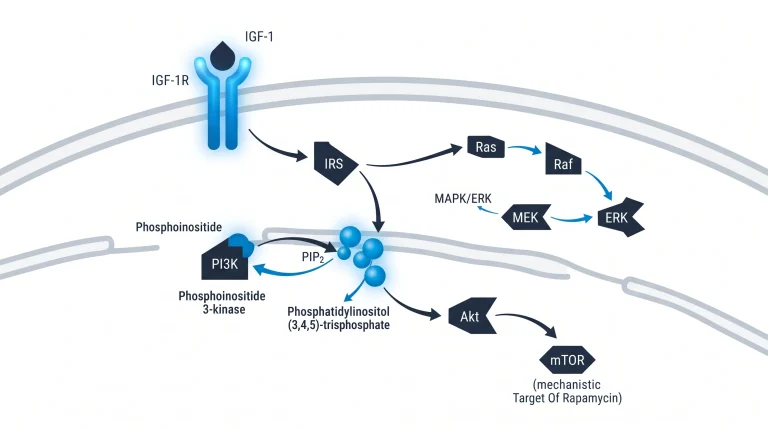
IGF-1 pathway research maps PI3K, Akt, and mTOR signaling. Studies show this cascade regulates cell growth, protein production, and survival in lab models.
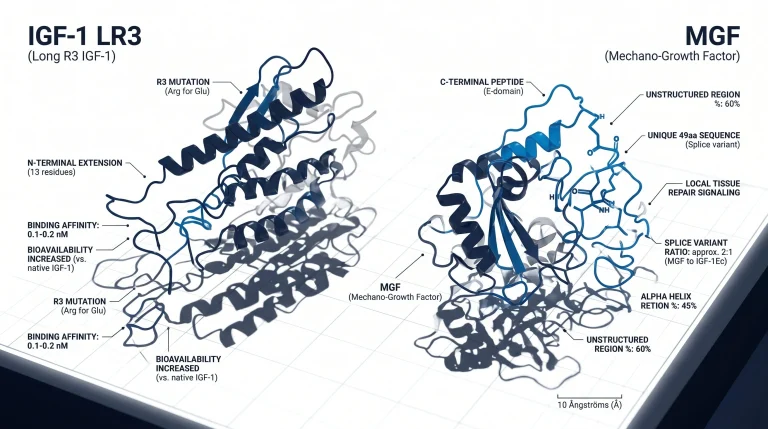
An igf-1 lr3 vs mgf research comparison examining structure, half-life, receptor binding, and research applications of these two IGF-1 gene variants.
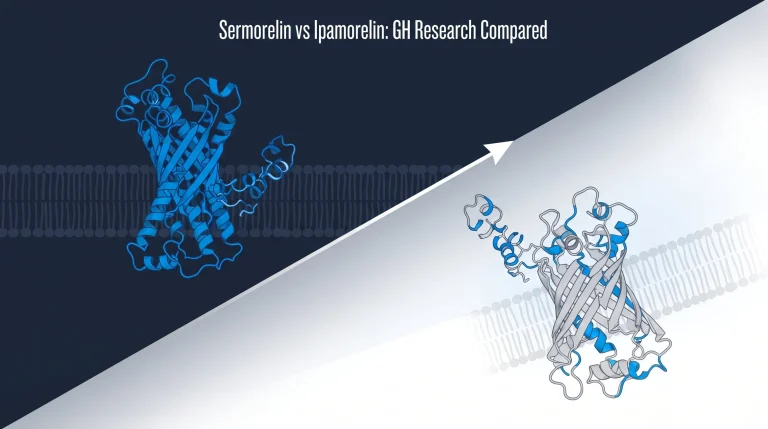
Compare sermorelin vs ipamorelin research: GHRH analog versus ghrelin mimetic, half-life differences, selectivity data, and combined-pathway findings.
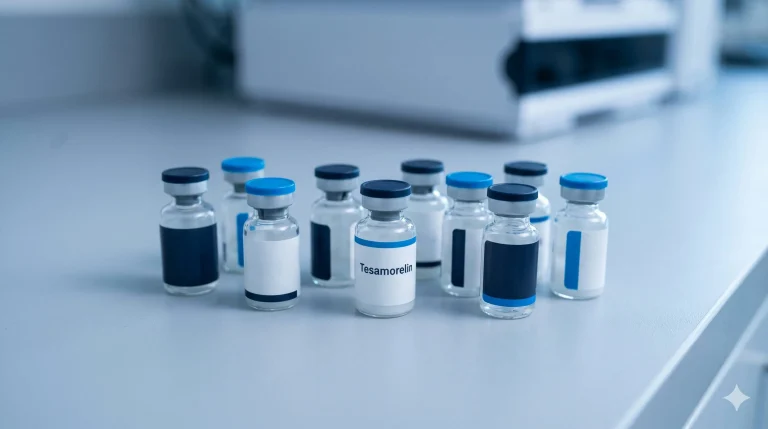
A research overview of CJC-1295, Sermorelin, and Tesamorelin: GHRH analogs studied in cell and animal models for GH release and half-life.
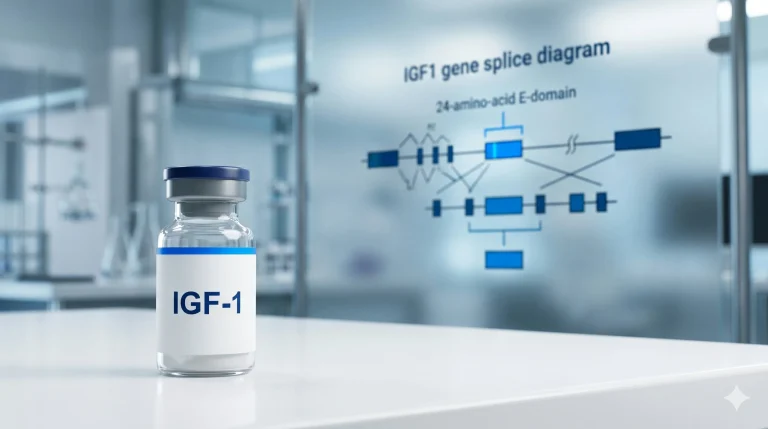
A research overview of MGF: an IGF-1 splice variant with a unique E-domain, studied in cell and animal models for satellite cell and IGF-1R activity.