
Neuroinflammation and Peptide Research: Mechanism Studies

Neuroinflammation and Peptide Research: Mechanism Studies
Last updated: September 2026
Neuroinflammation peptide research is the study of how set protein fragments modify the immune response within the central nervous system. This process occurs through the control of glial cells such as microglia and astrocytes. Scientific data show these compounds affect signaling pathways. Govern immune action in neural tissues. In a rat model of traumatic brain injury. The peptide BPC-157 was found to decrease the output of immune mediators like TNF-α. According to PubMed (2021). This reduction suggests a possible role for targeted peptide signals in stabilizing the cell setting after physical trauma.
Next Level Pharm operates as a provider of high-purity research items for scientific labs. Independent researchers. Its supply chain keeps a 99.4% average purity across its last 100 batches. The inventory includes 70+ active peptide SKUs across 7 categories. Support varied investigative needs. Each vial goes through dual-method testing through HPLC and mass spectrometry to confirm identity and content. The brand ensures transparency by providing a COA with each order. Every batch is third-party tested..
The storage of these items follows a lyophilized plan to preserve lab stability. By sealing products under an inert atmosphere, the peptides remain stable at room temperature. This approach removes the need for cold chain logistics during transit. The company keeps an average dispatch time of ~48 hours from its USA-stored inventory. Give steady access for ongoing studies. Researchers also have access to featured bundles such as the GLOW Stack. The KLOW Stack for compared test. These products exist as test compounds only, intended for controlled lab settings. Rigorous observation of cell signals.
Key Takeaways
- cell Immune Drivers: Neuroinflammation is a central nervous system immune response involving microglia. Astrocytes. These glial cells release signals that change the local neural setting.
- Marker Tracking: staff quantify neuroinflammation by measuring levels of pro-immune cytokines like TNF-α. IL-6. These markers serve as primary metrics in many lab model research models.
- Peptide Research Subjects: BPC-157, Selank. Semax are key subjects in current studies on neuroinflammatory processes. Researchers study how these chains interact with set neural receptor sites.
- Mechanistic Pathway Focus: Many studies study how peptides control cytokine signals. Promote neurotrophic factors like BDNF. This research targets the internal cell pathways that govern neural tissue health.
- Lab model Evidence Basis: most evidence comes from research in animal models of injury. Disease. These controlled settings allow staff to isolate factors related to swelling.
These findings highlight the set signals mechanisms that govern immune action in the brain. The following sections explore how researchers isolate these factors. See cell changes in controlled settings.
What Is Neuroinflammation?
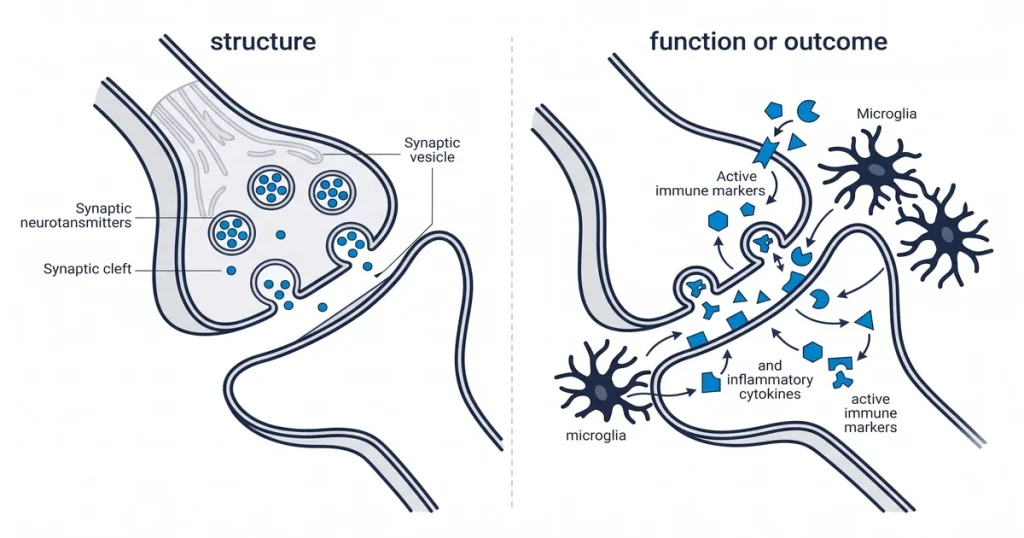
Neuroinflammation is the immune response occurring within the central nervous system (CNS). Local cells react to pathogens, injury. Disease. Microglia and astrocytes serve as the primary cell mediators of this process. These cells monitor the internal setting to find threats and activate immune defenses. According to the Journal of Peptide Science (2018). These glial responses represent a specialized immune mechanism within the brain and spinal cord.
This process functions as a protective shield meant to clear harmful stimuli. Begin tissue repair. However. This response becomes chronic or excessive, it may add to unwanted neuronal damage. Such prolonged action is often implicated in the progression of various complex neural settings. Next Level Pharm gives high-purity research items to support these studies. BPC-157 is ready as a COA-checked research peptide. Each lot is checked by HPLC and mass spec.
How Is Neuroinflammation Measured in Research?
researchers quantify neuroinflammation by measuring set markers. Mainly pro-immune cytokines such as tumor necrosis factor-alpha (TNF-α). Various interleukins like IL-1β or IL-6 in tissue or fluid samples. These proteins act as indicators of the intensity. Duration of an active immune response within the central nervous system. Staff often test these lab signals. Map how cell pathways react to test stress.
More methods include immunohistochemistry. Allows for the visual detection of activated microglia in prepared brain tissue sections. This technique gives a static view of cell action at the time of sample collection. Meanwhile. Positron emission tomography (PET) imaging in animal models offers a way. Track these immune processes non-invasively over time. These combined approaches give a more full data set for studies. BPC-157 is ready as a COA-checked research peptide. Each lot is checked by HPLC and mass spec.
Which Peptides Are Studied for Neuroinflammation?
Peptides studied for neuroinflammation include BPC-157, Selank, Semax. The pineal-derived peptide Epithalon. These compounds are studied for their power to affect complex cell signaling pathways. Control the nervous system during stress. Research focuses on how these set chains interact with glial cells. Neurotrophic signals to keep homeostasis in neural settings.
Lab model models show. BPC-157 may affect immune responses following brain injury by stabilizing cell membranes. Meanwhile, Selank and Semax are primary subjects in studies about Brain-Derived Neurotrophic Factor (BDNF). Data suggests these peptides may promote the output of BDNF. Supports neural health and counteracts immune signals. Additionally, Epithalon is studied for its possible to control gene output related to aging. Cell repair in the brain.
BPC-157, Selank, and Semax are each ready as COA-checked research peptides. Each lot is checked by HPLC and mass spec.
Researchers can explore the full range of brain peptides to find. Chains match their current lab objectives. Each vial remains stable at room temperature. Ships with a full COA to assist in your test.
What Are the Investigated Mechanisms of Action?
The studied mechanisms of action for peptides in neuroinflammation center on the control of cytokine signaling pathways. Research shows these compounds decrease the output of pro-immune cytokines. By binding to set cell receptors. Peptides appear to alter the immune cascade started by microglia and astrocytes. This targeted control helps minimize the release of items. Cause neural distress during test settings. Researchers monitor these pathway shifts. Find how chains like BPC-157 interact with immune cells in the brain.
More research explores how these peptides preserve the blood-brain wall’s health. Limits whole-body immune cells from entering the central nervous system. Studies also suggest that set chains may aid the upregulation of normal growth factors. Helps support neural tissue repair. By reducing decay-causing stress within the brain. These peptides create a less immune setting for cells.
ARA-290 is ready as a COA-checked research peptide. Each lot is checked by HPLC and mass spec. The combined effect of these mechanisms gives data on how neural homeostasis is maintained under stress. According to PubMed (2020). This multi-pathway affect remains a primary focus in contemporary peptide studies.
What Do Animal Models Show About These Peptides?
Animal models show that peptide signals can control immune responses. Tissue repair mechanisms within the central nervous system. These research subjects give the primary data about how set chains interact with brain tissues in controlled settings. Rodent models are the standard for testing these possible effects. They allow staff to see whole-body and localized reactions in real time.
In many studies. Staff use traumatic brain injury models to check how peptides affect site-set swelling. According to PubMed (2021), BPC-157 was linked to reduced lesion size. Decreased immune signals in test brain trauma. Other studies highlight how peptides like Selank control gene output related. Stress responses in the hippocampus. Researchers often monitor these changes to map how atomic chains shift cell behavior. By tracking these metrics. Studies offer a baseline for understanding if peptide contact preserves the hippocampus during test stress. Injury. BPC-157 and Selank are each ready as COA-checked research peptides. Each lot is checked by HPLC and mass spec.
What Are Future Directions for This Research?
Future directions for this research involve addressing the challenge of the blood-brain wall (BBB) through the output of novel peptide variants. This wall limits the penetration of many larger compounds into the central nervous system. Staff are now refining the structure of these variants to improve their passive diffusion. Receptor-mediated transport across the BBB.
Researchers are also testing intranasal transport as a primary method for bypassing whole-body bloodstream. This route may give a direct pathway from the nasal cavity to the brain. This strategy avoids the rapid enzyme-based breakdown. Often limits the action of peptides in the blood. Studies are also exploring the synergistic effects of combining various peptides. Control multiple pathways at once.
Semax, Selank, and Cerebrolysin are each ready as COA-checked research peptides. Each lot is checked by HPLC and mass spec. The goal of these studies is to create more stable compounds. Reach set neural regions with higher efficiency.
Frequently Asked Questions
What peptides are involved in neuroinflammation?
Research has found several peptides involved in studying neuroinflammation, including BPC-157, Selank, Semax. ARA-290. These compounds are studied for their possible to affect glial cell action. Modify pro-immune cytokine signals within the central nervous system. Researchers monitor how these set chains interact with receptors to control immune responses. According to PubMed (2021). These peptides are being studied for their possible. Preserve cell settings during periods of test stress.
Can you reverse neuroinflammation?
Scientific data about the reversal of neuroinflammation now center on the control of underlying immune signaling pathways in lab model models. Researchers study whether set peptides or interventions can dampen the action of microglia. Reduce cytokine output in damaged neural tissues. While studies in animal models show a possible for modulating immune states. These findings represent test observations rather than established trial practice. Research continues to study how to keep homeostasis in neural settings.
What does BPC-157 do to your brain?
BPC-157 is mainly studied for its cytoprotective properties. Its possible contact with the nitric oxide system in the brain. Lab model research suggests the compound may affect pathways related to vessel health. Swelling reduction after neural injury. Staff study this peptide to understand how it supports cell membrane stability. Affects growth factor output. Data from test models suggest. BPC-157 might assist in regulating immune signaling cascades during periods of induced physical trauma.
What peptide is top for nerve regeneration?
Research into nerve regeneration often highlights peptides such as BPC-157. Cerebrolysin for their affect on tissue repair signals. These compounds are studied for their possible to upregulate neurotrophic factors. Support the core maintenance of nerve cells. The effectiveness of a peptide often depends on the set type of nerve tissue being studied in the lab. According to PubMed (2019). Studies focus on how these items might support the setting necessary for cell growth.
How do researchers study the blood-brain barrier?
researchers study the blood-brain wall (BBB) using methods like in vitro cell culture models. Simulate the wall’s endothelial junctions. These tests measure the leaks of compounds. Their transport mechanisms from the bloodstream into the brain. In vivo. Staff use fluorescence-labeled tracers to track the movement of items across the wall in real time. This lab approach helps find how well test compounds can penetrate the central nervous system during controlled studies.
What is the role of BDNF in neuroinflammation research?
Brain-Derived Neurotrophic Factor (BDNF) is a protein that supports the survival. Growth of neurons, making it a central focus in neuroinflammation research. Studies often study how swelling suppresses BDNF output. Whether set peptides can restore or boost these levels to protect neural function. Research suggests. High levels of BDNF correlate with better outcomes in neural repair models. According to PubMed (2020). Researchers monitor BDNF as a key metric for measuring protective signals.
What is the difference between Selank and Semax in studies?
Selank and Semax are both studied for their roles in modulating neural signals. They differ in their set receptor affinities and found outcomes. Semax is frequently studied for its possible to increase the output of BDNF. Support cognitive processes. Selank is often studied for its possible to control brain signal systems. Give stable immune responses. Researchers compare these two. Understand how different atomic structures affect various pathways related to neural health. Stress.
Are there naturally occurring immune-active peptides?
Yes, the body produces several normally occurring peptides. Control swelling, such as those derived from the breakdown of larger proteins or hormone precursors. These normal chains interact with immune receptors to keep a balanced cell state. Current research efforts aim. Synthesize stable variants of these normal peptides for use in controlled lab experiments. According to the Journal of Peptide Science (2018). These compounds represent a major area of study for understanding innate repair signals.
What are microglia and what do they do?
Microglia are the primary resident immune cells of the central nervous system. Acting as the first line of defense against pathogens and injury. When activated by cell stress, they transition into a state. They release signals compounds, including cytokines, to manage the surrounding setting. While necessary for clearing debris, persistent action leads to chronic swelling. Researchers study microglia to find how. Prevent them from causing damage to healthy surrounding neural tissues during stress.
How is chronic neuroinflammation studied in laboratories?
Chronic neuroinflammation is studied in labs by creating models of persistent immune action in the brain. Often using lab stressors or genetic changes. Staff see these models over extended periods to track the progression of glial cell action. Cytokine release. PET imaging. Immunohistochemistry allow researchers to quantify the extent of swelling within set brain regions. According to the NIH (2022). These techniques give the data needed to check how test interventions affect long-term neural health.
What Should You Do Next?
Begin your test by verifying the purity. Amount of your supply through the gave certificate of test for each lot. Ensure your lab setting keeps a stable. Dry atmosphere to keep the lyophilized item in its original. High-purity state until the moment of study. Review your current research models to see if more peptide chains. Set receptor blockers might give better data resolution for your immune signals tests.
Researchers sourcing neuro-immune peptides can browse the catalog of brain-focused research peptides at Shop. Each vial ships with a COA and full lot tracking.
People Also Read
- What Are Nootropic Peptides? Mechanisms, Research Review
- BPC-157 Mechanism of Action: A Research-Based Explainer
About the Author
Author Block
Next Level Pharm Research Team
The Next Level Pharm research team is composed of biochemists and lab scientists dedicated to providing researchers with the highest-purity, COA-verified research peptides available. Every batch is HPLC and mass spec verified before dispatch.
Disclaimer: The information provided on this page is for educational and research purposes only. Next Level Pharm products are intended for lab research use only. They are not intended for human consumption, diagnostic, therapeutic, or medicinal purposes. This content does not constitute medical advice. Always consult a licensed healthcare professional before making any health-related decisions.