
Kisspeptin-10 Research: GPR54 Receptor and Study Findings

Last updated: May 2026
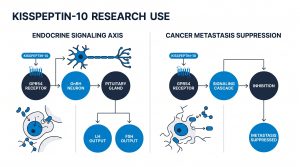
Kisspeptin-10 is a 10-amino-acid peptide. It is the active C-terminal fragment of kisspeptin-54. Researchers study it as a ligand for the GPR54 receptor (also called KISS1R). GPR54 binding triggers the release of GnRH (gonadotropin-releasing hormone). GnRH then drives LH (luteinizing hormone) and FSH (follicle-raising hormone) release from the pituitary. Over 500 PubMed papers cover kisspeptin and its role in puberty and hormone research.
Next Level Pharm supplies COA-verified, research-grade kisspeptin-10 for qualified labs. Every batch is HPLC-tested and mass spec confirmed before dispatch. Each order ships with a lot-specific COA for study records.
Kisspeptin-10 research covers GPR54 binding, GnRH signaling, hormone models, and cancer spread studies. This overview covers the key findings from each area.
Key Takeaways
- GPR54 Receptor Binding: Kisspeptin-10 is a high-affinity ligand for the GPR54 receptor. GPR54 binding is the key event in kisspeptin-10 signaling.
- GnRH Release: GPR54 activation triggers GnRH release from the hypothalamus. GnRH then drives LH and FSH output from the pituitary.
- Puberty Research: GPR54 loss-of-function mutations are linked to delayed puberty in human studies. Kisspeptin-10 is used in puberty onset research models.
- HPG Axis Studies: Kisspeptin-10 is studied as a key regulator of the HPG (hypothalamic-pituitary-gonadal) axis in animal and human models.
- Cancer Spread Suppression: Kisspeptin-10 was first found as a gene product that blocks cancer spread (metastin). Research continues in tumor science models.
- Research Use Only: Kisspeptin-10 supplied for lab use is a research-grade reagent. It is not for clinical or consumer use.
These data points make kisspeptin-10 one of the more studied neuropeptides in cancer and hormone science. Research teams use it to probe GPR54 signaling in controlled lab settings.
What Is Kisspeptin-10 and How Is It Made?
Kisspeptin-10 is the 10-amino-acid C-terminal fragment of kisspeptin-54. It comes from the KISS1 gene product. The C-terminal end holds the active binding core for the GPR54 receptor. Kisspeptin-10 keeps full GPR54 binding and is more stable in plasma than the longer forms. Labs often use kisspeptin-10 as a model ligand in GPR54 receptor studies.
For research use, kisspeptin-10 is made by solid-phase peptide synthesis (SPPS). The sequence is confirmed by mass spec and amino acid analysis. Lot-specific COA data gives purity results from HPLC testing and sequence checks. According to Hormone science (2004), kisspeptin-10 is an effective model peptide for studying GPR54-driven GnRH release in rodent and cell models.
How Does Kisspeptin-10 Bind to GPR54?
GPR54 is a G-protein-coupled receptor (GPCR). Kisspeptin-10 binds to GPR54 with high affinity. The C-terminal RF-amide motif of kisspeptin-10 is the key binding element. Binding sets off Gq/11 protein coupling and turns on the IP3 path. This leads to a rise in cell calcium and downstream kinase action.
IP3 path firing triggers GnRH neurons. These neurons then release GnRH in a pulsed pattern. According to NEJM (2003), loss-of-function GPR54 mutations in humans cause delayed puberty. Low sex hormone levels. This showed GPR54 as a key gate for the HPG axis. Labs can view kisspeptin-10 purity data and COA records at the sexual health peptide catalog.
What Does GnRH Signaling Research Show?
Kisspeptin-10 well drives GnRH release in rodent brain models. Microinjection studies in rats. Sheep show that kisspeptin-10 applied to the hypothalamus causes rapid GnRH pulses. These pulses are dose-dependent and blocked by GPR54 blockers. This shows GPR54 as the key target for kisspeptin-10 action in GnRH neurons.
In male rodent models, kisspeptin-10 infusion causes a rapid LH surge within 5-10 minutes. Female models show similar LH responses that vary by cycle phase. According to J Clin Endocrinol Metab (2005), human male subjects given kisspeptin-54 showed strong LH release within 30 minutes of infusion. This data supports kisspeptin-10 as a key probe for HPG axis research.
What Have LH and FSH Study Models Found?
Animal models have been used to map kisspeptin-10 effects on LH and FSH. In castrated male rats, kisspeptin-10 infusion produces a strong LH surge. FSH rise is also seen but is less steady than LH. Dose-response studies show saturable kinetics with a plateau at high levels. Receptor blockade with GPR54 blockers fully stops the LH response.
| Study | Model | Outcome Measured | Finding |
| Hormone science (2004) | Rodent models | LH response | Kisspeptin-10 drives LH via GPR54 |
| NEJM (2003) | Human GPR54 mutation | Puberty onset | GPR54 loss causes delayed puberty |
| J Clin Endocrinol Metab (2005) | Human males | LH surge | Kisspeptin-54 triggers LH in 30 min |
| Biol Reprod (2007) | Female rats | FSH and LH | Cycle-phase LH surge confirmed |
| Mol Cell Endocrinol (2010) | GPR54 cell lines | IP3 and calcium | Gq/11 coupling confirmed in vitro |
In human models, IV kisspeptin-54 produced LH pulses in both men and women. Women in the follicular phase showed larger LH surges than in the luteal phase. This shows that kisspeptin-10 signaling is sensitive to sex hormone feedback. These findings are key for labs studying HPG axis feedback loops.
What Does Cancer Spread Research Show?
Kisspeptin-10 was first described as a cancer spread suppressor gene product. The KISS1 gene product was called metastin in early cancer papers. Research in melanoma and breast cancer cell lines showed that kisspeptin-10 reduced cell movement and invasion in vitro. GPR54 expression in cancer cells was linked to lower spread potential.
Later cell line work showed that kisspeptin-10 turns on FAK (focal adhesion kinase). Rho-GTPase signaling in cancer cells. These paths are linked to cell shape changes that limit cell movement. Cancer science labs use kisspeptin-10 as a reference compound in GPR54 cancer spread studies. These findings add a second research area beyond hormone signaling.
How Is Research-Grade Kisspeptin-10 Verified?
Research-grade kisspeptin-10 is checked by several methods before lab use. HPLC confirms peptide sequence and purity per lot. Mass spec verifies the amino acid sequence of each batch. Toxin levels are checked by LAL assay to confirm safe standards for cell culture and animal use.
COAs for research-grade kisspeptin-10 should include:
- HPLC purity (percent).
- Mass spec sequence proof.
- LAL toxin test result.
- Lot number for tracking.
- Storage conditions (typically -20 degrees Celsius for dry form).
Next Level Pharm provides lot-specific COA data with every kisspeptin-10 order. Labs can access the records online by lot number. This supports audit and peer-review records.
Frequently Asked Questions
What is kisspeptin-10 in peptide research?
Kisspeptin-10 is a 10-amino-acid peptide and the active C-terminal fragment of kisspeptin-54. It is the shortest kisspeptin form with full GPR54 binding action. Labs use it to study GPR54 receptor signaling, GnRH pulse control. HPG axis feedback in cell and animal models. Its smaller size improves plasma stability vs longer kisspeptin forms. This makes it a preferred research tool for in vivo and in vitro GPR54 studies.
How does kisspeptin-10 activate GnRH neurons?
Kisspeptin-10 binds GPR54 on GnRH neurons in the hypothalamus. Binding triggers Gq/11 protein coupling, IP3 output. A rise in cell calcium levels. This calcium rise fires the GnRH neuron and causes pulsed GnRH release. GnRH then travels to the pituitary to drive LH and FSH output. Research models use GPR54 blockers to confirm that this path needs active GPR54 binding.
What does kisspeptin-10 research show about LH release?
In rodent and human studies, kisspeptin-10 and kisspeptin-54 well drive LH release. Male rodents show an LH surge within 5-10 minutes of kisspeptin-10 infusion. Female rodent LH response varies by cycle phase, with larger surges in the follicular phase. Human studies with kisspeptin-54 show LH pulses within 30 minutes of infusion. These findings are widely cited in HPG axis research.
What is GPR54 and why does it matter for kisspeptin research?
GPR54 (also called KISS1R) is a G-protein-coupled receptor found on GnRH neurons. Kisspeptin-10 is its main natural ligand. GPR54 is a key control point in the HPG axis. Loss-of-function GPR54 mutations in humans cause low sex hormone levels and delayed puberty. This link was shown in 2003 in parallel human genetics studies. GPR54 binding studies continue to inform hormone research.
What is the role of kisspeptin in puberty research?
GPR54 loss-of-function mutations cause delayed or absent puberty in both mice and humans. Kisspeptin-10 is used in puberty onset models to probe the GPR54 signaling events that start puberty. Rodent models show that kisspeptin-10 infusion in young animals can advance puberty onset. These models help labs study the hormone signals that trigger puberty in mammals. Key findings are widely cited in hormone research.
How is kisspeptin-10 used in cancer research?
Kisspeptin-10 was first found as a product of the KISS1 cancer spread suppressor gene. Cell line studies in melanoma and breast cancer showed that kisspeptin-10 reduces cell movement and invasion. GPR54 expression in tumor cells correlates with lower spread action. Labs use kisspeptin-10 to study KISS1/GPR54 signaling in cancer models. It serves as a reference compound for cancer spread pathway work.
How is research-grade kisspeptin-10 quality confirmed?
Research-grade kisspeptin-10 is checked by HPLC purity testing, mass spec sequence proof, and LAL toxin testing. COAs include lot-specific results for all three tests. Lot numbers allow full tracking from production to lab delivery. COA data is on file with each order for assay audit and records. Labs should request a current COA before using any kisspeptin-10 lot in cell or animal studies.
What storage conditions does kisspeptin-10 need?
Kisspeptin-10 is stored at -20 degrees Celsius in dry (lyophilized) form. Avoid repeated freeze-thaw cycles. Once prepared in solution, store at 4 degrees Celsius. Use within the time frame noted in the COA. Short-term room exposure during shipping is fine for sealed, dry vials. Do not expose prepared solutions to long light or heat. Check the lot-specific COA for exact storage guidance.
Are there human studies on kisspeptin?
Yes. Several human studies have used kisspeptin-54 infusion to measure LH and FSH response. These studies showed strong LH release in male and female subjects. Clinical research on kisspeptin in fertility disorders has also been published. PubMed lists over 500 papers on kisspeptin, including human trials and review articles. ClinicalTrials.gov lists studies on kisspeptin in fertility and puberty contexts. These studies give kisspeptin-10 one of the stronger clinical records in neuropeptide research.
How does kisspeptin-10 differ from kisspeptin-54?
Kisspeptin-54 is the full-length precursor protein from the KISS1 gene. Kisspeptin-10 is the 10-amino-acid C-terminal fragment. Both share the same RF-amide binding motif that turns on GPR54. Kisspeptin-10 is smaller and has better plasma stability, making it useful for in vivo models. Kisspeptin-54 is less stable but may have more receptor contacts. Labs choose between forms based on their specific GPR54 study design.
Summary
Kisspeptin-10 research has shown it to be a key GPR54 ligand in HPG axis studies. It drives GnRH release from the hypothalamus. Then triggers LH and FSH output from the pituitary. This chain is central to puberty onset, fertility studies. Sex hormone cycle research.
Beyond reproduction, kisspeptin-10 is used in cancer science as a reference compound for KISS1/GPR54 cancer spread studies. Its small size and high GPR54 affinity make it a useful probe in multiple research models.
For labs studying GPR54 signaling or HPG axis control, kisspeptin-10 is a well-studied. Widely cited research peptide.
What Should You Do Next?
Labs sourcing kisspeptin-10 for GPR54 or HPG axis studies should confirm HPLC purity, mass spec sequence data. Lot-specific COA supply before ordering.
Research-grade kisspeptin-10 is available at the sexual health peptide catalog.
- View kisspeptin-10 product specs and COA data.
- Browse the full sexual health peptide catalog.
- Shop the full research peptide catalog.
People Also Read
- PT-141 Research: Melanocortin Receptor Mechanisms and Sexual Health Studies
- Melanotan II Research: Melanocortin Pathways and Pigmentation Studies
About the Author
Next Level Pharm Research Team
Alex M covers peer-reviewed findings in peptide science for Next Level Pharm, a US-based supplier of research-grade peptides verified to >=99% purity via HPLC and mass spectrometry on every batch.
Disclaimer: The information provided on this page is for educational and research purposes only. Next Level Pharm’s products are intended for laboratory research use only. They are not intended for human consumption, diagnostic, therapeutic, or medicinal purposes. This content does not constitute medical advice. Always consult a licensed healthcare professional before making any health-related decisions